
19 Best Time Management Books
The best time management books, ranked by how many expert sources recommend each one, with notes on priorities, focus, practical systems, and who each suits.
Our take
Time management can mean deciding what matters, keeping track of commitments, or protecting the attention needed to finish something difficult. These are related problems, but a complicated task system will not necessarily solve overcommitment, and a clearer priority will not automatically remove interruptions. The books here offer different starting points for work, household responsibilities, and personal projects.
Getting Things Done provides a workflow for tracking commitments, while Make Time offers smaller experiments. Essentialism and The 80/20 Principle ask which activities deserve effort in the first place. For concentration, Deep Work and Indistractable examine how intended work gets displaced. The Effective Executive is especially relevant when results depend on decisions and other people, while Four Thousand Weeks questions the expectation that everything can fit. Some approaches assume more autonomy than a reader’s job or home life allows. Start with the problem that costs you the most time, then choose a method you can realistically maintain.
19 books · 8 sources · Last updated
As an Amazon Associate, we earn from qualifying purchases (at no extra cost to you).
How to choose from this list
Skip to the full rankingIf your tasks feel scattered: Getting Things Done
If you want small experiments: Make Time
If you have too many priorities: Essentialism → The 80/20 Principle
If interruptions take over: Indistractable → Deep Work
If you’re responsible for decisions and team output: The Effective Executive
If you feel you should get everything done: Four Thousand Weeks
The 19 books, ranked
Ranked by how many expert sources name each book. Ties go to the book more people recommend.
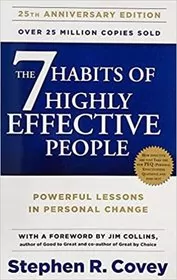
For readers who want time choices connected to values, relationships, and responsibility. The broader personal-effectiveness framework gives priorities a purpose, though it is more reflective and extensive than a practical calendar or task-management guide.
What it's about
Stephen Covey presents seven habits for personal effectiveness, connecting individual responsibility with cooperation and continual renewal. His framework emphasizes principles such as integrity, fairness, and service in approaching relationships, decisions, and goals at work and home.
Also recommended by
12 people Dave Ramsey recommended this book
Dave Ramsey
Recommended on Dave Ramsey's website.
Dave Ramsey's recommendation of this book  Daniel Pink recommended this book
Daniel Pink
Daniel Pink mentioned this book on "The Tim Ferriss Show" podcast.
Daniel Pink's recommendation of this book  Ken Block recommended this book
Ken Block
"[Also] helped me really be successful." - Ken Block
Ken Block's recommendation of this book  Dustin Moskovitz recommended this book
Dustin Moskovitz
"[I] was surprised at how familiar the topics felt." - Dustin Moskovitz
Dustin Moskovitz's recommendation of this book  Noah Kagan recommended this book
Noah Kagan
"Begin with the end in mind." - Noah Kagan
Noah Kagan's recommendation of this book  Kishore Biyani recommended this book
Kishore Biyani
"Immensely helpful and influential during my early years, it explained some of the basic mindsets required to succeed in any profession." - Kishore Biyani
Kishore Biyani's recommendation of this book +6
More recommendations
- Michael McCullough
"Helps you decide which action to actually take." - Michael McCullough
- Shay Carl
Shay Carl referenced this book on "The Tim Ferriss Show" podcast.
- Jenn Im
"Has changed my life in such a positive way." - Jenn Im
- Jim Kwik
"This personal development classic is a classic for a reason." - Jim Kwik
- Michael Hyatt
Michael Hyatt recommended this book on his website.
- Ben Greenfield
Most Recommended Books reached out to Ben Greenfield directly.
- Michael McCullough
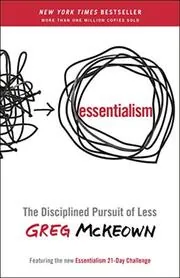
For readers who need to reduce commitments before reorganizing them. The attention to boundaries makes it more useful for overcommitment than a larger task system, though applying the principle can be difficult when others control your workload.
What it's about
Greg McKeown argues for deliberately identifying what matters most and eliminating commitments that distract from it. Using examples and practical methods, he explores prioritization, trade-offs, boundaries, and creating routines that support a smaller number of meaningful pursuits.
Also recommended by
7 people- Noah Kagan recommended this book
Noah Kagan
Noah Kagan recommended this book in the "Tools of Titans" book.
Noah Kagan's recommendation of this book  Kevin Rose recommended this book
Kevin Rose
"Really resonated with me, and I will certainly incorporate many of these principles into my work and personal life." - Kevin Rose
Kevin Rose's recommendation of this book  Reid Hoffman recommended this book
Reid Hoffman
"Offers concise and eloquent advice on how to determine what you care about most, and how to apply your energies in ways that ultimately bring you the greatest rewards." - Reid Hoffman
Reid Hoffman's recommendation of this book  Austen Allred recommended this book
Austen Allred
Austen Allred recommended this book on his website.
Austen Allred's recommendation of this book  Steve Harvey recommended this book
Steve Harvey
"This book changed my life." - Steve Harvey
Steve Harvey's recommendation of this book  Jodie Cook recommended this book
Jodie Cook
"Do less but do it better. Wise words with application across life and business." - Jodie Cook
Jodie Cook's recommendation of this book +1
More recommendations
- Michael Hyatt
Michael Hyatt recommended this book on his website.
- Michael Hyatt
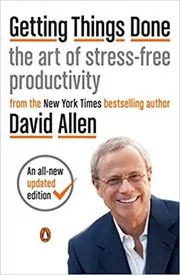
For readers whose commitments are scattered across messages, notes, and memory. The capture-and-review workflow provides more structure than a general priorities book, though keeping the system useful requires regular maintenance rather than one successful setup.
What it's about
David Allen presents a system for managing personal and professional commitments without relying on memory alone. He explains how capturing tasks, clarifying next actions, organizing information, and reviewing commitments can help people approach their work with greater focus.
Also recommended by
6 people Ev Williams recommended this book
Ev Williams
"Still the best advice on getting your life in order and freeing up your brain to be creative." - Ev Williams
Ev Williams's recommendation of this book - Dustin Moskovitz recommended this book
Dustin Moskovitz
"Put first things first." - Dustin Moskovitz
Dustin Moskovitz's recommendation of this book  Tony Hsieh recommended this book
Tony Hsieh
One of 4 books Tony Hsieh recommended in Inc.com
Tony Hsieh's recommendation of this book  Michael McCullough recommended this book
Michael McCullough
"Helps you actually to action." - Michael McCullough
Michael McCullough's recommendation of this book  Howard Stern recommended this book
Howard Stern
"A game changer. I’ve read it maybe 20 times." - Howard Stern
Howard Stern's recommendation of this book  Michael Hyatt recommended this book
Michael Hyatt
Michael Hyatt recommended this book on his website.
Michael Hyatt's recommendation of this book
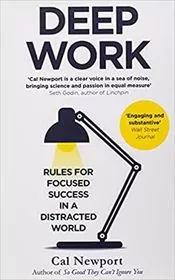
For readers whose important work needs uninterrupted concentration. The focus on protecting attention is more specific than general scheduling advice, though long quiet sessions are harder to arrange in roles built around responding to others.
What it's about
Newport makes the case that focused, distraction-free work is a rare and valuable skill. He explains why shallow busyness takes over and offers rules for building routines that protect serious thinking.
Also recommended by
1 person Tai Lopez recommended this book
Tai Lopez
"Great book on how to focus the mind. Read this if you need to be more productive." - Tai Lopez
Tai Lopez's recommendation of this book
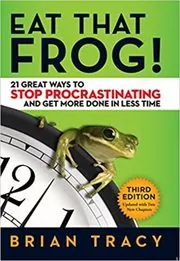
Eat That Frog!
21 Great Ways to Stop Procrastinating and Get More Done in Less Time
For readers who need a simple prompt to start important work. The short principles make prioritization easy to revisit, though the hardest-task-first approach does not account for every constraint on energy, schedules, or motivation.
What it's about
Brian Tracy uses eating a frog as a metaphor for tackling the most important and demanding task first. His guide offers twenty-one approaches to prioritization, preparation, concentration, and overcoming procrastination, helping readers direct effort toward work that matters.
Also recommended by
1 person Blake Randall recommended this book
Blake Randall
"" - Blake Randall
Blake Randall's recommendation of this book
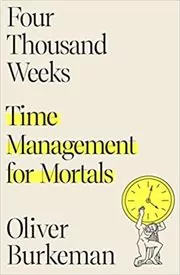
For readers who feel pressured to fit everything into a schedule. The argument for accepting limits offers a useful counterweight to efficiency systems, though the reflective approach provides fewer day-to-day procedures than a task-management manual.
What it's about
Oliver Burkeman explores how to live meaningfully within a finite lifespan. Drawing on philosophy and psychology, he questions the drive to accomplish everything and offers ways to accept limits, choose commitments, and relate differently to time.
Also recommended by
1 person Tim Ferriss recommended this book
Tim Ferriss
"Quite unlike anything I’ve ever read." - Tim Ferriss
Tim Ferriss's recommendation of this book
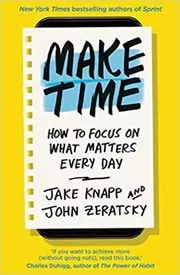
For readers who want to try small changes without adopting a rigid system. The menu of tactics makes experimentation easier than a large workflow overhaul, though selecting and testing options is part of the work.
What it's about
Jake Knapp and John Zeratsky offer a flexible daily framework for making room for meaningful activities. Small changes to habits and surroundings help readers choose priorities, reduce distraction, maintain energy, and reflect on how they spend their time.
Also recommended by
1 person Ali Abdaal recommended this book
Ali Abdaal
Ali Abdaal recommended this book on his website.
Ali Abdaal's recommendation of this book
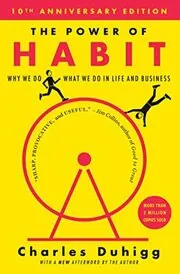
For readers interested in the routines that quietly shape how days are spent. The explanatory stories make habitual behavior easier to notice, though the book offers less direct instruction on planning a particular week.
What it's about
Charles Duhigg examines how habits form and change through scientific research and stories about individuals, companies, and social movements. He explains how recurring patterns influence behavior and how identifying them can help people reshape routines and organizations improve their practices.
Also recommended by
9 people Ray Dalio recommended this book
Ray Dalio
"Fantastic. I got [this book] and I gave it to everyone in my company." - Ray Dalio
Ray Dalio's recommendation of this book  Scott Adams recommended this book
Scott Adams
One of the books on Scott Adams' "Persuasion Reading List."
Scott Adams's recommendation of this book - Tim Ferriss recommended this book
Tim Ferriss
"A very good book." - Tim Ferriss
Tim Ferriss's recommendation of this book  Naval Ravikant recommended this book
Naval Ravikant
"Interesting, not because of its content necessarily, but because it’s good for me to always keep on top of mind how powerful my habits are." - Naval Ravikant
Naval Ravikant's recommendation of this book  Kelly Starrett recommended this book
Kelly Starrett
Kelly Starrett recommended this book in the "Tools of Titans" book.
Kelly Starrett's recommendation of this book  Mr. Money Mustache recommended this book
Mr. Money Mustache
Mr. Money Mustache recommended this book on his blog.
Mr. Money Mustache's recommendation of this book +3
More recommendations
- Max Levchin
"Compiles a bunch of great academic neuroscience and applied psychology research on habit formation." - Max Levchin
- Danny Miranda
"Great writing, interesting stories, and incredible insights on how to control your habits." - Danny Miranda
- Patrick Bet-David
Patrick Bet-David recommended this book on his website.
- Max Levchin
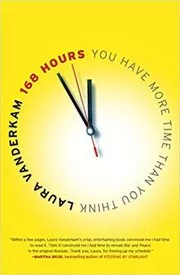
For readers who want to examine an entire week rather than one crowded day. The time-log approach can reveal neglected priorities, though examples involving flexible schedules or purchased help may not match every household’s constraints.
What it's about
Laura Vanderkam examines how people use the 168 hours in a week and proposes a more deliberate approach to scheduling. Time logs, examples, and planning exercises help readers identify priorities, streamline work, and make room for personal goals.
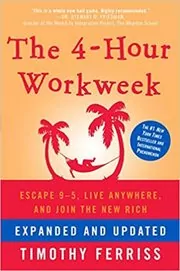
For readers interested in redesigning how work fits into life. The focus on delegation and autonomy goes beyond calendar management, though the entrepreneurial examples and assumptions about outsourcing fit some careers much better than others.
What it's about
Tim Ferriss presents an approach to reorganizing work around greater freedom of time and location. The guide explores reducing unnecessary tasks, outsourcing, automating income, and planning shorter periods away from work rather than postponing enjoyment until retirement.
Also recommended by
26 people Eric Weinstein recommended this book
Eric Weinstein
Eric Weinstein tweet about books that mattered enough to him.
Eric Weinstein's recommendation of this book  Tristan Harris recommended this book
Tristan Harris
Tristan Harris mentioned this book on "The Tim Ferriss Show" podcast.
Tristan Harris's recommendation of this book  Charles Poliquin recommended this book
Charles Poliquin
Charles Poliquin recommended this book in the "Tools of Titans" book.
Charles Poliquin's recommendation of this book  Walter Isaacson recommended this book
Walter Isaacson
"[The author has] a great curiosity and [...] a great love for things." - Walter Isaacson
Walter Isaacson's recommendation of this book - Daniel Pink recommended this book
Daniel Pink
Daniel Pink mentioned this book on "The Tim Ferriss Show" podcast.
Daniel Pink's recommendation of this book  Blake Mycoskie recommended this book
Blake Mycoskie
"I read [this book] right when I started Toms. There’s so many things that I took from [it] that allowed Toms to have this incredible growth." - Blake Mycoskie
Blake Mycoskie's recommendation of this book +20
More recommendations
- David Heinemeier Hansson
"My key takeaway from [this book] was the concept of lifestyle design." - DHH
- Marc Andreessen
"[The author] basically takes all of the time management and personal productivity theories of the last 20 to 30 years and pushes them to 11, to paraphrase 'Spinal Tap.'" - Marc Andreessen
- Jason Silva
"I was very affected by [this book]. I was like this guy has it figured out." - Jason Silva
- Mike Shinoda
"I do talk about [this book] quite a bit." - Mike Shinoda
- Mark Bell
"Taught me better ways to manage my time and the value of not making myself too busy." - Mark Bell
- Maurice Ashley
"Made me ditch the average life in search of one with complete flexibility and freedom to live life on my terms." - Maurice Ashley
- Tim Draper
"With this kind of time management and focus on the important things in life, people should be able to get 15 times as much done in a normal work week." - Tim Draper
- Derek Sivers
"Brilliant reversal of all of the 'how to manage all your crap' books." - Derek Sivers
- Rolf Potts
"Challenges the reader to seriously consider an essential–yet rarely asked–question: What do you really want from life?" - Rolf Potts
- A.J. Jacobs
A.J. Jacobs mentioned this book on "The Tim Ferriss Show" podcast.
- Caterina Fake
Caterina Fake mentioned this book on "The Tim Ferriss Show" podcast.
- Ev Williams
On the "books read" section of Ev Williams' GoodReads profile.
- Gary Keller
"This is a significant book." - Gary Keller
- Laura R Walker
"For those who struggle with productivity and taking control of their lives, [I give this book], of course!" - Laura R Walker
- Marc Goodman
One of Marc Goodman's most-gifted or recommended books.
- Mike Maples, Jr.
"If you want to live life on your own terms, this is your blueprint." - Mike Maples, Jr.
- Lewis Howes
"I've only probably read 4 books cover to cover. [This is one of them.]" - Lewis Howes
- Jodie Cook
"Life and work are reimagined and built back from scratch, in a way optimised for freedom and enjoyment." - Jodie Cook
- Brian Dean
"This book created thousands of entrepreneurs over the last 15 years… including me." - Brian Dean
- Michael Hyatt
Michael Hyatt recommended this book on his website.
- David Heinemeier Hansson
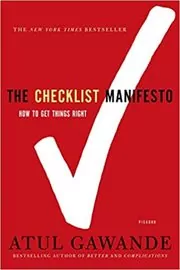
For readers managing repeated tasks where omissions matter. The examples show how a small shared checklist can support complex work, though the book is about reliability and coordination rather than a complete personal scheduling method.
What it's about
Atul Gawande investigates how simple checklists can reduce preventable errors in complex work. Drawing on surgery and aviation, he explores why expertise alone can fall short and how structured reminders and teamwork support more reliable professional practice.
Also recommended by
9 people Bill Gates recommended this book
Bill Gates
"A great read." - Bill Gates
Bill Gates's recommendation of this book  Jack Dorsey recommended this book
Jack Dorsey
"Success metric for my work [at Twitter]: these books disappear from my desk. (you should read it too)" - Jack Dorsey
Jack Dorsey's recommendation of this book - Tim Ferriss recommended this book
Tim Ferriss
"A great book." - Tim Ferriss
Tim Ferriss's recommendation of this book  Malcolm Gladwell recommended this book
Malcolm Gladwell
"[The author] took an extraordinary risk to his own reputation domestically in America in the medical profession by [releasing this book]." - Malcolm Gladwell
Malcolm Gladwell's recommendation of this book - Charles Poliquin recommended this book
Charles Poliquin
"A great book." - Charles Poliquin
Charles Poliquin's recommendation of this book  Keith Rabois recommended this book
Keith Rabois
Keith Rabois recommended this book on a Medium blog post.
Keith Rabois's recommendation of this book +3
More recommendations
- Ramit Sethi
"A great book." - Ramit Sethi
- Michael McCullough
"A really good book. [Shows] a checklist is profoundly helpful." - Michael McCullough
- Vinod Khosla
"Very good; definitely worth reading." - Vinod Khosla
- Ramit Sethi
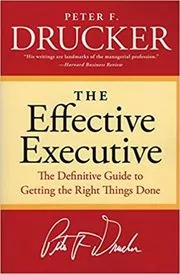
For readers whose work involves decisions, responsibility, and other people’s output. The focus on contribution distinguishes effectiveness from simply processing tasks, though the executive examples and older organizational assumptions need translating into today’s roles.
What it's about
Peter F. Drucker examines the practices that enable executives to turn knowledge and ability into useful results. He discusses managing time, focusing contributions, building on strengths, setting priorities, and making decisions, drawing on examples from business and government.
Also recommended by
5 people- Ev Williams recommended this book
Ev Williams
"[The author] writes about first principles and makes things seem obvious—once he explains them in his straightforward way." - Ev Williams
Ev Williams's recommendation of this book  Drew Houston recommended this book
Drew Houston
"I think one of the most valuable concepts from [this book] is measuring your time." - Drew Houston
Drew Houston's recommendation of this book  Matt Mullenweg recommended this book
Matt Mullenweg
"I recommend [this book] a lot in the company." - Matt Mullenweg
Matt Mullenweg's recommendation of this book  Guy Kawasaki recommended this book
Guy Kawasaki
"I devoured this book while in college." - Guy Kawasaki
Guy Kawasaki's recommendation of this book  Jim Collins recommended this book
Jim Collins
"I was very honored to have the opportunity to write the foreword to the 50th anniversary edition." - Jim Collins
Jim Collins's recommendation of this book
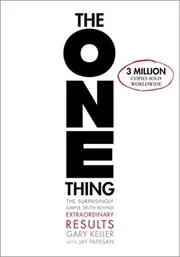
For readers whose main difficulty is choosing among competing goals. The repeated focusing question makes tradeoffs clearer than a long list of tactics, though multiple responsibilities rarely reduce neatly to a single priority.
What it's about
Gary Keller and Jay Papasan argue that concentrating on the most important priority can improve results. They examine habits and distractions that consume time and explain how a clearer focus can guide everyday choices.
Also recommended by
4 people- Charles Poliquin recommended this book
Charles Poliquin
Charles Poliquin recommended this book in the "Tools of Titans" book.
Charles Poliquin's recommendation of this book  Maria Sharapova recommended this book
Maria Sharapova
"It kind of hit home for me [...] that when you wake up in the morning, you put your focus on this one thing of what you want to accomplish during the day, which seems like a no-brainer." - Maria Sharapova
Maria Sharapova's recommendation of this book  Alexis Ohanian recommended this book
Alexis Ohanian
"Makes a strong case for tossing out my daily Todo list in favor of focusing just One Thing every day." - Alexis Ohanian
Alexis Ohanian's recommendation of this book  Kat Cole recommended this book
Kat Cole
"Big fan of this book." - Kat Cole
Kat Cole's recommendation of this book
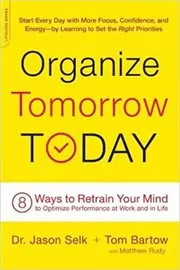
Organize Tomorrow Today
8 Ways to Retrain Your Mind to Optimize Performance at Work and in Life
For readers who want a compact set of planning and performance routines. The coaching perspective makes preparation and repeated practice concrete, though the sports-and-business examples emphasize individual habits more than structural limits on time.
What it's about
Jason Selk, Tom Bartow, and Matthew Rudy present eight principles for improving performance in work and daily life. Drawing on coaching athletes and businesspeople, they emphasize identifying important tasks and developing routines that turn intentions into consistent action.
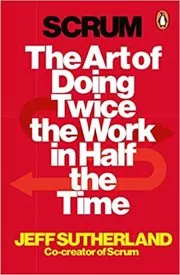
For readers responsible for a team’s flow of work. The focus on shared priorities and short feedback cycles addresses coordination more directly than personal-productivity books, though adopting Scrum requires team agreement and does not guarantee the title’s productivity claim.
What it's about
Jeff Sutherland introduces Scrum as an approach to organizing teamwork and managing projects. Drawing on its development and practical applications, he explains how teams can rethink traditional processes to improve collaboration, effectiveness, and the delivery of results.
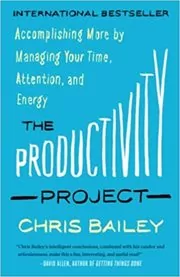
The Productivity Project
Accomplishing More by Managing Your Time, Attention, and Energy
For readers who want to experiment with attention, energy, and deliberate work. The personal trials make the methods approachable, though the results are better treated as ideas to test than a universal formula for scheduling.
What it's about
Chris Bailey recounts a year of personal productivity experiments and interviews with experts. The resulting guide offers practices for managing time, attention, and energy, including setting priorities, limiting distractions, and working more deliberately.
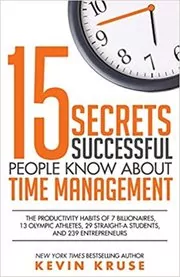
15 Secrets Successful People Know About Time Management
For readers who like comparing routines reported by high achievers. The short principles provide several easy starting points, though interviews with successful people do not establish that copying their habits will produce similar outcomes.
What it's about
Kevin Kruse draws on surveys and interviews with entrepreneurs, athletes, students, and billionaires to examine productivity habits. He presents strategies for setting priorities, handling email and meetings, resisting distractions, and addressing procrastination while protecting time outside work.
Indistractable
For readers whose planned time repeatedly disappears into distractions. The attention to internal discomfort and external triggers gives interruptions a fuller treatment than a calendar guide, though the techniques still depend on control over some parts of your environment.
What it's about
Nir Eyal and Julie Li examine why attention moves away from intended activities. The book connects internal triggers, external interruptions, scheduling, and advance commitments, offering a framework for noticing distraction and making more deliberate choices about time.
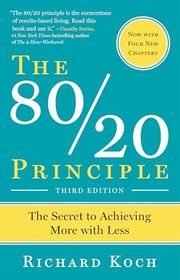
The 80/20 Principle
For readers who want to question which activities deserve most of their effort. The unequal-results lens offers a clear way to examine priorities, though the numerical ratio is a heuristic to investigate rather than a law that fits every situation.
What it's about
Richard Koch applies the idea that a minority of inputs often produces a large share of outcomes to business and personal life. Examples explore priorities, customers, work, and the possibility of concentrating effort on the activities that matter most.
Sources
- 1
Best Books for Time Management: 25 Picks for Busy Teams
kraftylab.com
- 2
The best time management books - 10 short summaries
spica.com
- 3
15 Best Time Management Books to Read
teambuilding.com
- 4
Time Management Books
goodreads.com
- 5
[Discussion] Best Time Management Books
reddit.com
- 6
Best books on time management?
reddit.com
- 7
Best Books on Time Management
fivebooks.com
- 8
10 Best Time Management Books Of 2026
thedigitalprojectmanager.com
Edited by
Software engineer whose passion for tracking book recommendations from podcasts inspired the creation of MRB.
Lead investor at 3one4 Capital whose startup expertise and love for books helped shape MRB and its growth.
Comments
Spotted a missing book, a wrong order or a mistake? Tell us and we'll fix this page.
We're a reading guide, not the author or publisher, so we can't send books or pass on messages.