
10 Best Organizing Books
The best organizing books, ranked by how many expert sources recommend each one, with notes on who they suit and where to start with home clutter.
Our take
Organizing a home involves several different jobs: deciding what belongs, giving things useful places, and maintaining routines after the initial effort. A book about letting go of possessions will not necessarily show you how to arrange a pantry, and a cleaning plan addresses another problem again. These books help readers choose an approach that fits their habits, time, and available space.
For deciding what to keep, The Life-Changing Magic of Tidying Up offers a clear philosophy, while Decluttering at the Speed of Life emphasizes progress during ordinary life. Organizing from the Inside Out begins with understanding your own needs. For visual storage ideas, consider The Complete Book of Home Organization or The Home Edit. Real Life Organizing works through smaller daily efforts, and Simply Clean focuses on maintenance. Start with the stage where you get stuck rather than trying to copy every system at once.
10 books · 11 sources · Last updated
As an Amazon Associate, we earn from qualifying purchases (at no extra cost to you).
How to choose from this list
Skip to the full rankingIf you struggle to decide what stays: Decluttering at the Speed of Life → The Life-Changing Magic of Tidying Up
If previous systems haven't lasted: Organizing from the Inside Out → Real Life Organizing
If you want visual storage ideas: The Complete Book of Home Organization → The Home Edit
If you want room for creative work: New Order
If you need a maintenance routine: Real Life Organizing → Simply Clean
The 10 books, ranked
Ranked by how many expert sources name each book. Ties go to the book more people recommend.

The Life-Changing Magic of Tidying Up
The Japanese Art of Decluttering and Organizing
For readers who need a clear principle for deciding what to keep. Kondo's category-based method differs from room-by-room storage guides, though the full tidying project and distinctive philosophy will not suit every household.
What it's about
Marie Kondo introduces her method for simplifying and organizing a home. The guide explores how to decide which possessions to keep and how to arrange them, connecting a deliberate approach to belongings with a more satisfying living environment.
Also recommended by
1 person Harry Styles recommended this book
Harry Styles
Harry Styles was seen purchasing this book.
Harry Styles's recommendation of this book

Organizing from the Inside Out
The Foolproof System For Organizing Your Home, Your Office and Your Life
For readers who want to understand why previous systems failed before buying more storage. Morgenstern connects organization with individual habits and goals, though the second edition's older technology examples need adaptation to current digital life.
What it's about
Julie Morgenstern develops an organizing system around individual goals, habits, and psychological needs. Her Analyze, Strategize, and Attack framework offers a way to create maintainable systems for homes, offices, and daily life, with guidance for different spaces and shared situations.

For readers who become overwhelmed when sorting creates a bigger mess. White emphasizes making progress within ordinary life rather than staging a complete overhaul, though the focus is on reducing clutter more than creating decorative storage systems.
What it's about
Dana White examines the emotional attachments and everyday obstacles that make decluttering difficult. Room-by-room strategies explain how to make progress amid busy schedules, recognize postponed tasks, and help other people reduce the possessions filling their homes.

For busy households that need inexpensive systems and short daily sessions. Aarssen's emphasis on workable habits makes it more approachable than a complete home overhaul, though the modest steps still require regular follow-through.
What it's about
Cassandra Aarssen offers inexpensive systems for managing household clutter through short daily organizing sessions. Examples address paperwork, kitchens, toys, and family routines, helping readers build practical storage habits without requiring a complete change of lifestyle.
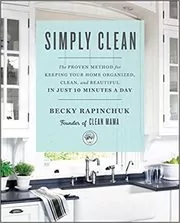
Simply Clean
The Proven Method for Keeping Your Home Organized, Clean, and Beautiful in Just 10 Minutes a Day
For readers whose main difficulty is maintaining cleaning routines after tidying. Its small daily tasks distinguish it from books about choosing possessions, though it offers less help with designing storage or handling emotional attachment to belongings.
What it's about
Becky Rapinchuk presents a flexible cleaning routine built around small daily tasks. A seven-day kick start and twenty-eight-day challenge help readers establish habits, while catch-up time accommodates interruptions and supports maintaining a cleaner, more organized home.

The Complete Book of Home Organization
For visual readers who want storage ideas across the whole house. Its range of spaces and structured challenge provide more practical detail than a decluttering philosophy, though a polished setup still needs adaptation to your budget and routines.
What it's about
Toni Hammersley offers storage solutions, cleaning advice, and organizing strategies for thirty areas of the home. A fifteen-week challenge provides a structure for tackling clutter, while smaller-space solutions and practical shortcuts help readers manage belongings and maintain order.

For visual readers who want attractive, clearly categorized storage. Shearer and Teplin combine practical sorting with design inspiration, though matching the polished photographs may require more space, containers, and upkeep than your household needs.
What it's about
Clea Shearer and Joanna Teplin present a room-by-room approach to decluttering and organizing the home. Photographs and practical guidance combine storage systems with attention to visual design, helping readers create orderly spaces that reflect how they live.

For readers whose clutter is partly an overcrowded schedule or too many competing priorities. McKeown helps clarify what deserves attention, though the book focuses on commitments and decisions rather than showing how to organize cupboards or rooms.
What it's about
Greg McKeown argues for deliberately identifying what matters most and eliminating commitments that distract from it. Using examples and practical methods, he explores prioritization, trade-offs, boundaries, and creating routines that support a smaller number of meaningful pursuits.
Also recommended by
7 people Noah Kagan recommended this book
Noah Kagan
Noah Kagan recommended this book in the "Tools of Titans" book.
Noah Kagan's recommendation of this book  Kevin Rose recommended this book
Kevin Rose
"Really resonated with me, and I will certainly incorporate many of these principles into my work and personal life." - Kevin Rose
Kevin Rose's recommendation of this book  Reid Hoffman recommended this book
Reid Hoffman
"Offers concise and eloquent advice on how to determine what you care about most, and how to apply your energies in ways that ultimately bring you the greatest rewards." - Reid Hoffman
Reid Hoffman's recommendation of this book  Austen Allred recommended this book
Austen Allred
Austen Allred recommended this book on his website.
Austen Allred's recommendation of this book  Steve Harvey recommended this book
Steve Harvey
"This book changed my life." - Steve Harvey
Steve Harvey's recommendation of this book  Jodie Cook recommended this book
Jodie Cook
"Do less but do it better. Wise words with application across life and business." - Jodie Cook
Jodie Cook's recommendation of this book +1
More recommendations
- Michael Hyatt
Michael Hyatt recommended this book on his website.
- Michael Hyatt

For creative people who want to reduce physical and digital distractions without pursuing perfection. Wolf connects organization with making room for priorities, though readers seeking an extensive gallery of storage layouts may prefer a more visual home guide.
What it's about
Fay Wolf connects decluttering with making room for creative work and personal priorities. Advice covers physical possessions, paperwork, digital clutter, and productivity habits, encouraging manageable daily action and acceptance of imperfection as readers simplify their spaces and routines.

For readers who want fewer possessions as well as a tidier home. Jay connects room-by-room choices with a broader minimalist outlook, though readers mainly seeking storage solutions may find the emphasis on reducing belongings more demanding than necessary.
What it's about
Francine Jay introduces minimalist living through the ten-step STREAMLINE method and room-by-room decluttering guidance. She also considers simplifying commitments and reclaiming time, connecting decisions about possessions with a broader approach to everyday life and consumption.
Sources
- 1
My Favorite Organizing Books
thecrazycraftlady.com
- 2
100 Best Organization Books of All Time
shortform.com
- 3
Recommended Reading
napomichigan.com
- 4
3 brilliant decluttering books that home organizing pros swear by
homesandgardens.com
- 5
Recommend me some of your favorite decluttering/cleaning/organizing books!
reddit.com
- 6
Best Organization Books (Minimalism and Decluttering Books)
developgoodhabits.com
- 7
9 Best Organization Books to Help Tidy Up Your Life
celadonbooks.com
- 8
Organizing Books
goodreads.com
- 9
Book suggestions?
reddit.com
- 10
Books that address decluttering and organizing at the same time?
reddit.com
- 11
7 Books to Help You Declutter & Organize Your Home
moving.com


Edited by
Software engineer whose passion for tracking book recommendations from podcasts inspired the creation of MRB.
Lead investor at 3one4 Capital whose startup expertise and love for books helped shape MRB and its growth.
Comments
Spotted a missing book, a wrong order or a mistake? Tell us and we'll fix this page.
We're a reading guide, not the author or publisher, so we can't send books or pass on messages.