
13 Best Habit Books
The best habit books, ranked by how many expert sources recommend each one, with notes on practical routines, behavior research, and the best place to start.
Our take
A habit book can help you understand an automatic response, make a useful action easier to repeat, or change the environment that keeps pulling you toward an unwanted routine. The books here range from practical systems and small daily exercises to research, personal experiments, and broader accounts of motivation and effectiveness.
Atomic Habits offers a clear starting framework, while Tiny Habits concentrates on actions small enough to fit into an existing routine. The Power of Habit uses reporting to explain recurring behavior, and Good Habits, Bad Habits gives more attention to the research on context and repetition. Books such as Mindset and Drive address related obstacles rather than supplying complete habit systems. Older scientific accounts also deserve a critical reading as evidence develops. Start with Clear for an overview or Fogg if beginning feels difficult, then test one manageable change before adding another method.
13 books · 8 sources · Last updated
As an Amazon Associate, we earn from qualifying purchases (at no extra cost to you).
How to choose from this list
Skip to the full rankingIf you want a practical starting system: Atomic Habits
If starting feels too difficult: Tiny Habits → Mini Habits
If you want to understand the research: The Power of Habit → Good Habits, Bad Habits
If standard strategies don't fit you: Better Than Before
If distractions crowd out your priorities: Make Time
If setbacks make you stop practicing: Mindset
The 13 books, ranked
Ranked by how many expert sources name each book. Ties go to the book more people recommend.

For readers who want a clear system they can apply to everyday routines. Its focus on cues and environment makes change concrete, though the streamlined framework simplifies research and overlaps with other habit guides.
What it's about
James Clear explores why habits persist and how everyday systems influence behavior. He draws on behavioral research and illustrative stories to offer practical methods for establishing constructive routines, reducing unwanted habits, and making gradual improvements more sustainable.
Also recommended by
8 people Tim Urban recommended this book
Tim Urban
"I'd attribute about 60% of my good habits to [the author's] blog and this book is rapidly filling in the other 40%." - Tim Urban
Tim Urban's recommendation of this book  Vinod Khosla recommended this book
Vinod Khosla
"A decent book on self-help tools, not a category I am generally a fan of." - Vinod Khosla
Vinod Khosla's recommendation of this book  Biz Stone recommended this book
Biz Stone
"Great book." - Biz Stone
Biz Stone's recommendation of this book  Anthony Pompliano recommended this book
Anthony Pompliano
"Highly recommend." - Anthony Pompliano
Anthony Pompliano's recommendation of this book  Jodie Cook recommended this book
Jodie Cook
"I love the simplicity of this book." - Jodie Cook
Jodie Cook's recommendation of this book  Blake Randall recommended this book
Blake Randall
"" - Blake Randall
Blake Randall's recommendation of this book +2
More recommendations
- Ali Abdaal
"Helped me understand how habits are formed and what we can do." - Ali Abdaal
- Ben Greenfield
Most Recommended Books reached out to Ben Greenfield directly.
- Ali Abdaal

For readers who want to understand habitual behavior before choosing a system. Its reporting connects personal routines with organizations and social patterns, though the stories take more space than direct instructions for changing one habit.
What it's about
Charles Duhigg examines how habits form and change through scientific research and stories about individuals, companies, and social movements. He explains how recurring patterns influence behavior and how identifying them can help people reshape routines and organizations improve their practices.
Also recommended by
9 people Ray Dalio recommended this book
Ray Dalio
"Fantastic. I got [this book] and I gave it to everyone in my company." - Ray Dalio
Ray Dalio's recommendation of this book  Scott Adams recommended this book
Scott Adams
One of the books on Scott Adams' "Persuasion Reading List."
Scott Adams's recommendation of this book  Tim Ferriss recommended this book
Tim Ferriss
"A very good book." - Tim Ferriss
Tim Ferriss's recommendation of this book  Naval Ravikant recommended this book
Naval Ravikant
"Interesting, not because of its content necessarily, but because it’s good for me to always keep on top of mind how powerful my habits are." - Naval Ravikant
Naval Ravikant's recommendation of this book  Kelly Starrett recommended this book
Kelly Starrett
Kelly Starrett recommended this book in the "Tools of Titans" book.
Kelly Starrett's recommendation of this book  Mr. Money Mustache recommended this book
Mr. Money Mustache
Mr. Money Mustache recommended this book on his blog.
Mr. Money Mustache's recommendation of this book +3
More recommendations
- Max Levchin
"Compiles a bunch of great academic neuroscience and applied psychology research on habit formation." - Max Levchin
- Danny Miranda
"Great writing, interesting stories, and incredible insights on how to control your habits." - Danny Miranda
- Patrick Bet-David
Patrick Bet-David recommended this book on his website.
- Max Levchin

For readers who want daily behavior grounded in priorities and relationships. Its broad principles offer more direction than a habit tracker, though this is a personal-effectiveness framework rather than a detailed account of automatic behavior.
What it's about
Stephen Covey presents seven habits for personal effectiveness, connecting individual responsibility with cooperation and continual renewal. His framework emphasizes principles such as integrity, fairness, and service in approaching relationships, decisions, and goals at work and home.
Also recommended by
12 people Dave Ramsey recommended this book
Dave Ramsey
Recommended on Dave Ramsey's website.
Dave Ramsey's recommendation of this book  Daniel Pink recommended this book
Daniel Pink
Daniel Pink mentioned this book on "The Tim Ferriss Show" podcast.
Daniel Pink's recommendation of this book  Ken Block recommended this book
Ken Block
"[Also] helped me really be successful." - Ken Block
Ken Block's recommendation of this book  Dustin Moskovitz recommended this book
Dustin Moskovitz
"[I] was surprised at how familiar the topics felt." - Dustin Moskovitz
Dustin Moskovitz's recommendation of this book  Noah Kagan recommended this book
Noah Kagan
"Begin with the end in mind." - Noah Kagan
Noah Kagan's recommendation of this book  Kishore Biyani recommended this book
Kishore Biyani
"Immensely helpful and influential during my early years, it explained some of the basic mindsets required to succeed in any profession." - Kishore Biyani
Kishore Biyani's recommendation of this book +6
More recommendations
- Michael McCullough
"Helps you decide which action to actually take." - Michael McCullough
- Shay Carl
Shay Carl referenced this book on "The Tim Ferriss Show" podcast.
- Jenn Im
"Has changed my life in such a positive way." - Jenn Im
- Jim Kwik
"This personal development classic is a classic for a reason." - Jim Kwik
- Michael Hyatt
Michael Hyatt recommended this book on his website.
- Ben Greenfield
Most Recommended Books reached out to Ben Greenfield directly.
- Michael McCullough

For readers who abandon practice when progress feels like a judgment of ability. Its focus on responses to setbacks complements habit methods, though it offers less detailed guidance on prompts, routines, and repetition.
What it's about
Carol Dweck explores how beliefs about ability influence learning, achievement, and responses to setbacks. Contrasting fixed and growth mindsets, she considers their implications for parenting, education, work, sports, and personal development.
Also recommended by
10 people Bill Gates recommended this book
Bill Gates
"Dweck and her research have helped my foundation colleagues and me understand more about the attitudes and habits that allow some students to persevere in school despite big challenges." - Bill Gates
Bill Gates's recommendation of this book  Tobi Lütke recommended this book
Tobi Lütke
Mentioned on "The Knowledge Project" podcast.
Tobi Lütke's recommendation of this book  Satya Nadella recommended this book
Satya Nadella
"Whatever change we’ve been able to achieve is because the cultural meme we picked was inspired by [this book]." - Satya Nadella
Satya Nadella's recommendation of this book  Tony Robbins recommended this book
Tony Robbins
Tony Robbins mentioned this book on "The Tim Ferriss Show" podcast.
Tony Robbins's recommendation of this book  Josh Waitzkin recommended this book
Josh Waitzkin
Josh Waitzkin recommended this book in the "Tools of Titans" book.
Josh Waitzkin's recommendation of this book  Ev Williams recommended this book
Ev Williams
"One of those ideas that is obvious only once you know it." - Ev Williams
Ev Williams's recommendation of this book +4
More recommendations
- Dustin Moskovitz
Dustin Moskovitz recommended this book on Twitter.
- Kathryn Minshew
"Read this book & love the idea!" - Kathryn Minshew
- Tom Bilyeu
Tom Bilyeu recommended this book on his website.
- Mark Manson
Mark Manson recommended this book on his website.
- Dustin Moskovitz

For readers whose plans collapse when an action feels too demanding. Its tiny actions, prompts, and celebration provide a practical design method, though readers seeking a broad scientific survey may prefer Good Habits, Bad Habits.
What it's about
BJ Fogg presents a method for changing behavior by starting with actions small enough to repeat easily. He explains how prompts, existing routines, and immediate celebration can support new habits, using examples and exercises to develop the approach.
Also recommended by
1 person Arianna Huffington recommended this book
Arianna Huffington
"At a time when there's a 'painful gap between what people want and what they actually do,' it's a blueprint for changing our approach." - Arianna Huffington
Arianna Huffington's recommendation of this book

For readers who find that standard habit advice does not suit their personality. Its range of strategies encourages useful self-observation, though the personal framework is less focused on experimental evidence than Wendy Wood’s account.
What it's about
Gretchen Rubin explores why different people need different approaches to forming and breaking habits. Research and personal experiments inform a practical framework for understanding one's own patterns and choosing strategies suited to everyday goals and temptations.
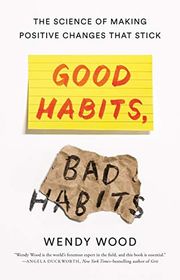
For readers who want a researcher’s account of why repetition and context matter. Its emphasis on the environment deepens the practical systems here, though it is less condensed into a checklist than Atomic Habits.
What it's about
Psychologist Wendy Wood examines how habits form, persist, and change. Drawing on research and everyday examples, she explains the influence of repeated actions, stable contexts, and rewards, showing why good intentions alone often fail to reshape behavior.

For readers who struggle to begin when motivation is low. Its deliberately small daily minimum makes getting started manageable, though the narrow premise provides less guidance on complex routines than the broader systems here.
What it's about
Stephen Guise proposes building habits through daily actions small enough to feel manageable even when motivation is low. He explains the reasoning behind mini habits and presents them as a strategy for making behavioral change more consistent.

Rewire
Change Your Brain to Break Bad Habits, Overcome Addictions, Conquer Self-Destructive Behavior
For readers who want reflective exercises for recurring self-defeating patterns. Its attention to automatic reactions extends beyond simple routines, though the psychological scope makes it less direct than a guide to one everyday habit.
What it's about
Richard O'Connor examines how automatic patterns can undermine deliberate intentions and sustain destructive habits. Exercises develop mindfulness, self-control, and responses to fear, with attention to problems such as procrastination, excessive worry, and overeating.

For readers interested in the history of research on self-control. Its examples make the subject accessible, though the central claim that willpower behaves like a depleted resource has faced substantial challenges in later research.
What it's about
Roy Baumeister and John Tierney examine self-control through psychological research and personal stories. They develop the idea that willpower can be strengthened and depleted, applying their account to habits, decisions, and the practical challenges of pursuing long-term goals.

For managers and workers who want to understand what makes effort feel worthwhile. Its emphasis on autonomy and purpose helps with engagement, though motivation is a broader question than making a specific action automatic.
What it's about
Daniel Pink examines motivation beyond rewards and punishments. Drawing on research, he argues that autonomy, mastery, and purpose can support lasting engagement, and considers how organizations can create conditions that encourage those internal drives.
Also recommended by
4 people- Tobi Lütke recommended this book
Tobi Lütke
One of Tobi Lütke's favorite books according to "The Globe and Mail."
Tobi Lütke's recommendation of this book  David Heinemeier Hansson recommended this book
David Heinemeier Hansson
"Takes some of those same ideas about motivations and rewards and extrapolates them in a little bit." - DHH
David Heinemeier Hansson's recommendation of this book  Danny Miranda recommended this book
Danny Miranda
"A highly practical guide to mastering your own psychology." - Danny Miranda
Danny Miranda's recommendation of this book  Michael Hyatt recommended this book
Michael Hyatt
Michael Hyatt recommended this book on his website.
Michael Hyatt's recommendation of this book

For readers who prefer a coaching approach to improving work and personal effectiveness. Its exercises connect routines with performance goals, though the energetic success-oriented tone differs from the quieter behavior-design methods elsewhere here.
What it's about
Brendon Burchard presents six habits associated with sustained high performance: clarity, energy, necessity, productivity, influence, and courage. He explains how readers can develop these practices through exercises aimed at improving work, relationships, and personal effectiveness.
Also recommended by
1 person Jim Kwik recommended this book
Jim Kwik
"[This author] is coach to some of the highest-archieving people on the planet." - Jim Kwik
Jim Kwik's recommendation of this book
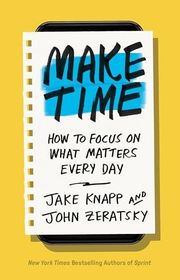
Make Time: How to Focus on What Matters Every Day
For readers whose main obstacle is a day crowded with distractions. Its flexible experiments help make room for a chosen priority, though it focuses on attention and daily design rather than the full science of habit.
What it's about
Jake Knapp and John Zeratsky present a daily framework for choosing a highlight, protecting attention, maintaining energy and reviewing results. Their collection of practical tactics helps readers adjust routines and make room for personally meaningful activities.
Sources
- 1
9 Best Habits Books to Read
teambuilding.com
- 2
14 Books About Building Better Habits That Will Change Your Life
lifehack.org
- 3
Habits Books
goodreads.com
- 4
whats the best book on habits that isnt atomic habits?
reddit.com
- 5
The habit books that actually changed how I build routines
reddit.com
- 6
Best Books on Habits: 31 Picks Recommended by CEOs
theceolibrary.com
- 7
12 Best Books on Goals and Habits, and the One Idea to Take From Each
goalgo.app
- 8
The Best Books on Character Development
fivebooks.com


Edited by
Software engineer whose passion for tracking book recommendations from podcasts inspired the creation of MRB.
Lead investor at 3one4 Capital whose startup expertise and love for books helped shape MRB and its growth.
Comments
Spotted a missing book, a wrong order or a mistake? Tell us and we'll fix this page.
We're a reading guide, not the author or publisher, so we can't send books or pass on messages.