
27 Best Self Improvement Books
The best self-improvement books, ranked by how many expert sources recommend each one, with notes for readers choosing habits, focus, reflection, or motivation.
Our take
Self-improvement books address different questions: how to organize commitments, build a routine, relate to others, or think about a meaningful life. A practical system can help with a repeated task, while memoir, psychology, or spiritual writing may be more useful for reflection. The best starting point depends on the problem you want to understand and the kind of guidance you find convincing.
Atomic Habits concentrates on everyday behavior, while Getting Things Done provides a system for handling commitments. Essentialism asks which commitments deserve attention in the first place, and Deep Work focuses on protecting concentration. For relationships, How To Win Friends and Influence People offers practical principles, while Daring Greatly examines vulnerability and connection. Man’s Search for Meaning takes a different path through testimony and reflection. Choose one book that addresses a specific difficulty, then allow time to consider or apply its ideas before moving to another approach.
27 books · 8 sources · Last updated
As an Amazon Associate, we earn from qualifying purchases (at no extra cost to you).
How to choose from this list
Skip to the full rankingIf you want to build routines: Atomic Habits
If commitments feel disorganized: Getting Things Done
If you need fewer priorities and more focus: Essentialism → Deep Work
If you want to understand relationships: How To Win Friends and Influence People → Daring Greatly
If you want to reflect on meaning: Man’s Search for Meaning
If you want to examine learning and judgment: Mindset → Thinking, Fast and Slow
The 27 books, ranked
Ranked by how many expert sources name each book. Ties go to the book more people recommend.

Man's Search for Meaning
For readers who want reflection on meaning rather than a routine-building manual. Its combination of personal testimony and psychological ideas gives it unusual weight, though the concentration-camp account is harrowing and cannot be reduced to motivational advice.
What it's about
Viktor Frankl combines his account of imprisonment in Nazi concentration camps with an introduction to logotherapy. He explores the search for meaning, arguing that purpose and one's response to suffering can remain significant even under extreme circumstances.
Also recommended by
36 people Jordan Peterson recommended this book
Jordan Peterson
Recommended on Jordan Peterson's website.
Jordan Peterson's recommendation of this book  Jocko Willink recommended this book
Jocko Willink
Jocko Willink covered this book in "Jocko Podcast" Ep. 78
Jocko Willink's recommendation of this book  Esther Perel recommended this book
Esther Perel
"The book I’ve probably gifted the most is [this book], since I’m 16." - Esther Perel
Esther Perel's recommendation of this book  Emma Watson recommended this book
Emma Watson
"Loved it. Really loved it." - Emma Watson
Emma Watson's recommendation of this book  Naval Ravikant recommended this book
Naval Ravikant
"Wow it's dark." - Naval Ravikant
Naval Ravikant's recommendation of this book  David Blaine recommended this book
David Blaine
"One of my favorite books." - David Blaine
David Blaine's recommendation of this book +30
More recommendations
- Terry Crews
"Incredible." - Terry Crews
- Jimmy Fallon
"Talks about the meaning of life, and I believe you come out a better person from reading it." - Jimmy Fallon
- Tony Robbins
"Taught me that if you change the meaning, you change everything." - Tony Robbins
- Simon Sinek
"Single most important book you can read." - Simon Sinek
- Michael Gervais
"Outlines methods to discover deep meaning and purpose in life." - Michael Gervais
- Daniel Pink
"A hugely important book for me." - Daniel Pink
- Ev Williams
On the "books read" section of Ev Williams' GoodReads profile.
- Bryan Johnson
"His basic point is no matter the conditions we surround ourselves in, we can author our life." - Bryan Johnson
- Dustin Moskovitz
Dustin Moskovitz recommended this book on Twitter.
- Sam Altman
This book was on Sam Altman's bookshelf.
- Chelsea Handler
"One of those beautiful accounts of a terrible time in our history. His calm and sagaciousness, while witnessing one horror after another played out during his time in three separate concentration camps, is awe inspiring." - Chelsea Handler
- Ryan Holiday
"Looks at how we find purpose by dedicating ourselves to a cause, learning to love and finding a meaning to our suffering." - Ryan Holiday
- Maria Popova
"A meditation on what the gruesome experience of Auschwitz taught [the author] about the primary purpose of life: the quest for meaning, which sustained those who survived." - Maria Popova
- Aniela Gregorek
"A book I have gifted to many people because it changed the way I think about human suffering and grace in life." - Aniela Gregorek
- Fedor Holz
"[From it] I interpreted that we cannot avoid suffering, but we can choose how to cope with it, and that having meaning in our life is essential." - Fedor Holz
- Turia Pitt
"[If people are] doing a bit of soul searching, hands down [I give them this book]." - Turia Pitt
- Chip Conley
"If I were to take the meaning of [this book], and turn it into an equation, it would be despair equals suffering minus meaning." - Chip Conley
- Dave Elitch
Dave Elitch mentioned this book on "The Tim Ferriss Show" podcast.
- PewDiePie
"A great tool to help people. [...] In case something really bad happens, I feel like, from reading this book, I'm better equipped to handle it." - PewDiePie
- Shane Parrish
"As hard as you think your life is, it pales in comparison to Auschwitz." - Shane Parrish
- Phil Jackson
"An important book for me." - Phil Jackson
- Tom Bilyeu
Tom Bilyeu recommended this book on his website.
- Lex Fridman
"I reread [this book] quite often." - Lex Fridman
- Mark Manson
Mark Manson recommended this book on his website.
- Alastair Humphreys
"Slim but packed with wisdom that I often come back to. I really recommend you read it." - Alastair Humphreys
- Steve Kerr
"Incredibly inspiring." - Steve Kerr
- Robin Black
"One of the great books ever written exists because of one of the worst times in human history. From suffering comes beauty." - Robin Black
- Jim Kwik
"Illustrates that it’s not our circumstances but the decisions we make that diminish or develop us." - Jim Kwik
- Michael Hyatt
Michael Hyatt recommended this book on his website.
- Patrick Bet-David
Patrick Bet-David recommended this book on his website.
- Terry Crews

For readers who want practical changes to the conditions surrounding a habit. Its clear framework makes small experiments easy to plan, though familiar ideas recur and the examples cannot remove the wider constraints shaping someone’s behavior.
What it's about
James Clear explores why habits persist and how everyday systems influence behavior. He draws on behavioral research and illustrative stories to offer practical methods for establishing constructive routines, reducing unwanted habits, and making gradual improvements more sustainable.
Also recommended by
8 people Tim Urban recommended this book
Tim Urban
"I'd attribute about 60% of my good habits to [the author's] blog and this book is rapidly filling in the other 40%." - Tim Urban
Tim Urban's recommendation of this book  Vinod Khosla recommended this book
Vinod Khosla
"A decent book on self-help tools, not a category I am generally a fan of." - Vinod Khosla
Vinod Khosla's recommendation of this book  Biz Stone recommended this book
Biz Stone
"Great book." - Biz Stone
Biz Stone's recommendation of this book  Anthony Pompliano recommended this book
Anthony Pompliano
"Highly recommend." - Anthony Pompliano
Anthony Pompliano's recommendation of this book  Jodie Cook recommended this book
Jodie Cook
"I love the simplicity of this book." - Jodie Cook
Jodie Cook's recommendation of this book  Blake Randall recommended this book
Blake Randall
"" - Blake Randall
Blake Randall's recommendation of this book +2
More recommendations
- Ali Abdaal
"Helped me understand how habits are formed and what we can do." - Ali Abdaal
- Ben Greenfield
Most Recommended Books reached out to Ben Greenfield directly.
- Ali Abdaal

For readers whose important work requires sustained concentration. Its practical rules connect attention with the design of a working day, though the examples assume more control over schedules and communication than many roles allow.
What it's about
Newport makes the case that focused, distraction-free work is a rare and valuable skill. He explains why shallow busyness takes over and offers rules for building routines that protect serious thinking.
Also recommended by
1 person Tai Lopez recommended this book
Tai Lopez
"Great book on how to focus the mind. Read this if you need to be more productive." - Tai Lopez
Tai Lopez's recommendation of this book

For readers who want to question conventional assumptions about work, time, and location. Its experiments encourage a different view of working life, though the business examples and outsourcing model are dated and difficult to apply in many jobs.
What it's about
Tim Ferriss presents an approach to reorganizing work around greater freedom of time and location. The guide explores reducing unnecessary tasks, outsourcing, automating income, and planning shorter periods away from work rather than postponing enjoyment until retirement.
Also recommended by
26 people Eric Weinstein recommended this book
Eric Weinstein
Eric Weinstein tweet about books that mattered enough to him.
Eric Weinstein's recommendation of this book  Tristan Harris recommended this book
Tristan Harris
Tristan Harris mentioned this book on "The Tim Ferriss Show" podcast.
Tristan Harris's recommendation of this book  Charles Poliquin recommended this book
Charles Poliquin
Charles Poliquin recommended this book in the "Tools of Titans" book.
Charles Poliquin's recommendation of this book  Walter Isaacson recommended this book
Walter Isaacson
"[The author has] a great curiosity and [...] a great love for things." - Walter Isaacson
Walter Isaacson's recommendation of this book  Daniel Pink recommended this book
Daniel Pink
Daniel Pink mentioned this book on "The Tim Ferriss Show" podcast.
Daniel Pink's recommendation of this book  Blake Mycoskie recommended this book
Blake Mycoskie
"I read [this book] right when I started Toms. There’s so many things that I took from [it] that allowed Toms to have this incredible growth." - Blake Mycoskie
Blake Mycoskie's recommendation of this book +20
More recommendations
- David Heinemeier Hansson
"My key takeaway from [this book] was the concept of lifestyle design." - DHH
- Marc Andreessen
"[The author] basically takes all of the time management and personal productivity theories of the last 20 to 30 years and pushes them to 11, to paraphrase 'Spinal Tap.'" - Marc Andreessen
- Jason Silva
"I was very affected by [this book]. I was like this guy has it figured out." - Jason Silva
- Mike Shinoda
"I do talk about [this book] quite a bit." - Mike Shinoda
- Mark Bell
"Taught me better ways to manage my time and the value of not making myself too busy." - Mark Bell
- Maurice Ashley
"Made me ditch the average life in search of one with complete flexibility and freedom to live life on my terms." - Maurice Ashley
- Tim Draper
"With this kind of time management and focus on the important things in life, people should be able to get 15 times as much done in a normal work week." - Tim Draper
- Derek Sivers
"Brilliant reversal of all of the 'how to manage all your crap' books." - Derek Sivers
- Rolf Potts
"Challenges the reader to seriously consider an essential–yet rarely asked–question: What do you really want from life?" - Rolf Potts
- A.J. Jacobs
A.J. Jacobs mentioned this book on "The Tim Ferriss Show" podcast.
- Caterina Fake
Caterina Fake mentioned this book on "The Tim Ferriss Show" podcast.
- Ev Williams
On the "books read" section of Ev Williams' GoodReads profile.
- Gary Keller
"This is a significant book." - Gary Keller
- Laura R Walker
"For those who struggle with productivity and taking control of their lives, [I give this book], of course!" - Laura R Walker
- Marc Goodman
One of Marc Goodman's most-gifted or recommended books.
- Mike Maples, Jr.
"If you want to live life on your own terms, this is your blueprint." - Mike Maples, Jr.
- Lewis Howes
"I've only probably read 4 books cover to cover. [This is one of them.]" - Lewis Howes
- Jodie Cook
"Life and work are reimagined and built back from scratch, in a way optimised for freedom and enjoyment." - Jodie Cook
- Brian Dean
"This book created thousands of entrepreneurs over the last 15 years… including me." - Brian Dean
- Michael Hyatt
Michael Hyatt recommended this book on his website.
- David Heinemeier Hansson

Thinking, Fast and Slow
For readers who want to question their judgments before trying to optimize their habits. Its detailed examples reveal patterns in decision-making, though the length and analytical demands make it less immediately practical than an exercise-based guide.
What it's about
Kahneman explores two modes of thought: quick, intuitive responses and slower, deliberate reasoning. Drawing on psychological research, he examines how biases and impressions shape decisions, and when intuition helps or misleads in personal and professional life.
Also recommended by
19 people Bill Gates recommended this book
Bill Gates
List of books Bill Gates read in 2012.
Bill Gates's recommendation of this book  Ray Dalio recommended this book
Ray Dalio
Ray Dalio mentioned this book in his book, "Principles."
Ray Dalio's recommendation of this book  Scott Adams recommended this book
Scott Adams
One of the books on Scott Adams' "Persuasion Reading List."
Scott Adams's recommendation of this book - Naval Ravikant recommended this book
Naval Ravikant
"Fine book but it didn’t need to be an entire book. A blog post would have gotten the point across." - Naval Ravikant
Naval Ravikant's recommendation of this book  Ev Williams recommended this book
Ev Williams
"I love surprising scientific findings, as well as information about how our brains work. [This book] is a treasure trove of both." - Ev Williams
Ev Williams's recommendation of this book  Marc Andreessen recommended this book
Marc Andreessen
"Captivating dive into human decision making, marred by inclusion of several/many? psychology studies that fail to replicate. Will stand as a cautionary tale?" - Marc Andreessen
Marc Andreessen's recommendation of this book +13
More recommendations
- Stewart Brand
Stewart Brand recommended this book on his "Selected Books for the Manual for Civilization" blog post.
- Bryan Johnson
"I started reading [this book] and I became increasingly convinced of my own fickleness and inability to actually act rationally in life." - Bryan Johnson
- Derek Sivers
"If you liked 'Predictably Irrational' or 'Stumbling on Happiness' or any of those pop-psychology books, well, this is the Godfather of all of their work." - Derek Sivers
- Sam Altman
One of Sam Altman's answers to "What are some of the best books you recommend for a young startup founder?"
- Ron Conway
"Covers all three phases of [the author's] career: his early days working oncognitive bias, his work on prospect theory, and his later work on happiness." - Ron Conway
- Jason Fried
"I enjoyed [this book]. Fascinating." - Jason Fried
- Nassim Taleb
"A landmark book in social thought, in the same league as The Wealth of Nations by Adam Smith and The Interpretation of Dreams by Sigmund Freud." - Nassim Taleb
- Sahil Lavingia
Sahil Lavingia recommended this book on Notion.
- Mark Manson
Mark Manson recommended this book on his website.
- Jay Shetty
"[One] of my favourite books." - Jay Shetty
- Michiko Kakutani
"Has become essential reading in many baseball front offices and among coaching staffs." - Michiko Kakutani
- Preston Pysh
"An incredible book!" - Preston Pysh
- Ben Greenfield
Most Recommended Books reached out to Ben Greenfield directly.
- Stewart Brand

How To Win Friends and Influence People
For readers who want concrete ways to listen, cooperate, and handle everyday interactions. Its memorable principles are easy to revisit, though the older anecdotes and emphasis on influence need to be balanced with sincerity and mutual respect.
What it's about
Carnegie presents practical guidance for building relationships, communicating effectively, and influencing others. Stories and principles explore social confidence, leadership, and cooperation, offering approaches readers can apply to interactions in their personal lives and at work.
Also recommended by
18 people Warren Buffett recommended this book
Warren Buffett
"In my office, you will not see the degree I have from the University of Nebraska, or the master’s degree I have from Columbia University, but you’ll see the certificate I got from the Dale Carnegie course." - Warren Buffett
Warren Buffett's recommendation of this book - Scott Adams recommended this book
Scott Adams
One of the books on Scott Adams' "Persuasion Reading List."
Scott Adams's recommendation of this book  Dave Ramsey recommended this book
Dave Ramsey
Recommended on Dave Ramsey's website.
Dave Ramsey's recommendation of this book  Paul Graham recommended this book
Paul Graham
"The one book we encourage startup founders to read. [...] It's critically important for anyone in business." - Paul Graham
Paul Graham's recommendation of this book  Derek Sivers recommended this book
Derek Sivers
Derek Sivers mentioned this book on "The Tim Ferriss Show" podcast.
Derek Sivers's recommendation of this book  Dustin Moskovitz recommended this book
Dustin Moskovitz
"Seek to be understood." - Dustin Moskovitz
Dustin Moskovitz's recommendation of this book +12
More recommendations
- Ken Block
"One of the first books that really helped me achieve my management style and what’s helped me really be successful." - Ken Block
- DJ Vlad
Most Recommended Books reached out to DJ Vlad directly.
- Strauss Zelnick
"Archaic references and overweening title to the side, it’s actually a great guide to leadership and salesmanship." - Strauss Zelnick
- Daymond John
"I love all the Dale Carnegie books." - Daymond John
- Shay Carl
"A staple that I have listened to three or four times." - Shay Carl
- Tim Draper
"[One of the books] that are recommended or required at Draper University." - Tim Draper
- Sahil Lavingia
Sahil Lavingia recommended this book on Notion.
- Barbara Corcoran
"A must read for anyone in business." - Barbara Corcoran
- Alex Hormozi
Alex Hormozi recommended this book on Instagram.
- Michael Hyatt
Michael Hyatt recommended this book on his website.
- Ben Greenfield
Most Recommended Books reached out to Ben Greenfield directly.
- Patrick Bet-David
Patrick Bet-David recommended this book on his website.
- Ken Block

For readers who want a broad framework connecting responsibility, priorities, and relationships. Its principles can organize reflection across several areas of life, though the formal style and extensive examples ask for more patience than a short practical handbook.
What it's about
Stephen Covey presents seven habits for personal effectiveness, connecting individual responsibility with cooperation and continual renewal. His framework emphasizes principles such as integrity, fairness, and service in approaching relationships, decisions, and goals at work and home.
Also recommended by
12 people- Dave Ramsey recommended this book
Dave Ramsey
Recommended on Dave Ramsey's website.
Dave Ramsey's recommendation of this book - Daniel Pink recommended this book
Daniel Pink
Daniel Pink mentioned this book on "The Tim Ferriss Show" podcast.
Daniel Pink's recommendation of this book  Ken Block recommended this book
Ken Block
"[Also] helped me really be successful." - Ken Block
Ken Block's recommendation of this book - Dustin Moskovitz recommended this book
Dustin Moskovitz
"[I] was surprised at how familiar the topics felt." - Dustin Moskovitz
Dustin Moskovitz's recommendation of this book  Noah Kagan recommended this book
Noah Kagan
"Begin with the end in mind." - Noah Kagan
Noah Kagan's recommendation of this book  Kishore Biyani recommended this book
Kishore Biyani
"Immensely helpful and influential during my early years, it explained some of the basic mindsets required to succeed in any profession." - Kishore Biyani
Kishore Biyani's recommendation of this book +6
More recommendations
- Michael McCullough
"Helps you decide which action to actually take." - Michael McCullough
- Shay Carl
Shay Carl referenced this book on "The Tim Ferriss Show" podcast.
- Jenn Im
"Has changed my life in such a positive way." - Jenn Im
- Jim Kwik
"This personal development classic is a classic for a reason." - Jim Kwik
- Michael Hyatt
Michael Hyatt recommended this book on his website.
- Ben Greenfield
Most Recommended Books reached out to Ben Greenfield directly.
- Michael McCullough

For readers who feel busy because too many commitments compete for their attention. Its emphasis on selection complements task-management systems, though declining or eliminating obligations is harder when other people control the workload.
What it's about
Greg McKeown argues for deliberately identifying what matters most and eliminating commitments that distract from it. Using examples and practical methods, he explores prioritization, trade-offs, boundaries, and creating routines that support a smaller number of meaningful pursuits.
Also recommended by
7 people- Noah Kagan recommended this book
Noah Kagan
Noah Kagan recommended this book in the "Tools of Titans" book.
Noah Kagan's recommendation of this book  Kevin Rose recommended this book
Kevin Rose
"Really resonated with me, and I will certainly incorporate many of these principles into my work and personal life." - Kevin Rose
Kevin Rose's recommendation of this book  Reid Hoffman recommended this book
Reid Hoffman
"Offers concise and eloquent advice on how to determine what you care about most, and how to apply your energies in ways that ultimately bring you the greatest rewards." - Reid Hoffman
Reid Hoffman's recommendation of this book  Austen Allred recommended this book
Austen Allred
Austen Allred recommended this book on his website.
Austen Allred's recommendation of this book  Steve Harvey recommended this book
Steve Harvey
"This book changed my life." - Steve Harvey
Steve Harvey's recommendation of this book - Jodie Cook recommended this book
Jodie Cook
"Do less but do it better. Wise words with application across life and business." - Jodie Cook
Jodie Cook's recommendation of this book +1
More recommendations
- Michael Hyatt
Michael Hyatt recommended this book on his website.
- Michael Hyatt

Think and Grow Rich
For readers interested in the history of achievement-oriented self-help and its emphasis on purpose and persistence. Its rhetoric can be energizing, though anecdotes and claims about thought should not be treated as a reliable formula for wealth.
What it's about
Napoleon Hill presents a philosophy of achievement centered on definite goals, persistent effort, and directed thought. Using stories of successful business figures, he explores desire, planning, cooperation, and overcoming fear as elements of his approach to wealth.
Also recommended by
7 people Neville Medhora recommended this book
Neville Medhora
"I’d bet money this book has restored countless relationships, made millions of millionaires and saved many lives." - Neville Medhora
Neville Medhora's recommendation of this book  Shay Carl recommended this book
Shay Carl
"Amazing." - Shay Carl
Shay Carl's recommendation of this book  Daymond John recommended this book
Daymond John
"The main takeaway from [this book] was goal-setting. It was the fact that if you don't set a specific goal, then how can you expect to hit it?" - Daymond John
Daymond John's recommendation of this book - Anthony Pompliano recommended this book
Anthony Pompliano
"[One of] the three most impactful books for me." - Anthony Pompliano
Anthony Pompliano's recommendation of this book  Tom Bilyeu recommended this book
Tom Bilyeu
Tom Bilyeu recommended this book on his website.
Tom Bilyeu's recommendation of this book  Jen Sincero recommended this book
Jen Sincero
"Do what he says (and really do all of it) and you will be large and in charge." - Jen Sincero
Jen Sincero's recommendation of this book +1
More recommendations
- Patrick Bet-David
Patrick Bet-David recommended this book on his website.
- Patrick Bet-David

Awaken the Giant Within
How to Take Immediate Control of Your Mental, Emotional, Physical and Financial
For readers who respond to an energetic voice and questions about personal decisions. Its wide scope can prompt reflection across life areas, though the emphatic style and sweeping claims may appeal less to readers seeking restrained, narrowly focused guidance.
What it's about
Tony Robbins presents a program for self-mastery across emotions, relationships, finances, and physical wellbeing. He explores the choices and habits that shape daily life, encouraging readers to clarify their purpose and take responsibility for change.
Also recommended by
5 people- Derek Sivers recommended this book
Derek Sivers
"When I was 18, [this book] changed my life." - Derek Sivers
Derek Sivers's recommendation of this book  Brian Koppelman recommended this book
Brian Koppelman
"This book was the first of [Tony Robbins books] I read, and it asked me crucial questions about the stories I was telling myself that were limiting my growth." - Brian Koppelman
Brian Koppelman's recommendation of this book - Jodie Cook recommended this book
Jodie Cook
"Plenty of actionables to develop a better mindset." - Jodie Cook
Jodie Cook's recommendation of this book  Danny Miranda recommended this book
Danny Miranda
"For anyone who wants to become the greatest version of themselves." - Danny Miranda
Danny Miranda's recommendation of this book  Roberto Blake recommended this book
Roberto Blake
"Helped me ground myself and believe I could make change in my own life." - Roberto Blake
Roberto Blake's recommendation of this book

For readers who want to examine the relationship between vulnerability, shame, and connection. Its emphasis on emotional openness adds depth beyond productivity advice, though the broad examples leave readers to adapt the ideas to their own circumstances.
What it's about
Drawing on years of research, this book reframes vulnerability as courage rather than weakness, exploring how shame and scarcity hold us back and offering practical ways to dare greatly in love, parenting, work, and leadership.
Also recommended by
5 people Matt Mullenweg recommended this book
Matt Mullenweg
"[Be] willing to show your own weaknesses and emotions and be vulnerable. I think [this book] talks about this really well." - Matt Mullenweg
Matt Mullenweg's recommendation of this book  Chase Jarvis recommended this book
Chase Jarvis
Chase Jarvis mentioned this book on "The Tim Ferriss Show" podcast.
Chase Jarvis's recommendation of this book  Melinda Gates recommended this book
Melinda Gates
Melinda Gates recommended this book on Likewise.com.
Melinda Gates's recommendation of this book  Sophia Bush recommended this book
Sophia Bush
"It's an amazing book, and will educate you about expectation, happiness, & vulnerability." - Sophia Bush
Sophia Bush's recommendation of this book - Tom Bilyeu recommended this book
Tom Bilyeu
Tom Bilyeu recommended this book on his website.
Tom Bilyeu's recommendation of this book

The 48 Laws of Power
For readers who want to recognize strategic behavior and competition for influence. Its historical stories make the ideas memorable, though its cynical framing can encourage mistrust and should not be mistaken for a complete guide to healthy relationships.
What it's about
A compact guide to power dynamics, built around 48 memorable principles and historical examples. It shows how influence is gained, lost, and defended, while warning that every tactic can backfire when used carelessly.
Also recommended by
7 people Aubrey Marcus recommended this book
Aubrey Marcus
"I cannot express how immensely valuable this book is, when absorbed into an open mind." - Aubrey Marcus
Aubrey Marcus's recommendation of this book  DJ Vlad recommended this book
DJ Vlad
Most Recommended Books reached out to DJ Vlad directly.
DJ Vlad's recommendation of this book  Ryan Holiday recommended this book
Ryan Holiday
"Critical for anyone trying to accomplish anything." - Ryan Holiday
Ryan Holiday's recommendation of this book  Alice Little recommended this book
Alice Little
"I think that [this book is] a great tool to get into the hands of women and get that positive thinking going." - Alice Little
Alice Little's recommendation of this book  Neil Strauss recommended this book
Neil Strauss
"Heavily researched and distilled handbook." - Neil Strauss
Neil Strauss's recommendation of this book - Rollo Tomassi recommended this book
Rollo Tomassi
"His best book." - Rollo Tomassi
Rollo Tomassi's recommendation of this book +1
More recommendations
- Patrick Bet-David
Patrick Bet-David recommended this book on his website.
- Patrick Bet-David

For readers overwhelmed by commitments they are trying to keep in their heads. Its capture-and-review system provides a concrete workflow, though maintaining that system takes effort and does not decide which goals deserve your time.
What it's about
David Allen presents a system for managing personal and professional commitments without relying on memory alone. He explains how capturing tasks, clarifying next actions, organizing information, and reviewing commitments can help people approach their work with greater focus.
Also recommended by
6 people- Ev Williams recommended this book
Ev Williams
"Still the best advice on getting your life in order and freeing up your brain to be creative." - Ev Williams
Ev Williams's recommendation of this book - Dustin Moskovitz recommended this book
Dustin Moskovitz
"Put first things first." - Dustin Moskovitz
Dustin Moskovitz's recommendation of this book  Tony Hsieh recommended this book
Tony Hsieh
One of 4 books Tony Hsieh recommended in Inc.com
Tony Hsieh's recommendation of this book  Michael McCullough recommended this book
Michael McCullough
"Helps you actually to action." - Michael McCullough
Michael McCullough's recommendation of this book  Howard Stern recommended this book
Howard Stern
"A game changer. I’ve read it maybe 20 times." - Howard Stern
Howard Stern's recommendation of this book  Michael Hyatt recommended this book
Michael Hyatt
Michael Hyatt recommended this book on his website.
Michael Hyatt's recommendation of this book

For readers who want to understand quieter temperaments without treating them as a defect. Its research and stories offer a useful counterweight to constant self-promotion, though the broad cultural argument provides fewer step-by-step exercises than a workbook.
What it's about
Susan Cain argues that cultures favoring extroversion often overlook the strengths of introverts. Drawing on research and individual stories, she examines solitude, listening, creativity, and the contributions quieter people make in work and society.
Also recommended by
6 people- Emma Watson recommended this book
Emma Watson
"Discusses how extroverts in our society are bigged up so much, and if you’re anything other than an extrovert you’re made to think there’s something wrong with you. That’s like the story of my life." - Emma Watson
Emma Watson's recommendation of this book  Simon Sinek recommended this book
Simon Sinek
"Affirms to a good many of us who are introverts by nature that we needn’t try to be extroverts if we want to lead." - Simon Sinek
Simon Sinek's recommendation of this book  Tom Peters recommended this book
Tom Peters
"[This book] embarrassed me. It suggests that most of us undervalue introverts and, thus, effectively take a pass on about 40 percent of the population. In particular, introverts tend to be more thoughtful and deliberate." - Tom Peters
Tom Peters's recommendation of this book  Laurie Halse Anderson recommended this book
Laurie Halse Anderson
"I have rarely cried about a book as much as I did this one." - Laurie Halse Anderson
Laurie Halse Anderson's recommendation of this book  Jason Fried recommended this book
Jason Fried
"A good book I'd recommend." - Jason Fried
Jason Fried's recommendation of this book  Jim Kwik recommended this book
Jim Kwik
"Love [this author] and her book." - Jim Kwik
Jim Kwik's recommendation of this book

For readers who want to understand deep absorption and meaningful engagement. Its framework connects challenge, skill, and attention, though it is more an explanation of experience than a compact set of instructions for arranging every workday.
What it's about
Psychologist Mihaly Csikszentmihalyi explores flow, the state of deep absorption in an activity that challenges one's abilities. Drawing on research into optimal experience, he examines how attention, clear goals, and meaningful engagement can contribute to satisfaction in daily life.
Also recommended by
3 people- Kishore Biyani recommended this book
Kishore Biyani
"Taught me one of the best values in life — achieving a state of flow." - Kishore Biyani
Kishore Biyani's recommendation of this book  Raoul Pal recommended this book
Raoul Pal
"A great book." - Raoul Pal
Raoul Pal's recommendation of this book  Pavel Durov recommended this book
Pavel Durov
Pavel Durov recommended this book in an interview.
Pavel Durov's recommendation of this book

You Are a Badass
How to Stop Doubting Your Greatness and Start Living an Awesome Life
For readers who respond to humor, direct encouragement, and an irreverent motivational voice. Its accessible exercises can prompt reflection on self-doubt, though the spiritual assumptions and expansive claims may not suit readers seeking a research-centered explanation.
What it's about
Jen Sincero uses personal stories, humor, and exercises to address self-doubt and habits that interfere with personal ambitions. Her motivational guide encourages readers to examine limiting beliefs, make deliberate changes, and pursue a life aligned with their desires.

For readers interested in how beliefs about ability shape responses to challenge. Its framework offers a useful language for learning and feedback, though treating people as simply one mindset or the other would flatten the argument.
What it's about
Carol Dweck explores how beliefs about ability influence learning, achievement, and responses to setbacks. Contrasting fixed and growth mindsets, she considers their implications for parenting, education, work, sports, and personal development.
Also recommended by
10 people- Bill Gates recommended this book
Bill Gates
"Dweck and her research have helped my foundation colleagues and me understand more about the attitudes and habits that allow some students to persevere in school despite big challenges." - Bill Gates
Bill Gates's recommendation of this book  Tobi Lütke recommended this book
Tobi Lütke
Mentioned on "The Knowledge Project" podcast.
Tobi Lütke's recommendation of this book  Satya Nadella recommended this book
Satya Nadella
"Whatever change we’ve been able to achieve is because the cultural meme we picked was inspired by [this book]." - Satya Nadella
Satya Nadella's recommendation of this book  Tony Robbins recommended this book
Tony Robbins
Tony Robbins mentioned this book on "The Tim Ferriss Show" podcast.
Tony Robbins's recommendation of this book  Josh Waitzkin recommended this book
Josh Waitzkin
Josh Waitzkin recommended this book in the "Tools of Titans" book.
Josh Waitzkin's recommendation of this book - Ev Williams recommended this book
Ev Williams
"One of those ideas that is obvious only once you know it." - Ev Williams
Ev Williams's recommendation of this book +4
More recommendations
- Dustin Moskovitz
Dustin Moskovitz recommended this book on Twitter.
- Kathryn Minshew
"Read this book & love the idea!" - Kathryn Minshew
- Tom Bilyeu
Tom Bilyeu recommended this book on his website.
- Mark Manson
Mark Manson recommended this book on his website.
- Dustin Moskovitz

For readers interested in a spiritual approach to attention and identity. Its question-and-answer format makes the central ideas easy to revisit, though its metaphysical claims and repeated language differ from a secular, evidence-based practice manual.
What it's about
Eckhart Tolle presents his spiritual philosophy through questions and answers about thought, identity, and awareness. He emphasizes attention to the present moment and explores how identification with the mind shapes suffering, relationships, and the search for inner peace.
Also recommended by
7 people Carlos Santana recommended this book
Carlos Santana
Carlos Santana recommended this book on his website.
Carlos Santana's recommendation of this book  Kristen Ulmer recommended this book
Kristen Ulmer
"It was so powerful because it outlines non-dual states—a.k.a something bigger than my own personal, limited view of the world." - Kristen Ulmer
Kristen Ulmer's recommendation of this book - Naval Ravikant recommended this book
Naval Ravikant
"[This book] is the OG." - Naval Ravikant
Naval Ravikant's recommendation of this book - Jen Sincero recommended this book
Jen Sincero
"It challenges you to see the world in a different way and does a great job of at helping you grasp some pretty deep theories about reality and time and perspective." - Jen Sincero
Jen Sincero's recommendation of this book  Justin Kan recommended this book
Justin Kan
"Changed my life!" - Justin Kan
Justin Kan's recommendation of this book  Matt Ogus recommended this book
Matt Ogus
"Absolutely life changing." - Matt Ogus
Matt Ogus's recommendation of this book +1
More recommendations
- Pete Holmes
"I love it on CD, hearing him read it helps." - Pete Holmes
- Pete Holmes
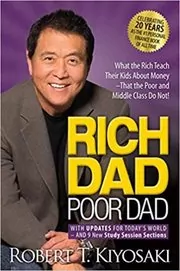
Rich Dad Poor Dad
What the Rich Teach Their Kids About Money That the Poor and Middle Class Do Not!
For readers who want an accessible introduction to one author’s ideas about money and financial independence. Its stories make the viewpoint memorable, though simplified distinctions and anecdotal claims need more scrutiny than the confident presentation suggests.
What it's about
Rich Dad, Poor Dad contrasts the money lessons Kiyosaki says he learned from his poor biological father and his rich mentor. Through simple stories he explains assets versus liabilities, cash flow, and why working only for a paycheck rarely leads to lasting wealth.
Also recommended by
3 people Will Smith recommended this book
Will Smith
Will Smith mentioned sharing this book with his son.
Will Smith's recommendation of this book - Anthony Pompliano recommended this book
Anthony Pompliano
"My favorite book of all time." - Anthony Pompliano
Anthony Pompliano's recommendation of this book  Patrick Bet-David recommended this book
Patrick Bet-David
Patrick Bet-David recommended this book on his website.
Patrick Bet-David's recommendation of this book

An Astronaut's Guide to Life on Earth
What Going to Space Taught Me About Ingenuity, Determination, and Being Prepared for Anything
For readers who prefer practical lessons grounded in a demanding professional life. Its spaceflight stories make preparation and teamwork tangible, though translating an astronaut’s highly structured work into ordinary circumstances requires selective judgment.
What it's about
Drawing on decades as a test pilot and astronaut, Chris Hadfield shares how he chased an impossible dream and what spaceflight taught him about preparation, teamwork, risk and perspective, turning behind-the-scenes stories into practical lessons for everyday life.
Also recommended by
1 person- Satya Nadella recommended this book
Satya Nadella
"Great read!" - Satya Nadella
Satya Nadella's recommendation of this book

For readers who want a more constructive way to interpret mistakes. Its stories make the case for learning and trying again approachable, though the motivational framing offers less detail on analyzing the causes of a particular failure.
What it's about
Maxwell examines how people respond to mistakes and argues that failure can become a source of learning rather than a permanent setback. Stories and practical suggestions address fear, attitude, and the decisions involved in moving forward after disappointment.

For readers who want an extensive collection of prompts about goals, responsibility, and action. Its breadth makes it useful for selective reference, though the many principles and success stories can feel repetitive without a specific problem to guide reading.
What it's about
Canfield and Janet Switzer present strategies for clarifying goals, taking responsibility, building confidence, and turning intentions into action. Examples from different lives support advice on managing challenges, developing supportive relationships, and applying consistent habits to personal and professional ambitions.

For readers who want a sharper sense of how luck distorts judgments about success. Its skeptical perspective challenges easy stories of achievement, though the market-centered examples and digressive voice make it less accessible than a straightforward habits guide.
What it's about
Nassim Nicholas Taleb examines how people mistake luck for skill and build explanations around accidental outcomes. Drawing on financial markets, probability, and human behaviour, he explores the biases that make uncertainty difficult to recognize in everyday judgments.
Also recommended by
7 people Howard Marks recommended this book
Howard Marks
"Really about how much randomness there is in our world." - Howard Marks
Howard Marks's recommendation of this book  Nick Kokonas recommended this book
Nick Kokonas
"Almost everyone in my office is forced to read [this book]." - Nick Kokonas
Nick Kokonas's recommendation of this book - Ev Williams recommended this book
Ev Williams
On the "books read" section of Ev Williams' GoodReads profile.
Ev Williams's recommendation of this book  James Altucher recommended this book
James Altucher
James Altucher mentioned this book on "The Tim Ferriss Show" podcast.
James Altucher's recommendation of this book  Art De Vany recommended this book
Art De Vany
"I used [this book] is a class I taught on the economics of uncertainty." - Art De Vany
Art De Vany's recommendation of this book  Ryan Shea recommended this book
Ryan Shea
Ryan Shea recommended this book on Twitter.
Ryan Shea's recommendation of this book +1
More recommendations
- James Clear
"[One of] the 10 books with the most page-for-page wisdom." - James Clear
- James Clear

Eat That Frog!
21 Great Ways to Stop Procrastinating and Get More Done in Less Time
For readers who need a direct prompt to tackle important work before easier distractions. Its brief, practical suggestions are easy to revisit, though the central idea is repeated and it gives limited attention to why procrastination differs between people.
What it's about
Brian Tracy uses eating a frog as a metaphor for tackling the most important and demanding task first. His guide offers twenty-one approaches to prioritization, preparation, concentration, and overcoming procrastination, helping readers direct effort toward work that matters.
Also recommended by
1 person- Blake Randall recommended this book
Blake Randall
"" - Blake Randall
Blake Randall's recommendation of this book

The Power of Positive Thinking
For readers who want encouragement rooted explicitly in Christian faith. Its combination of prayer and confidence-building offers a clear spiritual frame, though its anecdotes and optimistic assertions are not a substitute for examining difficult circumstances carefully.
What it's about
Norman Vincent Peale combines Christian faith, prayer, and practical exercises in a guide to approaching everyday difficulties with confidence. Personal stories support his advice on discouragement, worry, and cultivating a more optimistic outlook on life.
Also recommended by
1 person- Steve Harvey recommended this book
Steve Harvey
"Powerful." - Steve Harvey
Steve Harvey's recommendation of this book

For readers interested in sustained attention as a serious contemplative discipline. Its staged Buddhist framework offers more depth than general productivity advice, though the practice demands and spiritual context make it a substantial commitment rather than a quick technique.
What it's about
B. Alan Wallace presents a ten-stage framework for cultivating sustained attention through shamatha meditation. Drawing on Buddhist contemplative traditions, he describes practices for developing mental stability and clarity, addressing distraction and the challenges encountered as concentration deepens.

For readers who prefer short provocations they can browse rather than a single extended program. Its range across creativity, leadership, and work supplies varied starting points, though the collected-blog format lacks the coherence of a focused argument.
What it's about
This collection gathers six years of Seth Godin's blog posts alongside additional ebooks. Its short pieces explore marketing, leadership, creativity, and work, challenging readers to rethink familiar habits and act on ideas that matter.
Sources
- 1
31 Best Self-Improvement Books for Personal Growth
developgoodhabits.com
- 2
38 Best Self-Improvement Books to Read in 2026
lifehack.org
- 3
Self-Growth Books: 15 Best Personal Development and Self-Improvement Books
intelligentchange.com
- 4
Self Improvement Books
goodreads.com
- 5
I’ve read 100+ self-help books over the years. These are the ones I’d actually recommend
reddit.com
- 6
Top 13 Best Self Improvement Books to Win at Life (2023 Edition)
thecoolist.com
- 7
Best Self-Improvement Books Everyone Should Read
selectedreads.com
- 8
Self Improvement Books
wallstreetmojo.com


Edited by
Software engineer whose passion for tracking book recommendations from podcasts inspired the creation of MRB.
Lead investor at 3one4 Capital whose startup expertise and love for books helped shape MRB and its growth.
Comments
Did we miss something? Have feedback?
Help us improve this page by sharing your thoughts