
10 Best Scrum Books
The best Scrum books, ranked by expert source recommendation counts, with notes for beginners, Scrum Masters, Product Owners, and teams improving practice.
Our take
Scrum books answer different questions. Some explain the framework and its purpose; others address coaching, team relationships, retrospectives, or product decisions. A useful starting point depends on whether you are learning the vocabulary, taking on a new accountability, or trying to improve a team that already uses Scrum. More meetings and unfamiliar job titles do not by themselves explain how the framework should help.
Scrum: A Smart Travel Companion gives a compact conceptual introduction, while Essential Scrum provides a broader reference with illustrations. Jeff Sutherland’s Scrum offers an accessible account of the thinking behind the approach. For daily practice, The Great ScrumMaster and Coaching Agile Teams explore how to support teams without directing every decision. Agile Retrospectives narrows the focus to designing useful reflection.
Start with an introduction if the framework is new. Then choose by the difficulty you face: Fixing Your Scrum for recurring problems, Mastering Professional Scrum for applying the framework, or The Professional Product Owner for connecting work with product value.
10 books · 9 sources · Last updated
As an Amazon Associate, we earn from qualifying purchases (at no extra cost to you).
How to choose from this list
Skip to the full rankingIf you're new to the framework: Scrum → Essential Scrum
If you're becoming a Scrum Master: The Great ScrumMaster → Coaching Agile Teams
If you want more useful retrospectives: Agile Retrospectives
If your current practice feels ineffective: Fixing Your Scrum → Mastering Professional Scrum
If you want to connect work with product value: The Professional Product Owner
If your team struggles with trust: The Five Dysfunctions of a Team
The 10 books, ranked
Ranked by how many expert sources name each book. Ties go to the book more people recommend.

For facilitators who want team reflection to produce concrete changes rather than repetitive complaints. Derby and Larsen offer a usable structure and activities, though choosing and adapting them still requires sensitivity to the team’s circumstances.
What it's about
Esther Derby and Diana Larsen show how to design and facilitate retrospectives throughout a software project. Activities and practical guidance help teams identify strengths, address technical and interpersonal problems, and turn reflection into concrete improvements.

For readers who want an accessible explanation of why Scrum developed and how its advocates think about teamwork. The stories make organizational change tangible, though the promotional framing offers less balance and procedural detail than a practical reference.
What it's about
Jeff Sutherland introduces Scrum as an approach to organizing teamwork and managing projects. Drawing on its development and practical applications, he explains how teams can rethink traditional processes to improve collaboration, effectiveness, and the delivery of results.
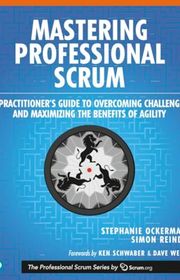
Mastering Professional Scrum
For Scrum Masters who know the framework but struggle to turn it into useful teamwork. Ockerman and Reindl connect common challenges with professional practice, though readers seeking a brief introduction should establish the basic terminology first.
What it's about
Stephanie Ockerman and Simon Reindl explore how teams apply Scrum when its basic rules meet difficult working conditions. The book examines goals, collaboration, product value, and continual improvement through practical challenges faced by Scrum Masters and their teams.

Coaching Agile Teams
A Companion for ScrumMasters, Agile Coaches, and Project Managers in Transition
For project managers moving from directing work toward supporting a team’s independence. Adkins gives coaching, mentoring, and facilitation distinct purposes, though the reflective material requires practice and judgment rather than providing a fixed script for every situation.
What it's about
Lyssa Adkins explores the shift from directing projects to coaching agile teams. The guide covers teaching, mentoring, facilitation, conflict, collaboration, and performance, helping coaches decide when to intervene and when to support a team's independence.

For team members and leaders who want a substantial reference connecting Scrum concepts with organizational practice. Rubin’s illustrations and breadth support a shared vocabulary, though the detail takes time and older terminology needs comparison with current framework guidance.
What it's about
Kenneth Rubin explains Scrum's values, principles, roles, activities, and artifacts through practical guidance and illustrations. The reference connects team, product, and portfolio perspectives, giving team members and leaders a shared foundation for implementing Scrum.
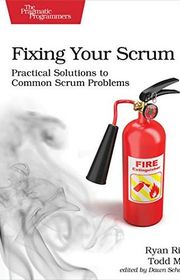
Fixing Your Scrum: Practical Solutions to Common Scrum Problems
For practitioners whose Scrum events and roles exist but are not helping the team. Ripley and Miller organize practical responses around recognizable problems, though the suggestions need local diagnosis rather than automatic application as universal fixes.
What it's about
Ryan Ripley and Todd Miller examine recurring problems in Scrum teams, from unclear responsibilities to ineffective events and weak collaboration. Their examples connect common symptoms with practical changes intended to support self management, useful feedback, and better delivery.

For readers who want a compact explanation of Scrum’s purpose and principles before exploring larger manuals. Verheyen emphasizes understanding the framework, though the short format leaves less space for detailed implementation examples and difficult organizational situations.
What it's about
Gunther Verheyen introduces Scrum through a compact guide to its principles and practical use. The book helps readers understand the framework's purpose and provides context for applying it in teams and organizations.
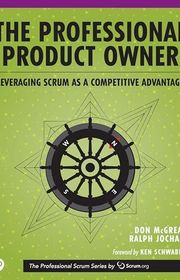
The Professional Product Owner: Leveraging Scrum as a Competitive Advantage
For Product Owners and Scrum Masters who want to connect team activity with product value. McGreal and Jocham broaden the discussion beyond backlog administration, though the role specific focus leaves general coaching and facilitation less developed.
What it's about
Don McGreal and Ralph Jocham examine product ownership through strategy, value, stakeholder collaboration, and backlog management. They connect business goals with the everyday decisions of Scrum teams, presenting the Product Owner role as broader than maintaining requirements.

For leaders whose teams struggle with trust, conflict, or shared commitment. Lencioni’s fable makes relationship problems easy to discuss, though its simplified framework is broader than Scrum and does not explain the framework’s specific accountabilities or events.
What it's about
New CEO Kathryn Petersen confronts a deeply divided executive team at DecisionTech. Through this leadership fable and its accompanying framework, Patrick Lencioni examines the behaviors that undermine cooperation and prevent talented colleagues from working effectively together.
Also recommended by
2 people Alfred Lin recommended this book
Alfred Lin
"Talks about the breakdowns of a team." - Alfred Lin
Alfred Lin's recommendation of this book  Patrick Bet-David recommended this book
Patrick Bet-David
Patrick Bet-David recommended this book on his website.
Patrick Bet-David's recommendation of this book

For Scrum Masters who want to extend their contribution beyond arranging meetings. Sochova connects team facilitation with relationships and wider organizational change, though applying the different roles requires experience and influence beyond what the book can supply.
What it's about
Zuzana Sochova explains the ScrumMaster's responsibilities through teaching, mentoring, facilitation, coaching, and removing impediments. Practical examples explore team development, organizational change, and how ScrumMasters can work at the levels of teams, relationships, and the wider system.
Sources
- 1
The 9 Scrum Books Every Scrum Master Must Read
nira.com
- 2
Scrum Books
goodreads.com
- 3
100 Best Scrum Books of All Time (Updated for 2026)
shortform.com
- 4
Best Books for Scrum Masters [2026] | JobRoadmaps
jobroadmaps.com
- 5
New to Scrum , book recommendations. : r/scrum
reddit.com
- 6
List of scrum books/resources : r/scrum
reddit.com
- 7
Agile Scrum Books We Recommend | Scrum Book - Lean Agile Training
leanagiletraining.com
- 8
Suggested Reading for Professional Scrum Master™ I | Scrum.org
scrum.org
- 9
Books By Our Professional Scrum Trainers and Team | Scrum.org
scrum.org


Edited by
Software engineer whose passion for tracking book recommendations from podcasts inspired the creation of MRB.
Lead investor at 3one4 Capital whose startup expertise and love for books helped shape MRB and its growth.
Comments
Spotted a missing book, a wrong order or a mistake? Tell us and we'll fix this page.
We're a reading guide, not the author or publisher, so we can't send books or pass on messages.