
31 Best Productivity Books
The best productivity books, ranked by how many expert sources recommend each one, with guidance on habits, focus, task systems and choosing priorities.
Our take
Productivity books address several different problems. You might need a reliable place to track commitments, a way to start work you have been avoiding, or enough uninterrupted time to think. You might also need to decide which commitments to drop. Choosing a book around that problem is more useful than collecting another set of tips.
Getting Things Done offers a detailed system for tasks and projects. Atomic Habits concentrates on repeated behavior, while Deep Work focuses on protecting attention. The Now Habit looks at the pressure behind procrastination. If the real problem is having too much to do, Essentialism and Four Thousand Weeks ask you to examine priorities and limits. Slow Productivity extends that discussion to sustaining meaningful work over time.
Start with the obstacle you encounter most often. A practical routine may help when you lack structure; a book about limits may help more when your structure is already full.
31 books · 8 sources · Last updated
As an Amazon Associate, we earn from qualifying purchases (at no extra cost to you).
How to choose from this list
Skip to the full rankingIf commitments keep slipping: Getting Things Done
If you struggle to repeat good routines: Atomic Habits → Tiny Habits
If interruptions break your concentration: Indistractable → Deep Work
If starting feels stressful: The Now Habit → Make Time
If you need fewer priorities: Essentialism → Four Thousand Weeks
If your pace feels unsustainable: Slow Productivity → Feel-Good Productivity
The 31 books, ranked
Ranked by how many expert sources name each book. Ties go to the book more people recommend.

For readers who want practical ways to make small actions repeatable. Its clear framework connects cues and surroundings with everyday behavior, though changing a habit does not by itself tell you which goals deserve your effort.
What it's about
James Clear explores why habits persist and how everyday systems influence behavior. He draws on behavioral research and illustrative stories to offer practical methods for establishing constructive routines, reducing unwanted habits, and making gradual improvements more sustainable.
Also recommended by
8 people Tim Urban recommended this book
Tim Urban
"I'd attribute about 60% of my good habits to [the author's] blog and this book is rapidly filling in the other 40%." - Tim Urban
Tim Urban's recommendation of this book  Vinod Khosla recommended this book
Vinod Khosla
"A decent book on self-help tools, not a category I am generally a fan of." - Vinod Khosla
Vinod Khosla's recommendation of this book  Biz Stone recommended this book
Biz Stone
"Great book." - Biz Stone
Biz Stone's recommendation of this book  Anthony Pompliano recommended this book
Anthony Pompliano
"Highly recommend." - Anthony Pompliano
Anthony Pompliano's recommendation of this book  Jodie Cook recommended this book
Jodie Cook
"I love the simplicity of this book." - Jodie Cook
Jodie Cook's recommendation of this book  Blake Randall recommended this book
Blake Randall
"" - Blake Randall
Blake Randall's recommendation of this book +2
More recommendations
- Ali Abdaal
"Helped me understand how habits are formed and what we can do." - Ali Abdaal
- Ben Greenfield
Most Recommended Books reached out to Ben Greenfield directly.
- Ali Abdaal

For knowledge workers who need sustained concentration for difficult tasks. Its routines help protect time for demanding work, though many suggestions are easier to apply when you control your calendar and availability.
What it's about
Newport makes the case that focused, distraction-free work is a rare and valuable skill. He explains why shallow busyness takes over and offers rules for building routines that protect serious thinking.
Also recommended by
1 person Tai Lopez recommended this book
Tai Lopez
"Great book on how to focus the mind. Read this if you need to be more productive." - Tai Lopez
Tai Lopez's recommendation of this book

For readers who need to reduce commitments before optimizing their schedules. It gives saying no and choosing priorities more attention than task-processing books, though the principles require firm decisions about what you are willing to give up.
What it's about
Greg McKeown argues for deliberately identifying what matters most and eliminating commitments that distract from it. Using examples and practical methods, he explores prioritization, trade-offs, boundaries, and creating routines that support a smaller number of meaningful pursuits.
Also recommended by
7 people Noah Kagan recommended this book
Noah Kagan
Noah Kagan recommended this book in the "Tools of Titans" book.
Noah Kagan's recommendation of this book  Kevin Rose recommended this book
Kevin Rose
"Really resonated with me, and I will certainly incorporate many of these principles into my work and personal life." - Kevin Rose
Kevin Rose's recommendation of this book  Reid Hoffman recommended this book
Reid Hoffman
"Offers concise and eloquent advice on how to determine what you care about most, and how to apply your energies in ways that ultimately bring you the greatest rewards." - Reid Hoffman
Reid Hoffman's recommendation of this book  Austen Allred recommended this book
Austen Allred
Austen Allred recommended this book on his website.
Austen Allred's recommendation of this book  Steve Harvey recommended this book
Steve Harvey
"This book changed my life." - Steve Harvey
Steve Harvey's recommendation of this book - Jodie Cook recommended this book
Jodie Cook
"Do less but do it better. Wise words with application across life and business." - Jodie Cook
Jodie Cook's recommendation of this book +1
More recommendations
- Michael Hyatt
Michael Hyatt recommended this book on his website.
- Michael Hyatt

For readers carrying many unfinished commitments in their heads. Its capture-and-review system handles tasks more comprehensively than the focus books, though setting it up and keeping the reviews going takes work.
What it's about
David Allen presents a system for managing personal and professional commitments without relying on memory alone. He explains how capturing tasks, clarifying next actions, organizing information, and reviewing commitments can help people approach their work with greater focus.
Also recommended by
6 people Ev Williams recommended this book
Ev Williams
"Still the best advice on getting your life in order and freeing up your brain to be creative." - Ev Williams
Ev Williams's recommendation of this book  Dustin Moskovitz recommended this book
Dustin Moskovitz
"Put first things first." - Dustin Moskovitz
Dustin Moskovitz's recommendation of this book  Tony Hsieh recommended this book
Tony Hsieh
One of 4 books Tony Hsieh recommended in Inc.com
Tony Hsieh's recommendation of this book  Michael McCullough recommended this book
Michael McCullough
"Helps you actually to action." - Michael McCullough
Michael McCullough's recommendation of this book  Howard Stern recommended this book
Howard Stern
"A game changer. I’ve read it maybe 20 times." - Howard Stern
Howard Stern's recommendation of this book  Michael Hyatt recommended this book
Michael Hyatt
Michael Hyatt recommended this book on his website.
Michael Hyatt's recommendation of this book

Eat That Frog!
21 Great Ways to Stop Procrastinating and Get More Done in Less Time
For readers who keep postponing an important task. Its short, direct advice makes prioritization easy to try immediately, though it gives less attention to the emotional causes of procrastination than The Now Habit.
What it's about
Brian Tracy uses eating a frog as a metaphor for tackling the most important and demanding task first. His guide offers twenty-one approaches to prioritization, preparation, concentration, and overcoming procrastination, helping readers direct effort toward work that matters.
Also recommended by
1 person- Blake Randall recommended this book
Blake Randall
"" - Blake Randall
Blake Randall's recommendation of this book

For readers who want productivity connected to values, relationships and personal responsibility. Its broad framework reaches beyond daily task lists, though the principles take time to translate into a concrete routine.
What it's about
Stephen Covey presents seven habits for personal effectiveness, connecting individual responsibility with cooperation and continual renewal. His framework emphasizes principles such as integrity, fairness, and service in approaching relationships, decisions, and goals at work and home.
Also recommended by
12 people Dave Ramsey recommended this book
Dave Ramsey
Recommended on Dave Ramsey's website.
Dave Ramsey's recommendation of this book  Daniel Pink recommended this book
Daniel Pink
Daniel Pink mentioned this book on "The Tim Ferriss Show" podcast.
Daniel Pink's recommendation of this book  Ken Block recommended this book
Ken Block
"[Also] helped me really be successful." - Ken Block
Ken Block's recommendation of this book - Dustin Moskovitz recommended this book
Dustin Moskovitz
"[I] was surprised at how familiar the topics felt." - Dustin Moskovitz
Dustin Moskovitz's recommendation of this book - Noah Kagan recommended this book
Noah Kagan
"Begin with the end in mind." - Noah Kagan
Noah Kagan's recommendation of this book  Kishore Biyani recommended this book
Kishore Biyani
"Immensely helpful and influential during my early years, it explained some of the basic mindsets required to succeed in any profession." - Kishore Biyani
Kishore Biyani's recommendation of this book +6
More recommendations
- Michael McCullough
"Helps you decide which action to actually take." - Michael McCullough
- Shay Carl
Shay Carl referenced this book on "The Tim Ferriss Show" podcast.
- Jenn Im
"Has changed my life in such a positive way." - Jenn Im
- Jim Kwik
"This personal development classic is a classic for a reason." - Jim Kwik
- Michael Hyatt
Michael Hyatt recommended this book on his website.
- Ben Greenfield
Most Recommended Books reached out to Ben Greenfield directly.
- Michael McCullough

For readers whose effort is scattered across too many priorities. Its focusing question makes daily choices simpler than a full task-management system, though concentrating on one thing can be harder when your work involves competing responsibilities.
What it's about
Gary Keller and Jay Papasan argue that concentrating on the most important priority can improve results. They examine habits and distractions that consume time and explain how a clearer focus can guide everyday choices.
Also recommended by
4 people Charles Poliquin recommended this book
Charles Poliquin
Charles Poliquin recommended this book in the "Tools of Titans" book.
Charles Poliquin's recommendation of this book  Maria Sharapova recommended this book
Maria Sharapova
"It kind of hit home for me [...] that when you wake up in the morning, you put your focus on this one thing of what you want to accomplish during the day, which seems like a no-brainer." - Maria Sharapova
Maria Sharapova's recommendation of this book  Alexis Ohanian recommended this book
Alexis Ohanian
"Makes a strong case for tossing out my daily Todo list in favor of focusing just One Thing every day." - Alexis Ohanian
Alexis Ohanian's recommendation of this book  Kat Cole recommended this book
Kat Cole
"Big fan of this book." - Kat Cole
Kat Cole's recommendation of this book

For readers curious about why routines persist in people and organizations. Its reporting provides more context than a short habit workbook, though the stories offer fewer step-by-step instructions than Atomic Habits.
What it's about
Charles Duhigg examines how habits form and change through scientific research and stories about individuals, companies, and social movements. He explains how recurring patterns influence behavior and how identifying them can help people reshape routines and organizations improve their practices.
Also recommended by
9 people Ray Dalio recommended this book
Ray Dalio
"Fantastic. I got [this book] and I gave it to everyone in my company." - Ray Dalio
Ray Dalio's recommendation of this book  Scott Adams recommended this book
Scott Adams
One of the books on Scott Adams' "Persuasion Reading List."
Scott Adams's recommendation of this book  Tim Ferriss recommended this book
Tim Ferriss
"A very good book." - Tim Ferriss
Tim Ferriss's recommendation of this book  Naval Ravikant recommended this book
Naval Ravikant
"Interesting, not because of its content necessarily, but because it’s good for me to always keep on top of mind how powerful my habits are." - Naval Ravikant
Naval Ravikant's recommendation of this book  Kelly Starrett recommended this book
Kelly Starrett
Kelly Starrett recommended this book in the "Tools of Titans" book.
Kelly Starrett's recommendation of this book  Mr. Money Mustache recommended this book
Mr. Money Mustache
Mr. Money Mustache recommended this book on his blog.
Mr. Money Mustache's recommendation of this book +3
More recommendations
- Max Levchin
"Compiles a bunch of great academic neuroscience and applied psychology research on habit formation." - Max Levchin
- Danny Miranda
"Great writing, interesting stories, and incredible insights on how to control your habits." - Danny Miranda
- Patrick Bet-David
Patrick Bet-David recommended this book on his website.
- Max Levchin

For readers who want to reconsider how digital tools fit into their lives. The structured declutter addresses habits beyond working hours, though it requires replacing online activity with worthwhile alternatives rather than simply deleting apps.
What it's about
Newport argues for a more intentional relationship with technology: keep the tools that support what you value, and strip away the rest. The book centers on a 30-day digital declutter and better offline leisure.
Also recommended by
2 people- Jodie Cook recommended this book
Jodie Cook
"[Looks] into lifestyle design and lifestyle habits to ensure that you’re making intentional choices about how you spend your limited time on this planet." - Jodie Cook
Jodie Cook's recommendation of this book  Danny Miranda recommended this book
Danny Miranda
"An interesting perspective on how to live a focused life in a world full of noise." - Danny Miranda
Danny Miranda's recommendation of this book
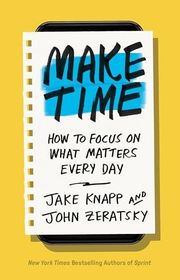
Make Time: How to Focus on What Matters Every Day
For readers who want a flexible daily experiment rather than a comprehensive system. Its single-highlight approach and menu of tactics make starting manageable, though you must choose and test the ideas that fit your circumstances.
What it's about
Jake Knapp and John Zeratsky present a daily framework for choosing a highlight, protecting attention, maintaining energy and reviewing results. Their collection of practical tactics helps readers adjust routines and make room for personally meaningful activities.

For readers considering a substantial redesign of how they earn and work. Its emphasis on elimination and delegation challenges habitual busyness, though the business model and travel examples are dated and do not fit every occupation.
What it's about
Tim Ferriss presents an approach to reorganizing work around greater freedom of time and location. The guide explores reducing unnecessary tasks, outsourcing, automating income, and planning shorter periods away from work rather than postponing enjoyment until retirement.
Also recommended by
26 people Eric Weinstein recommended this book
Eric Weinstein
Eric Weinstein tweet about books that mattered enough to him.
Eric Weinstein's recommendation of this book  Tristan Harris recommended this book
Tristan Harris
Tristan Harris mentioned this book on "The Tim Ferriss Show" podcast.
Tristan Harris's recommendation of this book - Charles Poliquin recommended this book
Charles Poliquin
Charles Poliquin recommended this book in the "Tools of Titans" book.
Charles Poliquin's recommendation of this book  Walter Isaacson recommended this book
Walter Isaacson
"[The author has] a great curiosity and [...] a great love for things." - Walter Isaacson
Walter Isaacson's recommendation of this book - Daniel Pink recommended this book
Daniel Pink
Daniel Pink mentioned this book on "The Tim Ferriss Show" podcast.
Daniel Pink's recommendation of this book  Blake Mycoskie recommended this book
Blake Mycoskie
"I read [this book] right when I started Toms. There’s so many things that I took from [it] that allowed Toms to have this incredible growth." - Blake Mycoskie
Blake Mycoskie's recommendation of this book +20
More recommendations
- David Heinemeier Hansson
"My key takeaway from [this book] was the concept of lifestyle design." - DHH
- Marc Andreessen
"[The author] basically takes all of the time management and personal productivity theories of the last 20 to 30 years and pushes them to 11, to paraphrase 'Spinal Tap.'" - Marc Andreessen
- Jason Silva
"I was very affected by [this book]. I was like this guy has it figured out." - Jason Silva
- Mike Shinoda
"I do talk about [this book] quite a bit." - Mike Shinoda
- Mark Bell
"Taught me better ways to manage my time and the value of not making myself too busy." - Mark Bell
- Maurice Ashley
"Made me ditch the average life in search of one with complete flexibility and freedom to live life on my terms." - Maurice Ashley
- Tim Draper
"With this kind of time management and focus on the important things in life, people should be able to get 15 times as much done in a normal work week." - Tim Draper
- Derek Sivers
"Brilliant reversal of all of the 'how to manage all your crap' books." - Derek Sivers
- Rolf Potts
"Challenges the reader to seriously consider an essential–yet rarely asked–question: What do you really want from life?" - Rolf Potts
- A.J. Jacobs
A.J. Jacobs mentioned this book on "The Tim Ferriss Show" podcast.
- Caterina Fake
Caterina Fake mentioned this book on "The Tim Ferriss Show" podcast.
- Ev Williams
On the "books read" section of Ev Williams' GoodReads profile.
- Gary Keller
"This is a significant book." - Gary Keller
- Laura R Walker
"For those who struggle with productivity and taking control of their lives, [I give this book], of course!" - Laura R Walker
- Marc Goodman
One of Marc Goodman's most-gifted or recommended books.
- Mike Maples, Jr.
"If you want to live life on your own terms, this is your blueprint." - Mike Maples, Jr.
- Lewis Howes
"I've only probably read 4 books cover to cover. [This is one of them.]" - Lewis Howes
- Jodie Cook
"Life and work are reimagined and built back from scratch, in a way optimised for freedom and enjoyment." - Jodie Cook
- Brian Dean
"This book created thousands of entrepreneurs over the last 15 years… including me." - Brian Dean
- Michael Hyatt
Michael Hyatt recommended this book on his website.
- David Heinemeier Hansson

For readers who want to understand the urge to switch tasks, not just block apps. It combines internal triggers with scheduling and environmental changes, though the approach depends on regularly examining your own behavior.
What it's about
Nir Eyal examines the internal discomfort and external cues that pull attention away from intended activities. He offers methods for planning time, managing interruptions, and making commitments that support focused work, relationships, and other personal priorities.
Also recommended by
3 people- Alexis Ohanian recommended this book
Alexis Ohanian
"A great foundation for bringing intention and focus to your work- and home-life." - Alexis Ohanian
Alexis Ohanian's recommendation of this book  Ryan Hoover recommended this book
Ryan Hoover
Ryan Hoover mentioned this book on Twitter.
Ryan Hoover's recommendation of this book  Balaji Srinivasan recommended this book
Balaji Srinivasan
"Tackles the problem of modern distraction by empowering us to break the bad habits at the root of the issue." - Balaji Srinivasan
Balaji Srinivasan's recommendation of this book

For readers exhausted by trying to fit everything in. It questions the demand for limitless efficiency more directly than the task-management books, though readers seeking a detailed planner may find its reflective approach less immediately actionable.
What it's about
Oliver Burkeman explores how to live meaningfully within a finite lifespan. Drawing on philosophy and psychology, he questions the drive to accomplish everything and offers ways to accept limits, choose commitments, and relate differently to time.
Also recommended by
1 person- Tim Ferriss recommended this book
Tim Ferriss
"Quite unlike anything I’ve ever read." - Tim Ferriss
Tim Ferriss's recommendation of this book

For professionals whose work involves complex procedures or handoffs. Its examples show how simple prompts can reduce avoidable mistakes, though it is a book about reliability and teamwork rather than a personal scheduling system.
What it's about
Atul Gawande investigates how simple checklists can reduce preventable errors in complex work. Drawing on surgery and aviation, he explores why expertise alone can fall short and how structured reminders and teamwork support more reliable professional practice.
Also recommended by
9 people Bill Gates recommended this book
Bill Gates
"A great read." - Bill Gates
Bill Gates's recommendation of this book  Jack Dorsey recommended this book
Jack Dorsey
"Success metric for my work [at Twitter]: these books disappear from my desk. (you should read it too)" - Jack Dorsey
Jack Dorsey's recommendation of this book - Tim Ferriss recommended this book
Tim Ferriss
"A great book." - Tim Ferriss
Tim Ferriss's recommendation of this book  Malcolm Gladwell recommended this book
Malcolm Gladwell
"[The author] took an extraordinary risk to his own reputation domestically in America in the medical profession by [releasing this book]." - Malcolm Gladwell
Malcolm Gladwell's recommendation of this book - Charles Poliquin recommended this book
Charles Poliquin
"A great book." - Charles Poliquin
Charles Poliquin's recommendation of this book  Keith Rabois recommended this book
Keith Rabois
Keith Rabois recommended this book on a Medium blog post.
Keith Rabois's recommendation of this book +3
More recommendations
- Ramit Sethi
"A great book." - Ramit Sethi
- Michael McCullough
"A really good book. [Shows] a checklist is profoundly helpful." - Michael McCullough
- Vinod Khosla
"Very good; definitely worth reading." - Vinod Khosla
- Ramit Sethi

Rework
For founders and small teams who want to question meetings, elaborate plans and overwork. Its brief arguments are easy to absorb, though the advice reflects a particular kind of business and offers no complete operating system.
What it's about
Jason Fried and David Heinemeier Hansson challenge familiar assumptions about starting and running a business. Brief lessons question elaborate planning, outside funding, excessive meetings, and overwork while emphasizing practical action, productivity, and doing more with fewer resources.
Also recommended by
8 people Mark Cuban recommended this book
Mark Cuban
"If given a choice between investing in someone who has read Rework or has an MBA, I'm investing in Rework every time." - Mark Cuban
Mark Cuban's recommendation of this book  Jeff Bezos recommended this book
Jeff Bezos
"Unperturbed by conventional wisdom, [the authors] start fresh and rewrite the rules of business." - Jeff Bezos
Jeff Bezos's recommendation of this book  Seth Godin recommended this book
Seth Godin
"I can't imagine what possible excuse you can dream up for not buying this book for every single person you work with, right now." - Seth Godin
Seth Godin's recommendation of this book - Tim Ferriss recommended this book
Tim Ferriss
"I encourage people to think of as an 'Elements of Style' for building profitable businesses in a web-savvy world." - Tim Ferriss
Tim Ferriss's recommendation of this book  Tom Peters recommended this book
Tom Peters
"The clarity, even genius, of this book actually brought me to near-tears on several occasions. Just bloody brilliant, that's what!" - Tom Peters
Tom Peters's recommendation of this book - Tony Hsieh recommended this book
Tony Hsieh
"Read this book multiple times to help give you the courage you need to get out there and make something great." - Tony Hsieh
Tony Hsieh's recommendation of this book +2
More recommendations
- Andrew Wilkinson
"[One of] my most recommended business books." - Andrew Wilkinson
- Shane Parrish
"This book showed me that I wasn’t alone or crazy." - Shane Parrish
- Andrew Wilkinson

For knowledge workers responsible for useful decisions and results. Its emphasis on contribution, time and priorities goes beyond getting through a task list, though the management examples reflect an older workplace.
What it's about
Peter F. Drucker examines the practices that enable executives to turn knowledge and ability into useful results. He discusses managing time, focusing contributions, building on strengths, setting priorities, and making decisions, drawing on examples from business and government.
Also recommended by
5 people- Ev Williams recommended this book
Ev Williams
"[The author] writes about first principles and makes things seem obvious—once he explains them in his straightforward way." - Ev Williams
Ev Williams's recommendation of this book  Drew Houston recommended this book
Drew Houston
"I think one of the most valuable concepts from [this book] is measuring your time." - Drew Houston
Drew Houston's recommendation of this book  Matt Mullenweg recommended this book
Matt Mullenweg
"I recommend [this book] a lot in the company." - Matt Mullenweg
Matt Mullenweg's recommendation of this book  Guy Kawasaki recommended this book
Guy Kawasaki
"I devoured this book while in college." - Guy Kawasaki
Guy Kawasaki's recommendation of this book  Jim Collins recommended this book
Jim Collins
"I was very honored to have the opportunity to write the foreword to the 50th anniversary edition." - Jim Collins
Jim Collins's recommendation of this book

For readers interested in what makes work absorbing and satisfying. Its psychological perspective explains engagement more deeply than a scheduling guide, though it offers less immediate help with an overflowing inbox or project list.
What it's about
Psychologist Mihaly Csikszentmihalyi explores flow, the state of deep absorption in an activity that challenges one's abilities. Drawing on research into optimal experience, he examines how attention, clear goals, and meaningful engagement can contribute to satisfaction in daily life.
Also recommended by
3 people- Kishore Biyani recommended this book
Kishore Biyani
"Taught me one of the best values in life — achieving a state of flow." - Kishore Biyani
Kishore Biyani's recommendation of this book  Raoul Pal recommended this book
Raoul Pal
"A great book." - Raoul Pal
Raoul Pal's recommendation of this book  Pavel Durov recommended this book
Pavel Durov
Pavel Durov recommended this book in an interview.
Pavel Durov's recommendation of this book

Slow Productivity
For knowledge workers whose constant activity is crowding out substantial work. It focuses on workload, pace and quality across longer periods, though applying the advice can be difficult when employers tightly control deadlines and assignments.
What it's about
Newport argues that modern knowledge work confuses visible busyness with real progress. His answer is a slower system built around doing fewer things, working at a natural pace, and giving your best work more attention.

For readers who enjoy reported stories about decisions, motivation and teamwork. It broadens productivity beyond individual routines, though extracting a personal working method takes more effort than following a book organized around specific daily actions.
What it's about
Charles Duhigg explores the habits of thought that support productivity, drawing on psychology, neuroscience, and examples from business, education, and other fields. The book examines motivation, goals, decisions, and teamwork to explain how people can become more effective in their work.

The Productivity Project
Accomplishing More by Managing Your Time, Attention, and Energy
For readers who like learning from experiments rather than following one fixed system. Its mix of time, attention and energy practices offers several entry points, though personal trials do not establish that every technique will suit you.
What it's about
Chris Bailey recounts a year of personal productivity experiments and interviews with experts. The resulting guide offers practices for managing time, attention, and energy, including setting priorities, limiting distractions, and working more deliberately.

For readers who repeatedly set goals that are too demanding to sustain. Its very small actions and attention to prompts make behavior design concrete, though tiny routines still need direction and adjustment to serve larger goals.
What it's about
BJ Fogg presents a method for changing behavior by starting with actions small enough to repeat easily. He explains how prompts, existing routines, and immediate celebration can support new habits, using examples and exercises to develop the approach.
Also recommended by
1 person Arianna Huffington recommended this book
Arianna Huffington
"At a time when there's a 'painful gap between what people want and what they actually do,' it's a blueprint for changing our approach." - Arianna Huffington
Arianna Huffington's recommendation of this book
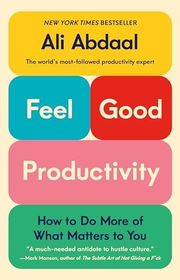
Feel-Good Productivity: How to Do More of What Matters to You
For readers who rely on pressure and discipline until work becomes draining. Its practical experiments emphasize enjoyment, energy and sustainable motivation, though it offers a collection of approaches rather than a detailed task-management framework.
What it's about
Ali Abdaal explores how positive emotions can support productive work. He presents experiments involving play, confidence, relationships and recovery, alongside approaches to overcoming uncertainty, fear and inertia while building a more sustainable relationship with effort.

For readers who want to manage both concentrated work and periods of mental wandering. Its contrast between attention modes adds nuance to distraction advice, though experimenting with the techniques takes more effort than simply reading them.
What it's about
Chris Bailey explores two ways of directing attention: sustained concentration for completing tasks and deliberate mind wandering for creative connections. He offers practical methods for reducing distractions, shaping work environments, and choosing when to focus or take a break.

The Now Habit
A Strategic Program for Overcoming Procrastination and Enjoying Guilt-Free Play
For readers whose procrastination involves fear, pressure or perfectionism. Its emphasis on starting safely and allowing leisure addresses concerns that priority lists miss, though the exercises require sustained personal reflection.
What it's about
Neil Fiore presents a program for understanding and addressing procrastination without sacrificing leisure. Psychological exercises and practical strategies target the pressures that make starting difficult, helping readers approach tasks with less stress and create room for guilt-free play.

The Power of Full Engagement
Managing Energy, Not Time, Is the Key to High Performance and Personal Renewal
For readers who can organize their hours but still struggle to sustain effort. Its attention to recovery and different kinds of energy broadens the usual time-management advice, though the performance-coaching framework will not suit everyone.
What it's about
Jim Loehr and Tony Schwartz argue that managing energy is central to sustained performance. Their approach addresses physical, emotional, mental, and spiritual resources, using recovery, training, and daily rituals to balance demanding work with renewal.
Also recommended by
2 people- Noah Kagan recommended this book
Noah Kagan
"It's not about how much time you have in your day but how you allocate you energy." - Noah Kagan
Noah Kagan's recommendation of this book - Michael Hyatt recommended this book
Michael Hyatt
Michael Hyatt recommended this book on his website.
Michael Hyatt's recommendation of this book

The Willpower Instinct
How Self-Control Works, Why It Matters, and What You Can Do to Get More of It
For readers interested in the pressures behind temptation and self-control. Its exercises encourage observation of real behavior, though it requires more reflection and experimentation than a simple checklist of productivity tactics.
What it's about
Kelly McGonigal examines self-control through psychology, neuroscience and the material from her Stanford course. She explains how temptation, stress and competing goals affect decisions, then offers exercises involving attention, habits and awareness of one's own responses.
Also recommended by
1 person Jane McGonigal recommended this book
Jane McGonigal
"The better book on will power."- Jane McGonigal
Jane McGonigal's recommendation of this book

First Things First
For readers who keep meeting urgent demands while neglecting longer-term priorities. Its values-based approach expands the perspective of a daily planner, though it is more reflective and less immediately procedural than Getting Things Done.
What it's about
Stephen Covey and his coauthors distinguish urgent demands from genuinely important goals. Their guide explores how organizing work around principles, relationships, and long-term priorities can help people find balance beyond simply getting more tasks done.

Manage Your Day-to-Day
Build Your Routine, Find Your Focus, and Sharpen Your Creative Mind
For creative workers who want brief perspectives on routines, attention and making time to create. The varied contributors make it easy to dip into, though their advice does not form one continuous productivity system.
What it's about
Jocelyn Glei brings together advice from creative professionals on organizing work in an environment of constant demands and distraction. The collection addresses building routines, protecting focus, and developing creative habits to make space for meaningful daily progress.

For readers already familiar with Getting Things Done who want short reminders and reflections. Its essay format makes individual ideas easy to revisit, though it is less useful than the original book for learning the whole system.
What it's about
David Allen gathers fifty-two productivity principles from his newsletter, extending the ideas introduced in Getting Things Done. The essays explore clearing mental clutter, focusing attention, creating useful structures, and taking action while making room for creativity.
Also recommended by
1 person- Ev Williams recommended this book
Ev Williams
On the "books read" section of Ev Williams' GoodReads profile.
Ev Williams's recommendation of this book

Your Brain at Work
Strategies for Overcoming Distraction, Regaining Focus, and Working Smarter All Day Long
For knowledge workers who want an accessible account of mental overload and workplace interactions. Its recurring characters make abstract ideas concrete, though the neuroscience explanations simplify a complicated subject and do not provide a complete task system.
What it's about
David Rock uses the working lives of Emily and Paul to explore attention, distraction, emotion, and collaboration. Drawing on neuroscience, he suggests strategies for managing mental demands, finding insights, giving feedback, and making decisions.
Also recommended by
1 person- Noah Kagan recommended this book
Noah Kagan
"Different ways to organize and prioritize your day to maximize productivity." - Noah Kagan
Noah Kagan's recommendation of this book

The Power of Less
The Fine Art of Limiting Yourself to the Essential...in Business and in Life
For readers who feel overwhelmed by elaborate systems and too many goals. Its emphasis on limits and small changes keeps the approach manageable, though the simplicity offers less help with complex team commitments or competing projects.
What it's about
Leo Babauta argues that setting limits and eliminating nonessential commitments can improve focus and productivity. He offers methods for breaking goals into smaller tasks, developing habits, and concentrating on a few priorities instead of scattered demands.
Sources
- 1
13 Best Productivity Books To Get More Done In 2026
thedigitalprojectmanager.com
- 2
15 Best Productivity Books (Ranked by Lasting Impact)
clickup.com
- 3
The 22 Best Productivity Books, With One Habit to Try From Each
dailyhabitai.com
- 4
Best Books on Productivity: 9 That Actually Changed How I Work
grahammann.net
- 5
30 Best Productivity Books in 2023
lifehack.org
- 6
Productivity Books
goodreads.com
- 7
Which 3 productivity books would you recommend from this list?
reddit.com
- 8
[Advice] A mega list of productivity books
reddit.com


Edited by
Software engineer whose passion for tracking book recommendations from podcasts inspired the creation of MRB.
Lead investor at 3one4 Capital whose startup expertise and love for books helped shape MRB and its growth.
Comments
Spotted a missing book, a wrong order or a mistake? Tell us and we'll fix this page.
We're a reading guide, not the author or publisher, so we can't send books or pass on messages.