
20 Best Psychology Books
The best psychology books, ranked by how many expert sources recommend each one, with notes for curious beginners, students, and readers exploring behavior.
Our take
Psychology asks how people think, feel, learn, and behave, both alone and around others. These books offer several ways into those questions. Some explain experiments and theories, some follow individual lives, and others translate psychological ideas into advice about habits, relationships, or change. They suit curious beginners as well as students looking for reading beyond a course textbook.
Thinking, Fast and Slow takes a detailed look at judgment, while The Invisible Gorilla concentrates on limits of attention and memory. Influence explores persuasion, and Elliot Aronson's The Social Animal offers a wider introduction to social behavior. For a different approach, The Man Who Mistook His Wife for a Hat builds its understanding through clinical portraits. The Happiness Hypothesis brings philosophical questions into the discussion, while 50 Great Myths of Popular Psychology encourages a more skeptical reading of familiar claims.
Start with the question that interests you most, then pair an accessible narrative with a book that examines its evidence in greater depth.
20 books · 9 sources · Last updated
As an Amazon Associate, we earn from qualifying purchases (at no extra cost to you).
How to choose from this list
Skip to the full rankingIf you're new to psychological research: 50 Great Myths of Popular Psychology → The Social Animal
If you want to understand judgment: The Invisible Gorilla → Thinking, Fast and Slow
If you're curious about persuasion: Influence → Mistakes Were Made (But Not by Me)
If you prefer clinical stories: The Man Who Mistook His Wife for a Hat
If you want to understand wellbeing: Stumbling on Happiness → The Happiness Hypothesis
The 20 books, ranked
Ranked by how many expert sources name each book. Ties go to the book more people recommend.

Thinking, Fast and Slow
For readers willing to work through a detailed account of judgment and bias. It offers more conceptual depth than the shorter decision-making books here, though the experiments and probability examples can make it a slow read.
What it's about
Kahneman explores two modes of thought: quick, intuitive responses and slower, deliberate reasoning. Drawing on psychological research, he examines how biases and impressions shape decisions, and when intuition helps or misleads in personal and professional life.
Also recommended by
19 people Bill Gates recommended this book
Bill Gates
List of books Bill Gates read in 2012.
Bill Gates's recommendation of this book  Ray Dalio recommended this book
Ray Dalio
Ray Dalio mentioned this book in his book, "Principles."
Ray Dalio's recommendation of this book  Scott Adams recommended this book
Scott Adams
One of the books on Scott Adams' "Persuasion Reading List."
Scott Adams's recommendation of this book  Naval Ravikant recommended this book
Naval Ravikant
"Fine book but it didn’t need to be an entire book. A blog post would have gotten the point across." - Naval Ravikant
Naval Ravikant's recommendation of this book  Ev Williams recommended this book
Ev Williams
"I love surprising scientific findings, as well as information about how our brains work. [This book] is a treasure trove of both." - Ev Williams
Ev Williams's recommendation of this book  Marc Andreessen recommended this book
Marc Andreessen
"Captivating dive into human decision making, marred by inclusion of several/many? psychology studies that fail to replicate. Will stand as a cautionary tale?" - Marc Andreessen
Marc Andreessen's recommendation of this book +13
More recommendations
- Stewart Brand
Stewart Brand recommended this book on his "Selected Books for the Manual for Civilization" blog post.
- Bryan Johnson
"I started reading [this book] and I became increasingly convinced of my own fickleness and inability to actually act rationally in life." - Bryan Johnson
- Derek Sivers
"If you liked 'Predictably Irrational' or 'Stumbling on Happiness' or any of those pop-psychology books, well, this is the Godfather of all of their work." - Derek Sivers
- Sam Altman
One of Sam Altman's answers to "What are some of the best books you recommend for a young startup founder?"
- Ron Conway
"Covers all three phases of [the author's] career: his early days working oncognitive bias, his work on prospect theory, and his later work on happiness." - Ron Conway
- Jason Fried
"I enjoyed [this book]. Fascinating." - Jason Fried
- Nassim Taleb
"A landmark book in social thought, in the same league as The Wealth of Nations by Adam Smith and The Interpretation of Dreams by Sigmund Freud." - Nassim Taleb
- Sahil Lavingia
Sahil Lavingia recommended this book on Notion.
- Mark Manson
Mark Manson recommended this book on his website.
- Jay Shetty
"[One] of my favourite books." - Jay Shetty
- Michiko Kakutani
"Has become essential reading in many baseball front offices and among coaching staffs." - Michiko Kakutani
- Preston Pysh
"An incredible book!" - Preston Pysh
- Ben Greenfield
Most Recommended Books reached out to Ben Greenfield directly.
- Stewart Brand

For readers interested in persuasion at work and in everyday life. Its organized principles make social influence easier to recognize than a general psychology survey, though applying them responsibly requires more judgment than following a checklist.
What it's about
Cialdini explores why people agree to requests and how recurring principles influence their decisions. Research and examples explain persuasion in everyday settings, alongside ways to recognize these mechanisms and resist attempts to exploit them.
Also recommended by
18 people Tobi Lütke recommended this book
Tobi Lütke
"The most mind-bending book you can imagine, because it essentially taught you always humans are flawed and influential." - Tobi Lütke
Tobi Lütke's recommendation of this book - Scott Adams recommended this book
Scott Adams
"100 percent of effective people seem to have read [this book]. In fact, it’s one of those things that when I meet somebody and they’re operating at a pretty high level, if you mention [this book], they’ve all read it." - Scott Adams
Scott Adams's recommendation of this book - Naval Ravikant recommended this book
Naval Ravikant
"Fundamental and had a lot to teach." - Naval Ravikant
Naval Ravikant's recommendation of this book  Charlie Munger recommended this book
Charlie Munger
Charlie Munger recommended this book in the "Poor Charlie's Almanack" book.
Charlie Munger's recommendation of this book  Adam Robinson recommended this book
Adam Robinson
Adam Robinson mentioned this book on "The Tim Ferriss Show" podcast.
Adam Robinson's recommendation of this book  Ramit Sethi recommended this book
Ramit Sethi
Ramit Sethi mentioned this book on "The Tim Ferriss Show" podcast.
Ramit Sethi's recommendation of this book +12
More recommendations
- Alexis Ohanian
"[Helps you] navigate the world with heightened awareness for how we're always being influenced/manipulated." - Alexis Ohanian
- Guy Kawasaki
"The guiding light for how I conduct business—and in many ways how I live my life." - Guy Kawasaki
- Max Levchin
One of Max Levchin's answers to "what's your favourite business book you'd advise to young entrepreneurs?"
- Noah Kagan
"People can be influenced in their behaviors by many different tactics." - Noah Kagan
- Samy Kamkar
"I love it because it was a very systematic and analytical approach to the most common ways that human being have been known to be influenced and persuaded to do something." - Samy Kamkar
- Andrew Wilkinson
"[One of] my most recommended business books." - Andrew Wilkinson
- Neil Strauss
"Understanding these [principles] make all the difference in making the leap from interest to attraction." - Neil Strauss
- Patrick O'Shaughnessy
Patrick O'Shaughnessy recommended this book on a blog post.
- Mark Manson
Mark Manson recommended this book on his website.
- Alex Hormozi
Alex Hormozi recommended this book on Instagram.
- James Clear
"[One of] the 10 best nonfiction books of all-time." - James Clear
- Michael Hyatt
Michael Hyatt recommended this book on his website.
- Alexis Ohanian

For readers who prefer reported stories to technical discussions of learning. It links personal routines with organizational behavior more broadly than a habit workbook, though its simple habit-loop framework cannot explain every difficulty with change.
What it's about
Charles Duhigg examines how habits form and change through scientific research and stories about individuals, companies, and social movements. He explains how recurring patterns influence behavior and how identifying them can help people reshape routines and organizations improve their practices.
Also recommended by
9 people- Ray Dalio recommended this book
Ray Dalio
"Fantastic. I got [this book] and I gave it to everyone in my company." - Ray Dalio
Ray Dalio's recommendation of this book - Scott Adams recommended this book
Scott Adams
One of the books on Scott Adams' "Persuasion Reading List."
Scott Adams's recommendation of this book  Tim Ferriss recommended this book
Tim Ferriss
"A very good book." - Tim Ferriss
Tim Ferriss's recommendation of this book - Naval Ravikant recommended this book
Naval Ravikant
"Interesting, not because of its content necessarily, but because it’s good for me to always keep on top of mind how powerful my habits are." - Naval Ravikant
Naval Ravikant's recommendation of this book  Kelly Starrett recommended this book
Kelly Starrett
Kelly Starrett recommended this book in the "Tools of Titans" book.
Kelly Starrett's recommendation of this book  Mr. Money Mustache recommended this book
Mr. Money Mustache
Mr. Money Mustache recommended this book on his blog.
Mr. Money Mustache's recommendation of this book +3
More recommendations
- Max Levchin
"Compiles a bunch of great academic neuroscience and applied psychology research on habit formation." - Max Levchin
- Danny Miranda
"Great writing, interesting stories, and incredible insights on how to control your habits." - Danny Miranda
- Patrick Bet-David
Patrick Bet-David recommended this book on his website.
- Max Levchin
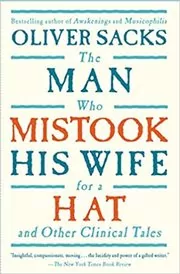
For readers drawn to individual experiences of perception, memory, and identity. Its clinical portraits make neurological differences more tangible than general behavior books, though these unusual cases are not a comprehensive introduction to psychology.
What it's about
In this collection of clinical tales, Sacks follows patients whose brains alter memory, recognition, movement, and identity. Strange symptoms become deeply human stories about how people rebuild a sense of self.
Also recommended by
1 person Jordan Peterson recommended this book
Jordan Peterson
Recommended on Jordan Peterson's website.
Jordan Peterson's recommendation of this book

For newcomers curious about pricing, expectations, and everyday choices. Its short experimental stories make behavioral economics more approachable than Kahneman's book, though surprising examples shouldn't be treated as universal predictions of how people will act.
What it's about
Dan Ariely challenges the assumption that people make consistently rational decisions. Through experiments and everyday examples, he examines recurring errors in judgment and argues that recognizing these patterns can help readers reconsider their own choices.
Also recommended by
4 people Keith Rabois recommended this book
Keith Rabois
Keith Rabois recommended this book on Quora.
Keith Rabois's recommendation of this book  Max Levchin recommended this book
Max Levchin
One of Max Levchin's answers to "what's your favourite business book you'd advise to young entrepreneurs?"
Max Levchin's recommendation of this book  Tom Bilyeu recommended this book
Tom Bilyeu
Tom Bilyeu recommended this book on his website.
Tom Bilyeu's recommendation of this book  Ryan Shea recommended this book
Ryan Shea
Ryan Shea recommended this book on his website.
Ryan Shea's recommendation of this book

For readers who like connecting psychological questions with philosophy and religion. Its wide view of a satisfying life goes beyond happiness forecasting, though the synthesis is more useful for reflection than as a step-by-step program.
What it's about
Jonathan Haidt examines ten ideas about happiness and meaning drawn from philosophical and religious traditions. He tests their implications against psychological research, exploring how ancient perspectives can illuminate relationships, virtue, fulfillment, and the construction of a satisfying life.
Also recommended by
4 people Joe Rogan recommended this book
Joe Rogan
"One of the best and most insightful books I’ve ever read." - Joe Rogan
Joe Rogan's recommendation of this book  Charles Koch recommended this book
Charles Koch
Charles Koch recommended this book on his website.
Charles Koch's recommendation of this book  Tony Hsieh recommended this book
Tony Hsieh
"One great book in this field." - Tony Hsieh
Tony Hsieh's recommendation of this book  Derren Brown recommended this book
Derren Brown
"First got me thinking about happiness (which led to Happy, my last book)." - Derren Brown
Derren Brown's recommendation of this book
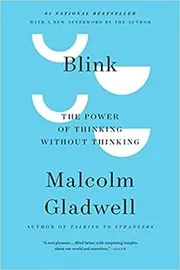
For readers who want a quick, story-driven entry into intuition. It is easier to get through than Thinking, Fast and Slow, though its memorable cases offer less systematic guidance on when a snap judgment deserves trust.
What it's about
In this fast-moving book about snap judgments, Gladwell explores how people think without thinking. He shows when quick impressions can be uncannily accurate, when they fail badly, and why expert intuition depends on knowing what details to ignore.
Also recommended by
3 people- Ev Williams recommended this book
Ev Williams
On the "books read" section of Ev Williams' GoodReads profile.
Ev Williams's recommendation of this book  Kevin Systrom recommended this book
Kevin Systrom
Kevin Systrom recommended this book on Facebook.
Kevin Systrom's recommendation of this book  Mike Shinoda recommended this book
Mike Shinoda
"I know most of the guys in the band read [this book]." - Mike Shinoda
Mike Shinoda's recommendation of this book

How To Win Friends and Influence People
For readers seeking practical help with listening, cooperation, and social confidence. Its concrete interpersonal advice is easier to try than an academic survey, though its older business examples and instrumental approach to relationships won't suit everyone.
What it's about
Carnegie presents practical guidance for building relationships, communicating effectively, and influencing others. Stories and principles explore social confidence, leadership, and cooperation, offering approaches readers can apply to interactions in their personal lives and at work.
Also recommended by
18 people Warren Buffett recommended this book
Warren Buffett
"In my office, you will not see the degree I have from the University of Nebraska, or the master’s degree I have from Columbia University, but you’ll see the certificate I got from the Dale Carnegie course." - Warren Buffett
Warren Buffett's recommendation of this book - Scott Adams recommended this book
Scott Adams
One of the books on Scott Adams' "Persuasion Reading List."
Scott Adams's recommendation of this book  Dave Ramsey recommended this book
Dave Ramsey
Recommended on Dave Ramsey's website.
Dave Ramsey's recommendation of this book  Paul Graham recommended this book
Paul Graham
"The one book we encourage startup founders to read. [...] It's critically important for anyone in business." - Paul Graham
Paul Graham's recommendation of this book  Derek Sivers recommended this book
Derek Sivers
Derek Sivers mentioned this book on "The Tim Ferriss Show" podcast.
Derek Sivers's recommendation of this book  Dustin Moskovitz recommended this book
Dustin Moskovitz
"Seek to be understood." - Dustin Moskovitz
Dustin Moskovitz's recommendation of this book +12
More recommendations
- Ken Block
"One of the first books that really helped me achieve my management style and what’s helped me really be successful." - Ken Block
- DJ Vlad
Most Recommended Books reached out to DJ Vlad directly.
- Strauss Zelnick
"Archaic references and overweening title to the side, it’s actually a great guide to leadership and salesmanship." - Strauss Zelnick
- Daymond John
"I love all the Dale Carnegie books." - Daymond John
- Shay Carl
"A staple that I have listened to three or four times." - Shay Carl
- Tim Draper
"[One of the books] that are recommended or required at Draper University." - Tim Draper
- Sahil Lavingia
Sahil Lavingia recommended this book on Notion.
- Barbara Corcoran
"A must read for anyone in business." - Barbara Corcoran
- Alex Hormozi
Alex Hormozi recommended this book on Instagram.
- Michael Hyatt
Michael Hyatt recommended this book on his website.
- Ben Greenfield
Most Recommended Books reached out to Ben Greenfield directly.
- Patrick Bet-David
Patrick Bet-David recommended this book on his website.
- Ken Block

Stumbling on Happiness
For readers who keep finding that anticipated rewards feel different when they arrive. Its focus on forecasting happiness is narrower than a general wellbeing guide, though it explains mistaken expectations more than it provides exercises.
What it's about
Daniel Gilbert examines why people often misjudge what will make them happy in the future. Drawing on psychology and related disciplines, he explores the distortions of imagination and memory that shape expectations and lead people to misunderstand their future selves.
Also recommended by
6 people Sam Harris recommended this book
Sam Harris
"A good book which I recommend." - Sam Harris
Sam Harris's recommendation of this book - Derek Sivers recommended this book
Derek Sivers
"Harvard professor of psychology has studied happiness for years, and shares factual findings that will change the way you look at the world." - Derek Sivers
Derek Sivers's recommendation of this book  Maria Popova recommended this book
Maria Popova
"Explores the sometimes subtle, sometimes radical changes we can make in our everyday cognitive strategies in order to avoid ending up unhappy and disappointed." - Maria Popova
Maria Popova's recommendation of this book - Ev Williams recommended this book
Ev Williams
On the "books read" section of Ev Williams' GoodReads profile.
Ev Williams's recommendation of this book  Andrew Wilkinson recommended this book
Andrew Wilkinson
"Had a surprisingly large impact on the way I think about the future, planning, travel, relationships, and so many other things." - Andrew Wilkinson
Andrew Wilkinson's recommendation of this book  Mark Manson recommended this book
Mark Manson
"The red-headed stepchild of happiness books." - Mark Manson
Mark Manson's recommendation of this book

For readers who want a vocabulary for emotions, empathy, and self-awareness. Its broad social perspective reaches beyond the decision-making titles here, though the expansive idea of emotional intelligence is less precise than the title may suggest.
What it's about
Daniel Goleman explores how understanding and managing emotions affects people's lives and relationships. He broadens the discussion of intelligence beyond IQ, considering the role of emotional abilities in personal development, education, and work.
Also recommended by
4 people Drew Houston recommended this book
Drew Houston
"It’s nonfiction, but it spelled out something that I just didn’t know you could kind of break down in a logical way. And, suddenly, I had this understanding about the world that I didn’t have before." - Drew Houston
Drew Houston's recommendation of this book  Jack Kornfield recommended this book
Jack Kornfield
Jack Kornfield mentioned this book on "The Tim Ferriss Show" podcast.
Jack Kornfield's recommendation of this book  Sharon Salzberg recommended this book
Sharon Salzberg
Sharon Salzberg mentioned this book on "The Tim Ferriss Show" podcast.
Sharon Salzberg's recommendation of this book  Patrick Bet-David recommended this book
Patrick Bet-David
Patrick Bet-David recommended this book on his website.
Patrick Bet-David's recommendation of this book

For readers who want to question their confidence in attention and memory. Its focused demonstrations make mental limits more concrete than broad advice about bias, though recognizing those limits doesn't automatically prevent mistakes in daily life.
What it's about
Christopher Chabris and Daniel Simons examine mistaken intuitions about attention, memory, perception, and reasoning. Combining experiments with everyday stories, they show how confidence in mental abilities can conceal significant limitations and lead to costly errors.
Also recommended by
2 people Nassim Taleb recommended this book
Nassim Taleb
"The illusion of attention is one of the most important, surprising, and least known flaws in human thinking. This lucid book examines it in detail." - Nassim Taleb
Nassim Taleb's recommendation of this book  Vinod Khosla recommended this book
Vinod Khosla
"Rigorously written (unlike many pysch books), fun, funny,surprising, enlightening." - Vinod Khosla
Vinod Khosla's recommendation of this book
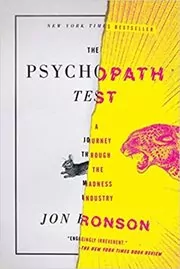
The Psychopath Test
For readers who prefer investigative reporting to a theory-led introduction. Its encounters raise memorable questions about psychiatric labels and their use, though the comic narrative is not a diagnostic manual or a systematic account of psychopathy.
What it's about
Ronson follows a strange academic hoax into the world of psychopathy, meeting patients, prison figures, and the experts who define madness. Funny and uneasy, it asks who gets labeled dangerous, and who gets to decide.
Also recommended by
2 people Shah Rukh Khan recommended this book
Shah Rukh Khan
"It's quite nice." - Shah Rukh Khan
Shah Rukh Khan's recommendation of this book  Jon Stewart recommended this book
Jon Stewart
"I took the test, and I'm happy to report I'm just neurotic." - Jon Stewart
Jon Stewart's recommendation of this book
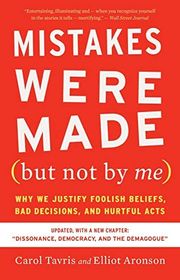
Mistakes Were Made (But Not by Me): Why We Justify Foolish Beliefs, Bad Decisions, and Hurtful Acts
For readers interested in arguments, entrenched beliefs, and difficulty admitting error. Its sustained focus on self-justification goes deeper than a catalog of biases, though the uncomfortable examples invite reflection more than they offer a quick solution.
What it's about
Carol Tavris and Elliot Aronson examine how cognitive dissonance leads people to defend mistaken beliefs and harmful decisions. Examples from relationships, institutions, and public life show how self-justification works and why acknowledging error can be difficult.

For readers interested in how personal narratives affect behavior and intervention. Its attention to testing well-intended ideas distinguishes it from general self-help, though the examples don't amount to a universal technique for changing anyone's life.
What it's about
Timothy D. Wilson explores how changing the stories people tell about themselves can influence behavior. Drawing on psychological research, he examines approaches to personal change, parenting, education, and prejudice, contrasting tested interventions with intuitive assumptions.

For readers overwhelmed by options and second-guessing. Its distinction between searching for the best and accepting good enough is easy to recognize, though the costs of choice depend on circumstances rather than a single rule.
What it's about
Barry Schwartz examines how an abundance of options can produce anxiety, regret, and dissatisfaction. Across consumer decisions and major life choices, he argues for managing expectations and adopting habits that make choosing less burdensome.
Also recommended by
2 people Pavel Tsatsouline recommended this book
Pavel Tsatsouline
"A very good book." - Pavel Tsatsouline
Pavel Tsatsouline's recommendation of this book  Noah Kagan recommended this book
Noah Kagan
"At restaurants, close the menu after you find the 1 dish that you like." - Noah Kagan
Noah Kagan's recommendation of this book

For readers curious about how children acquire language and how grammar works. Its extended argument offers greater depth on language than the general psychology titles, though technical passages and a strongly argued theoretical position require patience.
What it's about
Steven Pinker argues that language is an evolved human capacity rather than simply a cultural invention. Exploring grammar, childhood learning, and the brain, he uses everyday speech and linguistic research to explain how language works.
Also recommended by
1 person- Charlie Munger recommended this book
Charlie Munger
"Says that human language ability is not just learned, it is deeply buried - to a considerable extent - in the genome." - Charlie Munger
Charlie Munger's recommendation of this book

The Social Animal
For readers ready for a broader introduction to social psychology. It connects conformity, prejudice, persuasion, and self-justification more systematically than a single-topic popular book, though the textbook-like breadth takes more concentration than narrative nonfiction.
What it's about
Elliot Aronson introduces social psychology through experiments and examples from everyday life. He examines conformity, persuasion, self-justification, aggression, prejudice, and attraction, exploring the social influences and motives behind human behavior.
Also recommended by
1 person- Ramit Sethi recommended this book
Ramit Sethi
"[An outstanding book] on human behavior." - Ramit Sethi
Ramit Sethi's recommendation of this book
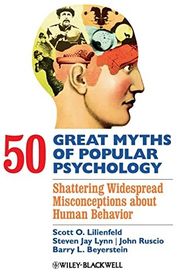
50 Great Myths of Popular Psychology: Shattering Widespread Misconceptions about Human Behavior
For beginners who want to question familiar claims before accepting them. Its claim-by-claim format gives more practice in skeptical reading than the narrative titles here, though its publication date means newer research needs separate checking.
What it's about
Four psychologists examine fifty common beliefs about memory, intelligence, development, mental health, and other topics. They compare popular claims with research and explain how misleading intuitions and mistaken reasoning allow psychological myths to spread.

For newcomers who want a brief introduction to irrational decisions. Its business and everyday stories are less demanding than Kahneman's treatment, though the compact format leaves less room to examine methods, qualifications, and competing explanations.
What it's about
Ori and Rom Brafman examine psychological forces that push people toward irrational decisions. Drawing on research and stories, they explore loss aversion, premature judgments, and social influences, then consider ways to recognize and resist these pressures.

For readers trying to change a team, community, or personal routine. Its framework turns motivation and environmental obstacles into usable questions, though its selected success stories give less attention to situations where change efforts fail.
What it's about
Chip and Dan Heath examine why lasting change is difficult, focusing on tension between rational intentions and emotional habits. Stories from workplaces, communities, and everyday life illustrate approaches for aligning motivation and creating conditions for change.
Also recommended by
3 people Adam Grant recommended this book
Adam Grant
"My all-time favorite book on change." - Adam Grant
Adam Grant's recommendation of this book - Andrew Wilkinson recommended this book
Andrew Wilkinson
"Such a great book." - Andrew Wilkinson
Andrew Wilkinson's recommendation of this book  Michael Hyatt recommended this book
Michael Hyatt
Michael Hyatt recommended this book on his website.
Michael Hyatt's recommendation of this book
Sources
- 1
Best Psychology Books
jamesclear.com
- 2
10 Psychology Books Everyone Should Read
oxfordscholastica.com
- 3
50 Must-Read Psychology Books (Best Complete List)
sparringmind.com
- 4
The Best Psychology Books of All Time: All Fields (Updated-2020)
taylorpearson.me
- 5
Psychology books to read if you’re a psychology fan
walbrook.ac.uk
- 6
Psychology Books
goodreads.com
- 7
What books are a must to read for psychology students ?
reddit.com
- 8
Popular Books on Psychology
apa.org
- 9
what is the best psychology book you’ve ever read?
reddit.com




Edited by
Software engineer whose passion for tracking book recommendations from podcasts inspired the creation of MRB.
Lead investor at 3one4 Capital whose startup expertise and love for books helped shape MRB and its growth.
Comments
Spotted a missing book, a wrong order or a mistake? Tell us and we'll fix this page.
We're a reading guide, not the author or publisher, so we can't send books or pass on messages.