
13 Best Happiness Books
The best happiness books, ranked by how many expert sources recommend each one, with notes on who each suits, from readers to people seeking exercises.
Our take
Happiness books do not all mean the same thing by happiness. Some investigate how people predict their feelings, while others focus on meaning, relationships, everyday habits, or responding to difficulty. A book can help you understand an idea without providing a practical method, and a personal account can offer useful questions without establishing a universal formula.
Stumbling on Happiness examines why forecasts about our future feelings go wrong. The Happiness Project follows one person’s experiments, while The How of Happiness offers more structured activities. The Happiness Trap questions the effort to eliminate unwanted feelings altogether. For spiritual reflection, The Art of Happiness and The Book of Joy use dialogue and lived experience. Authentic Happiness and Flourish show how Seligman’s account of well-being develops over time. Start by deciding whether you want an explanation, exercises, a personal story, or a perspective to think alongside.
13 books · 7 sources · Last updated
As an Amazon Associate, we earn from qualifying purchases (at no extra cost to you).
How to choose from this list
Skip to the full rankingIf you want to understand happiness research: Stumbling on Happiness → The Happiness Hypothesis
If you want activities to reflect on: The How of Happiness → The Happiness Project
If striving to feel happy has become frustrating: The Happiness Trap
If you prefer spiritual dialogue: The Art of Happiness → The Book of Joy
If you want to explore positive psychology: Authentic Happiness → Flourish
If you want workplace-oriented ideas: The Happiness Advantage
The 13 books, ranked
Ranked by how many expert sources name each book. Ties go to the book more people recommend.

Stumbling on Happiness
For readers who want to understand why imagined futures so often disappoint. Gilbert makes psychological questions entertaining and concrete, though the focus is on explaining mistaken expectations rather than supplying a program for becoming happier.
What it's about
Daniel Gilbert examines why people often misjudge what will make them happy in the future. Drawing on psychology and related disciplines, he explores the distortions of imagination and memory that shape expectations and lead people to misunderstand their future selves.
Also recommended by
6 people Sam Harris recommended this book
Sam Harris
"A good book which I recommend." - Sam Harris
Sam Harris's recommendation of this book  Derek Sivers recommended this book
Derek Sivers
"Harvard professor of psychology has studied happiness for years, and shares factual findings that will change the way you look at the world." - Derek Sivers
Derek Sivers's recommendation of this book  Maria Popova recommended this book
Maria Popova
"Explores the sometimes subtle, sometimes radical changes we can make in our everyday cognitive strategies in order to avoid ending up unhappy and disappointed." - Maria Popova
Maria Popova's recommendation of this book  Ev Williams recommended this book
Ev Williams
On the "books read" section of Ev Williams' GoodReads profile.
Ev Williams's recommendation of this book  Andrew Wilkinson recommended this book
Andrew Wilkinson
"Had a surprisingly large impact on the way I think about the future, planning, travel, relationships, and so many other things." - Andrew Wilkinson
Andrew Wilkinson's recommendation of this book  Mark Manson recommended this book
Mark Manson
"The red-headed stepchild of happiness books." - Mark Manson
Mark Manson's recommendation of this book

For readers who enjoy connecting philosophical traditions with psychological explanations. Haidt gives familiar ideas a broader interpretive frame, though the synthesis is selective and the research reflects the period in which the book was written.
What it's about
Jonathan Haidt examines ten ideas about happiness and meaning drawn from philosophical and religious traditions. He tests their implications against psychological research, exploring how ancient perspectives can illuminate relationships, virtue, fulfillment, and the construction of a satisfying life.
Also recommended by
4 people Joe Rogan recommended this book
Joe Rogan
"One of the best and most insightful books I’ve ever read." - Joe Rogan
Joe Rogan's recommendation of this book  Charles Koch recommended this book
Charles Koch
Charles Koch recommended this book on his website.
Charles Koch's recommendation of this book  Tony Hsieh recommended this book
Tony Hsieh
"One great book in this field." - Tony Hsieh
Tony Hsieh's recommendation of this book  Derren Brown recommended this book
Derren Brown
"First got me thinking about happiness (which led to Happy, my last book)." - Derren Brown
Derren Brown's recommendation of this book

For readers interested in positive psychology applied to working life. Achor organizes the argument into memorable practices, though the upbeat workplace framing can understate structural pressures and does not establish that positivity always produces success.
What it's about
Shawn Achor argues that happiness can support success rather than merely follow it. Drawing on positive psychology and workplace examples, he presents seven principles for developing a more positive outlook, manageable goals and supportive relationships.
Also recommended by
2 people Tai Lopez recommended this book
Tai Lopez
"Interesting book on how to be happy." - Tai Lopez
Tai Lopez's recommendation of this book  Ali Abdaal recommended this book
Ali Abdaal
Ali Abdaal recommended this book on his website.
Ali Abdaal's recommendation of this book

For readers who prefer reflective dialogue about compassion and emotional life. The Dalai Lama and Howard Cutler connect Buddhist teaching with ordinary concerns, though the spiritual perspective differs from a controlled comparison of practical interventions.
What it's about
The Dalai Lama and psychiatrist Howard Cutler explore happiness through conversations, stories, and meditation. They discuss anxiety, anger, relationships, loss, and wealth, connecting Buddhist teachings with the ordinary difficulties that shape people's search for inner peace.
Also recommended by
1 person- Jeff Weiner recommended this book
Jeff Weiner
Jeff Weiner recommended this book on Twitter.
Jeff Weiner's recommendation of this book
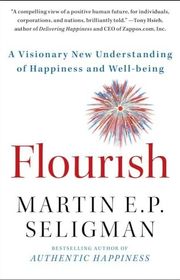
Flourish: A Visionary New Understanding of Happiness and Well-being
For readers who want well-being discussed beyond positive feelings alone. Seligman expands the framework to relationships, meaning, engagement, and accomplishment, though the ambitious applications and selected examples need comparison with later research.
What it's about
Martin Seligman develops a theory of well-being organized around positive emotion, engagement, relationships, meaning, and accomplishment. Exercises and accounts of applications in schools, workplaces, and other institutions connect the framework with attempts to improve everyday life.

For readers tired of treating every unpleasant feeling as a failure to be happy. Harris offers exercises grounded in acceptance and values, though the approach asks for sustained practice and is broader than a quick mood-improvement guide.
What it's about
Russ Harris explores how striving to eliminate unpleasant feelings can interfere with a satisfying life. Using acceptance and commitment therapy, he introduces mindfulness, acceptance, and values-based action through practical explanations and exercises for handling difficult thoughts and emotions.

For readers who want a reflective conversation about joy amid hardship. The friendship and differing spiritual traditions give the ideas a personal warmth, though the narrative and practices provide perspective rather than a guaranteed route to happiness.
What it's about
The Dalai Lama and Desmond Tutu discuss finding joy despite suffering during a week together in Dharamsala. With Douglas Abrams, they share personal stories, consider obstacles such as fear and grief, and explain practices underlying their approach.
Also recommended by
3 people Jack Kornfield recommended this book
Jack Kornfield
"A wonderful book." - Jack Kornfield
Jack Kornfield's recommendation of this book  Ellen DeGeneres recommended this book
Ellen DeGeneres
"When the Dalai Lama and Archbishop Desmond Tutu write a book, you gotta read it." - Ellen DeGeneres
Ellen DeGeneres's recommendation of this book  Alanis Morissette recommended this book
Alanis Morissette
"A beautiful book." - Alanis Morissette
Alanis Morissette's recommendation of this book

The Happiness Project
For readers who enjoy watching someone test small changes within an ordinary year. Rubin makes experimentation feel approachable through personal experience, though her circumstances and preferences limit how directly the lessons transfer to another life.
What it's about
Gretchen Rubin chronicles a year spent testing ways to become happier within her existing life. Drawing on research, philosophy, and personal experiments, she explores how everyday changes and deliberate resolutions can affect her sense of contentment.

Authentic Happiness
Using the New Positive Psychology to Realize Your Potential for Lasting Fulfillment
For readers interested in the early framework of positive psychology and personal strengths. Seligman connects reflection exercises with a broader argument about fulfillment, though later work develops the model beyond this book’s original formulation.
What it's about
Martin Seligman presents positive psychology as a way to understand lasting fulfillment. Exercises help readers identify their characteristic strengths and consider how to use them in relationships, work, and other areas of life to cultivate meaning and satisfaction.

For readers drawn to Buddhist-informed reflection on everyday emotional steadiness. Boorstein keeps relationships and ordinary frustrations close to the discussion, though the contemplative approach offers fewer structured measurements or comparative research explanations.
What it's about
Sylvia Boorstein draws on Buddhist practice to explore steadiness amid ordinary frustrations and uncertainty. Personal stories and reflections connect mindfulness, concentration, and compassionate effort with family relationships and the challenge of remaining engaged with the wider world.

For readers who prefer memorable prompts and accessible exercises to a sustained academic argument. Pasricha challenges familiar assumptions about achievement, though the packaged rules simplify differences in circumstance and are better treated as invitations to reflect.
What it's about
Neil Pasricha presents nine approaches to happiness that question familiar assumptions about success, advice, and retirement. Personal experience and practical exercises support his argument that fulfillment begins with changing everyday expectations and habits rather than accumulating achievements.

For readers seeking a motivational perspective on responding to adversity. Wilkinson encourages attention to attitudes and habits, though the broad promise in the title should not imply that difficult circumstances are irrelevant or happiness is always controllable.
What it's about
Kirk Wilkinson argues that difficult circumstances need not determine a person's sense of happiness. His guide presents an approach to responding to adversity, encouraging readers to examine their attitudes and develop habits that support greater contentment.

For readers who want to try structured activities and consider which fit their lives. Lyubomirsky connects research with exercises, though the findings and numerical claims need their research context and individual results will vary.
What it's about
Sonja Lyubomirsky combines positive psychology research with a workbook approach to everyday well-being. Quizzes, exercises, and suggested activities help readers consider their individual preferences and choose strategies intended to cultivate happiness and sustain it over time.
Sources
- 1
13 Best Happiness Books For Living A Happier Life
lifehack.org
- 2
The Best Books on Happiness, recommended by Jonathan Haidt
fivebooks.com
- 3
Best Happiness Books
goodreads.com
- 4
100 Best Happiness Books of All Time
shortform.com
- 5
What are some of the best books to read on happiness?
reddit.com
- 6
The 21 Best Happiness Books of All Time
berkeleywellbeing.com
- 7
15 Best Happiness Books and Are They Worth Your Time?
positivepsychology.com


Edited by
Software engineer whose passion for tracking book recommendations from podcasts inspired the creation of MRB.
Lead investor at 3one4 Capital whose startup expertise and love for books helped shape MRB and its growth.
Comments
Spotted a missing book, a wrong order or a mistake? Tell us and we'll fix this page.
We're a reading guide, not the author or publisher, so we can't send books or pass on messages.