
21 Best Economy Books
The best books about the economy, ranked by how many expert sources recommend each one, with notes for beginners, policy readers, and economic history fans.
Our take
Understanding the economy involves more than following markets or learning financial terminology. These books explore incentives, production, money, institutions, inequality, and the choices people make under different constraints. Some introduce a broad framework, while others explain a research tradition, revisit economic history, or argue for a particular approach to policy.
Naked Economics and The Undercover Economist offer accessible starting points. Economics: The User's Guide compares several ways of thinking, while The Worldly Philosophers places influential ideas in their historical setting. Misbehaving and Nudge focus on behavior and decision environments. For more specific questions, Poor Economics examines evidence about poverty, Why Nations Fail emphasizes institutions, and Capital in the Twenty-First Century develops a sustained argument about inequality.
Start with a broad introduction, then choose a focused study and compare its assumptions with a different perspective.
21 books · 7 sources · Last updated
As an Amazon Associate, we earn from qualifying purchases (at no extra cost to you).
How to choose from this list
Skip to the full rankingIf you want a plain-language introduction: Naked Economics → The Undercover Economist
If you want to compare economic perspectives: Basic Economics → Economics: The User's Guide
If you want behavioral economics: Misbehaving → Nudge
If you want poverty and development: Poor Economics → Why Nations Fail
If you want the history of ideas and finance: The Worldly Philosophers → The Ascent of Money
If you want wealth and obligation examined in depth: Capital in the Twenty-First Century → Debt: The First 5,000 Years
The 21 books, ranked
Ranked by how many expert sources name each book. Ties go to the book more people recommend.

Thinking, Fast and Slow
For readers interested in the psychology behind judgment and choice rather than a conventional economics overview. Its detailed explanations connect many decision-making patterns, though the length and research discussion make it more demanding than a quick introductory read.
What it's about
Kahneman explores two modes of thought: quick, intuitive responses and slower, deliberate reasoning. Drawing on psychological research, he examines how biases and impressions shape decisions, and when intuition helps or misleads in personal and professional life.
Also recommended by
19 people Bill Gates recommended this book
Bill Gates
List of books Bill Gates read in 2012.
Bill Gates's recommendation of this book  Ray Dalio recommended this book
Ray Dalio
Ray Dalio mentioned this book in his book, "Principles."
Ray Dalio's recommendation of this book  Scott Adams recommended this book
Scott Adams
One of the books on Scott Adams' "Persuasion Reading List."
Scott Adams's recommendation of this book  Naval Ravikant recommended this book
Naval Ravikant
"Fine book but it didn’t need to be an entire book. A blog post would have gotten the point across." - Naval Ravikant
Naval Ravikant's recommendation of this book  Ev Williams recommended this book
Ev Williams
"I love surprising scientific findings, as well as information about how our brains work. [This book] is a treasure trove of both." - Ev Williams
Ev Williams's recommendation of this book  Marc Andreessen recommended this book
Marc Andreessen
"Captivating dive into human decision making, marred by inclusion of several/many? psychology studies that fail to replicate. Will stand as a cautionary tale?" - Marc Andreessen
Marc Andreessen's recommendation of this book +13
More recommendations
- Stewart Brand
Stewart Brand recommended this book on his "Selected Books for the Manual for Civilization" blog post.
- Bryan Johnson
"I started reading [this book] and I became increasingly convinced of my own fickleness and inability to actually act rationally in life." - Bryan Johnson
- Derek Sivers
"If you liked 'Predictably Irrational' or 'Stumbling on Happiness' or any of those pop-psychology books, well, this is the Godfather of all of their work." - Derek Sivers
- Sam Altman
One of Sam Altman's answers to "What are some of the best books you recommend for a young startup founder?"
- Ron Conway
"Covers all three phases of [the author's] career: his early days working oncognitive bias, his work on prospect theory, and his later work on happiness." - Ron Conway
- Jason Fried
"I enjoyed [this book]. Fascinating." - Jason Fried
- Nassim Taleb
"A landmark book in social thought, in the same league as The Wealth of Nations by Adam Smith and The Interpretation of Dreams by Sigmund Freud." - Nassim Taleb
- Sahil Lavingia
Sahil Lavingia recommended this book on Notion.
- Mark Manson
Mark Manson recommended this book on his website.
- Jay Shetty
"[One] of my favourite books." - Jay Shetty
- Michiko Kakutani
"Has become essential reading in many baseball front offices and among coaching staffs." - Michiko Kakutani
- Preston Pysh
"An incredible book!" - Preston Pysh
- Ben Greenfield
Most Recommended Books reached out to Ben Greenfield directly.
- Stewart Brand

Choose this for an entertaining introduction to asking unexpected questions about incentives and behavior. Its case-based storytelling is approachable, though the selective examples do not provide a systematic explanation of inflation, employment, or the wider economy.
What it's about
Steven D. Levitt and Stephen J. Dubner use economic reasoning to investigate unexpected questions about everyday life. Their accounts of cheating, crime, parenting, and real estate explore incentives and challenge familiar explanations of how people behave.
Also recommended by
3 people Daymond John recommended this book
Daymond John
"I love newer books like [this book]." - Daymond John
Daymond John's recommendation of this book  James Altucher recommended this book
James Altucher
James Altucher mentioned this book on "The Tim Ferriss Show" podcast.
James Altucher's recommendation of this book - Ev Williams recommended this book
Ev Williams
On the "books read" section of Ev Williams' GoodReads profile.
Ev Williams's recommendation of this book

The Undercover Economist
Exposing Why the Rich Are Rich, the Poor Are Poor - and Why You Can Never Buy a Decent Used Car!
Choose this to understand prices, information, and incentives through ordinary transactions. Its concrete settings make microeconomic reasoning memorable, though it gives less comprehensive treatment to economy-wide subjects than a broad introductory course would.
What it's about
Tim Harford uses everyday questions about coffee prices, traffic and health care to introduce economic ideas. He explains how money, incentives and markets shape who gets what, while considering the differences between economic efficiency and a fair society.
Also recommended by
1 person- Naval Ravikant recommended this book
Naval Ravikant
Naval Ravikant mentioned this book on "The Knowledge Project with Shane Parrish" podcast.
Naval Ravikant's recommendation of this book

For readers who want a concise, clearly argued free-market perspective on policy consequences. Its recurring analytical principle makes the argument easy to follow, though the older examples and strong viewpoint do not represent the full range of economic thought.
What it's about
Henry Hazlitt introduces economic ideas through critiques of policies and common assumptions. Writing from a free-market perspective, he examines government intervention and argues for considering the wider consequences of economic decisions.
Also recommended by
7 people- Naval Ravikant recommended this book
Naval Ravikant
"Great book. Required reading." - Naval Ravikant
Naval Ravikant's recommendation of this book  Ben Shapiro recommended this book
Ben Shapiro
"[If you read this book and "Basic Economics"] you'll know more than all or your classmates combined about the basic workings of free markets and economics." - Ben Shapiro
Ben Shapiro's recommendation of this book  Ryan Petersen recommended this book
Ryan Petersen
Ryan Petersen mentioned this book on Twitter.
Ryan Petersen's recommendation of this book  Mark Spitznagel recommended this book
Mark Spitznagel
"If I am able to get my children to read only one economics text in their lifetime, God forbid, it would be [this book]." - Mark Spitznagel
Mark Spitznagel's recommendation of this book  Changpeng Zhao recommended this book
Changpeng Zhao
"There are few books that better encapsulate the inner workings of economics than this one." - Changpeng Zhao
Changpeng Zhao's recommendation of this book  Peter Schiff recommended this book
Peter Schiff
Peter Schiff recommended this book on his website.
Peter Schiff's recommendation of this book +1
More recommendations
- Rand Paul
On Rand Paul's website's "reading suggestions for students" section.
- Rand Paul

For readers who want an anthropological challenge to familiar stories about money, exchange, and obligation. Its historical reach makes economic arrangements feel less inevitable, though the sweeping argument and selection of evidence invite critical comparison.
What it's about
David Graeber traces the history of debt, credit, and money across cultures and thousands of years. Combining anthropology with economic history, he challenges familiar accounts of barter and examines how obligations become entangled with morality, violence, and political power.
Also recommended by
2 people Seth Godin recommended this book
Seth Godin
"The most fascinating book I've read all year [in 2015]." - Seth Godin
Seth Godin's recommendation of this book  Mark Manson recommended this book
Mark Manson
Mark Manson recommended this book on his website.
Mark Manson's recommendation of this book
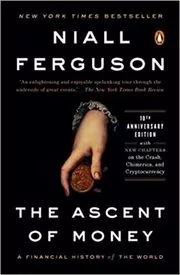
Choose this for a narrative history of financial institutions rather than a guide to managing your money. Its broad connections make finance part of wider history, though the selective examples and edition's endpoint limit its completeness.
What it's about
From ancient Mesopotamian clay tablets to modern derivatives, this lively history explains how money, credit, bonds, and insurance evolved, showing how financial innovation has fueled both prosperity and crisis and arguing that understanding finance is essential to understanding world history.
Also recommended by
2 people Max Levchin recommended this book
Max Levchin
One of Max Levchin's answers to "what's your favourite business book you'd advise to young entrepreneurs?"
Max Levchin's recommendation of this book  Fareed Zakaria recommended this book
Fareed Zakaria
"Fascinating." - Fareed Zakaria
Fareed Zakaria's recommendation of this book

For readers who want a large historical argument connecting political institutions with prosperity. Its comparative stories make the thesis accessible, though the strong institutional lens and repeated examples can leave other explanations less fully developed.
What it's about
Daron Acemoglu and James Robinson examine why countries follow different paths toward prosperity or poverty. Historical comparisons support their argument that political and economic institutions, rather than geography or culture alone, shape national development and opportunity.
Also recommended by
2 people Mark Zuckerberg recommended this book
Mark Zuckerberg
"Explores the different kinds of social institutions and incentives that nations have applied to encourage prosperity, economic development and elimination of poverty." - Mark Zuckerberg
Mark Zuckerberg's recommendation of this book - Bill Gates recommended this book
Bill Gates
"A major disappointment. I found the authors’ analysis vague and simplistic." - Bill Gates
Bill Gates's recommendation of this book

Choose this for a forceful argument about rare events, uncertainty, and the limits of prediction. Its stories challenge confidence in tidy explanations, though the polemical style and digressions make it less systematic than a probability textbook.
What it's about
Taleb examines rare, unexpected events that have enormous consequences and are explained too confidently afterward. He challenges conventional assumptions about prediction and knowledge, exploring why people overlook uncertainty and underestimate the influence of the highly improbable.
Also recommended by
9 people Jeff Bezos recommended this book
Jeff Bezos
Part of "Jeff's Reading List."
Jeff Bezos's recommendation of this book - Bill Gates recommended this book
Bill Gates
List of books Bill Gates read in 2012.
Bill Gates's recommendation of this book  Edward Norton recommended this book
Edward Norton
"I really like [this book]." - Edward Norton
Edward Norton's recommendation of this book  Nick Kokonas recommended this book
Nick Kokonas
"Great; it’s fine." - Nick Kokonas
Nick Kokonas's recommendation of this book - James Altucher recommended this book
James Altucher
James Altucher mentioned this book on "The Tim Ferriss Show" podcast.
James Altucher's recommendation of this book  Art De Vany recommended this book
Art De Vany
"Marvelous." - Art De Vany
Art De Vany's recommendation of this book +3
More recommendations
- Ev Williams
On the "books read" section of Ev Williams' GoodReads profile.
- Ryan Shea
Ryan Shea recommended this book on Twitter.
- Pavel Durov
"I would recommend reading [this book]." - Pavel Durov
- Ev Williams

Capital in the Twenty-First Century
Choose this for a substantial historical argument about wealth, income, and inequality. Its use of long-run data gives the discussion depth beyond a short policy essay, though the scale, interpretation, and proposed remedies demand critical, sustained reading.
What it's about
Thomas Piketty examines the long-term accumulation and distribution of wealth through historical economic data. He explores relationships among capital, growth, inheritance, and inequality, concluding with proposals concerning taxation and institutions that might influence the concentration of wealth.
Also recommended by
4 people Alexandria Ocasio-Cortez recommended this book
Alexandria Ocasio-Cortez
Alexandria Ocasio-Cortez recommended this book on Twitter.
Alexandria Ocasio-Cortez's recommendation of this book - Bill Gates recommended this book
Bill Gates
"A 700-page treatise on economics translated from French." - Bill Gates
Bill Gates's recommendation of this book  Carl Icahn recommended this book
Carl Icahn
"Very good, very well thought out... And I agree that there are storm clouds ahead." - Carl Icahn
Carl Icahn's recommendation of this book  Peter Thiel recommended this book
Peter Thiel
"Accurately describes inequality in the past and present of countries like the United States." - Peter Thiel
Peter Thiel's recommendation of this book

The General Theory of Employment, Interest, and Money
For readers who want to encounter a major macroeconomic argument in its original form after an introduction. Its historical importance rewards close study, though specialized reasoning and period debates make it a demanding route into the subject.
What it's about
John Maynard Keynes challenges classical explanations of employment through a theory centered on effective demand. He examines consumption, investment, interest, and money, explaining why economies may remain below full employment and considering implications for economic policy.
Also recommended by
3 people Eric Weinstein recommended this book
Eric Weinstein
Eric Weinstein tweet about books that mattered enough to him.
Eric Weinstein's recommendation of this book  Warren Buffett recommended this book
Warren Buffett
"Talked about investment speculation and the propensity of people to speculate." - Warren Buffett
Warren Buffett's recommendation of this book  Brad Delong recommended this book
Brad Delong
Brad Delong recommended this book in his website.
Brad Delong's recommendation of this book
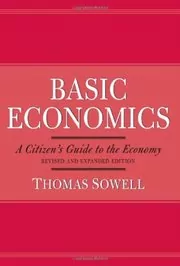
Basic Economics
Choose this for a long, equation-free explanation organized around incentives, scarcity, and policy consequences. Its direct prose suits general readers, though its free-market orientation is a substantive viewpoint to compare with other approaches rather than an invisible default.
What it's about
Written for general readers, this book explains core economic ideas—scarcity, prices, profits and losses, trade, and inflation—without graphs or equations. Sowell uses examples from everyday life and history to show how different systems encourage prosperity or waste.
Also recommended by
1 person- Ben Shapiro recommended this book
Ben Shapiro
"[If you read this book and "Economics in One Lesson"] you'll know more than all or your classmates combined about the basic workings of free markets and economics." - Ben Shapiro
Ben Shapiro's recommendation of this book

Choose this for the story of how behavioral economics challenged assumptions about rational choice. The personal narrative makes academic debates approachable, though its memoir structure offers less systematic instruction than a textbook or a policy guide.
What it's about
Richard Thaler recounts the development of behavioral economics and his challenges to models of perfectly rational decision-making. Through research, everyday examples, and academic disputes, he explores how human habits and predictable mistakes complicate traditional economic assumptions.
Also recommended by
1 person Peter Mallouk recommended this book
Peter Mallouk
Peter Mallouk mentioned this book on Twitter.
Peter Mallouk's recommendation of this book

A useful first choice for readers who want broad economic concepts explained without equations. Its familiar examples lower the barrier to entry, though the conversational treatment and predominantly American context simplify issues that become more complex in formal study.
What it's about
Charles Wheelan explains economic ideas through familiar situations rather than equations. His account connects incentives, markets, trade, and public policy with contemporary debates over inequality, automation, financial crises, and the choices people and governments make.
Also recommended by
1 person Mr. Money Mustache recommended this book
Mr. Money Mustache
"This book’s claim to fame is that it uses absolutely no graphs or numbers when explaining economics. It’s also moderately funny at times." - MMM
Mr. Money Mustache's recommendation of this book

23 Things They Don't Tell You about Capitalism
For readers who want short, pointed challenges to familiar free-market claims. Its numbered essays make the arguments easy to sample and compare, though the polemical format compresses counterarguments and works best alongside alternative perspectives.
What it's about
Ha-Joon Chang challenges widely repeated assumptions about free markets and global capitalism through twenty-three accessible essays. He questions prevailing economic prescriptions, examines their consequences, and argues for shaping the economic system around broader social goals.
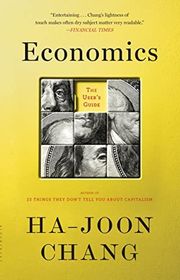
Economics: The User's Guide
For readers who want an introduction that compares schools of economic thought rather than presenting one framework alone. Its historical perspective broadens the discussion, though the author's own policy commitments still shape the selection and interpretation.
What it's about
Chang introduces economic ideas by comparing theoretical traditions and connecting them with historical examples and practical questions. The book considers how different approaches explain production, markets, institutions, and policy, including the strengths and limitations of competing frameworks.
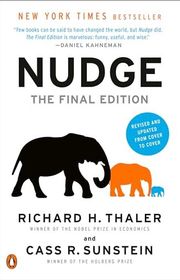
Nudge
Choose this for behavioral economics applied to how choices are presented in institutions and daily life. Its practical policy focus complements Misbehaving, though questions about effectiveness, consent, and who defines a better outcome remain important.
What it's about
Thaler and Sunstein explain choice architecture, the design of settings in which people make decisions. Using behavioral insights, they consider defaults, framing, and related tools across public and private institutions, with discussion of policy applications and ethical questions.
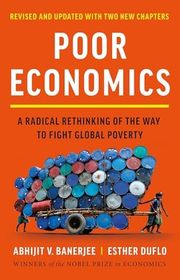
Poor Economics
Choose this for a close look at how research investigates decisions made under poverty. Its attention to specific mechanisms provides an alternative to sweeping national explanations, though findings depend on context and do not form one universal policy recipe.
What it's about
Banerjee and Duflo examine the choices and constraints faced by people living in poverty. Field research informs discussions of schooling, health, borrowing, saving, and policy, asking how detailed evidence can improve understanding of difficult economic problems.
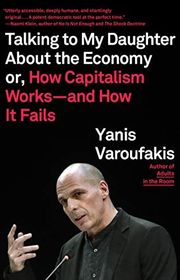
Talking to My Daughter About the Economy
For readers who want a conversational introduction through stories and historical explanation. Its informal address makes questions about markets and inequality approachable, though the author's explicitly critical view of capitalism is central to the argument.
What it's about
Varoufakis addresses his daughter in an accessible account of how the economy developed and operates. Historical stories and everyday examples introduce markets, money, inequality, and political power while questioning who benefits from existing economic arrangements.
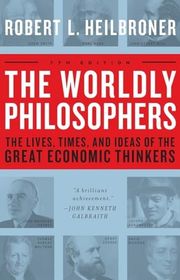
The Worldly Philosophers
For readers who learn ideas more easily through the people and historical problems behind them. Its biographical narrative gives economic thought a human setting, though it is selective intellectual history rather than instruction in contemporary analytical techniques.
What it's about
Heilbroner introduces influential economic thinkers through their lives, historical settings, and central arguments. The changing effort to understand capitalist society links contrasting ideas about markets, social conflict, growth, and the organization of economic life.

Good Economics for Hard Times
For readers who want contemporary policy questions approached through economic research rather than one simple ideological answer. Its accessible arguments cover substantial ground, though the breadth and context-dependent evidence leave many individual debates needing further study.
What it's about
Abhijit Banerjee and Esther Duflo use economic research to examine immigration, inequality, trade, technological change, growth, and climate policy. They challenge familiar assumptions and consider how evidence can help address difficult public problems amid political disagreement.

Choose this if you enjoy provocative applications of incentives to familiar puzzles. Its short examples encourage an economic way of asking questions, though the deliberately counterintuitive arguments and model-based reasoning need comparison with evidence and alternative explanations.
What it's about
Steven Landsburg uses economic reasoning to explore everyday decisions and public debates. Through examples involving incentives, advertising, and policy, he shows how apparently puzzling behavior can become clearer when viewed in terms of costs and benefits.
Sources
- 1
7 books to read if you’re an economics student
topuniversities.com
- 2
Economics Books
wallstreetmojo.com
- 3
Economics Books
goodreads.com
- 4
Best economics book that you have read?
reddit.com
- 5
Must-Read Economics Books
american.edu
- 6
Really easy to read book that explains how economies work to the average layman?
reddit.com
- 7
Books To Understand the Economy
penguinrandomhouse.com





Edited by
Software engineer whose passion for tracking book recommendations from podcasts inspired the creation of MRB.
Lead investor at 3one4 Capital whose startup expertise and love for books helped shape MRB and its growth.
Comments
Did we miss something? Have feedback?
Help us improve this page by sharing your thoughts