
8 Best Malcolm Gladwell Books
The best Malcolm Gladwell books, ranked by how many expert sources recommend each one, with notes on who each suits and where to begin with his ideas.
Our take
Malcolm Gladwell writes narrative nonfiction about the explanations people accept too quickly: why someone succeeds, how a trend spreads, or what a stranger’s behavior means. He connects research with stories from sport, business, history, and public life. The books are approachable, but their tidy patterns reward a reader willing to question how far a case or analogy can carry an argument.
Outliers looks at achievement through opportunity and circumstance, while The Tipping Point examines social contagion. Blink turns toward rapid judgment, and Talking to Strangers explores misunderstandings between unfamiliar people. If you prefer shorter pieces, What the Dog Saw collects essays rather than building one continuous case. The Bomber Mafia offers a more focused historical narrative, and Revenge of the Tipping Point returns to the subject of the debut from a later perspective. Start with Outliers for success and opportunity, or The Tipping Point for the framework that introduced his style.
8 books · 9 sources · Last updated
As an Amazon Associate, we earn from qualifying purchases (at no extra cost to you).
Reading Malcolm Gladwell in order? See all Malcolm Gladwell books in order
How to choose from this list
Skip to the full rankingIf you’re new to Gladwell: Outliers → The Tipping Point
If you want social contagion: The Tipping Point → Revenge of the Tipping Point
If you want judgment and misjudgment: Blink → Talking to Strangers
If you prefer short essays: What the Dog Saw
If you want a historical narrative: The Bomber Mafia
The 8 books, ranked
Ranked by how many expert sources name each book. Ties go to the book more people recommend.
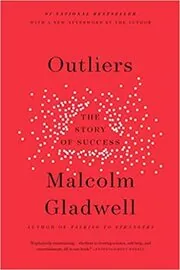
For readers who want to question explanations of success centered only on talent. Its stories make timing and opportunity easy to discuss, though memorable examples and numerical rules should not be treated as universal laws.
What it's about
Gladwell looks past talent alone and asks how timing, family, culture, luck, and opportunity shape success. From hockey players to software billionaires and the Beatles, he makes the case that achievement is never as individual as it seems.
Also recommended by
11 people Bill Gates recommended this book
Bill Gates
"Makes a lot of great points." - Bill Gates
Bill Gates's recommendation of this book  Charlie Munger recommended this book
Charlie Munger
"Perfectly marvelous book." - Charlie Munger
Charlie Munger's recommendation of this book 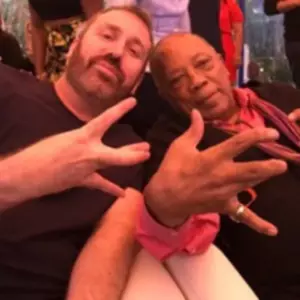 DJ Vlad recommended this book
DJ Vlad
Most Recommended Books reached out to DJ Vlad directly.
DJ Vlad's recommendation of this book 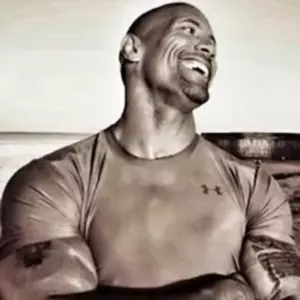 Dwayne Johnson recommended this book
Dwayne Johnson
Dwayne Johnson said he was reading this book in an interview with Andy Warhol.
Dwayne Johnson's recommendation of this book  James Altucher recommended this book
James Altucher
"I really love [this book]." - James Altucher
James Altucher's recommendation of this book 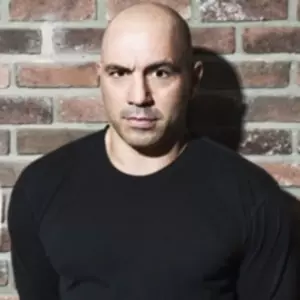 Joe Rogan recommended this book
Joe Rogan
"It's fucking great." - Joe Rogan
Joe Rogan's recommendation of this book +5
More recommendations
- Shaun White
"I started applying [a lesson from this book] to my own life." - Shaun White
- Will Smith
"Talks about the concept of 10,000 hours." - Will Smith
- Jay-Z
"About the principles of timing and repetition—about preparing yourself for luck, really." - Jay-Z
- Carlos Slim
"Must [read]." - Carlos Slim
- Patrick Bet-David
Patrick Bet-David recommended this book on his website.
- Shaun White
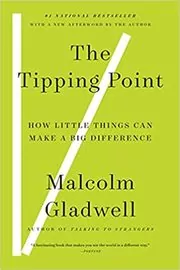
For readers curious about how ideas and behaviors spread through groups. Its clear organizing framework makes a strong introduction to Gladwell’s style, though the epidemic analogy simplifies complicated social processes and does not provide reliable predictions.
What it's about
Gladwell’s breakout book explores social epidemics, the moment when an idea, product, or behavior suddenly takes off. He shows how small shifts, key personalities, and the right context can turn a quiet trend into a cultural wave.
Also recommended by
7 people- Joe Rogan recommended this book
Joe Rogan
"Hearing him do the audio part is great." - Joe Rogan
Joe Rogan's recommendation of this book  Ev Williams recommended this book
Ev Williams
On the "books read" section of Ev Williams' GoodReads profile.
Ev Williams's recommendation of this book  Kevin Rose recommended this book
Kevin Rose
"A bunch of really good information here on how to make ideas go viral." - Kevin Rose
Kevin Rose's recommendation of this book  Mike Shinoda recommended this book
Mike Shinoda
"I love books like [this book]." - Mike Shinoda
Mike Shinoda's recommendation of this book  Kevin Systrom recommended this book
Kevin Systrom
Kevin Systrom recommended this book on Facebook.
Kevin Systrom's recommendation of this book  Jenn Im recommended this book
Jenn Im
Jenn Im recommended this book on Twitter.
Jenn Im's recommendation of this book +1
More recommendations
- Michael Hyatt
Michael Hyatt recommended this book on his website.
- Michael Hyatt
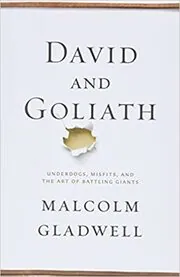
For readers who enjoy reconsidering familiar ideas about strength and disadvantage. Its range of stories makes an accessible discussion starter, though the selected cases support questions more readily than a general rule about overcoming adversity.
What it's about
Using stories from history, education, disability, and conflict, Gladwell rethinks what it means to be an underdog. He argues that apparent weaknesses can become strengths, and that power often works differently than it first appears.
Also recommended by
3 people Shah Rukh Khan recommended this book
Shah Rukh Khan
"Reading [this book]. Effort over ability....challenge conventions...you have to be so bad that you have no choice but to be desperate..." - Shah Rukh Khan
Shah Rukh Khan's recommendation of this book  Jodie Cook recommended this book
Jodie Cook
"Straight-talking guidance on why life is too short to be little." - Jodie Cook
Jodie Cook's recommendation of this book  Patrick Bet-David recommended this book
Patrick Bet-David
Patrick Bet-David recommended this book on his website.
Patrick Bet-David's recommendation of this book
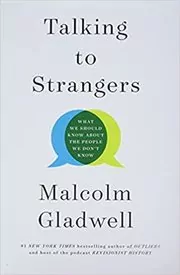
For readers interested in misjudgment, trust, and the limits of reading unfamiliar people. Its connected cases give the subject narrative force, though the interpretations of complex public events invite scrutiny and comparison with other accounts.
What it's about
Gladwell examines why we are so bad at reading people we do not know, using cases from policing, spying, fraud, and public scandal. It is an idea-driven book about trust, misjudgment, and the cost of false confidence.
Also recommended by
4 people Fareed Zakaria recommended this book
Fareed Zakaria
"Fascinating." - Fareed Zakaria
Fareed Zakaria's recommendation of this book  Elizabeth Warren recommended this book
Elizabeth Warren
"About how our perceptions [...] are based on us, and not on reality." - Elizabeth Warren
Elizabeth Warren's recommendation of this book  Melinda Gates recommended this book
Melinda Gates
Melinda Gates recommended this book on Twitter.
Melinda Gates's recommendation of this book  Mark Manson recommended this book
Mark Manson
Mark Manson recommended this book on his website.
Mark Manson's recommendation of this book
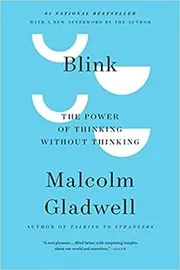
For readers interested in when quick judgments help and when they mislead. Its contrasting examples keep the question lively, though the narrative approach offers neither a comprehensive account of decision science nor a dependable intuition checklist.
What it's about
In this fast-moving book about snap judgments, Gladwell explores how people think without thinking. He shows when quick impressions can be uncannily accurate, when they fail badly, and why expert intuition depends on knowing what details to ignore.
Also recommended by
3 people- Ev Williams recommended this book
Ev Williams
On the "books read" section of Ev Williams' GoodReads profile.
Ev Williams's recommendation of this book - Kevin Systrom recommended this book
Kevin Systrom
Kevin Systrom recommended this book on Facebook.
Kevin Systrom's recommendation of this book - Mike Shinoda recommended this book
Mike Shinoda
"I know most of the guys in the band read [this book]." - Mike Shinoda
Mike Shinoda's recommendation of this book
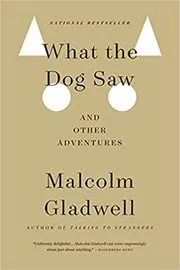
For readers who want to try Gladwell’s writing without committing to one long argument. Its varied essays show his curiosity across many subjects, though the collection offers less continuity than his books organized around a single idea.
What it's about
This essay collection gathers Gladwell’s New Yorker pieces on inventors, marketers, dog trainers, intelligence tests, and other unexpected subjects. It is a good entry point if you like his curiosity, quick pivots, and eye for hidden patterns.
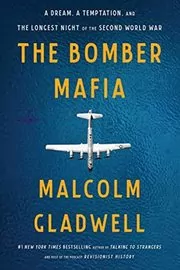
The Bomber Mafia
A Dream, a Temptation, and the Longest Night of the Second World War
For readers who want a compact historical narrative about technology and moral choices in war. Its narrower focus differs from Gladwell’s social-behavior books, though it compresses a large historical debate into a short account.
What it's about
Part war history, part moral argument, this book follows the clash between idealists who believed in precision bombing and leaders who chose devastating firebombing. Gladwell uses that conflict to ask how technology, good intentions, and brutal results can collide.

Revenge of the Tipping Point
For readers who want Gladwell revisiting social contagion after the original book. Its attention to the troubling uses of influence changes the emphasis, though it works best when read alongside the earlier framework rather than alone.
What it's about
Twenty-five years after The Tipping Point, Gladwell returns to social contagion with a darker focus. He looks at superspreaders, group dynamics, and engineered environments to ask how behaviors spread, and why some epidemics turn destructive.
Sources
- 1
Top Malcolm Gladwell Books
goodreads.com
- 2
Malcolm Gladwell – Books
gladwellbooks.com
- 3
Which Malcolm Gladwell Book Should You Read First?
hachettebookgroup.com
- 4
Malcolm Gladwell’s Bestselling Bibliography
masterclass.com
- 5
All Malcolm Gladwell Books Ranked: Which One Should You Read First?
editorsreads.com
- 6
Malcolm Gladwell Books in Order, and Which to Read First
lisanneswart.com
- 7
6 Malcolm Gladwell Books That Will Change the Way You Think
tckpublishing.com
- 8
What’s the best Malcolm Gladwell book?
reddit.com
- 9
Gladwell’s pop-sociology styled books, ranked
reddit.com




Edited by
Software engineer whose passion for tracking book recommendations from podcasts inspired the creation of MRB.
Lead investor at 3one4 Capital whose startup expertise and love for books helped shape MRB and its growth.
Comments
Spotted a missing book, a wrong order or a mistake? Tell us and we'll fix this page.
We're a reading guide, not the author or publisher, so we can't send books or pass on messages.