
8 Best Cognitive Psychology Books
The best cognitive psychology books, ranked by expert source mentions, with notes on perception, memory, reasoning, popular accounts, and course textbooks.
Our take
Cognitive psychology studies how people perceive the world, direct attention, remember information, use language, and reason through problems. Some books explain these processes across the whole field. Others concentrate on a revealing weakness, such as misplaced confidence, snap judgment, or the urge to justify a mistake. The right starting point depends on whether you want a course or an engaging exploration of one question.
Thinking, Fast and Slow and Blink introduce problems in judgment through memorable examples, while Mistakes Were Made (But Not by Me) concentrates on self-justification. For systematic coverage, Cognition: Exploring the Science of the Mind and Cognitive Psychology: A Student's Handbook explain the experiments as well as the theories. How the Mind Works offers a broader popular account with a strong evolutionary perspective. Start with Reisberg for a structured foundation, or Kahneman if judgment and decision-making are what drew you to the subject.
8 books · 6 sources · Last updated
As an Amazon Associate, we earn from qualifying purchases (at no extra cost to you).
How to choose from this list
Skip to the full rankingIf you want a structured introduction: Cognition
If you want a comprehensive reference: Cognitive Psychology
If you want a broad popular account: How the Mind Works
If you want to understand judgment errors: Thinking, Fast and Slow → Rationality
If you want to examine self-justification: Mistakes Were Made (But Not by Me)
If you want to understand persuasion: Influence
The 8 books, ranked
Ranked by how many expert sources name each book. Ties go to the book more people recommend.

Thinking, Fast and Slow
For readers interested in judgment, intuition, and recurring errors in reasoning. Its synthesis gives the field’s questions a memorable shape, though some supporting findings have been challenged and it does not cover cognition as broadly as a textbook.
What it's about
Kahneman explores two modes of thought: quick, intuitive responses and slower, deliberate reasoning. Drawing on psychological research, he examines how biases and impressions shape decisions, and when intuition helps or misleads in personal and professional life.
Also recommended by
19 people Bill Gates recommended this book
Bill Gates
List of books Bill Gates read in 2012.
Bill Gates's recommendation of this book  Ray Dalio recommended this book
Ray Dalio
Ray Dalio mentioned this book in his book, "Principles."
Ray Dalio's recommendation of this book  Scott Adams recommended this book
Scott Adams
One of the books on Scott Adams' "Persuasion Reading List."
Scott Adams's recommendation of this book  Naval Ravikant recommended this book
Naval Ravikant
"Fine book but it didn’t need to be an entire book. A blog post would have gotten the point across." - Naval Ravikant
Naval Ravikant's recommendation of this book  Ev Williams recommended this book
Ev Williams
"I love surprising scientific findings, as well as information about how our brains work. [This book] is a treasure trove of both." - Ev Williams
Ev Williams's recommendation of this book  Marc Andreessen recommended this book
Marc Andreessen
"Captivating dive into human decision making, marred by inclusion of several/many? psychology studies that fail to replicate. Will stand as a cautionary tale?" - Marc Andreessen
Marc Andreessen's recommendation of this book +13
More recommendations
- Stewart Brand
Stewart Brand recommended this book on his "Selected Books for the Manual for Civilization" blog post.
- Bryan Johnson
"I started reading [this book] and I became increasingly convinced of my own fickleness and inability to actually act rationally in life." - Bryan Johnson
- Derek Sivers
"If you liked 'Predictably Irrational' or 'Stumbling on Happiness' or any of those pop-psychology books, well, this is the Godfather of all of their work." - Derek Sivers
- Sam Altman
One of Sam Altman's answers to "What are some of the best books you recommend for a young startup founder?"
- Ron Conway
"Covers all three phases of [the author's] career: his early days working oncognitive bias, his work on prospect theory, and his later work on happiness." - Ron Conway
- Jason Fried
"I enjoyed [this book]. Fascinating." - Jason Fried
- Nassim Taleb
"A landmark book in social thought, in the same league as The Wealth of Nations by Adam Smith and The Interpretation of Dreams by Sigmund Freud." - Nassim Taleb
- Sahil Lavingia
Sahil Lavingia recommended this book on Notion.
- Mark Manson
Mark Manson recommended this book on his website.
- Jay Shetty
"[One] of my favourite books." - Jay Shetty
- Michiko Kakutani
"Has become essential reading in many baseball front offices and among coaching staffs." - Michiko Kakutani
- Preston Pysh
"An incredible book!" - Preston Pysh
- Ben Greenfield
Most Recommended Books reached out to Ben Greenfield directly.
- Stewart Brand
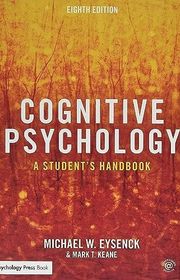
Cognitive Psychology: A Student's Handbook
For students who want comprehensive coverage of the field rather than a single memorable theme. Its explanations connect competing theories with experimental findings, though the substantial length and technical detail demand sustained study.
What it's about
Michael W. Eysenck and Mark T. Keane survey cognitive psychology, including perception, attention, memory, language, and thinking. The textbook compares theoretical explanations with research findings and connects laboratory evidence to practical questions about how the mind works.

How the Mind Works
For general readers who want an ambitious account connecting perception, thought, and behavior. Its explanatory range offers more breadth than the decision-making books, though its evolutionary arguments invite debate and it is a substantial read.
What it's about
Steven Pinker examines perception, reasoning, emotions, social behavior, and enjoyment of the arts through cognitive science and evolutionary biology. He argues that understanding the problems our ancestors faced helps explain the mind's abilities and peculiarities.

For readers who want to connect mental shortcuts with persuasion in everyday settings. Its concrete examples make social influence recognizable, though the focus is narrower than perception, memory, and reasoning across cognitive psychology.
What it's about
Cialdini explores why people agree to requests and how recurring principles influence their decisions. Research and examples explain persuasion in everyday settings, alongside ways to recognize these mechanisms and resist attempts to exploit them.
Also recommended by
18 people Tobi Lütke recommended this book
Tobi Lütke
"The most mind-bending book you can imagine, because it essentially taught you always humans are flawed and influential." - Tobi Lütke
Tobi Lütke's recommendation of this book - Scott Adams recommended this book
Scott Adams
"100 percent of effective people seem to have read [this book]. In fact, it’s one of those things that when I meet somebody and they’re operating at a pretty high level, if you mention [this book], they’ve all read it." - Scott Adams
Scott Adams's recommendation of this book - Naval Ravikant recommended this book
Naval Ravikant
"Fundamental and had a lot to teach." - Naval Ravikant
Naval Ravikant's recommendation of this book  Charlie Munger recommended this book
Charlie Munger
Charlie Munger recommended this book in the "Poor Charlie's Almanack" book.
Charlie Munger's recommendation of this book  Adam Robinson recommended this book
Adam Robinson
Adam Robinson mentioned this book on "The Tim Ferriss Show" podcast.
Adam Robinson's recommendation of this book  Ramit Sethi recommended this book
Ramit Sethi
Ramit Sethi mentioned this book on "The Tim Ferriss Show" podcast.
Ramit Sethi's recommendation of this book +12
More recommendations
- Alexis Ohanian
"[Helps you] navigate the world with heightened awareness for how we're always being influenced/manipulated." - Alexis Ohanian
- Guy Kawasaki
"The guiding light for how I conduct business—and in many ways how I live my life." - Guy Kawasaki
- Max Levchin
One of Max Levchin's answers to "what's your favourite business book you'd advise to young entrepreneurs?"
- Noah Kagan
"People can be influenced in their behaviors by many different tactics." - Noah Kagan
- Samy Kamkar
"I love it because it was a very systematic and analytical approach to the most common ways that human being have been known to be influenced and persuaded to do something." - Samy Kamkar
- Andrew Wilkinson
"[One of] my most recommended business books." - Andrew Wilkinson
- Neil Strauss
"Understanding these [principles] make all the difference in making the leap from interest to attraction." - Neil Strauss
- Patrick O'Shaughnessy
Patrick O'Shaughnessy recommended this book on a blog post.
- Mark Manson
Mark Manson recommended this book on his website.
- Alex Hormozi
Alex Hormozi recommended this book on Instagram.
- James Clear
"[One of] the 10 best nonfiction books of all-time." - James Clear
- Michael Hyatt
Michael Hyatt recommended this book on his website.
- Alexis Ohanian
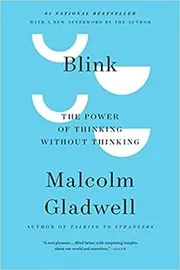
For readers who enjoy a narrative introduction to rapid judgment and expert intuition. Its memorable cases make the questions accessible, though the storytelling simplifies the evidence and offers less systematic coverage than a research textbook.
What it's about
In this fast-moving book about snap judgments, Gladwell explores how people think without thinking. He shows when quick impressions can be uncannily accurate, when they fail badly, and why expert intuition depends on knowing what details to ignore.
Also recommended by
3 people- Ev Williams recommended this book
Ev Williams
On the "books read" section of Ev Williams' GoodReads profile.
Ev Williams's recommendation of this book  Kevin Systrom recommended this book
Kevin Systrom
Kevin Systrom recommended this book on Facebook.
Kevin Systrom's recommendation of this book  Mike Shinoda recommended this book
Mike Shinoda
"I know most of the guys in the band read [this book]." - Mike Shinoda
Mike Shinoda's recommendation of this book
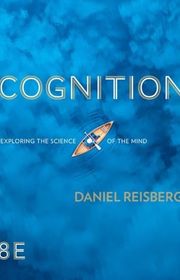
Cognition: Exploring the Science of the Mind
For readers who want a full introductory course with clear explanations of how experiments support conclusions. Its teaching structure builds understanding across topics, though it requires more time and active study than the popular narratives here.
What it's about
Daniel Reisberg introduces the scientific study of perception, attention, memory, language, problem solving, and decision-making. Explanations of experiments connect theories to evidence, helping readers understand both cognitive processes and the methods used to investigate them.

Mistakes Were Made (But Not by Me)
Why We Justify Foolish Beliefs, Bad Decisions, and Hurtful Acts
For readers interested in why people defend beliefs after making mistakes. Its sustained focus on self-justification gives everyday disputes psychological depth, though it is a thematic account rather than a comprehensive course on cognition.
What it's about
Carol Tavris and Elliot Aronson examine how self-justification protects people's self-image after mistakes and harmful actions. Research and examples explain cognitive dissonance, the persistence of false beliefs, and the obstacles to acknowledging errors and accepting responsibility.
Also recommended by
2 people Peter Attia recommended this book
Peter Attia
"The moment I finished it, I not only reread it, but I bought it for about ten people." - Peter Attia
Peter Attia's recommendation of this book  Glenn Beck recommended this book
Glenn Beck
"Some really good lessons!" - Glenn Beck
Glenn Beck's recommendation of this book

For readers who want to practice evaluating claims using probability and logic. Its explicit reasoning tools complement books about intuitive errors, though the emphasis is normative and argumentative rather than a broad survey of experimental cognition.
What it's about
Steven Pinker introduces tools for reasoning, including logic, probability, and distinguishing correlation from causation. He investigates why individuals and societies embrace misinformation and explores how better habits and institutions can support evidence-based choices.
Sources
- 1
The Inner Workings of the Mind – An Introduction to Cognitive Psychology
psychotricks.com
- 2
Cognitive Psychology Books
goodreads.com
- 3
Books recommendations on cognitive psych?
reddit.com
- 4
Psychology: Cognitive Psychology
libguides.qmu.ac.uk
- 5
Resources for beginners in cognitive science
cskemp.github.io
- 6
25 Best Psychology Books to Read
reedsy.com






Edited by
Software engineer whose passion for tracking book recommendations from podcasts inspired the creation of MRB.
Lead investor at 3one4 Capital whose startup expertise and love for books helped shape MRB and its growth.
Comments
Spotted a missing book, a wrong order or a mistake? Tell us and we'll fix this page.
We're a reading guide, not the author or publisher, so we can't send books or pass on messages.