
18 Best Social Psychology Books
The best social psychology books, ranked by how many expert sources recommend each one, with notes for choosing textbooks, research stories, and focused studies.
Our take
Social psychology studies how other people and social situations influence what we think, feel, and do. The subject includes persuasion, conformity, prejudice, relationships, group behavior, and the explanations people give for their own actions. These books range from broad teaching texts to popular accounts of a single theme, so they offer different levels of detail about evidence and research methods.
The Social Animal provides an approachable starting point before a full textbook. Influence concentrates on persuasion, while The Righteous Mind examines moral disagreement and Mistakes Were Made (But Not by Me) focuses on self-justification. Books such as Thinking, Fast and Slow, Quiet, and The Art of Choosing connect related behavioral questions with everyday experience. The popular narratives can raise useful questions, but a memorable example does not establish a universal rule. Start with Aronson if you want the field in context, then choose a focused book on the behavior that interests you.
18 books · 9 sources · Last updated
As an Amazon Associate, we earn from qualifying purchases (at no extra cost to you).
How to choose from this list
Skip to the full rankingIf you want an introduction to the field: The Social Animal
If you want to recognize persuasion: Influence
If you want to examine judgment and choice: Thinking, Fast and Slow → The Art of Choosing → The Paradox of Choice
If you want to understand moral disagreement: The Righteous Mind → Mistakes Were Made (But Not by Me)
If you want behavior in everyday settings: Quiet → The Power of Habit
The 18 books, ranked
Ranked by how many expert sources name each book. Ties go to the book more people recommend.

The Social Animal
For readers who want an accessible introduction organized around social influence and familiar behavior. Aronson develops more context than a single-theme popular book, though the coverage is still selective compared with a comprehensive course textbook.
What it's about
Elliot Aronson introduces social psychology through experiments and examples from everyday life. He examines conformity, persuasion, self-justification, aggression, prejudice, and attraction, exploring the social influences and motives behind human behavior.
Also recommended by
1 person Ramit Sethi recommended this book
Ramit Sethi
"[An outstanding book] on human behavior." - Ramit Sethi
Ramit Sethi's recommendation of this book

Social Psychology
For students who want to learn how social situations shape thought and action across the field. The research-led explanations give breadth beyond a persuasion book, though similar titles by other authors make checking the required edition important.
What it's about
This textbook introduces social psychology through research studies and examples of everyday behavior. It examines social perception, attitudes, conformity, group dynamics, relationships, aggression, and prejudice, showing how social situations influence what people think and do.

For readers interested in why people agree to requests and how influence operates around them. The recurring principles make social pressure easier to recognize, though this focused account of persuasion leaves many other areas of social psychology unexplored.
What it's about
Cialdini explores why people agree to requests and how recurring principles influence their decisions. Research and examples explain persuasion in everyday settings, alongside ways to recognize these mechanisms and resist attempts to exploit them.
Also recommended by
18 people Tobi Lütke recommended this book
Tobi Lütke
"The most mind-bending book you can imagine, because it essentially taught you always humans are flawed and influential." - Tobi Lütke
Tobi Lütke's recommendation of this book  Scott Adams recommended this book
Scott Adams
"100 percent of effective people seem to have read [this book]. In fact, it’s one of those things that when I meet somebody and they’re operating at a pretty high level, if you mention [this book], they’ve all read it." - Scott Adams
Scott Adams's recommendation of this book  Naval Ravikant recommended this book
Naval Ravikant
"Fundamental and had a lot to teach." - Naval Ravikant
Naval Ravikant's recommendation of this book  Charlie Munger recommended this book
Charlie Munger
Charlie Munger recommended this book in the "Poor Charlie's Almanack" book.
Charlie Munger's recommendation of this book  Adam Robinson recommended this book
Adam Robinson
Adam Robinson mentioned this book on "The Tim Ferriss Show" podcast.
Adam Robinson's recommendation of this book - Ramit Sethi recommended this book
Ramit Sethi
Ramit Sethi mentioned this book on "The Tim Ferriss Show" podcast.
Ramit Sethi's recommendation of this book +12
More recommendations
- Alexis Ohanian
"[Helps you] navigate the world with heightened awareness for how we're always being influenced/manipulated." - Alexis Ohanian
- Guy Kawasaki
"The guiding light for how I conduct business—and in many ways how I live my life." - Guy Kawasaki
- Max Levchin
One of Max Levchin's answers to "what's your favourite business book you'd advise to young entrepreneurs?"
- Noah Kagan
"People can be influenced in their behaviors by many different tactics." - Noah Kagan
- Samy Kamkar
"I love it because it was a very systematic and analytical approach to the most common ways that human being have been known to be influenced and persuaded to do something." - Samy Kamkar
- Andrew Wilkinson
"[One of] my most recommended business books." - Andrew Wilkinson
- Neil Strauss
"Understanding these [principles] make all the difference in making the leap from interest to attraction." - Neil Strauss
- Patrick O'Shaughnessy
Patrick O'Shaughnessy recommended this book on a blog post.
- Mark Manson
Mark Manson recommended this book on his website.
- Alex Hormozi
Alex Hormozi recommended this book on Instagram.
- James Clear
"[One of] the 10 best nonfiction books of all-time." - James Clear
- Michael Hyatt
Michael Hyatt recommended this book on his website.
- Alexis Ohanian

ISE Social Psychology
For students who want a broad course text linking social thought, influence, and relationships with applications. The range supports systematic study, though the textbook structure and detail require more commitment than a narrative introduction.
What it's about
David Myers and Jean Twenge introduce the study of social thought, influence, and relationships. Chapters examine attitudes, persuasion, group behavior, prejudice, aggression, attraction, and helping, alongside research methods and applications to law, health, and environmental issues.

Thinking, Fast and Slow
For readers who want to examine intuition and deliberate judgment through research stories. Kahneman gives biases a broad conceptual frame, though the range of studies and detailed distinctions reward critical, unhurried reading rather than a search for quick tricks.
What it's about
Kahneman explores two modes of thought: quick, intuitive responses and slower, deliberate reasoning. Drawing on psychological research, he examines how biases and impressions shape decisions, and when intuition helps or misleads in personal and professional life.
Also recommended by
19 people Bill Gates recommended this book
Bill Gates
List of books Bill Gates read in 2012.
Bill Gates's recommendation of this book  Ray Dalio recommended this book
Ray Dalio
Ray Dalio mentioned this book in his book, "Principles."
Ray Dalio's recommendation of this book - Scott Adams recommended this book
Scott Adams
One of the books on Scott Adams' "Persuasion Reading List."
Scott Adams's recommendation of this book - Naval Ravikant recommended this book
Naval Ravikant
"Fine book but it didn’t need to be an entire book. A blog post would have gotten the point across." - Naval Ravikant
Naval Ravikant's recommendation of this book  Ev Williams recommended this book
Ev Williams
"I love surprising scientific findings, as well as information about how our brains work. [This book] is a treasure trove of both." - Ev Williams
Ev Williams's recommendation of this book  Marc Andreessen recommended this book
Marc Andreessen
"Captivating dive into human decision making, marred by inclusion of several/many? psychology studies that fail to replicate. Will stand as a cautionary tale?" - Marc Andreessen
Marc Andreessen's recommendation of this book +13
More recommendations
- Stewart Brand
Stewart Brand recommended this book on his "Selected Books for the Manual for Civilization" blog post.
- Bryan Johnson
"I started reading [this book] and I became increasingly convinced of my own fickleness and inability to actually act rationally in life." - Bryan Johnson
- Derek Sivers
"If you liked 'Predictably Irrational' or 'Stumbling on Happiness' or any of those pop-psychology books, well, this is the Godfather of all of their work." - Derek Sivers
- Sam Altman
One of Sam Altman's answers to "What are some of the best books you recommend for a young startup founder?"
- Ron Conway
"Covers all three phases of [the author's] career: his early days working oncognitive bias, his work on prospect theory, and his later work on happiness." - Ron Conway
- Jason Fried
"I enjoyed [this book]. Fascinating." - Jason Fried
- Nassim Taleb
"A landmark book in social thought, in the same league as The Wealth of Nations by Adam Smith and The Interpretation of Dreams by Sigmund Freud." - Nassim Taleb
- Sahil Lavingia
Sahil Lavingia recommended this book on Notion.
- Mark Manson
Mark Manson recommended this book on his website.
- Jay Shetty
"[One] of my favourite books." - Jay Shetty
- Michiko Kakutani
"Has become essential reading in many baseball front offices and among coaching staffs." - Michiko Kakutani
- Preston Pysh
"An incredible book!" - Preston Pysh
- Ben Greenfield
Most Recommended Books reached out to Ben Greenfield directly.
- Stewart Brand

For readers who prefer organizational and personal stories about repeated behavior. Duhigg gives habit formation a memorable organizing framework, though the narrative treatment simplifies a subject that varies across people, settings, and kinds of behavior.
What it's about
Charles Duhigg examines how habits form and change through scientific research and stories about individuals, companies, and social movements. He explains how recurring patterns influence behavior and how identifying them can help people reshape routines and organizations improve their practices.
Also recommended by
9 people- Ray Dalio recommended this book
Ray Dalio
"Fantastic. I got [this book] and I gave it to everyone in my company." - Ray Dalio
Ray Dalio's recommendation of this book - Scott Adams recommended this book
Scott Adams
One of the books on Scott Adams' "Persuasion Reading List."
Scott Adams's recommendation of this book  Tim Ferriss recommended this book
Tim Ferriss
"A very good book." - Tim Ferriss
Tim Ferriss's recommendation of this book - Naval Ravikant recommended this book
Naval Ravikant
"Interesting, not because of its content necessarily, but because it’s good for me to always keep on top of mind how powerful my habits are." - Naval Ravikant
Naval Ravikant's recommendation of this book  Kelly Starrett recommended this book
Kelly Starrett
Kelly Starrett recommended this book in the "Tools of Titans" book.
Kelly Starrett's recommendation of this book  Mr. Money Mustache recommended this book
Mr. Money Mustache
Mr. Money Mustache recommended this book on his blog.
Mr. Money Mustache's recommendation of this book +3
More recommendations
- Max Levchin
"Compiles a bunch of great academic neuroscience and applied psychology research on habit formation." - Max Levchin
- Danny Miranda
"Great writing, interesting stories, and incredible insights on how to control your habits." - Danny Miranda
- Patrick Bet-David
Patrick Bet-David recommended this book on his website.
- Max Levchin

The 48 Laws of Power
For readers interested in strategic behavior through historical anecdotes. The memorable laws make patterns of power easy to discuss, though this adversarial advice collection differs substantially from an evidence-based introduction to social psychology.
What it's about
A compact guide to power dynamics, built around 48 memorable principles and historical examples. It shows how influence is gained, lost, and defended, while warning that every tactic can backfire when used carelessly.
Also recommended by
7 people Aubrey Marcus recommended this book
Aubrey Marcus
"I cannot express how immensely valuable this book is, when absorbed into an open mind." - Aubrey Marcus
Aubrey Marcus's recommendation of this book  DJ Vlad recommended this book
DJ Vlad
Most Recommended Books reached out to DJ Vlad directly.
DJ Vlad's recommendation of this book  Ryan Holiday recommended this book
Ryan Holiday
"Critical for anyone trying to accomplish anything." - Ryan Holiday
Ryan Holiday's recommendation of this book  Alice Little recommended this book
Alice Little
"I think that [this book is] a great tool to get into the hands of women and get that positive thinking going." - Alice Little
Alice Little's recommendation of this book  Neil Strauss recommended this book
Neil Strauss
"Heavily researched and distilled handbook." - Neil Strauss
Neil Strauss's recommendation of this book - Rollo Tomassi recommended this book
Rollo Tomassi
"His best book." - Rollo Tomassi
Rollo Tomassi's recommendation of this book +1
More recommendations
- Patrick Bet-David
Patrick Bet-David recommended this book on his website.
- Patrick Bet-David
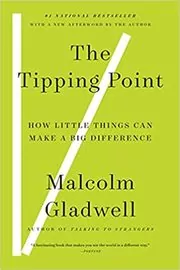
For readers curious about how behavior and ideas spread through groups. Gladwell's connected stories make social transmission engaging, though the explanatory framework is selective and should not be treated as a general law of how trends develop.
What it's about
Gladwell’s breakout book explores social epidemics, the moment when an idea, product, or behavior suddenly takes off. He shows how small shifts, key personalities, and the right context can turn a quiet trend into a cultural wave.
Also recommended by
7 people Joe Rogan recommended this book
Joe Rogan
"Hearing him do the audio part is great." - Joe Rogan
Joe Rogan's recommendation of this book - Ev Williams recommended this book
Ev Williams
On the "books read" section of Ev Williams' GoodReads profile.
Ev Williams's recommendation of this book  Kevin Rose recommended this book
Kevin Rose
"A bunch of really good information here on how to make ideas go viral." - Kevin Rose
Kevin Rose's recommendation of this book  Mike Shinoda recommended this book
Mike Shinoda
"I love books like [this book]." - Mike Shinoda
Mike Shinoda's recommendation of this book  Kevin Systrom recommended this book
Kevin Systrom
Kevin Systrom recommended this book on Facebook.
Kevin Systrom's recommendation of this book  Jenn Im recommended this book
Jenn Im
Jenn Im recommended this book on Twitter.
Jenn Im's recommendation of this book +1
More recommendations
- Michael Hyatt
Michael Hyatt recommended this book on his website.
- Michael Hyatt

For readers who want to examine cultural expectations about sociability. Cain connects individual experience with workplaces and education, though the strong focus on introversion can make a broad range of personality differences seem more neatly divided than they are.
What it's about
Susan Cain argues that cultures favoring extroversion often overlook the strengths of introverts. Drawing on research and individual stories, she examines solitude, listening, creativity, and the contributions quieter people make in work and society.
Also recommended by
6 people Emma Watson recommended this book
Emma Watson
"Discusses how extroverts in our society are bigged up so much, and if you’re anything other than an extrovert you’re made to think there’s something wrong with you. That’s like the story of my life." - Emma Watson
Emma Watson's recommendation of this book  Simon Sinek recommended this book
Simon Sinek
"Affirms to a good many of us who are introverts by nature that we needn’t try to be extroverts if we want to lead." - Simon Sinek
Simon Sinek's recommendation of this book  Tom Peters recommended this book
Tom Peters
"[This book] embarrassed me. It suggests that most of us undervalue introverts and, thus, effectively take a pass on about 40 percent of the population. In particular, introverts tend to be more thoughtful and deliberate." - Tom Peters
Tom Peters's recommendation of this book  Laurie Halse Anderson recommended this book
Laurie Halse Anderson
"I have rarely cried about a book as much as I did this one." - Laurie Halse Anderson
Laurie Halse Anderson's recommendation of this book  Jason Fried recommended this book
Jason Fried
"A good book I'd recommend." - Jason Fried
Jason Fried's recommendation of this book  Jim Kwik recommended this book
Jim Kwik
"Love [this author] and her book." - Jim Kwik
Jim Kwik's recommendation of this book

For general readers who enjoy experiments connected to everyday decisions. Ariely's accessible storytelling makes behavioral questions approachable, though the confident generalizations are best read critically and compared with broader accounts of research methods.
What it's about
Dan Ariely challenges the assumption that people make consistently rational decisions. Through experiments and everyday examples, he examines recurring errors in judgment and argues that recognizing these patterns can help readers reconsider their own choices.
Also recommended by
4 people Keith Rabois recommended this book
Keith Rabois
Keith Rabois recommended this book on Quora.
Keith Rabois's recommendation of this book  Max Levchin recommended this book
Max Levchin
One of Max Levchin's answers to "what's your favourite business book you'd advise to young entrepreneurs?"
Max Levchin's recommendation of this book  Tom Bilyeu recommended this book
Tom Bilyeu
Tom Bilyeu recommended this book on his website.
Tom Bilyeu's recommendation of this book  Ryan Shea recommended this book
Ryan Shea
Ryan Shea recommended this book on his website.
Ryan Shea's recommendation of this book
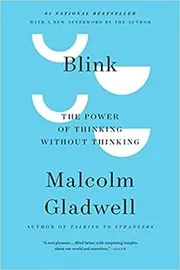
For readers interested in both the usefulness and failure of rapid impressions. Gladwell presents a lively collection of cases about intuition, though the examples provide less systematic guidance than a textbook on judgment and decision-making.
What it's about
In this fast-moving book about snap judgments, Gladwell explores how people think without thinking. He shows when quick impressions can be uncannily accurate, when they fail badly, and why expert intuition depends on knowing what details to ignore.
Also recommended by
3 people- Ev Williams recommended this book
Ev Williams
On the "books read" section of Ev Williams' GoodReads profile.
Ev Williams's recommendation of this book - Kevin Systrom recommended this book
Kevin Systrom
Kevin Systrom recommended this book on Facebook.
Kevin Systrom's recommendation of this book - Mike Shinoda recommended this book
Mike Shinoda
"I know most of the guys in the band read [this book]." - Mike Shinoda
Mike Shinoda's recommendation of this book
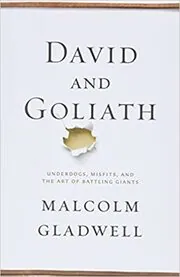
For readers who like counterintuitive stories about apparent advantages and disadvantages. The narrative approach makes assumptions about strength easy to question, though the selected cases do not establish that adversity generally produces better outcomes.
What it's about
Using stories from history, education, disability, and conflict, Gladwell rethinks what it means to be an underdog. He argues that apparent weaknesses can become strengths, and that power often works differently than it first appears.
Also recommended by
3 people Shah Rukh Khan recommended this book
Shah Rukh Khan
"Reading [this book]. Effort over ability....challenge conventions...you have to be so bad that you have no choice but to be desperate..." - Shah Rukh Khan
Shah Rukh Khan's recommendation of this book  Jodie Cook recommended this book
Jodie Cook
"Straight-talking guidance on why life is too short to be little." - Jodie Cook
Jodie Cook's recommendation of this book  Patrick Bet-David recommended this book
Patrick Bet-David
Patrick Bet-David recommended this book on his website.
Patrick Bet-David's recommendation of this book

For readers interested in the emotional costs of deciding among alternatives. Schwartz gives expectations and regret a central role, though the emphasis on excessive choice needs balancing against situations where more options provide real benefits.
What it's about
Barry Schwartz examines how an abundance of options can produce anxiety, regret, and dissatisfaction. Across consumer decisions and major life choices, he argues for managing expectations and adopting habits that make choosing less burdensome.
Also recommended by
2 people Pavel Tsatsouline recommended this book
Pavel Tsatsouline
"A very good book." - Pavel Tsatsouline
Pavel Tsatsouline's recommendation of this book  Noah Kagan recommended this book
Noah Kagan
"At restaurants, close the menu after you find the 1 dish that you like." - Noah Kagan
Noah Kagan's recommendation of this book

For readers interested in how people protect an honest self-image while behaving inconsistently. The focused theme makes rationalization easy to discuss, though its experiment-driven conclusions need critical evaluation rather than automatic transfer to every setting.
What it's about
Dan Ariely examines why people cheat while maintaining an image of themselves as honest. His discussion considers rationalization, willpower, social influence, and business practices, questioning familiar assumptions about the incentives and circumstances that encourage deception.
Also recommended by
1 person Shane Parrish recommended this book
Shane Parrish
"A fascinating look at our own propensity to cheat and rationalize our dishonesty." - Shane Parrish
Shane Parrish's recommendation of this book

For readers interested in moral disagreement and group loyalty. Haidt offers a framework for examining why reasonable-seeming arguments fail to persuade opponents, though the framework is a particular explanatory model rather than a complete account of politics.
What it's about
Jonathan Haidt investigates the intuitive foundations of moral judgment and the sources of political and religious disagreement. Drawing on moral psychology, he explores how differing values can bind communities together while creating persistent divisions between them.
Also recommended by
4 people A.J. Jacobs recommended this book
A.J. Jacobs
"All about trying to figure out the gap between the red and blue states – Republican and Democrat – and it’s really interesting." - A.J. Jacobs
A.J. Jacobs's recommendation of this book  Ann Miura-Ko recommended this book
Ann Miura-Ko
"I love this book because it clarified for me a lot of things that I’ve been feeling for so long around." - Ann Miura-Ko
Ann Miura-Ko's recommendation of this book  Derren Brown recommended this book
Derren Brown
"Tremendous & was part of forming Sacrifice (on Netflix)." - Derren Brown
Derren Brown's recommendation of this book  Russell Moore recommended this book
Russell Moore
"The most important book in years." - Russell Moore
Russell Moore's recommendation of this book
Mistakes Were Made (But Not by Me): Why We Justify Foolish Beliefs, Bad Decisions, and Hurtful Acts
For readers who want a focused account of self-justification rather than a broad survey. The connection between cognitive dissonance and everyday conflict makes the theme concrete, though recognizing the pattern in others is easier than applying it to yourself.
What it's about
Carol Tavris and Elliot Aronson examine how cognitive dissonance leads people to defend mistaken beliefs and harmful decisions. Examples from relationships, institutions, and public life show how self-justification works and why acknowledging error can be difficult.

Social Psychology
For students interested in cultural differences alongside the core topics of social psychology. The links to law, business, and everyday examples give the survey an applied dimension, though the breadth is better suited to coursework than casual browsing.
What it's about
Saul Kassin, Steven Fein, and Hazel Rose Markus connect social psychology research with everyday life. The textbook examines social cognition and applications to law, business, and well-being, integrating cultural differences and examples from media, politics, and entertainment.

The Art of Choosing
For readers who want choice examined across cultures as well as individual decisions. Iyengar gives freedom and control a broader setting than a simple overload argument, though the wide-ranging discussion offers fewer concise prescriptions than a practical decision guide.
What it's about
Sheena Iyengar explores how people make choices and how culture shapes their expectations of freedom and control. Drawing on research, she considers everyday decisions, competing interests, and the consequences of having different kinds and amounts of choice.
Sources
- 1
Social Psychology Textbooks
socialpsychology.org
- 2
100 Best Social Psychology Books of All Time (Updated for 2026)
shortform.com
- 3
Social Psychology Books
goodreads.com
- 4
Suggestion regarding Social Psychology : r/AcademicPsychology
reddit.com
- 5
Please suggest me some good books for Social Psychology for newbies : r/psychologystudents
reddit.com
- 6
Social Psychology Textbooks: Which Is The Best? | Top Hat
tophat.com
- 7
My List of Best Social Psychology Books
medium.com
- 8
Social Psychology Recommended Literature - Cognitive Connie
cognitiveconnie.com
- 9
The best social psychology books of all time (chosen by social psychology authors)
shepherd.com



Edited by
Software engineer whose passion for tracking book recommendations from podcasts inspired the creation of MRB.
Lead investor at 3one4 Capital whose startup expertise and love for books helped shape MRB and its growth.
Comments
Did we miss something? Have feedback?
Help us improve this page by sharing your thoughts