
Seven Circles Books in Order
Part ofDouglas Niles Books in OrderSee the Seven Circles books by Douglas Niles in order, with short summaries, series background, and help choosing where to enter this fantasy world.
Last updated:
As an Amazon Associate, we earn from qualifying purchases (at no extra cost to you).
Seven Circles books in publication order
3 books
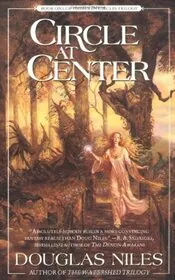
Circle at Center
by Douglas Niles
2000
An Aztec warrior is pulled into a layered magical realm where elves, dwarves, and crusaders are heading toward war. It opens a big portal-fantasy trilogy with a lot of movement and conflict.
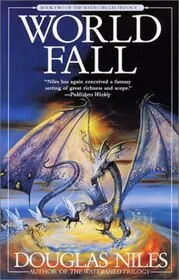
World Fall
by Douglas Niles
2001
Characters drawn from Earth and the Seven Circles face a widening war as old evils press upward through the realms. The second book broadens the world and raises the magical stakes.
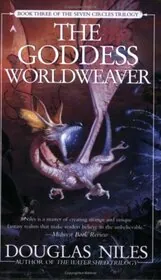
The Goddess Worldweaver
by Douglas Niles
2003
The Seven Circles trilogy ends with the balance of its linked worlds at risk. History, magic, and war converge as the struggle reaches the power at the heart of creation.
Seven Circles books in chronological order
Series background & context
The Seven Circles books are some of Douglas Niles's most openly mythic fantasy. Instead of working inside a licensed setting like Krynn or the Forgotten Realms, he builds a layered cosmos of linked realms and then starts pulling people into it from different points in Earth's history.
The trilogy begins with Circle at Center, continues in World Fall, and ends with The Goddess Worldweaver. At the heart of the setting is Nayve, the central circle, where the balance of the whole structure can be threatened by conflict above and below. Elves, dwarves, crusaders, dark under-realms, and world-shaping magic all crowd into the same large design.
What gives the series its own flavor is the collision of histories. Niles brings in figures from Earth, including warriors shaped by very different cultures and eras, then drops them into a magical struggle that is both cosmic and very physical. You still get battles, marches, betrayals, and sieges, but you also get a setting that feels more like a grand layered myth than a single kingdom map.
The tone is bigger and stranger than the Watershed books. It is less interested in one local border dispute and more interested in balance, creation, and whether the center can hold when belief, ambition, and conquest all start tearing at it.
This trilogy is a good fit if you like portal fantasy, parallel realms, and large-scale magical stakes.
This page helps you keep the trilogy straight and see how the books build from one realm-spanning conflict into another.






Edited by
Software engineer whose passion for tracking book recommendations from podcasts inspired the creation of MRB.
Lead investor at 3one4 Capital whose startup expertise and love for books helped shape MRB and its growth.
Comments
Did we miss something? Have feedback?
Help us improve this page by sharing your thoughts