
Fox on the Rhine Books in Order
Part ofDouglas Niles Books in OrderSee the Fox on the Rhine books by Douglas Niles in order, with short summaries, series background, and guidance on where this alternate war begins.
Last updated:
As an Amazon Associate, we earn from qualifying purchases (at no extra cost to you).
Fox on the Rhine books in publication order
2 books
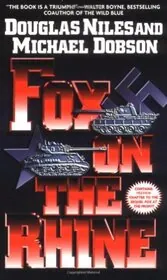
Fox on the Rhine
by Douglas Niles
2000
What if Hitler died in July 1944 and Rommel lived? This alternate-history novel follows the military and political shock that turns the war in Western Europe into a very different endgame.
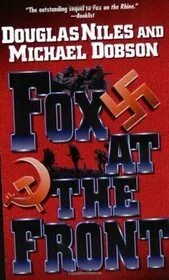
Fox at the Front
by Douglas Niles
2003
With Rommel and Patton forced into an uneasy alignment, this sequel imagines the end of World War II tilting toward a new race against Himmler and the Soviets. It is big, tactical, and relentlessly tense.
Fox on the Rhine books in chronological order
Series background & context
The Fox on the Rhine books are alternate World War II novels built around a sharp point of divergence: Hitler dies in the July 1944 plot, Rommel survives, and the closing months of the war in Europe stop following the history we know. From there Douglas Niles and Michael Dobson turn the story into a hard-driving military and political what-if.
The first book, Fox on the Rhine, sets the new board. Rommel, Himmler, Patton, and other real figures are all forced into different alignments, and the western front becomes a place of sudden possibility and sudden danger. Fox at the Front picks up that shift and pushes it further, with the western Allies, surviving German military leaders, SS diehards, and the Soviet advance all colliding in a new endgame.
These books are not really character studies dressed up as war novels. They are war novels in the full sense. Unit movement matters. Logistics matter. Staff decisions matter. The authors clearly enjoy the mechanics of campaigns, but they do not lose sight of the political stakes. Every battlefield choice carries consequences for Europe after the guns stop.
Rommel is a big part of the draw. The series uses his reputation, his pragmatism, and his complicated position inside the German war machine to build a different route through late 1944 and 1945. Patton also fits naturally into that framework, because he brings the same mix of military drive and difficult personality from the Allied side.
If you like alternate history that stays close to real commanders and real operational questions, this series has a lot to offer.
This page helps you read the duology in order and decide where to follow the divergence from actual history.





Edited by
Software engineer whose passion for tracking book recommendations from podcasts inspired the creation of MRB.
Lead investor at 3one4 Capital whose startup expertise and love for books helped shape MRB and its growth.
Comments
Did we miss something? Have feedback?
Help us improve this page by sharing your thoughts