
23 Best Social Engineering Books
The best social engineering books, ranked by how many expert sources recommend each one, with notes on security, persuasion, human behavior, and where to start.
Our take
Social engineering concerns the ways people can be influenced into sharing information, granting access, or making decisions that serve someone else’s aims. The books here approach that subject from several directions: security assessments, accounts of deception, persuasion research, and everyday communication. Some are professional references; others provide background for recognizing patterns of influence or questioning easy claims about human behavior.
The Art of Deception uses illustrative security scenarios, while Ghost in the Wires offers a personal account of hacking and evasion. Practical Social Engineering and Hacking the Human focus more directly on professional security work. Influence provides a broad persuasion framework, and Thinking, Fast and Slow examines judgment and decision-making. Books on rapport and nonverbal behavior take narrower approaches, with interpretations that still depend on context.
Start with cases if you want concrete examples, choose a professional manual for authorized security work, or begin with persuasion research if you want the psychological background.
23 books · 8 sources · Last updated
As an Amazon Associate, we earn from qualifying purchases (at no extra cost to you).
How to choose from this list
Skip to the full rankingIf you want an accessible security starting point: The Art of Deception → Ghost in the Wires
If you assess organizational human risk: Hacking the Human → Practical Social Engineering
If you want the psychology of persuasion: Influence → Yes! → Pre-Suasion
If you want background on judgment: Thinking, Fast and Slow
If you want constructive rapport skills: It's Not All About "Me" → Human Hacking → The Code of Trust
If you want case-based fraud awareness: The Art of the Steal → The Art of Intrusion
The 23 books, ranked
Ranked by how many expert sources name each book. Ties go to the book more people recommend.

For readers who prefer a personal narrative showing the human side of computer intrusion. Mitnick’s account makes trust and improvisation vivid, though it is a retrospective memoir with one participant’s perspective rather than a systematic security course.
What it's about
Kevin Mitnick recounts his computer and telephone exploits, life under false identities, and attempts to evade the authorities. Written with William L. Simon, the memoir follows the escalating pursuit that ended his years as a fugitive hacker.
Also recommended by
1 person Thomas Frank recommended this book
Thomas Frank
"I love stuff at the intersection of crime and computers." - Thomas Frank
Thomas Frank's recommendation of this book

For readers interested in observing nonverbal behavior during ordinary interactions. Its examples make posture and gestures concrete, though individual signals are context-dependent and should not be treated as proof of hidden thoughts or dishonesty.
What it's about
Joe Navarro and Marvin Karlins explain an approach to observing nonverbal behavior through posture, gestures, and movement. Examples from Navarro's FBI career explore expressions of comfort, discomfort, and confidence, connecting body language with social interactions and people's responses to their surroundings.
Also recommended by
2 people Scott Adams recommended this book
Scott Adams
One of the books on Scott Adams' "Persuasion Reading List."
Scott Adams's recommendation of this book  Neil Strauss recommended this book
Neil Strauss
Neil Strauss recommended this book in a blog post.
Neil Strauss's recommendation of this book

For security professionals who want a broad framework for understanding human-focused attacks. Its combination of concepts and cases supports structured study, though readers seeking a concise awareness introduction may find the procedural detail more than they need.
What it's about
Christopher Hadnagy examines how attackers exploit human behavior to gain access to information and protected spaces. Past examples illustrate techniques for influencing people and bypassing technical defenses, with discussion aimed at helping security professionals recognize and address the human side of attacks.

For readers who want recurring persuasion principles explained through research and everyday examples. Its framework helps organize other books on influence, though it offers less operational detail about security testing than the specialist manuals.
What it's about
Cialdini explores why people agree to requests and how recurring principles influence their decisions. Research and examples explain persuasion in everyday settings, alongside ways to recognize these mechanisms and resist attempts to exploit them.
Also recommended by
18 people Tobi Lütke recommended this book
Tobi Lütke
"The most mind-bending book you can imagine, because it essentially taught you always humans are flawed and influential." - Tobi Lütke
Tobi Lütke's recommendation of this book - Scott Adams recommended this book
Scott Adams
"100 percent of effective people seem to have read [this book]. In fact, it’s one of those things that when I meet somebody and they’re operating at a pretty high level, if you mention [this book], they’ve all read it." - Scott Adams
Scott Adams's recommendation of this book  Naval Ravikant recommended this book
Naval Ravikant
"Fundamental and had a lot to teach." - Naval Ravikant
Naval Ravikant's recommendation of this book  Charlie Munger recommended this book
Charlie Munger
Charlie Munger recommended this book in the "Poor Charlie's Almanack" book.
Charlie Munger's recommendation of this book  Adam Robinson recommended this book
Adam Robinson
Adam Robinson mentioned this book on "The Tim Ferriss Show" podcast.
Adam Robinson's recommendation of this book  Ramit Sethi recommended this book
Ramit Sethi
Ramit Sethi mentioned this book on "The Tim Ferriss Show" podcast.
Ramit Sethi's recommendation of this book +12
More recommendations
- Alexis Ohanian
"[Helps you] navigate the world with heightened awareness for how we're always being influenced/manipulated." - Alexis Ohanian
- Guy Kawasaki
"The guiding light for how I conduct business—and in many ways how I live my life." - Guy Kawasaki
- Max Levchin
One of Max Levchin's answers to "what's your favourite business book you'd advise to young entrepreneurs?"
- Noah Kagan
"People can be influenced in their behaviors by many different tactics." - Noah Kagan
- Samy Kamkar
"I love it because it was a very systematic and analytical approach to the most common ways that human being have been known to be influenced and persuaded to do something." - Samy Kamkar
- Andrew Wilkinson
"[One of] my most recommended business books." - Andrew Wilkinson
- Neil Strauss
"Understanding these [principles] make all the difference in making the leap from interest to attraction." - Neil Strauss
- Patrick O'Shaughnessy
Patrick O'Shaughnessy recommended this book on a blog post.
- Mark Manson
Mark Manson recommended this book on his website.
- Alex Hormozi
Alex Hormozi recommended this book on Instagram.
- James Clear
"[One of] the 10 best nonfiction books of all-time." - James Clear
- Michael Hyatt
Michael Hyatt recommended this book on his website.
- Alexis Ohanian

The 48 Laws of Power
For readers interested in a strategic, often cynical interpretation of power and social maneuvering. Its historical anecdotes make the principles memorable, though the sweeping rules are an author’s framework rather than a tested guide to every relationship.
What it's about
A compact guide to power dynamics, built around 48 memorable principles and historical examples. It shows how influence is gained, lost, and defended, while warning that every tactic can backfire when used carelessly.
Also recommended by
7 people Aubrey Marcus recommended this book
Aubrey Marcus
"I cannot express how immensely valuable this book is, when absorbed into an open mind." - Aubrey Marcus
Aubrey Marcus's recommendation of this book  DJ Vlad recommended this book
DJ Vlad
Most Recommended Books reached out to DJ Vlad directly.
DJ Vlad's recommendation of this book  Ryan Holiday recommended this book
Ryan Holiday
"Critical for anyone trying to accomplish anything." - Ryan Holiday
Ryan Holiday's recommendation of this book  Alice Little recommended this book
Alice Little
"I think that [this book is] a great tool to get into the hands of women and get that positive thinking going." - Alice Little
Alice Little's recommendation of this book - Neil Strauss recommended this book
Neil Strauss
"Heavily researched and distilled handbook." - Neil Strauss
Neil Strauss's recommendation of this book - Rollo Tomassi recommended this book
Rollo Tomassi
"His best book." - Rollo Tomassi
Rollo Tomassi's recommendation of this book +1
More recommendations
- Patrick Bet-David
Patrick Bet-David recommended this book on his website.
- Patrick Bet-David

It's Not All About "Me"
The Top Ten Techniques for Building Quick Rapport with Anyone
For readers who want a short introduction to rapport centered on the other person. Its concise techniques make a manageable companion to broader persuasion books, though it provides less historical or research context than a full-length treatment.
What it's about
Robin Dreeke presents ten techniques for building rapport by shifting attention toward other people's needs and interests. Drawing on his experience with interpersonal behavior, he discusses nonverbal communication and approaches applicable to professional and personal relationships.

For readers who want recognizable examples of deception linked to organizational security. Its case-based approach makes staff procedures and trust easy to discuss, though the technology is dated and the illustrative scenarios should not be mistaken for independent incident reports.
What it's about
Kevin Mitnick and William L. Simon examine how attackers manipulate trust and human behavior to bypass security. Accounts of deceptive encounters illustrate social engineering, while guidance on awareness, training, and organizational policies explains ways to address the human element of protection.

Thinking, Fast and Slow
For readers who want a broad account of judgment before studying particular persuasion techniques. Its discussion of intuitive and deliberate thinking gives useful conceptual background, though the length and research focus make it less immediately practical than a security guide.
What it's about
Kahneman explores two modes of thought: quick, intuitive responses and slower, deliberate reasoning. Drawing on psychological research, he examines how biases and impressions shape decisions, and when intuition helps or misleads in personal and professional life.
Also recommended by
19 people Bill Gates recommended this book
Bill Gates
List of books Bill Gates read in 2012.
Bill Gates's recommendation of this book  Ray Dalio recommended this book
Ray Dalio
Ray Dalio mentioned this book in his book, "Principles."
Ray Dalio's recommendation of this book - Scott Adams recommended this book
Scott Adams
One of the books on Scott Adams' "Persuasion Reading List."
Scott Adams's recommendation of this book - Naval Ravikant recommended this book
Naval Ravikant
"Fine book but it didn’t need to be an entire book. A blog post would have gotten the point across." - Naval Ravikant
Naval Ravikant's recommendation of this book  Ev Williams recommended this book
Ev Williams
"I love surprising scientific findings, as well as information about how our brains work. [This book] is a treasure trove of both." - Ev Williams
Ev Williams's recommendation of this book  Marc Andreessen recommended this book
Marc Andreessen
"Captivating dive into human decision making, marred by inclusion of several/many? psychology studies that fail to replicate. Will stand as a cautionary tale?" - Marc Andreessen
Marc Andreessen's recommendation of this book +13
More recommendations
- Stewart Brand
Stewart Brand recommended this book on his "Selected Books for the Manual for Civilization" blog post.
- Bryan Johnson
"I started reading [this book] and I became increasingly convinced of my own fickleness and inability to actually act rationally in life." - Bryan Johnson
- Derek Sivers
"If you liked 'Predictably Irrational' or 'Stumbling on Happiness' or any of those pop-psychology books, well, this is the Godfather of all of their work." - Derek Sivers
- Sam Altman
One of Sam Altman's answers to "What are some of the best books you recommend for a young startup founder?"
- Ron Conway
"Covers all three phases of [the author's] career: his early days working oncognitive bias, his work on prospect theory, and his later work on happiness." - Ron Conway
- Jason Fried
"I enjoyed [this book]. Fascinating." - Jason Fried
- Nassim Taleb
"A landmark book in social thought, in the same league as The Wealth of Nations by Adam Smith and The Interpretation of Dreams by Sigmund Freud." - Nassim Taleb
- Sahil Lavingia
Sahil Lavingia recommended this book on Notion.
- Mark Manson
Mark Manson recommended this book on his website.
- Jay Shetty
"[One] of my favourite books." - Jay Shetty
- Michiko Kakutani
"Has become essential reading in many baseball front offices and among coaching staffs." - Michiko Kakutani
- Preston Pysh
"An incredible book!" - Preston Pysh
- Ben Greenfield
Most Recommended Books reached out to Ben Greenfield directly.
- Stewart Brand

How To Win Friends and Influence People
For readers who want a foundation in cooperative communication before studying manipulation. Its emphasis on attention, appreciation, and other people’s interests remains approachable, though the older anecdotes and relationship focus do not make it a security manual.
What it's about
Carnegie presents practical guidance for building relationships, communicating effectively, and influencing others. Stories and principles explore social confidence, leadership, and cooperation, offering approaches readers can apply to interactions in their personal lives and at work.
Also recommended by
18 people Warren Buffett recommended this book
Warren Buffett
"In my office, you will not see the degree I have from the University of Nebraska, or the master’s degree I have from Columbia University, but you’ll see the certificate I got from the Dale Carnegie course." - Warren Buffett
Warren Buffett's recommendation of this book - Scott Adams recommended this book
Scott Adams
One of the books on Scott Adams' "Persuasion Reading List."
Scott Adams's recommendation of this book  Dave Ramsey recommended this book
Dave Ramsey
Recommended on Dave Ramsey's website.
Dave Ramsey's recommendation of this book  Paul Graham recommended this book
Paul Graham
"The one book we encourage startup founders to read. [...] It's critically important for anyone in business." - Paul Graham
Paul Graham's recommendation of this book  Derek Sivers recommended this book
Derek Sivers
Derek Sivers mentioned this book on "The Tim Ferriss Show" podcast.
Derek Sivers's recommendation of this book  Dustin Moskovitz recommended this book
Dustin Moskovitz
"Seek to be understood." - Dustin Moskovitz
Dustin Moskovitz's recommendation of this book +12
More recommendations
- Ken Block
"One of the first books that really helped me achieve my management style and what’s helped me really be successful." - Ken Block
- DJ Vlad
Most Recommended Books reached out to DJ Vlad directly.
- Strauss Zelnick
"Archaic references and overweening title to the side, it’s actually a great guide to leadership and salesmanship." - Strauss Zelnick
- Daymond John
"I love all the Dale Carnegie books." - Daymond John
- Shay Carl
"A staple that I have listened to three or four times." - Shay Carl
- Tim Draper
"[One of the books] that are recommended or required at Draper University." - Tim Draper
- Sahil Lavingia
Sahil Lavingia recommended this book on Notion.
- Barbara Corcoran
"A must read for anyone in business." - Barbara Corcoran
- Alex Hormozi
Alex Hormozi recommended this book on Instagram.
- Michael Hyatt
Michael Hyatt recommended this book on his website.
- Ben Greenfield
Most Recommended Books reached out to Ben Greenfield directly.
- Patrick Bet-David
Patrick Bet-David recommended this book on his website.
- Ken Block

Emotions Revealed
Recognizing Faces and Feelings to Improve Communication and Emotional Life
For readers who want a wider discussion of emotion before interpreting facial behavior. Its attention to triggers and expressions supplies context beyond a gesture checklist, though recognizing an expression does not establish what caused it or whether someone lies.
What it's about
Paul Ekman explores how emotions arise and how they appear in facial expressions. Chapters examine sadness, anger, fear, surprise, disgust, contempt, and enjoyment, connecting cross-cultural research with questions about emotional triggers, behavior, and everyday communication.
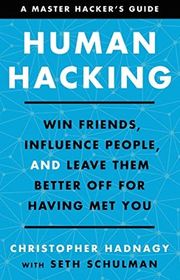
Human Hacking
For readers interested in applying communication lessons to constructive everyday relationships. Its attention to empathy and rapport offers a different emphasis from Hadnagy’s security manuals, though it remains an advice framework rather than a comprehensive psychology text.
What it's about
Hadnagy and Schulman adapt ideas from social engineering to everyday communication, emphasizing empathy, generosity, and rapport. Examples and exercises explore how readers approach conversations, interpret cues, and influence interactions while considering the experience of the other person.
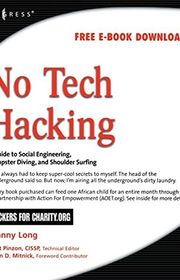
No Tech Hacking
For security readers who want to examine weaknesses outside software vulnerabilities. Its focus on physical access, observation, and everyday information exposure broadens a technical perspective, though the examples reflect an older security environment and need contextual updating.
What it's about
Long and his collaborators discuss security weaknesses involving people, physical spaces, and exposed information rather than complex technical exploits. Examples examine observation, discarded materials, and misplaced trust, showing how organizational habits can undermine otherwise substantial technical protections.
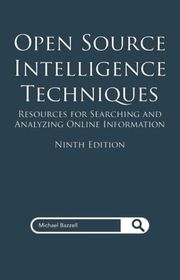
Open Source Intelligence Techniques
For investigators and security practitioners studying how publicly available information becomes an exposure. Its resource-building approach gives more technical depth than persuasion books, though the linked edition’s tools and services need checking because online platforms change quickly.
What it's about
Bazzell explains methods for searching and analyzing publicly available online information. The ninth edition emphasizes building an investigation environment and maintaining independent tools, connecting search techniques with the collection, assessment, and explanation of findings in practical investigations.

For readers interested in Hadnagy’s approach to nonverbal behavior within security encounters. Its visual emphasis complements broader social engineering frameworks, though behavioral cues require context and cannot reliably establish a person’s intentions on their own.
What it's about
Christopher Hadnagy explores the role of nonverbal communication in social engineering. Visual examples connect gestures and other behavior with the ways scammers build trust, presenting the author's approach to recognizing manipulation and examining the human element of security.

For readers who already know basic persuasion principles and want to examine what happens before a message. Its focus on attention and context adds a distinct angle, though the examples are not a dedicated treatment of security attacks.
What it's about
Cialdini examines how the moments before a message influence its reception. Drawing on persuasion research, he explores the role of attention, context, and subtle cues in preparing people to respond to communication in particular ways.
Also recommended by
5 people- Scott Adams recommended this book
Scott Adams
"Read [this book], and thank me later." - Scott Adams
Scott Adams's recommendation of this book - Naval Ravikant recommended this book
Naval Ravikant
"Good but closer to a single-themed book." - Naval Ravikant
Naval Ravikant's recommendation of this book  Michael Mauboussin recommended this book
Michael Mauboussin
"Fascinating and useful read. An instant classic." - Michael Mauboussin
Michael Mauboussin's recommendation of this book  Patrick O'Shaughnessy recommended this book
Patrick O'Shaughnessy
"Very interesting and readable." - Patrick O'Shaughnessy
Patrick O'Shaughnessy's recommendation of this book  Alex Hormozi recommended this book
Alex Hormozi
Alex Hormozi recommended this book on Instagram.
Alex Hormozi's recommendation of this book

For readers interested in one interviewing framework for evaluating possible deception. Its intelligence-career examples make the authors’ method concrete, though behavioral observations should be treated as prompts for further questioning rather than proof that someone is lying.
What it's about
Former CIA officers Philip Houston, Michael Floyd, and Susan Carnicero explain their approach to detecting deception. Drawing on intelligence work, they discuss questioning techniques and verbal and nonverbal behavior, proposing applications for conversations in professional and personal life.
Also recommended by
1 person Patrick Bet-David recommended this book
Patrick Bet-David
Patrick Bet-David recommended this book on his website.
Patrick Bet-David's recommendation of this book

Hacking the Human
For managers and security teams who want human risk treated as something to assess and manage. Its attention to vulnerability mapping and awareness programs distinguishes it from memoirs, though the organizational framework is less suited to casual reading.
What it's about
Mann examines social engineering as an information-security risk involving people and organizational practices. Psychological models and examples lead into vulnerability mapping, protective systems, and awareness training, offering a framework for understanding exposure and planning countermeasures.

How to Read a Person Like a Book
Observing Body Language to Know What People Are Thinking
For readers comparing older approaches to nonverbal communication. Its emphasis on observing groups of gestures offers a practical interpretive framework, though the title overstates how confidently body language can reveal another person’s thoughts.
What it's about
Gerard Nierenberg and his coauthors present methods for observing and interpreting nonverbal communication. Facial expressions, individual gestures, and clusters of body movements provide the basis for their discussion of attitudes, negotiations, and personal relationships.
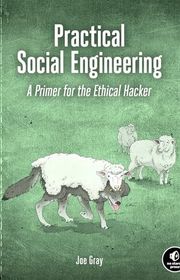
Practical Social Engineering
For security practitioners who want a working reference for authorized assessments and reporting. Its examples connect human-focused testing with organizational defenses, though the technical tools and engagement detail assume more background than a general reader’s introduction.
What it's about
Gray examines social engineering through professional security assessments, case studies, and defensive practices. The book covers information gathering, simulated attacks, and reporting, connecting the methods used in authorized engagements with ways organizations can understand and reduce their exposure.
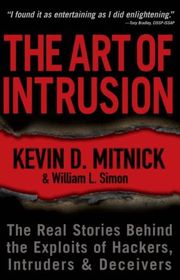
The Art of Intrusion
For readers who want reported intrusion stories alongside discussion of prevention. Its accounts show technical and human weaknesses interacting, though the older technologies and narrative case selection make it less useful as a current operational reference.
What it's about
Mitnick and Simon recount computer intrusions based on accounts from people involved, examining how the attacks unfolded and how organizations responded. The cases connect technical weaknesses with human decisions and include discussion of measures that might have prevented them.
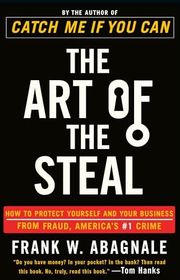
The Art of the Steal
For readers who want fraud examples connected to precautions for individuals and businesses. Its attention to routine transactions broadens the page beyond computer security, though older payment technologies and practices mean some details need updating.
What it's about
Abagnale discusses fraud involving money, documents, identity, and routine business transactions. Examples explain how weaknesses in ordinary procedures can be exploited, alongside advice intended to help individuals and organizations recognize exposure and strengthen their preventive practices.
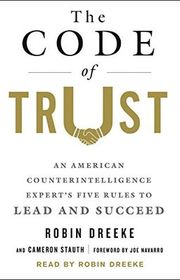
The Code of Trust
For readers who want a relationship framework built around credibility and other people’s priorities. Its counterintelligence perspective distinguishes it from general networking advice, though the personal system should not be mistaken for a guarantee of predicting or controlling behavior.
What it's about
Dreeke and Stauth present a five-rule approach to building trust, drawing on counterintelligence work and professional relationships. The book connects self-management, communication, and attention to others’ priorities with the development of cooperation in work and everyday life.
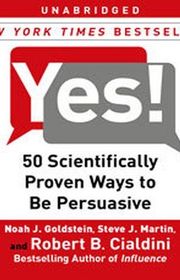
Yes!
For readers who want persuasion ideas in short, example-led chapters. Its compact format makes an accessible companion to Influence, though individual findings depend on context and should not be treated as universal scripts for getting agreement.
What it's about
Goldstein, Martin, and Cialdini present fifty short discussions of persuasion research and everyday applications. Examples consider how changes in requests, messages, and social settings can affect responses, connecting psychological findings with situations in work and personal life.
Sources
- 1
Best Social Engineering books
cybershelf.org
- 2
Social Engineering Books
goodreads.com
- 3
100 Best Social Engineering Books of All Time
shortform.com
- 4
Start Learning about Social Engineering with these 27 Books
phoenixts.com
- 5
The Best Social Engineering Books
reddit.com
- 6
Which are the best books to learn about social engineering?
reddit.com
- 7
Social engineering resources
sites.temple.edu
- 8
Top 6 Books for Social Engineering 2021
gainsec.com


Edited by
Software engineer whose passion for tracking book recommendations from podcasts inspired the creation of MRB.
Lead investor at 3one4 Capital whose startup expertise and love for books helped shape MRB and its growth.
Comments
Spotted a missing book, a wrong order or a mistake? Tell us and we'll fix this page.
We're a reading guide, not the author or publisher, so we can't send books or pass on messages.