
17 Best Product Marketing Books
The best product marketing books, ranked by how many expert sources recommend each one, with notes on who each suits, from new PMMs to go-to-market leaders.
Our take
Product marketing connects what a product does with the customers who need it and the reasons they would choose it. The work spans customer understanding, positioning, messaging, launches, and support for sales. These books help at different points in that process, so a useful starting point depends on whether you need to understand the role or solve a particular problem.
Loved and The Product Marketing Manager explain the discipline and its place within a technology business. Obviously Awesome gives positioning a practical structure, while Sales Pitch carries that work into buyer conversations. The Mom Test helps improve the evidence behind those choices, and Made to Stick focuses on communicating ideas clearly. Broader books about persuasion or product development can deepen your judgment, but each needs translating into your own market and team. Start with Loved if you’re new to the role, or Obviously Awesome if unclear positioning is the immediate problem.
17 books · 9 sources · Last updated
As an Amazon Associate, we earn from qualifying purchases (at no extra cost to you).
How to choose from this list
Skip to the full rankingIf you’re new to product marketing: Loved → The Product Marketing Manager
If you need clearer positioning: Obviously Awesome → Sales Pitch
If you need better customer evidence: The Mom Test → The Four Steps to the Epiphany
If your message is hard to explain: Made to Stick → Building a StoryBrand
If you’re moving beyond early adopters: Crossing the Chasm
If you’re exploring product-led growth: Product-Led Growth → Hooked
The 17 books, ranked
Ranked by how many expert sources name each book. Ties go to the book more people recommend.

Obviously Awesome
How to Nail Product Positioning so Customers Get It, Buy It, Love It
For teams that need a repeatable way to clarify product positioning. Its process connects alternatives, capabilities, and customer value to market context, though strong results depend on customer evidence and agreement across the team.
What it's about
April Dunford provides a process for positioning products so customers understand their distinctive value. She connects competitive alternatives, unique capabilities, customer needs, and market categories, showing how these choices support marketing and sales.

Crossing the Chasm
Marketing and Selling High-Tech Products to Mainstream Customers
For teams taking a technology product beyond early adopters. Its focus on a specific beachhead market sharpens go-to-market choices, though the framework is most directly suited to technology adoption rather than every kind of consumer purchase.
What it's about
Geoffrey Moore examines the difficulty of moving technology products from early enthusiasm to mainstream adoption. He offers a marketing framework for choosing target customers, positioning products, and building a broader market.
Also recommended by
10 people Andrew Ng recommended this book
Andrew Ng
"For B2B, I recommend [this book]." - Andrew Ng
Andrew Ng's recommendation of this book  Drew Houston recommended this book
Drew Houston
"It’s [about] how do technology products make their way from early adopters to the mainstream." - Drew Houston
Drew Houston's recommendation of this book  Seth Godin recommended this book
Seth Godin
"Helps us understand that it is a myth — an incorrect myth, a false myth — to believe that we can start with an idea for a few people and ride it from early adopter to early majority to late majority to laggard." - Seth Godin
Seth Godin's recommendation of this book  Aaron Levie recommended this book
Aaron Levie
"[One of] four good books that I would highly recommend reading if you're gonna build a B2B software company." - Aaron Levie
Aaron Levie's recommendation of this book  Ev Williams recommended this book
Ev Williams
On the "books read" section of Ev Williams' GoodReads profile.
Ev Williams's recommendation of this book  Ron Conway recommended this book
Ron Conway
"Bestselling guide that created a new game plan for marketing in high-tech industries." - Ron Conway
Ron Conway's recommendation of this book +4
More recommendations
- Guy Kawasaki
"Entrepreneurs should read this book when they are cranking out their 'conservative' sales projections." - Guy Kawasaki
- Bill Gurley
"All entrepreneurs should read." - Bill Gurley
- Changpeng Zhao
"Has helped me hone my message with regard to talking about Binance to the world." - Changpeng Zhao
- Chris Dixon
Chris Dixon recommended this book on Twitter.
- Guy Kawasaki

For readers who need to understand product marketing’s role inside a technology company. Its focus on the craft and organizational contribution complements tactical messaging books, though applying the ideas requires adapting to your team’s responsibilities.
What it's about
Martina Lauchengco explains how product marketing helps technology products reach customers and succeed in the market. Drawing on examples from startups and major technology companies, she presents practical approaches to positioning, market understanding, and communicating a product's value.
Also recommended by
1 person Marty Cagan recommended this book
Marty Cagan
"I just listened to [this] audio book sample and [the author] sounds like a professional narrator." - Marty Cagan
Marty Cagan's recommendation of this book

For product marketers who struggle to make an important idea understandable and memorable. Its communication principles help refine explanations and examples, though it assumes you have already identified a meaningful message for the right audience.
What it's about
Chip and Dan Heath explore why some ideas remain memorable while others disappear. Through stories and research, they identify ways to make messages more understandable and compelling, examining how communication can influence what people remember.
Also recommended by
5 people Brian Armstrong recommended this book
Brian Armstrong
"How to make your message memorable so it will spread." - Brian Armstrong
Brian Armstrong's recommendation of this book - Ev Williams recommended this book
Ev Williams
On the "books read" section of Ev Williams' GoodReads profile.
Ev Williams's recommendation of this book  Andrew Wilkinson recommended this book
Andrew Wilkinson
"Our marketing bible." - Andrew Wilkinson
Andrew Wilkinson's recommendation of this book  Changpeng Zhao recommended this book
Changpeng Zhao
"Informs a lot of our public outreach in terms of making our services more essential for our users." - Changpeng Zhao
Changpeng Zhao's recommendation of this book  Sahil Lavingia recommended this book
Sahil Lavingia
Sahil Lavingia recommended this book on Notion.
Sahil Lavingia's recommendation of this book

For readers who want the underlying logic of competing for a place in customers’ minds. Its emphasis on perception clarifies why differentiation matters, though the older brand examples provide less implementation detail than Obviously Awesome.
What it's about
Al Ries and Jack Trout explain how brands establish a distinctive place in consumers' minds. Their approach considers existing perceptions and competing products, showing why a clear position matters in a crowded communications environment.
Also recommended by
3 people- Ev Williams recommended this book
Ev Williams
On the "books read" section of Ev Williams' GoodReads profile.
Ev Williams's recommendation of this book  Patrick O'Shaughnessy recommended this book
Patrick O'Shaughnessy
"A really great book about communication." - Patrick O'Shaughnessy
Patrick O'Shaughnessy's recommendation of this book  Michael Hyatt recommended this book
Michael Hyatt
Michael Hyatt recommended this book on his website.
Michael Hyatt's recommendation of this book

For marketers who need a clear structure for customer-facing copy. Its customer-as-hero framework can organize a message quickly, though the formula needs adapting when technical buying decisions involve several audiences or complex evidence.
What it's about
Donald Miller introduces a seven-part storytelling framework for clarifying a business's message. Positioning the customer as the hero and the brand as a guide, he explains how problems, plans, and calls to action shape effective marketing.
Also recommended by
1 person Dave Ramsey recommended this book
Dave Ramsey
Recommended on Dave Ramsey's website.
Dave Ramsey's recommendation of this book

For marketers working closely with product teams on repeat use. Its behavioral model helps frame retention questions, though habitual engagement is only one form of product value and the approach needs careful ethical judgment.
What it's about
Nir Eyal explains a four-stage model for designing products that encourage repeated use. Examples and practical guidance help founders, designers, marketers, and product managers examine how technology influences behavior and how customer habits develop.
Also recommended by
1 person Marc Goodman recommended this book
Marc Goodman
One of Marc Goodman's answers to "sources you've learned from in the last year?"
Marc Goodman's recommendation of this book

For teams exploring how the product experience can support acquisition and conversion. Its focus on delivering value through use complements sales-led approaches, though the model needs suitable economics and customer behavior rather than simply adding free access.
What it's about
Wes Bush explains how software businesses can use the product itself to acquire, convert, and retain customers. Examples and practical guidance address free trials, freemium offers, pricing, and growth teams, connecting customer access to product value with a broader business strategy.

For product marketers whose work depends on influencing colleagues and understanding buyers. Its broad view of selling makes persuasion relevant across roles, though it offers less guidance on product positioning or launch execution.
What it's about
Daniel Pink argues that persuading and influencing others are everyday activities extending beyond formal sales jobs. He explores skills such as understanding another person's perspective, handling rejection, clarifying problems, and communicating with a spirit of service.

For marketers who want a framework for understanding persuasion and recognizing its misuse. The examples connect recurring social influences with everyday decisions, though the book does not provide a product launch or positioning process.
What it's about
Cialdini explores why people agree to requests and how recurring principles influence their decisions. Research and examples explain persuasion in everyday settings, alongside ways to recognize these mechanisms and resist attempts to exploit them.
Also recommended by
18 people Tobi Lütke recommended this book
Tobi Lütke
"The most mind-bending book you can imagine, because it essentially taught you always humans are flawed and influential." - Tobi Lütke
Tobi Lütke's recommendation of this book  Scott Adams recommended this book
Scott Adams
"100 percent of effective people seem to have read [this book]. In fact, it’s one of those things that when I meet somebody and they’re operating at a pretty high level, if you mention [this book], they’ve all read it." - Scott Adams
Scott Adams's recommendation of this book  Naval Ravikant recommended this book
Naval Ravikant
"Fundamental and had a lot to teach." - Naval Ravikant
Naval Ravikant's recommendation of this book  Charlie Munger recommended this book
Charlie Munger
Charlie Munger recommended this book in the "Poor Charlie's Almanack" book.
Charlie Munger's recommendation of this book  Adam Robinson recommended this book
Adam Robinson
Adam Robinson mentioned this book on "The Tim Ferriss Show" podcast.
Adam Robinson's recommendation of this book  Ramit Sethi recommended this book
Ramit Sethi
Ramit Sethi mentioned this book on "The Tim Ferriss Show" podcast.
Ramit Sethi's recommendation of this book +12
More recommendations
- Alexis Ohanian
"[Helps you] navigate the world with heightened awareness for how we're always being influenced/manipulated." - Alexis Ohanian
- Guy Kawasaki
"The guiding light for how I conduct business—and in many ways how I live my life." - Guy Kawasaki
- Max Levchin
One of Max Levchin's answers to "what's your favourite business book you'd advise to young entrepreneurs?"
- Noah Kagan
"People can be influenced in their behaviors by many different tactics." - Noah Kagan
- Samy Kamkar
"I love it because it was a very systematic and analytical approach to the most common ways that human being have been known to be influenced and persuaded to do something." - Samy Kamkar
- Andrew Wilkinson
"[One of] my most recommended business books." - Andrew Wilkinson
- Neil Strauss
"Understanding these [principles] make all the difference in making the leap from interest to attraction." - Neil Strauss
- Patrick O'Shaughnessy
Patrick O'Shaughnessy recommended this book on a blog post.
- Mark Manson
Mark Manson recommended this book on his website.
- Alex Hormozi
Alex Hormozi recommended this book on Instagram.
- James Clear
"[One of] the 10 best nonfiction books of all-time." - James Clear
- Michael Hyatt
Michael Hyatt recommended this book on his website.
- Alexis Ohanian

For startup teams that need to test customer and market assumptions before scaling. Its detailed Customer Development process connects learning with business decisions, though the dense presentation requires more effort than a short interviewing guide.
What it's about
Steve Blank introduces Customer Development as a way for startups to discover and test a workable business model. Customer feedback, experimentation, and iteration guide his approach to organizing sales, marketing, and product decisions before committing to expansion.
Also recommended by
2 people- Ron Conway recommended this book
Ron Conway
"Offers the practical and proven four-step Customer Development process for search and offers insight into what makes some startups successful and leaves some startups unsuccessful." - Ron Conway
Ron Conway's recommendation of this book  Ryan Hoover recommended this book
Ryan Hoover
"Too much (good) info but thankfully there's a summary in the Appendix." - Ryan Hoover
Ryan Hoover's recommendation of this book

For product marketers who want to understand the product teams they work with. Its focus on discovery, teams, and customer value improves collaboration, though it is primarily a product management book rather than a marketing handbook.
What it's about
Marty Cagan explains how technology companies organize product teams and develop products customers value. The book examines staffing, product discovery, and delivery, connecting customer needs with business goals and the responsibilities of effective product leadership.

Product Marketing, Simplified
A Customer-Centric Approach to Take a Product to Market
For newcomers seeking a broad view of taking a product to market. Its customer-centered approach connects messaging, launches, and commercial choices, though the breadth means specialist questions about research, positioning, or pricing may need deeper reading.
What it's about
Srini Sekaran introduces product marketing through a customer-focused approach to bringing products to market. The guide covers messaging, launches, pricing and packaging, customer value, and the product marketer's influence on product strategy and roadmaps.
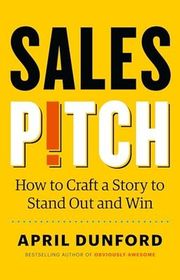
Sales Pitch: How to Craft a Story to Stand Out and Win
For product marketers turning positioning into conversations that help buyers choose. Its sales narrative structure offers a focused follow-on to Obviously Awesome, though it assumes sufficient understanding of alternatives and customer needs before crafting the pitch.
What it's about
April Dunford explains how to structure a sales story around differentiated value and the choices available to a buyer. The book connects positioning with discovery, qualification, product demonstrations, and a narrative designed to support confident purchasing decisions.

For marketers interested in why people share some ideas and products. Its framework supplies useful questions about word of mouth, though memorable examples do not guarantee that a particular campaign will spread or attract suitable buyers.
What it's about
Jonah Berger investigates why certain products, ideas, and stories spread through word of mouth. Research and examples explain how social motives, emotions, everyday reminders, and other factors influence what people share and what others choose to pass along.
Also recommended by
1 person- Changpeng Zhao recommended this book
Changpeng Zhao
"A must-read for all product designers and marketers, and a lot of people in our team have taken the lessons in this book to heart." - Changpeng Zhao
Changpeng Zhao's recommendation of this book
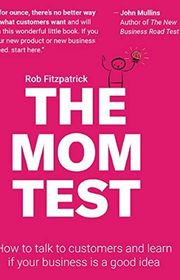
The Mom Test: How to Talk to Customers & Learn If Your Business Is a Good Idea When Everyone Is Lying to You
For marketers who need better customer conversations before choosing messages or markets. Its concise questioning guidance helps separate evidence from compliments, though interviews still need careful recruitment and cannot establish market demand on their own.
What it's about
Rob Fitzpatrick explains how founders can learn from customer conversations without inviting reassurance or leading answers. The book focuses on discussing actual behavior, identifying meaningful problems, and recognizing when feedback offers evidence rather than polite encouragement.
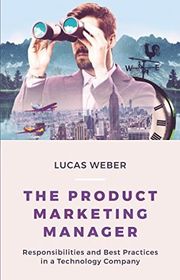
The Product Marketing Manager: Responsibilities and Best Practices in a Technology Company
For new product marketers who want a concrete explanation of day-to-day responsibilities. Its practical role overview connects messaging with cross-team work and launches, though responsibilities vary considerably between organizations and some examples reflect the author’s setting.
What it's about
Lucas Weber explains the product marketing manager’s role in a technology company, including positioning, messaging, sales communication, and product launches. Practical examples and professional experiences show how the role connects detailed product knowledge with work across several teams.
Sources
- 1
Geek Alert: 17 Best Product Marketing Books I Swear By
cpoclub.com
- 2
Top 10 Must-read Books for Product Marketers
getbeamer.com
- 3
100+ product marketing books every PMM should read
productmarketingalliance.com
- 4
Books for Product Marketing (23 books)
goodreads.com
- 5
Product Marketing Resources Hub: The Complete Guide to Tools, Communities, Books & Podcasts
blog.segment8.com
- 6
Suggest a good pmm book for B2B SaaS
reddit.com
- 7
Does anyone have any good book recommendations for Product Marketing?
reddit.com
- 8
8 Best Books for Product Marketing Managers
userguiding.com
- 9
Best Product Marketing & GTM Books for Product Managers
bestproductmanagementbooks.com


Edited by
Software engineer whose passion for tracking book recommendations from podcasts inspired the creation of MRB.
Lead investor at 3one4 Capital whose startup expertise and love for books helped shape MRB and its growth.
Comments
Spotted a missing book, a wrong order or a mistake? Tell us and we'll fix this page.
We're a reading guide, not the author or publisher, so we can't send books or pass on messages.