
25 Best Product Management Books
The best product management books, ranked by how many expert sources recommend each one, with notes for aspiring PMs, working practitioners, and team leaders.
Our take
Product management involves deciding which problems deserve attention, helping a team learn about possible solutions, and connecting that work with business goals. The role also depends on communication: customers, designers, engineers, and leaders rarely begin with the same information or priorities. These books approach different parts of that work, from interviewing and prototyping to roadmaps, metrics, and organizational leadership.
For a broad introduction, The Product Book explains the role, while Product Management in Practice concentrates on its daily realities. The Mom Test and Continuous Discovery Habits focus on learning from customers. Product Roadmaps Relaunched and User Story Mapping help teams discuss direction and scope, and Lean Analytics turns toward measurement. The leadership books address conditions that an individual PM may not control, so their advice needs to be read against your actual authority and company setting. Start with an overview if you are new to the role, or choose the book that addresses a problem you are facing with your team now.
25 books · 10 sources · Last updated
As an Amazon Associate, we earn from qualifying purchases (at no extra cost to you).
How to choose from this list
Skip to the full rankingIf you're new to product management: The Product Book → Product Management in Practice
If you want better customer discovery: The Mom Test → Continuous Discovery Habits
If you need clearer plans and scope: User Story Mapping → Product Roadmaps Relaunched → Shape Up
If you need better outcomes and metrics: Outcomes Over Output → Lean Analytics
If you lead product teams: Inspired → Empowered → Transformed
If you want to develop your PM career: Cracking the PM Career
The 25 books, ranked
Ranked by how many expert sources name each book. Ties go to the book more people recommend.

For aspiring and working technology PMs who want a model of discovery, team responsibilities, and leadership. Its coherent picture gives the role context, but applying it depends on organizational support and autonomy that many teams lack.
What it's about
Marty Cagan explains how technology companies organize product teams and develop products customers value. The book examines staffing, product discovery, and delivery, connecting customer needs with business goals and the responsibilities of effective product leadership.

For PMs examining why customers return to a product repeatedly. The compact behavioral model makes engagement patterns easier to discuss, but habit formation is narrower than lasting customer value and raises questions about whose interests the design serves.
What it's about
Nir Eyal explains a four-stage model for designing products that encourage repeated use. Examples and practical guidance help founders, designers, marketers, and product managers examine how technology influences behavior and how customer habits develop.
Also recommended by
1 person Marc Goodman recommended this book
Marc Goodman
One of Marc Goodman's answers to "sources you've learned from in the last year?"
Marc Goodman's recommendation of this book

The Design of Everyday Things
For PMs who want to recognize why interfaces and ordinary objects confuse people. Its attention to feedback and understandable actions builds useful design judgment, but it does not cover the full range of product strategy, business, or delivery responsibilities.
What it's about
Don Norman examines why everyday objects can be difficult to use, locating many failures in design rather than their users. He connects human psychology with product design to explain how objects can better support understandable interaction.
Also recommended by
4 people Scott Adams recommended this book
Scott Adams
One of the books on Scott Adams' "Persuasion Reading List."
Scott Adams's recommendation of this book  Jeff Atwood recommended this book
Jeff Atwood
"Will give you a new appreciation of the 'devil in the details.'" - Jeff Atwood
Jeff Atwood's recommendation of this book  Tobi Lütke recommended this book
Tobi Lütke
Tobi Lütke mentioned this book on the "Invest Like the Best" podcast.
Tobi Lütke's recommendation of this book  Marissa Mayer recommended this book
Marissa Mayer
"Makes you think about design in new ways." - Marissa Mayer
Marissa Mayer's recommendation of this book

The Lean Product Playbook
How to Innovate with Minimum Viable Products and Rapid Customer Feedback
For practitioners who want a structured sequence from customer needs to prototypes and feedback. Its concrete steps offer more procedural detail than broad leadership books, but real projects rarely move through the framework as neatly as the presentation suggests.
What it's about
Dan Olsen presents a repeatable process for finding product-market fit through customer understanding and experimentation. Steps cover selecting target users, identifying unmet needs, defining a value proposition, building minimum viable prototypes, testing them, and iterating from feedback.

The Lean Startup
How Today's Entrepreneurs Use Continuous Innovation to Create Radically Successful Businesses
For PMs exploring uncertain opportunities before committing to a full product. Its learning-oriented approach gives experiments a strategic purpose, but the startup examples and broad principles need translating into the constraints of established teams and markets.
What it's about
Eric Ries proposes developing businesses through repeated experiments, customer feedback, and validated learning. The book explains how entrepreneurs can test assumptions, measure progress, and adjust products and strategy under uncertainty rather than rely entirely on detailed initial plans.
Also recommended by
15 people Andrew Ng recommended this book
Andrew Ng
"Gives one specific tactic for innovating quickly." - Andrew Ng
Andrew Ng's recommendation of this book  Ben Horowitz recommended this book
Ben Horowitz
"Great." - Ben Horowitz
Ben Horowitz's recommendation of this book  Dustin Moskovitz recommended this book
Dustin Moskovitz
"At Asana, we've been lucky to benefit from [the author]'s advice firsthand; this book will enable him to help many more entrepreneurs answer the tough questions about their business." - Dustin Moskovitz
Dustin Moskovitz's recommendation of this book  Jason Calacanis recommended this book
Jason Calacanis
"You need to read [this book]." - Jason Calacanis
Jason Calacanis's recommendation of this book  Kevin Systrom recommended this book
Kevin Systrom
"The principles from [this book], I still apply today." - Kevin Systrom
Kevin Systrom's recommendation of this book  Marc Andreessen recommended this book
Marc Andreessen
"[The author] has created a science where previously there was only art. A must read for every serious entrepreneur—and every manager interested in innovation." - Marc Andreessen
Marc Andreessen's recommendation of this book +9
More recommendations
- Mark Cuban
One of the 7 books Mark Cuban credits his success to.
- Mike Maples, Jr.
"[I was] lucky enough to have a front-row seat at the birth of these ideas." - Mike Maples, Jr.
- Tim O’Reilly
"[This book] isn't just about how to create a more successful entrepreneurial business, it's about what we can learn from those businesses to improve virtually everything we do." - Tim O’Reilly
- Chris Dixon
Chris Dixon recommended this book on Twitter.
- Raoul Pal
Raoul Pal recommended this book on Twitter.
- Sheryl Sandberg
"Provides a great inside look at how the tech industry approaches building products and businesses." - Sheryl Sandberg
- Steve Blank
"A 'must have' for your shelf." - Steve Blank
- Marty Cagan
"Buy it." - Marty Cagan
- Patrick Bet-David
Patrick Bet-David recommended this book on his website.
- Mark Cuban

For PMs and leaders whose organizations measure success mainly by features shipped. Its connection between strategy, team structure, and outcomes explains why local process improvements stall, but many proposed changes require authority beyond a single product team.
What it's about
Melissa Perri examines why organizations can ship many features while failing to create customer value. She connects product strategy, team structure, discovery, and company culture, explaining how product management can align development decisions with customer needs and business outcomes.
The Mom Test: How to Talk to Customers & Learn If Your Business Is a Good Idea When Everyone Is Lying to You
For PMs and founders who need more reliable customer conversations. Its compact examples make leading questions and empty encouragement easier to recognize, but better interviews alone do not establish market demand or replace observing actual behavior.
What it's about
Rob Fitzpatrick explains how founders can learn from customer conversations without inviting reassurance or leading answers. The book focuses on discussing actual behavior, identifying meaningful problems, and recognizing when feedback offers evidence rather than polite encouragement.

Crossing the Chasm
Marketing and Selling High-Tech Products to Mainstream Customers
For product managers facing the move from enthusiastic early buyers to a more cautious market. Its focus on positioning and target segments complements discovery books, but the technology marketing examples and staged adoption model need contextual interpretation.
What it's about
Geoffrey Moore examines the difficulty of moving technology products from early enthusiasm to mainstream adoption. He offers a marketing framework for choosing target customers, positioning products, and building a broader market.
Also recommended by
10 people- Andrew Ng recommended this book
Andrew Ng
"For B2B, I recommend [this book]." - Andrew Ng
Andrew Ng's recommendation of this book  Drew Houston recommended this book
Drew Houston
"It’s [about] how do technology products make their way from early adopters to the mainstream." - Drew Houston
Drew Houston's recommendation of this book  Seth Godin recommended this book
Seth Godin
"Helps us understand that it is a myth — an incorrect myth, a false myth — to believe that we can start with an idea for a few people and ride it from early adopter to early majority to late majority to laggard." - Seth Godin
Seth Godin's recommendation of this book  Aaron Levie recommended this book
Aaron Levie
"[One of] four good books that I would highly recommend reading if you're gonna build a B2B software company." - Aaron Levie
Aaron Levie's recommendation of this book  Ev Williams recommended this book
Ev Williams
On the "books read" section of Ev Williams' GoodReads profile.
Ev Williams's recommendation of this book  Ron Conway recommended this book
Ron Conway
"Bestselling guide that created a new game plan for marketing in high-tech industries." - Ron Conway
Ron Conway's recommendation of this book +4
More recommendations
- Guy Kawasaki
"Entrepreneurs should read this book when they are cranking out their 'conservative' sales projections." - Guy Kawasaki
- Bill Gurley
"All entrepreneurs should read." - Bill Gurley
- Changpeng Zhao
"Has helped me hone my message with regard to talking about Binance to the world." - Changpeng Zhao
- Chris Dixon
Chris Dixon recommended this book on Twitter.
- Guy Kawasaki

Measure What Matters
How Google, Bono, and the Gates Foundation Rock the World with OKRs
For PMs and leaders who want a shared language for goals and measurable results. The organizational stories make OKRs easy to discuss, but the framework does not determine which product outcomes matter or resolve competing strategic choices.
What it's about
John Doerr explains the objectives and key results framework through accounts from companies and nonprofit organizations. He examines how clear priorities and measurable goals can help teams coordinate effort, track progress, and reconsider activities that are not working.
Also recommended by
8 people Larry Page recommended this book
Larry Page
"I wish I had had this book nineteen years ago, when we founded Google. Or even before that, when I was only managing myself!" - Larry Page
Larry Page's recommendation of this book  Bill Gates recommended this book
Bill Gates
"I’d recommend [John Doerr]’s book for anyone interested in becoming a better manager." - Bill Gates
Bill Gates's recommendation of this book  Walter Isaacson recommended this book
Walter Isaacson
"The most important venture capitalist of our era reveals a key to business innovation and success." - Walter Isaacson
Walter Isaacson's recommendation of this book - Dustin Moskovitz recommended this book
Dustin Moskovitz
Dustin Moskovitz recommended this book on Twitter.
Dustin Moskovitz's recommendation of this book  Reid Hoffman recommended this book
Reid Hoffman
"Whether you're a seasoned CEO or a first-time entrepreneur, you'll find valuable lessons, tools, and inspiration in the pages of [this book]. I'm glad [the author] invested the time to share these ideas with the world." - Reid Hoffman
Reid Hoffman's recommendation of this book  Jim Collins recommended this book
Jim Collins
"Deserves to be fully embraced by every person responsible for performance, in any walk of life. [The author] makes Andy Grove a mentor to us all." - Jim Collins
Jim Collins's recommendation of this book +2
More recommendations
- Sheryl Sandberg
"Shows how any organization or team can aim high, move fast, and excel." - Sheryl Sandberg
- Marty Cagan
"Does a good job overall - worth reading." - Marty Cagan
- Sheryl Sandberg
Product Management in Practice
For working PMs who need help with collaboration and the unglamorous realities of the role. Its practical attention to communication complements idealized team models, but the emphasis on daily judgment offers less of a single strategic framework.
What it's about
LeMay examines product management as practical work that brings clarity and coordination to teams. The revised edition addresses common questions, communication problems, and collaboration across remote or hybrid settings, emphasizing the connective responsibilities behind the role’s more visible decisions.
Product Roadmaps Relaunched
For PMs who need roadmaps to communicate direction rather than freeze a feature schedule. Its examples connect strategy, priorities, and stakeholder discussion, but the approach requires ongoing negotiation and cannot remove uncertainty about delivery or changing needs.
What it's about
This practical guide explains creating and updating product roadmaps that communicate direction and align stakeholders. It connects customer and business goals with prioritization, showing how the roadmap can support discussion and adaptation rather than function as a fixed delivery schedule.

Continuous Discovery Habits
Discover Products that Create Customer Value and Business Value
For product teams that want customer learning to become regular work rather than an occasional project. Its connected habits give discovery a usable structure, but access to customers and collaboration across roles are prerequisites that the book cannot supply.
What it's about
Teresa Torres presents a structured approach to making customer discovery an ongoing part of product development. She explains how teams can use customer input, explore opportunities, and test assumptions while balancing action with uncertainty and connecting customer value to business outcomes.
Also recommended by
1 person Marty Cagan recommended this book
Marty Cagan
"For aspiring strong product people to get their career started in the right direction." - Marty Cagan
Marty Cagan's recommendation of this book
Empowered
For product leaders responsible for the conditions in which teams work. Its attention to coaching and organizational support develops the leadership side of Inspired, but readers without management authority may have limited ability to apply its recommendations.
What it's about
Cagan and Jones examine how leaders enable product teams to solve difficult problems together. The book focuses on the working environment, coaching, responsibilities, and organizational choices that support teams, extending the discussion beyond the techniques used within a product project.
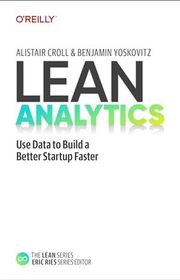
Lean Analytics: Use Data to Build a Better Startup Faster
For PMs who need to choose meaningful metrics rather than accumulate dashboards. Its attention to business model and stage gives measurement a purpose, but the case studies require interpretation and a useful metric still needs a credible underlying strategy.
What it's about
Alistair Croll and Benjamin Yoskovitz explain how startups can select metrics that support decisions at different stages. Business-model examples and case studies connect measurement with testing assumptions, understanding customers, and deciding what deserves attention next.
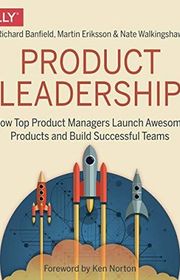
Product Leadership
For PMs moving toward responsibility for people and product organizations. Its interview-based perspective shows varied approaches beyond a single company model, but readers looking for a tightly sequenced operating manual may find the coverage broad and uneven.
What it's about
Interviews with product leaders inform an examination of guiding products and building teams. The authors connect professional experience with questions about leadership, collaboration, organizational context, and the changing responsibilities involved in moving from an idea toward a successful product.
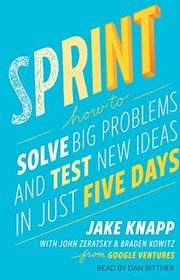
Sprint
For teams that need a structured way to explore and test one important idea quickly. Its scheduled workshop makes collaboration concrete, but arranging the participants and focused time takes effort, and one sprint cannot replace ongoing discovery.
What it's about
Knapp, Zeratsky, and Kowitz describe a five-day process for tackling an important problem, developing a prototype, and testing it. The book organizes decisions and group activities into a focused sequence intended to help teams learn before committing to full development.
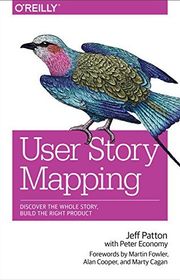
User Story Mapping
For teams whose feature lists have lost their connection to the user’s overall task. The collaborative visual approach helps create shared context, but the map needs real user understanding and continued discussion rather than becoming another static planning artifact.
What it's about
Patton explains using story maps to build a shared understanding of what a product should help people do. Exercises and examples connect user activities with planning conversations, allowing teams to discuss scope and priorities without losing the larger experience.

For readers trying to understand why serving existing customers can conflict with responding to new markets. Its industry cases encourage strategic questioning, but the disruption framework is an interpretive lens rather than a prediction rule for every competitive threat.
What it's about
Christensen examines why established companies can lose market leadership despite serving customers well and following sound management practices. Through industry examples, he explains disruptive innovation and considers how organizations can respond to emerging technologies and initially smaller markets.
Also recommended by
18 people Jeff Bezos recommended this book
Jeff Bezos
Part of "Jeff's Reading List."
Jeff Bezos's recommendation of this book  Steve Jobs recommended this book
Steve Jobs
Walter Isaacson said Steve Jobs was deeply influenced by this book.
Steve Jobs's recommendation of this book  Mark Cuban recommended this book
Mark Cuban
Mark Cuban's answer to "what's a book you always recommend?"
Mark Cuban's recommendation of this book  Marc Benioff recommended this book
Marc Benioff
"We often referenced [this book. A] thought-provoking [book] that validated our crusade." - Marc Benioff
Marc Benioff's recommendation of this book - Ben Horowitz recommended this book
Ben Horowitz
"A great book on strategy." - Ben Horowitz
Ben Horowitz's recommendation of this book - Drew Houston recommended this book
Drew Houston
"About how businesses get disrupted, and a lot of those themes are why startups can succeed and thrive even when there are big competitors who you would think would just wipe ’em out." - Drew Houston
Drew Houston's recommendation of this book +12
More recommendations
- Aaron Levie
"[One of] four good books that I would highly recommend reading if you're gonna build a B2B software company." - Aaron Levie
- Ev Williams
On the "books read" section of Ev Williams' GoodReads profile.
- Max Levchin
One of Max Levchin's answers to "what's your favourite business book you'd advise to young entrepreneurs?"
- Tim O’Reilly
"[A] business classic." - Tim O’Reilly
- Caterina Fake
"A must-read for entrepreneurs." - Caterina Fake
- Guy Kawasaki
"Taught me why it’s so hard to come up with a second hit." - Guy Kawasaki
- Bill Gurley
"All entrepreneurs should read." - Bill Gurley
- Blake Scholl
"Everyone talks about it, I wonder how many people actually read it. You should actually read it." - Blake Scholl
- Chris Dixon
Chris Dixon recommended this book on Twitter.
- Marc Andreessen
"Really critical to understanding how this industry works." - Marc Andreessen
- Michael Bloomberg
"An insightful analysis of changing technology and its importance to a company's future success." - Michael Bloomberg
- Steve Blank
"The foundational read for managing disruptive innovation." - Steve Blank
- Aaron Levie
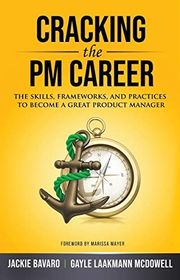
Cracking the PM Career
For PMs who want a broad reference for developing skills and progressing into leadership. Its coverage extends beyond getting hired into the work itself, but the size and range make selective consultation more practical than a quick introductory read.
What it's about
Bavaro and McDowell explore the skills, frameworks, and working practices involved in a product management career. The guide ranges from early responsibilities to leadership, connecting execution, strategy, product judgment, and professional development through questions that arise as the role expands.
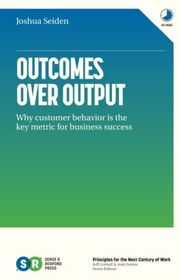
Outcomes Over Output
For teams that need a short explanation of why shipping features is not the same as creating value. Its behavioral definition makes outcomes concrete, but the brief treatment leaves substantial work in choosing measures and changing planning practices.
What it's about
Seiden argues for setting product goals around changes in customer behavior rather than completed features. The concise discussion connects outcomes with focus and alignment, explaining how teams can reconsider success when digital services continue evolving after a release.

For newcomers who need an overview of the role and its relationships with other functions. Its introductory breadth helps establish vocabulary and expectations, but experienced PMs will need more depth on discovery, strategy, and difficult organizational situations.
What it's about
Based on Product School’s curriculum, this introduction explains the product manager’s role among engineering, design, marketing, and sales teams. Practical advice and professional perspectives help readers understand how product management contributes to developing and delivering products.
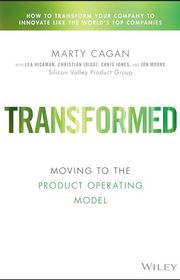
Transformed
For leaders trying to change how an established company develops products. Its organizational focus addresses obstacles beyond individual PM technique, but the proposed transition requires executive commitment and should not be mistaken for a small team process adjustment.
What it's about
Cagan and his colleagues examine the shift from established ways of delivering technology to a product operating model. The discussion addresses changes in team responsibilities, leadership, and company practices, considering what organizations must confront when they want to work differently.
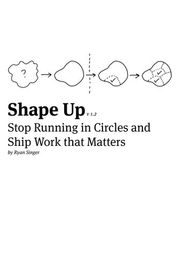
Shape Up
For teams that ship software but struggle to turn open-ended ideas into bounded work. Its treatment of shaping and scope gives delivery decisions a practical structure, but adopting the full approach requires changes beyond an individual PM’s control.
What it's about
Ryan Singer explains a product development approach built around shaping work, selecting projects, and completing them in six-week cycles. He describes setting boundaries, managing risks, assigning teams responsibility, and adjusting scope so that useful work reaches completion.
Also recommended by
1 person Ryan Hoover recommended this book
Ryan Hoover
"Short, actionable, and free. We'll be applying some of their ideas to our process at Product Hunt." - Ryan Hoover
Ryan Hoover's recommendation of this book

For PMs who want to define a desired behavior before selecting features or interventions. Its behavioral perspective offers a useful alternative to solution-first planning, but the process still requires research and testing rather than relying on an appealing explanation.
What it's about
Matt Wallaert proposes designing products and services by defining the behavior they should change. Drawing on behavioral science and business examples, he examines the pressures that encourage or prevent action and a process for testing interventions against desired outcomes.

The Hard Thing About Hard Things
Building a Business When There Are No Easy Answers
For product leaders who want to understand the pressures and personnel decisions facing a chief executive. The candid cases add organizational perspective, but this is a company-building memoir and advice book rather than a guide to daily product management.
What it's about
Ben Horowitz draws on his experiences leading technology companies to discuss the difficult decisions involved in running a business. His advice covers leadership under pressure, personnel problems, competition, and the responsibilities that accompany the role of chief executive.
Also recommended by
22 people Peter Thiel recommended this book
Peter Thiel
"[The author] has written the first true guide for protecting a startup from self-sabotage." - Peter Thiel
Peter Thiel's recommendation of this book  Mark Zuckerberg recommended this book
Mark Zuckerberg
"For anyone insterested in building, growing, or leading a great company, this book is an incredibly valuable resource." - Mark Zuckerberg
Mark Zuckerberg's recommendation of this book  Peter Attia recommended this book
Peter Attia
One of Peter Attia's answers to "any books you feel would make your reading list?"
Peter Attia's recommendation of this book - Marc Andreessen recommended this book
Marc Andreessen
"Let’s just say, we started out relationship with vigorous disagreement, and we’ve continued that to this day." - Marc Andreessen
Marc Andreessen's recommendation of this book - Larry Page recommended this book
Larry Page
"An inspiring story of a business rebirth through sheer willpower." - Larry Page
Larry Page's recommendation of this book  Matt Mullenweg recommended this book
Matt Mullenweg
"Entertaining more than anything. I read [this book], I was like: I would never work for this guy. But entertaining and some good lessons." - Matt Mullenweg
Matt Mullenweg's recommendation of this book +16
More recommendations
- Andrew Ng
"A bit dark but it does cover a lot of useful territory on what building an organization is like." - Andrew Ng
- Drew Houston
"One of the great things that [the author] wrote in [this book] is the hardest part of being a CEO is managing your psychology." - Drew Houston
- Keith Rabois
"Reflects 2000-2003." - Keith Rabois
- Dustin Moskovitz
Dustin Moskovitz recommended this book during a Stanford lecture in 2014.
- Max Levchin
One of Max Levchin's answers to "what's your favourite business book you'd advise to young entrepreneurs?"
- Luis von Ahn
"I like this one, but it’s not for very new entrepreneurs." - Luis von Ahn
- Kathryn Minshew
Most Recommended Books reached out to Kathryn Minshew directly.
- Andrew Wilkinson
"One of the best business books I've picked up in years." - Andrew Wilkinson
- Tim Ferriss
"A great book." - Tim Ferriss
- Blake Scholl
"Good." - Blake Scholl
- Chris Dixon
Chris Dixon recommended this book on Twitter.
- Fred Wilson
"Chapter five in [this book] is possibly the best thing I've read about leading a tech company." - Fred Wilson
- Raoul Pal
"By far, the best, most brutally honest and incredibly useful book about the realities of starting and running a company." - Raoul Pal
- Jodie Cook
"Reframes your mind: hard doesn’t mean bad. Seeking the easy route is a trap." - Jodie Cook
- Michael Dell
"Candidly talks about the very real thrills and perils of starting a business."- Michael Dell
- Marty Cagan
"Trust me: if you're a leader in tech, the best thing you can do in 2014 for your company is to read [this book]." - Marty Cagan
- Andrew Ng
Sources
- 1
11 Best Product Management Books to Read in 2026
adplist.org
- 2
Product management books
lyssna.com
- 3
15 Must-Read Books for Product Management Leaders
productplan.com
- 4
15 best books for product managers
productboard.com
- 5
14 Best Books on Product Management in 2026
userguiding.com
- 6
Best new and classic books for PMs to read?
reddit.com
- 7
What are some good books you would recommend reading as a Product Manager?
reddit.com
- 8
Product Management: Most Recommended
goodreads.com
- 9
Best Product Management Books: 36 Picks Recommended by CEOs
theceolibrary.com
- 10
The 16 Best Product Management Books to Know
builtin.com


Edited by
Software engineer whose passion for tracking book recommendations from podcasts inspired the creation of MRB.
Lead investor at 3one4 Capital whose startup expertise and love for books helped shape MRB and its growth.
Comments
Spotted a missing book, a wrong order or a mistake? Tell us and we'll fix this page.
We're a reading guide, not the author or publisher, so we can't send books or pass on messages.