
19 Best Digital Marketing Books
The best digital marketing books, ranked by how many expert sources recommend each one, with notes for beginners, specialists, and teams choosing their next read.
Our take
Digital marketing connects an audience’s needs with messages, channels, and experiences that support a business goal. Books on the subject range from broad planning texts to focused treatments of content, persuasion, customer service, and measurement. Some help you decide what to do; others help you question how a particular activity is working. Platform instructions date faster than the underlying questions about customers and value.
Digital Marketing For Dummies provides an initial map, while Digital Marketing Strategy and Digital Marketing offer more structured planning frameworks. Building a StoryBrand concentrates on clarity, and Epic Content Marketing turns toward editorial purpose and production. For teams organizing experiments, Hacking Growth pairs usefully with the measurement questions in Lean Analytics. Influence and Contagious examine behavior behind responses and sharing. Start with a broad introduction if the channels are unfamiliar, then choose a specialist book that addresses the decision in front of you.
19 books · 9 sources · Last updated
As an Amazon Associate, we earn from qualifying purchases (at no extra cost to you).
How to choose from this list
Skip to the full rankingIf you are starting from zero: Digital Marketing For Dummies → Digital Marketing Strategy
If you want a structured course text: Digital Marketing
If you need a clearer message: Building a StoryBrand
If you want a content program: Epic Content Marketing → Content Machine
If you want to organize growth experiments: Hacking Growth → Lean Analytics
If you need to interpret results: Digital Marketing Analytics
The 19 books, ranked
Ranked by how many expert sources name each book. Ties go to the book more people recommend.

Epic Content Marketing
How to Tell a Different Story, Break through the Clutter, and Win More Customers by Marketing Less
For marketers who want an editorial purpose and production process behind their content. Its focus on audience needs adds discipline beyond posting regularly, though the many organizational choices may feel extensive for a very small operation.
What it's about
Joe Pulizzi presents a process for creating content that attracts an audience without relying on sales interruptions. The guide covers selecting a niche, defining a mission, organizing production, distributing material and measuring performance through business case studies.

For marketers who want a research-based framework for understanding persuasion. Its principles travel across channels better than platform tactics, though translating them into responsible messages and testing their relevance requires work beyond reading the examples.
What it's about
Cialdini explores why people agree to requests and how recurring principles influence their decisions. Research and examples explain persuasion in everyday settings, alongside ways to recognize these mechanisms and resist attempts to exploit them.
Also recommended by
18 people Tobi Lütke recommended this book
Tobi Lütke
"The most mind-bending book you can imagine, because it essentially taught you always humans are flawed and influential." - Tobi Lütke
Tobi Lütke's recommendation of this book  Scott Adams recommended this book
Scott Adams
"100 percent of effective people seem to have read [this book]. In fact, it’s one of those things that when I meet somebody and they’re operating at a pretty high level, if you mention [this book], they’ve all read it." - Scott Adams
Scott Adams's recommendation of this book  Naval Ravikant recommended this book
Naval Ravikant
"Fundamental and had a lot to teach." - Naval Ravikant
Naval Ravikant's recommendation of this book  Charlie Munger recommended this book
Charlie Munger
Charlie Munger recommended this book in the "Poor Charlie's Almanack" book.
Charlie Munger's recommendation of this book  Adam Robinson recommended this book
Adam Robinson
Adam Robinson mentioned this book on "The Tim Ferriss Show" podcast.
Adam Robinson's recommendation of this book  Ramit Sethi recommended this book
Ramit Sethi
Ramit Sethi mentioned this book on "The Tim Ferriss Show" podcast.
Ramit Sethi's recommendation of this book +12
More recommendations
- Alexis Ohanian
"[Helps you] navigate the world with heightened awareness for how we're always being influenced/manipulated." - Alexis Ohanian
- Guy Kawasaki
"The guiding light for how I conduct business—and in many ways how I live my life." - Guy Kawasaki
- Max Levchin
One of Max Levchin's answers to "what's your favourite business book you'd advise to young entrepreneurs?"
- Noah Kagan
"People can be influenced in their behaviors by many different tactics." - Noah Kagan
- Samy Kamkar
"I love it because it was a very systematic and analytical approach to the most common ways that human being have been known to be influenced and persuaded to do something." - Samy Kamkar
- Andrew Wilkinson
"[One of] my most recommended business books." - Andrew Wilkinson
- Neil Strauss
"Understanding these [principles] make all the difference in making the leap from interest to attraction." - Neil Strauss
- Patrick O'Shaughnessy
Patrick O'Shaughnessy recommended this book on a blog post.
- Mark Manson
Mark Manson recommended this book on his website.
- Alex Hormozi
Alex Hormozi recommended this book on Instagram.
- James Clear
"[One of] the 10 best nonfiction books of all-time." - James Clear
- Michael Hyatt
Michael Hyatt recommended this book on his website.
- Alexis Ohanian

Digital Marketing For Dummies
For beginners who need a broad map of channels and the customer journey. Its practical overview helps connect separate activities, though the breadth limits depth and platform-specific details need checking against the edition you use.
What it's about
Ryan Deiss and Russ Henneberry introduce digital marketing through practical approaches to attracting prospects, generating leads, and building customer relationships. The guide covers online campaigns and channels, showing how to move an audience from initial engagement toward purchase and loyalty.

For teams ready to make experimentation a regular part of growth work. Its cross-functional process connects acquisition with retention and monetization, though it assumes enough coordination, data, and implementation capacity to run useful tests.
What it's about
Sean Ellis and Morgan Brown explain growth hacking as a process of experimentation centered on customers. Their guide connects acquiring, retaining, engaging, and monetizing users with coordinated teamwork and repeated testing, showing how companies can investigate opportunities for growth.

For marketers who want to build ongoing relationships with an interested audience. Its argument for earning attention remains useful across channels, though the examples predate much of the current platform landscape and it is not a compliance guide.
What it's about
Seth Godin proposes building marketing around people's willingness to receive messages rather than interrupting them. He explores how attracting interested customers and earning their permission can support trust, ongoing relationships, and more relevant communication.
Also recommended by
2 people Noah Kagan recommended this book
Noah Kagan
"No one wants your annoying ass marketing. Get their permission and deliver more than what they expect." - Noah Kagan
Noah Kagan's recommendation of this book  Michael Hyatt recommended this book
Michael Hyatt
Michael Hyatt recommended this book on his website.
Michael Hyatt's recommendation of this book

For business owners and marketers whose message is difficult to explain. Its repeatable framework gives copy and calls to action a clear structure, though fitting every brand into the same story pattern can flatten distinctive nuances.
What it's about
Donald Miller introduces a seven-part storytelling framework for clarifying a business's message. Positioning the customer as the hero and the brand as a guide, he explains how problems, plans, and calls to action shape effective marketing.
Also recommended by
1 person Dave Ramsey recommended this book
Dave Ramsey
Recommended on Dave Ramsey's website.
Dave Ramsey's recommendation of this book

For marketers interested in why people talk about and share ideas. Its framework connects message design with social motives and everyday triggers, though explaining patterns of sharing does not make any campaign predictably viral.
What it's about
Jonah Berger investigates why certain products, ideas, and stories spread through word of mouth. Research and examples explain how social motives, emotions, everyday reminders, and other factors influence what people share and what others choose to pass along.
Also recommended by
1 person Changpeng Zhao recommended this book
Changpeng Zhao
"A must-read for all product designers and marketers, and a lot of people in our team have taken the lessons in this book to heart." - Changpeng Zhao
Changpeng Zhao's recommendation of this book

For marketers working closely with product teams on repeat use. Its compact behavioral model helps explain engagement beyond acquisition, though it focuses on product habits and requires ethical judgment rather than providing a complete marketing strategy.
What it's about
Nir Eyal explains a four-stage model for designing products that encourage repeated use. Examples and practical guidance help founders, designers, marketers, and product managers examine how technology influences behavior and how customer habits develop.
Also recommended by
1 person Marc Goodman recommended this book
Marc Goodman
One of Marc Goodman's answers to "sources you've learned from in the last year?"
Marc Goodman's recommendation of this book

For social marketers who need to think about context before asking for a sale. Its platform-specific examples make content choices concrete, though those examples reflect an earlier social-media landscape and should not be followed as current operating instructions.
What it's about
Gary Vaynerchuk explains social-media marketing through the balance between ongoing audience engagement and direct sales appeals. He examines how brands can adapt stories and content to different platforms rather than treating every online channel alike.
Also recommended by
1 person Chase Jarvis recommended this book
Chase Jarvis
"[The author]'s been pounding his chest for a long time about all this stuff he pounds his chest on, besides the Jets." - Chase Jarvis
Chase Jarvis's recommendation of this book
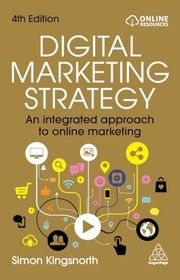
Digital Marketing Strategy: An Integrated Approach to Online Marketing
For marketers who need to turn separate channel activities into a coherent plan. Its integration of business goals, customer insight, and implementation provides a strategic bridge, though a broad framework cannot supply every specialist execution detail.
What it's about
Simon Kingsnorth explains how to build and implement an integrated digital marketing strategy. The book connects business objectives with customer understanding, channel selection, planning, measurement, and organizational delivery through frameworks, examples, and practical planning tools.

Ogilvy on Advertising
For marketers who want to study clear copy, research, and advertising discipline. Its campaign examples make the principles tangible, though the media environment and some cultural assumptions belong to an earlier era of advertising.
What it's about
David Ogilvy explains his approach to advertising through campaign examples and lessons from his career. He discusses research, copywriting, creative execution, and agency work, outlining principles for communicating with consumers and evaluating the effectiveness of advertisements.
Also recommended by
3 people Neville Medhora recommended this book
Neville Medhora
"Written directly by the guy who started the famed Ogilvy and Mather advertising firm in New York (which “Mad Men” is based off of)." - Neville Medhora
Neville Medhora's recommendation of this book - Noah Kagan recommended this book
Noah Kagan
Noah Kagan recommended this book in the "Tools of Titans" book.
Noah Kagan's recommendation of this book  Ev Williams recommended this book
Ev Williams
On the "books read" section of Ev Williams' GoodReads profile.
Ev Williams's recommendation of this book
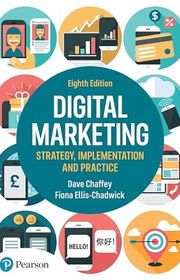
Digital Marketing
For students and professionals who want a substantial textbook rather than a short practitioner’s playbook. Its models, cases, and broad coverage support systematic study, though the academic presentation and length ask for more sustained attention.
What it's about
Dave Chaffey and Fiona Ellis-Chadwick examine digital marketing strategy, implementation, and practice. Academic models and business cases connect marketplace analysis, customer behavior, channel decisions, campaign planning, and evaluation, providing a structured account of the discipline.
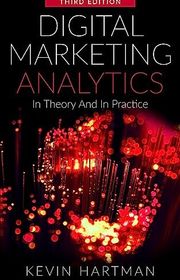
Digital Marketing Analytics: In Theory And In Practice
For marketers who need to turn data into an explanation others can use. Its progression from measurement to analysis and communication adds depth beyond choosing a metric, though it requires more analytical engagement than a general marketing introduction.
What it's about
Kevin Hartman examines the collection, analysis, visualization, and communication of digital marketing data. The book connects measurement across channels with analytical reasoning and reporting, showing how findings can be organized into an explanation that supports decisions.

The New Rules of Marketing and PR
For marketers who want to connect direct communication, content, and public relations. Its broad framework explains how those activities fit together, though the specific tools and examples vary substantially between editions and can date quickly.
What it's about
David Meerman Scott explains how organizations communicate directly with buyers through digital content and public relations. The guide combines examples and practical planning advice covering social media, podcasts, live video, artificial intelligence, and timely responses to news.

For teams whose public reputation depends on how they handle complaints. Its customer-service focus adds a useful perspective beyond acquisition, though effective responses require operational support and cannot be reduced to better wording alone.
What it's about
Jay Baer examines customer complaints across private channels and public platforms, arguing that businesses should respond rather than ignore criticism. Research and case studies offer approaches for handling dissatisfaction and making customer service part of a company's broader strategy.
Also recommended by
1 person- Changpeng Zhao recommended this book
Changpeng Zhao
"A must-read for marketing and customer service teams." - Changpeng Zhao
Changpeng Zhao's recommendation of this book

Content Machine
Use Content Marketing to Build a 7-figure Business With Zero Advertising
For small-business owners who want to organize content production around a commercial goal. Its practical frameworks connect audience building with repeatable work, though the author’s business experience should be treated as an example rather than a promised result.
What it's about
Dan Norris describes how to connect content marketing with business growth, drawing on the development of his own company. Frameworks cover choosing ideas, creating distinctive material, setting writing standards, building an audience, and hiring a team to expand production.

For founders and growth teams who struggle to decide what to measure. Its business-model and stage-based approach helps narrow attention, though choosing a useful metric still requires context and the examples are mainly startup-oriented.
What it's about
Alistair Croll and Benjamin Yoskovitz explain how startups can choose useful metrics for their business model and stage of development. Case studies and frameworks cover validating assumptions, distinguishing actionable data from vanity measures, and focusing experiments around a central metric.

What Customers Crave
How to Create Relevant and Memorable Experiences at Every Touchpoint
For marketers who want to examine the experience surrounding a campaign rather than the message alone. Its touchpoint framework encourages attention to customer frustrations, though it provides less detail on executing individual digital channels.
What it's about
Nicholas Webb argues that customer experience begins with understanding what people love and hate. His framework examines five stages of a customer relationship, using examples to show how organizations can reduce frustration and design more relevant interactions across channels.

Getting Everything You Can Out of All You've Got
21 Ways You Can Out-Think, Out-Perform, and Out-Earn the Competition
For business owners looking for opportunities inside existing relationships and resources. Its commercial examples encourage a broader view of growth, though it is a general business-marketing book rather than a guide to digital channels.
What it's about
Jay Abraham presents business and marketing strategies for recognizing overlooked assets, opportunities, and resources. Case histories and examples show how he proposes adapting growth techniques to individual companies, with related advice for careers and personal goals.
Also recommended by
3 people- Ramit Sethi recommended this book
Ramit Sethi
Ramit Sethi recommended this book in the "Tools of Titans" book.
Ramit Sethi's recommendation of this book - Neville Medhora recommended this book
Neville Medhora
"Lots of great examples of businesses growing their existing revenue." - Neville Medhora
Neville Medhora's recommendation of this book  Andrew Wilkinson recommended this book
Andrew Wilkinson
"[One of] my most recommended business books." - Andrew Wilkinson
Andrew Wilkinson's recommendation of this book
Sources
- 1
Top 14 Digital Marketing Books to Read in 2026
iide.co
- 2
Top 12 Digital Marketing Books Every Marketing Professional Should Read
stanventures.com
- 3
Best Digital Marketing Books for Beginners in 2026
kraftshala.com
- 4
10 Best Digital Marketing Books to Read in 2026 (Ranked by Experts)
digitalvidya.com
- 5
Digital Marketing Books
goodreads.com
- 6
What are some good books on digital marketing?
reddit.com
- 7
What are like the essential digital marketing books? Or just marketing in general?
reddit.com
- 8
The 18 Best Digital Marketing Books in 2021
brandastic.com
- 9
The best digital marketing books every marketer should read in 2026
targetinternet.com


Edited by
Software engineer whose passion for tracking book recommendations from podcasts inspired the creation of MRB.
Lead investor at 3one4 Capital whose startup expertise and love for books helped shape MRB and its growth.
Comments
Spotted a missing book, a wrong order or a mistake? Tell us and we'll fix this page.
We're a reading guide, not the author or publisher, so we can't send books or pass on messages.