
28 Best Entrepreneurship Books
The best entrepreneurship books, ranked by how many expert sources recommend each one, with notes on testing ideas, building small businesses, and leading teams.
Our take
Entrepreneurship books are most useful when they address the stage you are actually in. Testing whether anyone needs an idea is different from hiring a team, reducing dependence on the owner, or coping with a company in trouble. Some of these books provide tools and exercises; others offer a founder’s story or a strong opinion about how business should work.
The Mom Test focuses on learning from customers, while The Lean Startup places experimentation within a broader approach to developing a business. The $100 Startup and Rework speak more directly to readers interested in modest, independent companies than to those pursuing venture funding. Once a business is running, The E-Myth Revisited and Built to Sell examine systems and the owner’s role. Traction addresses coordination within a team, and The Hard Thing About Hard Things deals with difficult leadership choices. For perspective rather than a process, try Founders at Work or Shoe Dog. Start with the book that addresses your current uncertainty, then apply one idea before moving on.
28 books · 13 sources · Last updated
As an Amazon Associate, we earn from qualifying purchases (at no extra cost to you).
How to choose from this list
Skip to the full rankingIf you need to test demand: The Mom Test → The Lean Startup
If you're building a small independent business: The $100 Startup → Rework
If your business depends too much on you: The E-Myth Revisited → Built to Sell
If you need to coordinate a growing team: Traction → The Hard Thing About Hard Things
If you want broad business fundamentals: The Personal MBA → Business Model Generation
If you want firsthand founder experience: Founders at Work → Shoe Dog
The 28 books, ranked
Ranked by how many expert sources name each book. Ties go to the book more people recommend.

The Hard Thing About Hard Things
Building a Business When There Are No Easy Answers
For founders already facing difficult personnel, financing, or leadership decisions. Its candid accounts of pressure offer more value during a crisis than an idea-stage workbook, though the venture-backed technology setting will not match every business.
What it's about
Ben Horowitz draws on his experiences leading technology companies to discuss the difficult decisions involved in running a business. His advice covers leadership under pressure, personnel problems, competition, and the responsibilities that accompany the role of chief executive.
Also recommended by
22 people Peter Thiel recommended this book
Peter Thiel
"[The author] has written the first true guide for protecting a startup from self-sabotage." - Peter Thiel
Peter Thiel's recommendation of this book  Mark Zuckerberg recommended this book
Mark Zuckerberg
"For anyone insterested in building, growing, or leading a great company, this book is an incredibly valuable resource." - Mark Zuckerberg
Mark Zuckerberg's recommendation of this book  Peter Attia recommended this book
Peter Attia
One of Peter Attia's answers to "any books you feel would make your reading list?"
Peter Attia's recommendation of this book  Marc Andreessen recommended this book
Marc Andreessen
"Let’s just say, we started out relationship with vigorous disagreement, and we’ve continued that to this day." - Marc Andreessen
Marc Andreessen's recommendation of this book  Larry Page recommended this book
Larry Page
"An inspiring story of a business rebirth through sheer willpower." - Larry Page
Larry Page's recommendation of this book  Matt Mullenweg recommended this book
Matt Mullenweg
"Entertaining more than anything. I read [this book], I was like: I would never work for this guy. But entertaining and some good lessons." - Matt Mullenweg
Matt Mullenweg's recommendation of this book +16
More recommendations
- Andrew Ng
"A bit dark but it does cover a lot of useful territory on what building an organization is like." - Andrew Ng
- Drew Houston
"One of the great things that [the author] wrote in [this book] is the hardest part of being a CEO is managing your psychology." - Drew Houston
- Keith Rabois
"Reflects 2000-2003." - Keith Rabois
- Dustin Moskovitz
Dustin Moskovitz recommended this book during a Stanford lecture in 2014.
- Max Levchin
One of Max Levchin's answers to "what's your favourite business book you'd advise to young entrepreneurs?"
- Luis von Ahn
"I like this one, but it’s not for very new entrepreneurs." - Luis von Ahn
- Kathryn Minshew
Most Recommended Books reached out to Kathryn Minshew directly.
- Andrew Wilkinson
"One of the best business books I've picked up in years." - Andrew Wilkinson
- Tim Ferriss
"A great book." - Tim Ferriss
- Blake Scholl
"Good." - Blake Scholl
- Chris Dixon
Chris Dixon recommended this book on Twitter.
- Fred Wilson
"Chapter five in [this book] is possibly the best thing I've read about leading a tech company." - Fred Wilson
- Raoul Pal
"By far, the best, most brutally honest and incredibly useful book about the realities of starting and running a company." - Raoul Pal
- Jodie Cook
"Reframes your mind: hard doesn’t mean bad. Seeking the easy route is a trap." - Jodie Cook
- Michael Dell
"Candidly talks about the very real thrills and perils of starting a business."- Michael Dell
- Marty Cagan
"Trust me: if you're a leader in tech, the best thing you can do in 2014 for your company is to read [this book]." - Marty Cagan
- Andrew Ng

How To Win Friends and Influence People
For founders who want to improve everyday conversations with customers and colleagues. Its focus on attention and cooperation complements the strategy books, though the older anecdotes and general principles provide little detail on building a company.
What it's about
Carnegie presents practical guidance for building relationships, communicating effectively, and influencing others. Stories and principles explore social confidence, leadership, and cooperation, offering approaches readers can apply to interactions in their personal lives and at work.
Also recommended by
18 people Warren Buffett recommended this book
Warren Buffett
"In my office, you will not see the degree I have from the University of Nebraska, or the master’s degree I have from Columbia University, but you’ll see the certificate I got from the Dale Carnegie course." - Warren Buffett
Warren Buffett's recommendation of this book  Scott Adams recommended this book
Scott Adams
One of the books on Scott Adams' "Persuasion Reading List."
Scott Adams's recommendation of this book  Dave Ramsey recommended this book
Dave Ramsey
Recommended on Dave Ramsey's website.
Dave Ramsey's recommendation of this book  Paul Graham recommended this book
Paul Graham
"The one book we encourage startup founders to read. [...] It's critically important for anyone in business." - Paul Graham
Paul Graham's recommendation of this book  Derek Sivers recommended this book
Derek Sivers
Derek Sivers mentioned this book on "The Tim Ferriss Show" podcast.
Derek Sivers's recommendation of this book  Dustin Moskovitz recommended this book
Dustin Moskovitz
"Seek to be understood." - Dustin Moskovitz
Dustin Moskovitz's recommendation of this book +12
More recommendations
- Ken Block
"One of the first books that really helped me achieve my management style and what’s helped me really be successful." - Ken Block
- DJ Vlad
Most Recommended Books reached out to DJ Vlad directly.
- Strauss Zelnick
"Archaic references and overweening title to the side, it’s actually a great guide to leadership and salesmanship." - Strauss Zelnick
- Daymond John
"I love all the Dale Carnegie books." - Daymond John
- Shay Carl
"A staple that I have listened to three or four times." - Shay Carl
- Tim Draper
"[One of the books] that are recommended or required at Draper University." - Tim Draper
- Sahil Lavingia
Sahil Lavingia recommended this book on Notion.
- Barbara Corcoran
"A must read for anyone in business." - Barbara Corcoran
- Alex Hormozi
Alex Hormozi recommended this book on Instagram.
- Michael Hyatt
Michael Hyatt recommended this book on his website.
- Ben Greenfield
Most Recommended Books reached out to Ben Greenfield directly.
- Patrick Bet-David
Patrick Bet-David recommended this book on his website.
- Ken Block

The Lean Startup
How Today's Entrepreneurs Use Continuous Innovation to Create Radically Successful Businesses
For founders building under uncertainty who need a framework for testing assumptions. Its emphasis on experiments and learning is more systematic than the motivational books, though deciding what to test still requires careful judgment about your market.
What it's about
Eric Ries proposes developing businesses through repeated experiments, customer feedback, and validated learning. The book explains how entrepreneurs can test assumptions, measure progress, and adjust products and strategy under uncertainty rather than rely entirely on detailed initial plans.
Also recommended by
15 people Andrew Ng recommended this book
Andrew Ng
"Gives one specific tactic for innovating quickly." - Andrew Ng
Andrew Ng's recommendation of this book  Ben Horowitz recommended this book
Ben Horowitz
"Great." - Ben Horowitz
Ben Horowitz's recommendation of this book - Dustin Moskovitz recommended this book
Dustin Moskovitz
"At Asana, we've been lucky to benefit from [the author]'s advice firsthand; this book will enable him to help many more entrepreneurs answer the tough questions about their business." - Dustin Moskovitz
Dustin Moskovitz's recommendation of this book  Jason Calacanis recommended this book
Jason Calacanis
"You need to read [this book]." - Jason Calacanis
Jason Calacanis's recommendation of this book  Kevin Systrom recommended this book
Kevin Systrom
"The principles from [this book], I still apply today." - Kevin Systrom
Kevin Systrom's recommendation of this book - Marc Andreessen recommended this book
Marc Andreessen
"[The author] has created a science where previously there was only art. A must read for every serious entrepreneur—and every manager interested in innovation." - Marc Andreessen
Marc Andreessen's recommendation of this book +9
More recommendations
- Mark Cuban
One of the 7 books Mark Cuban credits his success to.
- Mike Maples, Jr.
"[I was] lucky enough to have a front-row seat at the birth of these ideas." - Mike Maples, Jr.
- Tim O’Reilly
"[This book] isn't just about how to create a more successful entrepreneurial business, it's about what we can learn from those businesses to improve virtually everything we do." - Tim O’Reilly
- Chris Dixon
Chris Dixon recommended this book on Twitter.
- Raoul Pal
Raoul Pal recommended this book on Twitter.
- Sheryl Sandberg
"Provides a great inside look at how the tech industry approaches building products and businesses." - Sheryl Sandberg
- Steve Blank
"A 'must have' for your shelf." - Steve Blank
- Marty Cagan
"Buy it." - Marty Cagan
- Patrick Bet-David
Patrick Bet-David recommended this book on his website.
- Mark Cuban

The E-Myth Revisited
Why Most Small Businesses Don't Work and What to Do About It
For owner-operators whose business depends on them doing everything. Its distinction between technical work and building systems makes a clear starting point for delegation, though the franchise-style model can feel too prescriptive for some businesses.
What it's about
Michael Gerber argues that technical expertise does not automatically equip someone to run a small business. He distinguishes entrepreneurial, managerial, and technical responsibilities, outlining a systems-based approach designed to reduce a company’s dependence on its owner.
Also recommended by
7 people Tim Ferriss recommended this book
Tim Ferriss
"If you’re stuck in your own business, this book can help you get unstuck." - Tim Ferriss
Tim Ferriss's recommendation of this book - Dave Ramsey recommended this book
Dave Ramsey
Recommended on Dave Ramsey's website.
Dave Ramsey's recommendation of this book - Derek Sivers recommended this book
Derek Sivers
"Absolutely everyone who is an entrepreneur or wants to be one needs to read this book." - Derek Sivers
Derek Sivers's recommendation of this book  Dave Camarillo recommended this book
Dave Camarillo
"Was huge." - Dave Camarillo
Dave Camarillo's recommendation of this book  Tom Bilyeu recommended this book
Tom Bilyeu
Tom Bilyeu recommended this book on his website.
Tom Bilyeu's recommendation of this book  Michael Hyatt recommended this book
Michael Hyatt
Michael Hyatt recommended this book on his website.
Michael Hyatt's recommendation of this book +1
More recommendations
- Patrick Bet-David
Patrick Bet-David recommended this book on his website.
- Patrick Bet-David
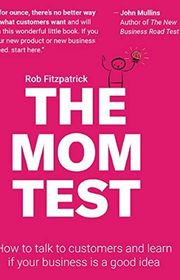
The Mom Test: How to Talk to Customers & Learn If Your Business Is a Good Idea When Everyone Is Lying to You
For founders who need better customer conversations before committing to an idea. Its narrow focus on concrete questions is easier to apply than a broad startup framework, though interviews alone cannot prove that people will buy.
What it's about
Rob Fitzpatrick explains how founders can learn from customer conversations without inviting reassurance or leading answers. The book focuses on discussing actual behavior, identifying meaningful problems, and recognizing when feedback offers evidence rather than polite encouragement.

For founders who want to question whether their idea creates distinctive value. Its strategic arguments challenge imitation more directly than an execution manual, though the contrarian claims and technology-investing perspective need weighing against your own market.
What it's about
Peter Thiel examines how startups can create something new rather than imitate existing businesses. Written with Blake Masters, the book explores independent thinking, technological progress, and the search for opportunities that produce distinctive value in any industry.
Also recommended by
22 people- Andrew Ng recommended this book
Andrew Ng
"Gives an overview of entrepreneurship and innovation." - Andrew Ng
Andrew Ng's recommendation of this book - Ben Horowitz recommended this book
Ben Horowitz
"I learned a lot reading it." - Ben Horowitz
Ben Horowitz's recommendation of this book  Bryan Johnson recommended this book
Bryan Johnson
"A must read." - Bryan Johnson
Bryan Johnson's recommendation of this book  Chris Dixon recommended this book
Chris Dixon
Chris Dixon recommended this book on Twitter.
Chris Dixon's recommendation of this book - Dustin Moskovitz recommended this book
Dustin Moskovitz
Dustin Moskovitz recommended this book during a Stanford lecture in 2014.
Dustin Moskovitz's recommendation of this book  Elon Musk recommended this book
Elon Musk
"[This author] has built multiple breakthrough companies, and [this book] shows how." - Elon Musk
Elon Musk's recommendation of this book +16
More recommendations
- Eric Weinstein
"If you really understand something that the rest of the world is confused about, and it’s an important truth, [this book] says here are all the ways you might want to make that work." - Eric Weinstein
- Keith Rabois
Keith Rabois recommended this book on a Medium blog post.
- Kishore Biyani
"Captures some interesting perspectives and insights on the way the world and the business organisations are changing and challenging the status quo." - Kishore Biyani
- Lee Stranahan
"A great business book." - Lee Stranahan
- Luis von Ahn
"I love [this book]." - Luis von Ahn
- Marc Andreessen
"The first book any working or aspiring entrepreneur must read—period." - Marc Andreessen
- Mark Zuckerberg
"This book delivers completely new and refreshing ideas on how to create value in the world." - Mark Zuckerberg
- Matt Mullenweg
"[This book] was excellent." - Matt Mullenweg
- Max Levchin
One of Max Levchin's answers to "what's your favourite business book you'd advise to young entrepreneurs?"
- Nassim Taleb
"When a risk taker writes a book, read it. In the case of [this author], read it twice. Or, to be safe, three times. This is a classic." - Nassim Taleb
- Sam Altman
This book was on Sam Altman's bookshelf.
- Patrick O'Shaughnessy
"An obvious suggestion, because [this book] is the talk of the town and sits at the top of bestseller lists everywhere." - Patrick O'Shaughnessy
- Tom Bilyeu
Tom Bilyeu recommended this book on his website.
- Ryan Petersen
"[Part of] my biz book canon." - Ryan Petersen
- Brian Dean
"Business classic that lives up to the hype. Completely reframes what a startup should do with their product and positioning." - Brian Dean
- Rupert Murdoch
"Brilliant, often provocative." - Rupert Murdoch
- Eric Weinstein

Rework
For small teams that want a business with fewer moving parts. The short lessons question funding, meetings, and expansion more directly than the growth-focused books, though the authors’ software-company experience limits how widely every suggestion applies.
What it's about
Jason Fried and David Heinemeier Hansson challenge familiar assumptions about starting and running a business. Brief lessons question elaborate planning, outside funding, excessive meetings, and overwork while emphasizing practical action, productivity, and doing more with fewer resources.
Also recommended by
8 people Mark Cuban recommended this book
Mark Cuban
"If given a choice between investing in someone who has read Rework or has an MBA, I'm investing in Rework every time." - Mark Cuban
Mark Cuban's recommendation of this book  Jeff Bezos recommended this book
Jeff Bezos
"Unperturbed by conventional wisdom, [the authors] start fresh and rewrite the rules of business." - Jeff Bezos
Jeff Bezos's recommendation of this book  Seth Godin recommended this book
Seth Godin
"I can't imagine what possible excuse you can dream up for not buying this book for every single person you work with, right now." - Seth Godin
Seth Godin's recommendation of this book - Tim Ferriss recommended this book
Tim Ferriss
"I encourage people to think of as an 'Elements of Style' for building profitable businesses in a web-savvy world." - Tim Ferriss
Tim Ferriss's recommendation of this book  Tom Peters recommended this book
Tom Peters
"The clarity, even genius, of this book actually brought me to near-tears on several occasions. Just bloody brilliant, that's what!" - Tom Peters
Tom Peters's recommendation of this book  Tony Hsieh recommended this book
Tony Hsieh
"Read this book multiple times to help give you the courage you need to get out there and make something great." - Tony Hsieh
Tony Hsieh's recommendation of this book +2
More recommendations
- Andrew Wilkinson
"[One of] my most recommended business books." - Andrew Wilkinson
- Shane Parrish
"This book showed me that I wasn’t alone or crazy." - Shane Parrish
- Andrew Wilkinson

For founders struggling to explain the purpose behind their offer or organization. Its simple communication framework makes positioning conversations easier to begin, though inspirational company stories give less help with testing demand or managing operations.
What it's about
Start with Why introduces the Golden Circle, Simon Sinek's simple model for leading with purpose rather than manipulation. Drawing on stories of companies and leaders, he shows how clearly communicating why you do something can inspire loyalty and lasting success.
Also recommended by
9 people Richard Branson recommended this book
Richard Branson
Richard Branson recommended this book on his "70 must-read books" blog post.
Richard Branson's recommendation of this book  Robert Rodriguez recommended this book
Robert Rodriguez
"I realized better what I was doing when I read [this book], and I gave it to people to show them how to clarify what they’re doing right and what they’re doing wrong." - Robert Rodriguez
Robert Rodriguez's recommendation of this book - Tony Hsieh recommended this book
Tony Hsieh
One of 4 books Tony Hsieh recommended in Inc.com
Tony Hsieh's recommendation of this book  Julie Rice recommended this book
Julie Rice
"So important, because people understanding why you do something, not what you are doing, is really what makes or breaks a brand." - Julie Rice
Julie Rice's recommendation of this book  Kathryn Minshew recommended this book
Kathryn Minshew
Most Recommended Books reached out to Kathryn Minshew directly.
Kathryn Minshew's recommendation of this book - Tom Bilyeu recommended this book
Tom Bilyeu
Tom Bilyeu recommended this book on his website.
Tom Bilyeu's recommendation of this book +3
More recommendations
- Jim Kwik
"Explains how great leaders and organizations use this superpower of motivation to achieve success." - Jim Kwik
- Michael Hyatt
Michael Hyatt recommended this book on his website.
- Patrick Bet-David
Patrick Bet-David recommended this book on his website.
- Jim Kwik

For readers questioning how much of their business really needs their time. Its focus on delegation and work design challenges conventional growth goals, though the lifestyle promise and older online-business examples need a skeptical reading.
What it's about
Tim Ferriss presents an approach to reorganizing work around greater freedom of time and location. The guide explores reducing unnecessary tasks, outsourcing, automating income, and planning shorter periods away from work rather than postponing enjoyment until retirement.
Also recommended by
26 people Eric Weinstein recommended this book
Eric Weinstein
Eric Weinstein tweet about books that mattered enough to him.
Eric Weinstein's recommendation of this book  Tristan Harris recommended this book
Tristan Harris
Tristan Harris mentioned this book on "The Tim Ferriss Show" podcast.
Tristan Harris's recommendation of this book  Charles Poliquin recommended this book
Charles Poliquin
Charles Poliquin recommended this book in the "Tools of Titans" book.
Charles Poliquin's recommendation of this book  Walter Isaacson recommended this book
Walter Isaacson
"[The author has] a great curiosity and [...] a great love for things." - Walter Isaacson
Walter Isaacson's recommendation of this book  Daniel Pink recommended this book
Daniel Pink
Daniel Pink mentioned this book on "The Tim Ferriss Show" podcast.
Daniel Pink's recommendation of this book  Blake Mycoskie recommended this book
Blake Mycoskie
"I read [this book] right when I started Toms. There’s so many things that I took from [it] that allowed Toms to have this incredible growth." - Blake Mycoskie
Blake Mycoskie's recommendation of this book +20
More recommendations
- David Heinemeier Hansson
"My key takeaway from [this book] was the concept of lifestyle design." - DHH
- Marc Andreessen
"[The author] basically takes all of the time management and personal productivity theories of the last 20 to 30 years and pushes them to 11, to paraphrase 'Spinal Tap.'" - Marc Andreessen
- Jason Silva
"I was very affected by [this book]. I was like this guy has it figured out." - Jason Silva
- Mike Shinoda
"I do talk about [this book] quite a bit." - Mike Shinoda
- Mark Bell
"Taught me better ways to manage my time and the value of not making myself too busy." - Mark Bell
- Maurice Ashley
"Made me ditch the average life in search of one with complete flexibility and freedom to live life on my terms." - Maurice Ashley
- Tim Draper
"With this kind of time management and focus on the important things in life, people should be able to get 15 times as much done in a normal work week." - Tim Draper
- Derek Sivers
"Brilliant reversal of all of the 'how to manage all your crap' books." - Derek Sivers
- Rolf Potts
"Challenges the reader to seriously consider an essential–yet rarely asked–question: What do you really want from life?" - Rolf Potts
- A.J. Jacobs
A.J. Jacobs mentioned this book on "The Tim Ferriss Show" podcast.
- Caterina Fake
Caterina Fake mentioned this book on "The Tim Ferriss Show" podcast.
- Ev Williams
On the "books read" section of Ev Williams' GoodReads profile.
- Gary Keller
"This is a significant book." - Gary Keller
- Laura R Walker
"For those who struggle with productivity and taking control of their lives, [I give this book], of course!" - Laura R Walker
- Marc Goodman
One of Marc Goodman's most-gifted or recommended books.
- Mike Maples, Jr.
"If you want to live life on your own terms, this is your blueprint." - Mike Maples, Jr.
- Lewis Howes
"I've only probably read 4 books cover to cover. [This is one of them.]" - Lewis Howes
- Jodie Cook
"Life and work are reimagined and built back from scratch, in a way optimised for freedom and enjoyment." - Jodie Cook
- Brian Dean
"This book created thousands of entrepreneurs over the last 15 years… including me." - Brian Dean
- Michael Hyatt
Michael Hyatt recommended this book on his website.
- David Heinemeier Hansson

For readers interested in turning knowledge or enthusiasm into an audience-led business. Its focus on personal branding offers a different route from product-development manuals, though the older platform examples and promotional tone require some updating.
What it's about
Gary Vaynerchuk explains how personal interests can become the foundation for an online business. Drawing on his wine-retailing experience, he discusses creating content, building a personal brand, and using internet platforms to reach an audience.
Also recommended by
3 people Mark Bell recommended this book
Mark Bell
"Made me recognize that I have enough access to make a very large company, even from my house, since everyone has the same access to the Internet." - Mark Bell
Mark Bell's recommendation of this book  Ryan Hoover recommended this book
Ryan Hoover
"I love how he cuts to the point - no BS." - Ryan Hoover
Ryan Hoover's recommendation of this book  Patrick Bet-David recommended this book
Patrick Bet-David
Patrick Bet-David recommended this book on his website.
Patrick Bet-David's recommendation of this book
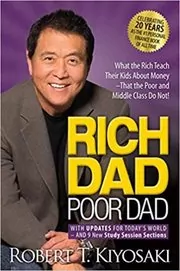
Rich Dad Poor Dad
What the Rich Teach Their Kids About Money That the Poor and Middle Class Do Not!
For readers who want an accessible discussion of income, ownership, and cash flow. Its stories can prompt useful questions about money, though it offers neither a detailed business-building process nor a rigorous treatment of financial decisions.
What it's about
Rich Dad, Poor Dad contrasts the money lessons Kiyosaki says he learned from his poor biological father and his rich mentor. Through simple stories he explains assets versus liabilities, cash flow, and why working only for a paycheck rarely leads to lasting wealth.
Also recommended by
3 people Will Smith recommended this book
Will Smith
Will Smith mentioned sharing this book with his son.
Will Smith's recommendation of this book  Anthony Pompliano recommended this book
Anthony Pompliano
"My favorite book of all time." - Anthony Pompliano
Anthony Pompliano's recommendation of this book - Patrick Bet-David recommended this book
Patrick Bet-David
Patrick Bet-David recommended this book on his website.
Patrick Bet-David's recommendation of this book

For readers who want a broad vocabulary for understanding how businesses work. Its short explanations connect value, marketing, sales, and operations more widely than a startup-only guide, though the breadth leaves less detail on any one discipline.
What it's about
Josh Kaufman presents the core ideas behind running a business without attending business school. He explains value creation, marketing, sales, finance, and operations through practical concepts and mental models intended to clarify everyday business decisions.
Also recommended by
1 person Patrick O'Shaughnessy recommended this book
Patrick O'Shaughnessy
"If you dislike (most) business books like I do, but want to learn about the business of business, this book is a great tool." - Patrick O'Shaughnessy
Patrick O'Shaughnessy's recommendation of this book
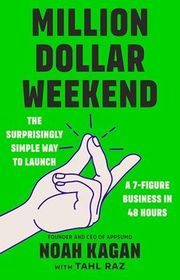
Million Dollar Weekend: The Surprisingly Simple Way to Launch a 7-Figure Business in 48 Hours
For aspiring founders who keep postponing the first test. Its short challenges emphasize asking, selling, and taking action more than extended planning, though the title’s ambitious outcome should not be treated as a typical or guaranteed result.
What it's about
Noah Kagan and Tahl Raz present exercises for moving from an idea toward an initial business test. The approach emphasizes identifying problems, asking potential customers, making offers, and developing habits that help entrepreneurs act despite uncertainty.

Thinking, Fast and Slow
For entrepreneurs who want to question the confidence behind their decisions. Kahneman develops a broad vocabulary for judgment and bias, though this substantial psychology book offers less immediate operating guidance than the startup-focused titles.
What it's about
Kahneman explores two modes of thought: quick, intuitive responses and slower, deliberate reasoning. Drawing on psychological research, he examines how biases and impressions shape decisions, and when intuition helps or misleads in personal and professional life.
Also recommended by
19 people Bill Gates recommended this book
Bill Gates
List of books Bill Gates read in 2012.
Bill Gates's recommendation of this book  Ray Dalio recommended this book
Ray Dalio
Ray Dalio mentioned this book in his book, "Principles."
Ray Dalio's recommendation of this book - Scott Adams recommended this book
Scott Adams
One of the books on Scott Adams' "Persuasion Reading List."
Scott Adams's recommendation of this book  Naval Ravikant recommended this book
Naval Ravikant
"Fine book but it didn’t need to be an entire book. A blog post would have gotten the point across." - Naval Ravikant
Naval Ravikant's recommendation of this book  Ev Williams recommended this book
Ev Williams
"I love surprising scientific findings, as well as information about how our brains work. [This book] is a treasure trove of both." - Ev Williams
Ev Williams's recommendation of this book - Marc Andreessen recommended this book
Marc Andreessen
"Captivating dive into human decision making, marred by inclusion of several/many? psychology studies that fail to replicate. Will stand as a cautionary tale?" - Marc Andreessen
Marc Andreessen's recommendation of this book +13
More recommendations
- Stewart Brand
Stewart Brand recommended this book on his "Selected Books for the Manual for Civilization" blog post.
- Bryan Johnson
"I started reading [this book] and I became increasingly convinced of my own fickleness and inability to actually act rationally in life." - Bryan Johnson
- Derek Sivers
"If you liked 'Predictably Irrational' or 'Stumbling on Happiness' or any of those pop-psychology books, well, this is the Godfather of all of their work." - Derek Sivers
- Sam Altman
One of Sam Altman's answers to "What are some of the best books you recommend for a young startup founder?"
- Ron Conway
"Covers all three phases of [the author's] career: his early days working oncognitive bias, his work on prospect theory, and his later work on happiness." - Ron Conway
- Jason Fried
"I enjoyed [this book]. Fascinating." - Jason Fried
- Nassim Taleb
"A landmark book in social thought, in the same league as The Wealth of Nations by Adam Smith and The Interpretation of Dreams by Sigmund Freud." - Nassim Taleb
- Sahil Lavingia
Sahil Lavingia recommended this book on Notion.
- Mark Manson
Mark Manson recommended this book on his website.
- Jay Shetty
"[One] of my favourite books." - Jay Shetty
- Michiko Kakutani
"Has become essential reading in many baseball front offices and among coaching staffs." - Michiko Kakutani
- Preston Pysh
"An incredible book!" - Preston Pysh
- Ben Greenfield
Most Recommended Books reached out to Ben Greenfield directly.
- Stewart Brand

For readers who want a founder’s account of persistence, risk, and early operational problems. The extended memoir gives decisions more context than short success profiles, though it is one retrospective story rather than a practical startup course.
What it's about
Phil Knight recounts Nike's beginnings as a business importing running shoes from Japan. His memoir follows the company's growth from early sales out of a car, describing the risks, setbacks, relationships, and decisions behind its development.
Also recommended by
16 people Alexis Ohanian recommended this book
Alexis Ohanian
"A great one -- had no idea Nike had such a long history." - Alexis Ohanian
Alexis Ohanian's recommendation of this book - Anthony Pompliano recommended this book
Anthony Pompliano
"[One of the] best books I read in 2017." - Anthony Pompliano
Anthony Pompliano's recommendation of this book  Austen Allred recommended this book
Austen Allred
"Loved [this book]." - Austen Allred
Austen Allred's recommendation of this book - Bill Gates recommended this book
Bill Gates
"A refreshingly honest reminder of what the path to business success really looks like." - Bill Gates
Bill Gates's recommendation of this book  Bill Gurley recommended this book
Bill Gurley
"All entrepreneurs should read." - Bill Gurley
Bill Gurley's recommendation of this book  Brian Armstrong recommended this book
Brian Armstrong
"Memoir by the Nike founder and CEO." - Brian Armstrong
Brian Armstrong's recommendation of this book +10
More recommendations
- Jason Calacanis
"Great inspirational [book]." - Jason Calacanis
- Kathryn Minshew
Most Recommended Books reached out to Kathryn Minshew directly.
- Tobi Lütke
"An autobiographical account of one of the world’s most recognizable brands." - Tobi Lütke
- Vlad Tenev
Vlad Tenev's response to Bloomberg's "The Best Books of 2017" survey.
- Warren Buffett
"The best book I read [in 2015]." - Warren Buffett
- Patrick O'Shaughnessy
"A perfect business book & memoir hybrid." - Patrick O'Shaughnessy
- Tim Cook
"Best business book of the century." - Tim Cook
- Ryan Shea
Ryan Shea recommended this book on his website.
- Trung Phan
"About the Footwear industry." - Trung Phan
- Blake Randall
"" - Blake Randall
- Jason Calacanis

For founders who need a framework for priorities, responsibility, and cooperation. Covey connects personal habits with relationships, though the broad principles require translation into concrete business decisions and offer little instruction on launching a product.
What it's about
Stephen Covey presents seven habits for personal effectiveness, connecting individual responsibility with cooperation and continual renewal. His framework emphasizes principles such as integrity, fairness, and service in approaching relationships, decisions, and goals at work and home.
Also recommended by
12 people- Dave Ramsey recommended this book
Dave Ramsey
Recommended on Dave Ramsey's website.
Dave Ramsey's recommendation of this book - Daniel Pink recommended this book
Daniel Pink
Daniel Pink mentioned this book on "The Tim Ferriss Show" podcast.
Daniel Pink's recommendation of this book  Ken Block recommended this book
Ken Block
"[Also] helped me really be successful." - Ken Block
Ken Block's recommendation of this book - Dustin Moskovitz recommended this book
Dustin Moskovitz
"[I] was surprised at how familiar the topics felt." - Dustin Moskovitz
Dustin Moskovitz's recommendation of this book  Noah Kagan recommended this book
Noah Kagan
"Begin with the end in mind." - Noah Kagan
Noah Kagan's recommendation of this book  Kishore Biyani recommended this book
Kishore Biyani
"Immensely helpful and influential during my early years, it explained some of the basic mindsets required to succeed in any profession." - Kishore Biyani
Kishore Biyani's recommendation of this book +6
More recommendations
- Michael McCullough
"Helps you decide which action to actually take." - Michael McCullough
- Shay Carl
Shay Carl referenced this book on "The Tim Ferriss Show" podcast.
- Jenn Im
"Has changed my life in such a positive way." - Jenn Im
- Jim Kwik
"This personal development classic is a classic for a reason." - Jim Kwik
- Michael Hyatt
Michael Hyatt recommended this book on his website.
- Ben Greenfield
Most Recommended Books reached out to Ben Greenfield directly.
- Michael McCullough
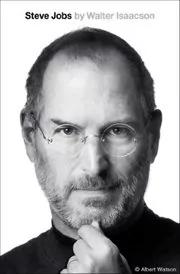
Steve Jobs
For readers interested in the personality and decisions behind a company builder. The extensive biographical detail gives a fuller human picture than a leadership manual, though one unusual career cannot serve as a general management template.
What it's about
Built from years of interviews with Jobs and the people around him, this is a close look at a brilliant and difficult builder. It follows the intensity, control, and imagination that reshaped several industries.
Also recommended by
9 people- Elon Musk recommended this book
Elon Musk
"Quite interesting." - Elon Musk
Elon Musk's recommendation of this book - Scott Adams recommended this book
Scott Adams
"I’m fascinated by the discussion of how Jobs developed what became known as the Reality Distortion Field. Apparently Jobs had a lifelong battle with reality and won." - Scott Adams
Scott Adams's recommendation of this book - Ray Dalio recommended this book
Ray Dalio
"I noticed a number of similarities between [Steve Jobs and I], especially when [the author] quoted Jobs’s own words. [...] but to be clear, I didn’t think that Bridgewater or I held a candle to Apple and Jobs." - Ray Dalio
Ray Dalio's recommendation of this book - Bill Gates recommended this book
Bill Gates
List of books Bill Gates read in 2012.
Bill Gates's recommendation of this book  Gary Vaynerchuk recommended this book
Gary Vaynerchuk
"I've read 3 business books in my life. If you call [this book] a business book." - Gary Vaynerchuk
Gary Vaynerchuk's recommendation of this book  George Raveling recommended this book
George Raveling
"[When I read this book] I was so blown away. I had underlined about three-quarters of the book." - George Raveling
George Raveling's recommendation of this book +3
More recommendations
- Chris Fussell
"Really did a good job of capturing the way that an innovation leader’s mind works." - Chris Fussell
- Scott Belsky
Scott Belsky mentioned this book on "The Tim Ferriss Show" podcast.
- Ed Zschau
Ed Zschau mentioned this book on "The Tim Ferriss Show" podcast.
- Chris Fussell

For readers who want firsthand accounts of how technology companies began. The interviews reveal uncertainty and unexpected changes more vividly than a tidy framework, though they offer selective retrospective experiences rather than a repeatable formula.
What it's about
Jessica Livingston interviews founders of technology companies about their earliest days. Firsthand accounts from Apple, PayPal, Flickr, Hotmail, and other ventures explore initial ideas, unexpected discoveries, funding challenges, failures, and the work of building a company.
Also recommended by
5 people- Paul Graham recommended this book
Paul Graham
"Probably the single most valuable book a startup founder could read." - Paul Graham
Paul Graham's recommendation of this book  Ryan Holiday recommended this book
Ryan Holiday
"Interviews with technology founders from one of the best investors of all time." - Ryan Holiday
Ryan Holiday's recommendation of this book - Alexis Ohanian recommended this book
Alexis Ohanian
"A bunch of really great interviews [Jessica] did with a bunch of just OGs of entrepreneurship." - Alexis Ohanian
Alexis Ohanian's recommendation of this book - Ev Williams recommended this book
Ev Williams
On the "books read" section of Ev Williams' GoodReads profile.
Ev Williams's recommendation of this book  Ron Conway recommended this book
Ron Conway
"Collection of interviews with founders of famous technology companies about what happened in the very earliest days." - Ron Conway
Ron Conway's recommendation of this book

The Art of the Start
The Time-Tested, Battle-Hardened Guide for Anyone Starting Anything
For first-time founders who want a broad introduction to launching a venture. It connects pitching, positioning, and recruiting in one place, though older examples make it less current than focused books on a particular startup task.
What it's about
Guy Kawasaki turns his experience as an entrepreneur and venture capitalist into a guide to launching new ventures. He addresses positioning, pitching, fundraising, recruiting, and branding, helping readers move from an initial idea to the practical work of building an organization.
Also recommended by
2 people Keith Rabois recommended this book
Keith Rabois
"For a first-time entrepreneur: [this book] is an excellent introduction to many key issues." - Keith Rabois
Keith Rabois's recommendation of this book - Ev Williams recommended this book
Ev Williams
On the "books read" section of Ev Williams' GoodReads profile.
Ev Williams's recommendation of this book

For product founders examining why customers return. Its compact behavioral model gives repeated use more focused attention than the general startup guides, though it is most relevant to recurring-use products and requires judgment about customers’ interests.
What it's about
Nir Eyal explains a four-stage model for designing products that encourage repeated use. Examples and practical guidance help founders, designers, marketers, and product managers examine how technology influences behavior and how customer habits develop.
Also recommended by
1 person Marc Goodman recommended this book
Marc Goodman
One of Marc Goodman's answers to "sources you've learned from in the last year?"
Marc Goodman's recommendation of this book

The $100 Startup
Reinvent the Way You Make a Living, Do What You Love, and Create a New Future
For readers considering a modest independent business built around existing skills. Its small-scale examples offer a useful counterpoint to venture-funded startup narratives, though successful case studies do not show how often similar attempts fail.
What it's about
Chris Guillebeau profiles people who built small businesses with modest startup funds. Their experiences illustrate how existing skills, a useful offer, and identifiable customers can become the basis of an independent livelihood.

For founders who want a detailed reference for customer development and business-model testing. The checklists translate broad startup principles into more concrete work, though the size and procedural detail make it better for consultation than casual reading.
What it's about
Steve Blank and Bob Dorf provide a detailed guide to applying Customer Development when building a startup. Charts, checklists, and the Business Model Canvas organize experiments in identifying customers, testing assumptions, and developing a repeatable, scalable business.

The Power of Broke
For entrepreneurs working with limited resources who want examples of resourcefulness. Its founder stories make constraint feel more concrete than abstract strategy, though the motivational approach gives less operational detail than a planning or systems guide.
What it's about
Daymond John argues that limited resources can encourage entrepreneurial creativity and focus. Drawing on his own experience and other founders' stories, he examines resourcefulness, customer relationships, and inventive marketing as ways to build a business with little money.
Also recommended by
3 people Chris Sacca recommended this book
Chris Sacca
"Compelling tales of hustle and hunger." - Chris Sacca
Chris Sacca's recommendation of this book - Gary Vaynerchuk recommended this book
Gary Vaynerchuk
"I firmly believe that you should only read business books from people who have actually built businesses. [This author] has done just that." - Gary Vaynerchuk
Gary Vaynerchuk's recommendation of this book - Mark Cuban recommended this book
Mark Cuban
"This guy built an empire from the streets of Hollis, Queens, and here he compares notes with other visionaries." - Mark Cuban
Mark Cuban's recommendation of this book

For founders ready to study customer development in detail. Its systematic approach offers more depth than a short interview guide, though the dense presentation and enterprise-technology examples make it a substantial commitment for beginners.
What it's about
Steve Blank introduces Customer Development as a way for startups to discover and test a workable business model. Customer feedback, experimentation, and iteration guide his approach to organizing sales, marketing, and product decisions before committing to expansion.
Also recommended by
2 people- Ron Conway recommended this book
Ron Conway
"Offers the practical and proven four-step Customer Development process for search and offers insight into what makes some startups successful and leaves some startups unsuccessful." - Ron Conway
Ron Conway's recommendation of this book - Ryan Hoover recommended this book
Ryan Hoover
"Too much (good) info but thankfully there's a summary in the Appendix." - Ryan Hoover
Ryan Hoover's recommendation of this book

For owners who need a repeatable way to coordinate people, priorities, and execution. The operating framework is more relevant to an established team than an untested idea, though adopting its routines can feel rigid in some organizations.
What it's about
Gino Wickman introduces the Entrepreneurial Operating System as a framework for running a business. He explains how leaders can strengthen six key components of their organization, address recurring management problems, and turn decisions into coordinated action.
Also recommended by
1 person Garry Tan recommended this book
Garry Tan
Garry Tan recommended this book on TechCrunch.
Garry Tan's recommendation of this book

For service-business owners who want the company to depend less on their personal labor. Its focused story makes standardization and transferability easy to follow, though the simplified agency example leaves many industry-specific complications unexplored.
What it's about
Through the story of an advertising agency owner seeking to sell his company, John Warrillow explains how to reduce a business’s dependence on its founder. He emphasizes teachable services, distinctive value, and repeatable revenue as foundations for a transferable company.

Business Model Generation
A Handbook for Visionaries, Game Changers, and Challengers
For founders who think visually and want to compare how a business could work. The canvas makes relationships between customers, costs, and value easy to discuss, though filling it in does not establish that the assumptions are true.
What it's about
Alexander Osterwalder and Yves Pigneur introduce the Business Model Canvas for describing and designing businesses. This visual handbook combines model patterns, customer insights, prototyping, strategy, and a design process to help organizations rethink how they create and capture value.

For small-business owners who want one leader’s approach to teams, finances, and daily management. Its broad operational focus complements idea-stage startup books, though the strongly personal prescriptions may need adapting to different organizations and values.
What it's about
Dave Ramsey draws on building his own company to explain business leadership and growth. He discusses motivating employees, creating a unified team, handling business finances and setting goals, offering practical guidance for entrepreneurs and managers at different levels.
Sources
- 1
The 32 Best Books For Entrepreneurs
shopify.com
- 2
20 Books Every Entrepreneur Should Read This Year
uschamber.com
- 3
Entrepreneurship Books
goodreads.com
- 4
The 21 Best Business Books for Entrepreneurs
scienceofpeople.com
- 5
20 All-Time Best Entrepreneur Books to Make Your Business Successful
lifehack.org
- 6
What books should someone who wants to be an entrepreneur read?
reddit.com
- 7
The best entrepreneur books to read in 2026
relayfi.com
- 8
The Personal MBA Recommended Reading List: 99 Best Business Books
personalmba.com
- 9
What’s your favourite books for entrepreneurship?
reddit.com
- 10
What entrepreneur books are actually legit?
reddit.com
- 11
13 Best Books on Entrepreneurship
startups.com
- 12
There are so many garbage books for entrepreneurs. Which ONE book do you recommend on the subject?
reddit.com
- 13
Best Entrepreneurship Books (2026): 15 Ranked by Data
entrepedia.co


Edited by
Software engineer whose passion for tracking book recommendations from podcasts inspired the creation of MRB.
Lead investor at 3one4 Capital whose startup expertise and love for books helped shape MRB and its growth.
Comments
Did we miss something? Have feedback?
Help us improve this page by sharing your thoughts