
9 Best CEO Books
The best CEO books, ranked by how many expert sources recommend each one, with notes on leadership, management, founder stories and the best place to start.
Our take
A CEO's reading needs can range from managing an executive team to making a decision that could change a company's future. Some books here offer frameworks for recurring work. Others explain leadership through a founder's experiences or argue for a particular view of culture and business purpose. The distinction matters: a compelling story can sharpen judgment without providing a method you can copy.
The Hard Thing About Hard Things addresses difficult choices under pressure, while High Output Management concentrates on the routines through which managers help teams perform. The Five Dysfunctions of a Team gives leaders a shared vocabulary for collaboration. For a longer view of building a company, Shoe Dog follows Nike's uncertain beginnings and The Ride of a Lifetime examines leadership within Disney. Conscious Capitalism makes a broader argument about business and stakeholders. Start with the book closest to your immediate responsibility, then compare its advice with an account from a different kind of organization.
9 books · 7 sources · Last updated
As an Amazon Associate, we earn from qualifying purchases (at no extra cost to you).
How to choose from this list
Skip to the full rankingIf you're facing difficult founder decisions: The Hard Thing About Hard Things → High Output Management
If you want to improve executive teamwork: The Five Dysfunctions of a Team → Nine Lies About Work
If you want company-building memoirs: Shoe Dog → The Ride of a Lifetime
If you're examining culture and purpose: Delivering Happiness → Conscious Capitalism
If you want to discuss organizational performance: Good to Great
The 9 books, ranked
Ranked by how many expert sources name each book. Ties go to the book more people recommend.
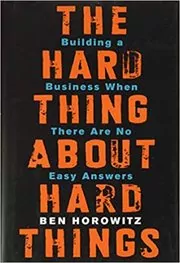
The Hard Thing About Hard Things
Building a Business When There Are No Easy Answers
For founders and CEOs facing decisions with no comfortable option. Horowitz makes layoffs, leadership pressure and company survival unusually concrete, though the technology-startup setting limits how directly every lesson transfers to other organizations.
What it's about
Ben Horowitz draws on his experiences leading technology companies to discuss the difficult decisions involved in running a business. His advice covers leadership under pressure, personnel problems, competition, and the responsibilities that accompany the role of chief executive.
Also recommended by
22 people Peter Thiel recommended this book
Peter Thiel
"[The author] has written the first true guide for protecting a startup from self-sabotage." - Peter Thiel
Peter Thiel's recommendation of this book 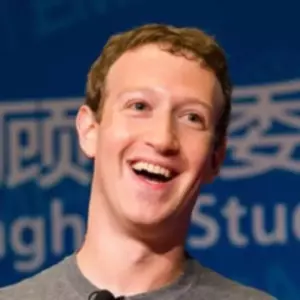 Mark Zuckerberg recommended this book
Mark Zuckerberg
"For anyone insterested in building, growing, or leading a great company, this book is an incredibly valuable resource." - Mark Zuckerberg
Mark Zuckerberg's recommendation of this book  Peter Attia recommended this book
Peter Attia
One of Peter Attia's answers to "any books you feel would make your reading list?"
Peter Attia's recommendation of this book  Marc Andreessen recommended this book
Marc Andreessen
"Let’s just say, we started out relationship with vigorous disagreement, and we’ve continued that to this day." - Marc Andreessen
Marc Andreessen's recommendation of this book 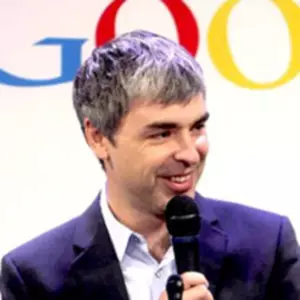 Larry Page recommended this book
Larry Page
"An inspiring story of a business rebirth through sheer willpower." - Larry Page
Larry Page's recommendation of this book  Matt Mullenweg recommended this book
Matt Mullenweg
"Entertaining more than anything. I read [this book], I was like: I would never work for this guy. But entertaining and some good lessons." - Matt Mullenweg
Matt Mullenweg's recommendation of this book +16
More recommendations
- Andrew Ng
"A bit dark but it does cover a lot of useful territory on what building an organization is like." - Andrew Ng
- Drew Houston
"One of the great things that [the author] wrote in [this book] is the hardest part of being a CEO is managing your psychology." - Drew Houston
- Keith Rabois
"Reflects 2000-2003." - Keith Rabois
- Dustin Moskovitz
Dustin Moskovitz recommended this book during a Stanford lecture in 2014.
- Max Levchin
One of Max Levchin's answers to "what's your favourite business book you'd advise to young entrepreneurs?"
- Luis von Ahn
"I like this one, but it’s not for very new entrepreneurs." - Luis von Ahn
- Kathryn Minshew
Most Recommended Books reached out to Kathryn Minshew directly.
- Andrew Wilkinson
"One of the best business books I've picked up in years." - Andrew Wilkinson
- Tim Ferriss
"A great book." - Tim Ferriss
- Blake Scholl
"Good." - Blake Scholl
- Chris Dixon
Chris Dixon recommended this book on Twitter.
- Fred Wilson
"Chapter five in [this book] is possibly the best thing I've read about leading a tech company." - Fred Wilson
- Raoul Pal
"By far, the best, most brutally honest and incredibly useful book about the realities of starting and running a company." - Raoul Pal
- Jodie Cook
"Reframes your mind: hard doesn’t mean bad. Seeking the easy route is a trap." - Jodie Cook
- Michael Dell
"Candidly talks about the very real thrills and perils of starting a business."- Michael Dell
- Marty Cagan
"Trust me: if you're a leader in tech, the best thing you can do in 2014 for your company is to read [this book]." - Marty Cagan
- Andrew Ng
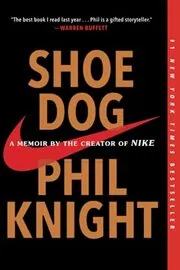
For founders who want a close account of uncertainty during a company's early growth. Knight makes financing pressures and fragile relationships vivid, though the memoir provides a retrospective story rather than a repeatable operating method.
What it's about
Phil Knight recounts Nike's beginnings as a business importing running shoes from Japan. His memoir follows the company's growth from early sales out of a car, describing the risks, setbacks, relationships, and decisions behind its development.
Also recommended by
16 people Alexis Ohanian recommended this book
Alexis Ohanian
"A great one -- had no idea Nike had such a long history." - Alexis Ohanian
Alexis Ohanian's recommendation of this book  Anthony Pompliano recommended this book
Anthony Pompliano
"[One of the] best books I read in 2017." - Anthony Pompliano
Anthony Pompliano's recommendation of this book  Austen Allred recommended this book
Austen Allred
"Loved [this book]." - Austen Allred
Austen Allred's recommendation of this book  Bill Gates recommended this book
Bill Gates
"A refreshingly honest reminder of what the path to business success really looks like." - Bill Gates
Bill Gates's recommendation of this book  Bill Gurley recommended this book
Bill Gurley
"All entrepreneurs should read." - Bill Gurley
Bill Gurley's recommendation of this book  Brian Armstrong recommended this book
Brian Armstrong
"Memoir by the Nike founder and CEO." - Brian Armstrong
Brian Armstrong's recommendation of this book +10
More recommendations
- Jason Calacanis
"Great inspirational [book]." - Jason Calacanis
- Kathryn Minshew
Most Recommended Books reached out to Kathryn Minshew directly.
- Tobi Lütke
"An autobiographical account of one of the world’s most recognizable brands." - Tobi Lütke
- Vlad Tenev
Vlad Tenev's response to Bloomberg's "The Best Books of 2017" survey.
- Warren Buffett
"The best book I read [in 2015]." - Warren Buffett
- Patrick O'Shaughnessy
"A perfect business book & memoir hybrid." - Patrick O'Shaughnessy
- Tim Cook
"Best business book of the century." - Tim Cook
- Ryan Shea
Ryan Shea recommended this book on his website.
- Trung Phan
"About the Footwear industry." - Trung Phan
- Blake Randall
"" - Blake Randall
- Jason Calacanis
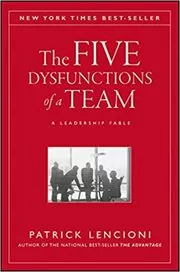
For leaders who need a simple vocabulary for discussing executive-team problems. Lencioni's fictional scenario makes trust, conflict and accountability easy to recognize, though its neat framework simplifies the politics and constraints of real organizations.
What it's about
New CEO Kathryn Petersen confronts a deeply divided executive team at DecisionTech. Through this leadership fable and its accompanying framework, Patrick Lencioni examines the behaviors that undermine cooperation and prevent talented colleagues from working effectively together.
Also recommended by
2 people Alfred Lin recommended this book
Alfred Lin
"Talks about the breakdowns of a team." - Alfred Lin
Alfred Lin's recommendation of this book  Patrick Bet-David recommended this book
Patrick Bet-David
Patrick Bet-David recommended this book on his website.
Patrick Bet-David's recommendation of this book
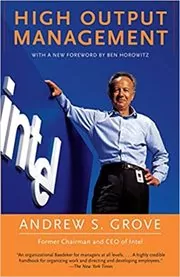
High Output Management
For executives who want practical ways to organize managerial work. Grove connects meetings, training and decisions with the output of teams, though the industrial and technology-company examples reflect an earlier workplace and need thoughtful adaptation.
What it's about
Drawing on his experience at Intel, Andrew Grove explains how managers can organize work, develop employees, and improve team productivity. He connects everyday business operations with practical methods for motivation and effective management.
Also recommended by
14 people- Mark Zuckerberg recommended this book
Mark Zuckerberg
"Played a big role in shaping my management style." - Mark Zuckerberg
Mark Zuckerberg's recommendation of this book - Marc Andreessen recommended this book
Marc Andreessen
"The best book on management ever written." - Marc Andreessen
Marc Andreessen's recommendation of this book  Tobi Lütke recommended this book
Tobi Lütke
"Unapologetically almost a how to manual, but kind of deconstructs the world of business into first principles." - Tobi Lütke
Tobi Lütke's recommendation of this book  Larry Ellison recommended this book
Larry Ellison
"[Larry Ellison] considers [this book] his bible when it comes to management concepts." - Subbu Viswanathan
Larry Ellison's recommendation of this book  Ben Horowitz recommended this book
Ben Horowitz
"Andy Grove, who built himself from nothing to run Intel, stopped what he was doing to teach us his magic. And not through some ghostwriter either — Andy wrote this book himself. What an incredible gift." - Ben Horowitz
Ben Horowitz's recommendation of this book  Keith Rabois recommended this book
Keith Rabois
Keith Rabois recommended this book on a Medium blog post.
Keith Rabois's recommendation of this book +8
More recommendations
- Drew Houston
"The best book on management ever written." - Drew Houston
- Brian Chesky
"Chesky, CEO of AirBnB, treats 'High Output Management' as his primary reference book on management." - Business Insider
- Brian Armstrong
"Surprisingly, I found I was already using many of the management ideas in this book (1:1, OKRs, etc) which is a testament to just how influential this book is." - Brian Armstrong
- Ron Conway
"User-friendly guide to the art and science of management." - Ron Conway
- Sahil Lavingia
Sahil Lavingia recommended this book on Notion.
- Balaji Srinivasan
Balaji Srinivasan recommended this book in "The Almanack of Balaji Srinivasan."
- Justin Kan
Justin Kan recommended this book on Twitter.
- John Doerr
John Doerr recommended this book at the end of "Measure What Matters."
- Drew Houston
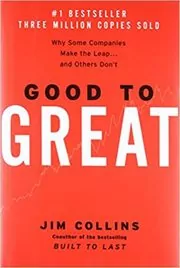
For leaders who want a framework for discussing organizational discipline and sustained performance. Collins's company comparisons make the ideas memorable, though the retrospective selection of successful firms should not be treated as proof of a guaranteed formula.
What it's about
Jim Collins examines why some companies achieve lasting improvements while comparable businesses do not. His research emphasizes leadership, people, disciplined focus, and cumulative momentum as foundations of transformation.
Also recommended by
11 people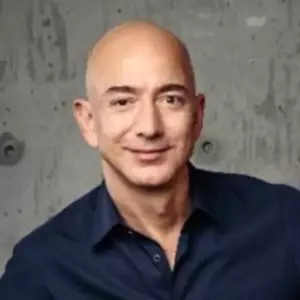 Jeff Bezos recommended this book
Jeff Bezos
Part of "Jeff's Reading List."
Jeff Bezos's recommendation of this book 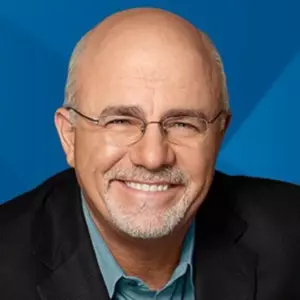 Dave Ramsey recommended this book
Dave Ramsey
Recommended on Dave Ramsey's website.
Dave Ramsey's recommendation of this book  Jason Calacanis recommended this book
Jason Calacanis
"The great management book." - Jason Calacanis
Jason Calacanis's recommendation of this book  Max Levchin recommended this book
Max Levchin
One of Max Levchin's answers to "what's your favourite business book you'd advise to young entrepreneurs?"
Max Levchin's recommendation of this book - Brian Armstrong recommended this book
Brian Armstrong
"The scientific method can be applied to business. This book draws powerful lessons from data." - Brian Armstrong
Brian Armstrong's recommendation of this book  Ev Williams recommended this book
Ev Williams
On the "books read" section of Ev Williams' GoodReads profile.
Ev Williams's recommendation of this book +5
More recommendations
- Frank Blake
"As a business person, I love [this book]." - Frank Blake
- Tracy DiNunzio
"It’s too good. [...] Definitely a must read." - Tracy DiNunzio
- Daniel Ek
"A really interesting book." - Daniel Ek
- John Doerr
John Doerr recommended this book at the end of "Measure What Matters."
- Michael Hyatt
Michael Hyatt recommended this book on his website.
- Frank Blake
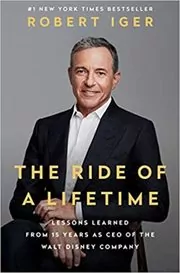
For readers interested in leading a large creative company through negotiations and major acquisitions. Iger's account emphasizes relationships and judgment at the top, though the memoir presents his perspective and stops short of Disney's later challenges.
What it's about
Robert Iger recounts his career and his years leading Disney, including major acquisitions and the challenges of managing a global entertainment company. He reflects on leadership, technological change, creative partnerships, and decisions made under pressure.
Also recommended by
9 people Tim Ferriss recommended this book
Tim Ferriss
"The negotiation stories with Steve Jobs alone make this book worth the read." - Tim Ferriss
Tim Ferriss's recommendation of this book  Brené Brown recommended this book
Brené Brown
"Leadership gold—you won’t forget the stories or the lessons." - Brené Brown
Brené Brown's recommendation of this book  Brian Chesky recommended this book
Brian Chesky
"Bob's book is great and he's an excellent CEO." - Brian Chesky
Brian Chesky's recommendation of this book - Jason Calacanis recommended this book
Jason Calacanis
"We recently read [this book] in the 'This Week in Startups' book club." - Jason Calacanis
Jason Calacanis's recommendation of this book  Karlie Kloss recommended this book
Karlie Kloss
Karlie Kloss said this book really inspired her to become a better boss.
Karlie Kloss's recommendation of this book - Alexis Ohanian recommended this book
Alexis Ohanian
"One of the best leadership books I've read." - Alexis Ohanian
Alexis Ohanian's recommendation of this book +3
More recommendations
- Michael Bloomberg
"A testament to the idea that in America, if you work hard and pursue a dream, you really can achieve it." - Michael Bloomberg
- Bill Gates
"A short, readable book with smart insights, and along the way he crosses paths with some colorful characters." - Bill Gates
- Saagar Enjeti
"[Details] the evolution of the modern-American media conglomerate." - Saagar Enjeti
- Michael Bloomberg
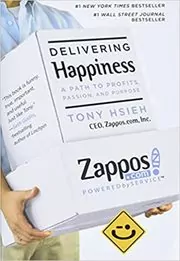
For leaders interested in making service and culture central to a company's identity. Hsieh explains his choices through an entrepreneurial memoir, though the personal success narrative offers fewer tools for evaluating whether the same approach fits another business.
What it's about
Tony Hsieh recounts his entrepreneurial experiences, from early ventures to building Zappos. Combining memoir with business reflections, he explains why he made customer service, employee happiness, and company culture central to his approach to growth.
Also recommended by
7 people- Tim Ferriss recommended this book
Tim Ferriss
"What I also enjoyed is that it's entirely in Tony's voice." - Tim Ferriss
Tim Ferriss's recommendation of this book  Kevin Rose recommended this book
Kevin Rose
"Phenomenal." - Kevin Rose
Kevin Rose's recommendation of this book  Gretchen Rubin recommended this book
Gretchen Rubin
"In this fascinating (and often hilarious) account, [the author] explains how he turns his beliefs into actions that really do deliver happiness." - Gretchen Rubin
Gretchen Rubin's recommendation of this book  Julie Rice recommended this book
Julie Rice
"[At SoulCycle] we’re all big fans of [this book]." - Julie Rice
Julie Rice's recommendation of this book  Chip Conley recommended this book
Chip Conley
"[The author] is a wise guy. Sincerely. He’s one of the wisest and most thoughtful business leaders of the modern age." - Chip Conley
Chip Conley's recommendation of this book  Danny Miranda recommended this book
Danny Miranda
"I bought it for three people and recommended it far and wide." - Danny Miranda
Danny Miranda's recommendation of this book +1
More recommendations
- Patrick Bet-David
Patrick Bet-David recommended this book on his website.
- Patrick Bet-David
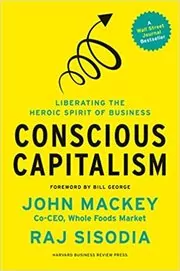
For leaders considering how purpose and stakeholder relationships should shape business decisions. Mackey and Sisodia present an affirmative case for their model, though the advocacy and selected company examples deserve critical reading rather than automatic adoption.
What it's about
John Mackey and Raj Sisodia argue that businesses can create value for customers, employees, suppliers, investors, communities, and the environment. Company examples illustrate their case for a more purposeful and humane capitalism, connecting commercial success with responsibility toward multiple stakeholders.
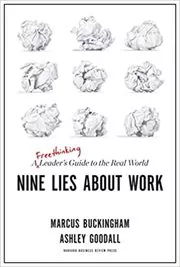
For leaders willing to question familiar approaches to feedback, planning and employee performance. Buckingham and Goodall emphasize individual strengths and team realities, though the deliberately provocative framing can make complex management debates seem more settled than they are.
What it's about
Marcus Buckingham and Ashley Goodall challenge nine common beliefs about organizations, feedback, planning, and leadership. Their alternative approach emphasizes distinctive individual strengths and the realities of teams, asking leaders to reconsider practices that can frustrate employees and undermine performance.
Sources
- 1
The Top 10 Books Every CEO Should Read
ceotodaymagazine.com
- 2
Executive Wisdom: Top 20 Books by Visionary CEOs
greatworklife.com
- 3
Page turners: the top 10 business books, as recommended by CEOs
raconteur.net
- 4
21 Business and Leadership Books for CEOs
llrpartners.com
- 5
What are you favorite CEO/leadership books?
reddit.com
- 6
Leadership Books
goodreads.com
- 7
The best CEO books of all time (chosen by CEO authors)
bookdna.com
Edited by
Software engineer whose passion for tracking book recommendations from podcasts inspired the creation of MRB.
Lead investor at 3one4 Capital whose startup expertise and love for books helped shape MRB and its growth.
Comments
Did we miss something? Have feedback?
Help us improve this page by sharing your thoughts