
13 Best Persuasion Books
The best persuasion books, ranked by how many expert sources recommend each one, with reader notes on influence, negotiation, relationships, and memorable messages.
Our take
Persuasion can mean asking for cooperation, explaining an idea clearly, negotiating an agreement, or understanding why a message affects you. These books cover those different tasks. Some examine psychological patterns; others focus on relationships, public speaking, sales, or the spread of ideas. They can help readers recognize influence as well as become more thoughtful about their own communication.
Influence provides a useful starting framework, while How To Win Friends and Influence People concentrates on interpersonal habits. Getting to Yes and Never Split the Difference approach negotiation from different directions, so reading both can expose the limits of either approach alone. For a message people will remember, turn to Made to Stick; for spoken and written arguments, try Thank You for Arguing. None makes agreement automatic, and examples need adapting to the people and situation. Begin with the book that matches your immediate communication problem, then widen your perspective.
13 books · 10 sources · Last updated
As an Amazon Associate, we earn from qualifying purchases (at no extra cost to you).
How to choose from this list
Skip to the full rankingIf you want the psychology of influence: Influence → Pre-Suasion
If you want better everyday interactions: How To Win Friends and Influence People → To Sell Is Human
If you need to negotiate an agreement: Getting to Yes → Never Split the Difference
If you want ideas people remember and share: Made to Stick → Contagious
If you want to improve your arguments: Thank You for Arguing
If you prefer short practical lessons: Yes!
The 13 books, ranked
Ranked by how many expert sources name each book. Ties go to the book more people recommend.

For readers who want a framework for recognizing why requests succeed. Cialdini connects recurring influence principles with familiar situations, though understanding those patterns does not supply a script for every conversation or guarantee agreement.
What it's about
Cialdini explores why people agree to requests and how recurring principles influence their decisions. Research and examples explain persuasion in everyday settings, alongside ways to recognize these mechanisms and resist attempts to exploit them.
Also recommended by
18 people Tobi Lütke recommended this book
Tobi Lütke
"The most mind-bending book you can imagine, because it essentially taught you always humans are flawed and influential." - Tobi Lütke
Tobi Lütke's recommendation of this book  Scott Adams recommended this book
Scott Adams
"100 percent of effective people seem to have read [this book]. In fact, it’s one of those things that when I meet somebody and they’re operating at a pretty high level, if you mention [this book], they’ve all read it." - Scott Adams
Scott Adams's recommendation of this book  Naval Ravikant recommended this book
Naval Ravikant
"Fundamental and had a lot to teach." - Naval Ravikant
Naval Ravikant's recommendation of this book  Charlie Munger recommended this book
Charlie Munger
Charlie Munger recommended this book in the "Poor Charlie's Almanack" book.
Charlie Munger's recommendation of this book  Adam Robinson recommended this book
Adam Robinson
Adam Robinson mentioned this book on "The Tim Ferriss Show" podcast.
Adam Robinson's recommendation of this book  Ramit Sethi recommended this book
Ramit Sethi
Ramit Sethi mentioned this book on "The Tim Ferriss Show" podcast.
Ramit Sethi's recommendation of this book +12
More recommendations
- Alexis Ohanian
"[Helps you] navigate the world with heightened awareness for how we're always being influenced/manipulated." - Alexis Ohanian
- Guy Kawasaki
"The guiding light for how I conduct business—and in many ways how I live my life." - Guy Kawasaki
- Max Levchin
One of Max Levchin's answers to "what's your favourite business book you'd advise to young entrepreneurs?"
- Noah Kagan
"People can be influenced in their behaviors by many different tactics." - Noah Kagan
- Samy Kamkar
"I love it because it was a very systematic and analytical approach to the most common ways that human being have been known to be influenced and persuaded to do something." - Samy Kamkar
- Andrew Wilkinson
"[One of] my most recommended business books." - Andrew Wilkinson
- Neil Strauss
"Understanding these [principles] make all the difference in making the leap from interest to attraction." - Neil Strauss
- Patrick O'Shaughnessy
Patrick O'Shaughnessy recommended this book on a blog post.
- Mark Manson
Mark Manson recommended this book on his website.
- Alex Hormozi
Alex Hormozi recommended this book on Instagram.
- James Clear
"[One of] the 10 best nonfiction books of all-time." - James Clear
- Michael Hyatt
Michael Hyatt recommended this book on his website.
- Alexis Ohanian

How To Win Friends and Influence People
For beginners who need stronger interpersonal habits before learning persuasion techniques. Carnegie emphasizes attention, appreciation, and cooperation in accessible stories, though the older examples and repeated principles can feel dated or overly tidy.
What it's about
Carnegie presents practical guidance for building relationships, communicating effectively, and influencing others. Stories and principles explore social confidence, leadership, and cooperation, offering approaches readers can apply to interactions in their personal lives and at work.
Also recommended by
18 people Warren Buffett recommended this book
Warren Buffett
"In my office, you will not see the degree I have from the University of Nebraska, or the master’s degree I have from Columbia University, but you’ll see the certificate I got from the Dale Carnegie course." - Warren Buffett
Warren Buffett's recommendation of this book - Scott Adams recommended this book
Scott Adams
One of the books on Scott Adams' "Persuasion Reading List."
Scott Adams's recommendation of this book  Dave Ramsey recommended this book
Dave Ramsey
Recommended on Dave Ramsey's website.
Dave Ramsey's recommendation of this book  Paul Graham recommended this book
Paul Graham
"The one book we encourage startup founders to read. [...] It's critically important for anyone in business." - Paul Graham
Paul Graham's recommendation of this book  Derek Sivers recommended this book
Derek Sivers
Derek Sivers mentioned this book on "The Tim Ferriss Show" podcast.
Derek Sivers's recommendation of this book  Dustin Moskovitz recommended this book
Dustin Moskovitz
"Seek to be understood." - Dustin Moskovitz
Dustin Moskovitz's recommendation of this book +12
More recommendations
- Ken Block
"One of the first books that really helped me achieve my management style and what’s helped me really be successful." - Ken Block
- DJ Vlad
Most Recommended Books reached out to DJ Vlad directly.
- Strauss Zelnick
"Archaic references and overweening title to the side, it’s actually a great guide to leadership and salesmanship." - Strauss Zelnick
- Daymond John
"I love all the Dale Carnegie books." - Daymond John
- Shay Carl
"A staple that I have listened to three or four times." - Shay Carl
- Tim Draper
"[One of the books] that are recommended or required at Draper University." - Tim Draper
- Sahil Lavingia
Sahil Lavingia recommended this book on Notion.
- Barbara Corcoran
"A must read for anyone in business." - Barbara Corcoran
- Alex Hormozi
Alex Hormozi recommended this book on Instagram.
- Michael Hyatt
Michael Hyatt recommended this book on his website.
- Ben Greenfield
Most Recommended Books reached out to Ben Greenfield directly.
- Patrick Bet-David
Patrick Bet-David recommended this book on his website.
- Ken Block

For readers who already understand a message but want to examine the context around it. The focus on attention before a request adds a distinct angle, though the narrow theme offers less breadth than Influence.
What it's about
Cialdini examines how the moments before a message influence its reception. Drawing on persuasion research, he explores the role of attention, context, and subtle cues in preparing people to respond to communication in particular ways.
Also recommended by
5 people- Scott Adams recommended this book
Scott Adams
"Read [this book], and thank me later." - Scott Adams
Scott Adams's recommendation of this book - Naval Ravikant recommended this book
Naval Ravikant
"Good but closer to a single-themed book." - Naval Ravikant
Naval Ravikant's recommendation of this book  Michael Mauboussin recommended this book
Michael Mauboussin
"Fascinating and useful read. An instant classic." - Michael Mauboussin
Michael Mauboussin's recommendation of this book  Patrick O'Shaughnessy recommended this book
Patrick O'Shaughnessy
"Very interesting and readable." - Patrick O'Shaughnessy
Patrick O'Shaughnessy's recommendation of this book  Alex Hormozi recommended this book
Alex Hormozi
Alex Hormozi recommended this book on Instagram.
Alex Hormozi's recommendation of this book

For readers trying to reach agreement while preserving a working relationship. Its emphasis on interests and independent standards offers a cooperative framework, though it gives less room to emotional pressure and uncooperative counterparts than some alternatives.
What it's about
Roger Fisher and William Ury present an approach to negotiation based on interests and mutually beneficial agreements. They explain separating people from problems, developing options together, and using independent standards to resolve disagreements.
Also recommended by
7 people- Charlie Munger recommended this book
Charlie Munger
Charlie Munger recommended this book in the "Poor Charlie's Almanack" book.
Charlie Munger's recommendation of this book  Tim Ferriss recommended this book
Tim Ferriss
"A really important concept to grasp." - Tim Ferriss
Tim Ferriss's recommendation of this book  Drew Houston recommended this book
Drew Houston
"About principled negotiation, and I still think about and apply a lot of those concepts today." - Drew Houston
Drew Houston's recommendation of this book - Dustin Moskovitz recommended this book
Dustin Moskovitz
Dustin Moskovitz recommended this book on Twitter.
Dustin Moskovitz's recommendation of this book  Tim Draper recommended this book
Tim Draper
"[One of the books] that are recommended or required at Draper University." - Tim Draper
Tim Draper's recommendation of this book  Nick Ganju recommended this book
Nick Ganju
"I love [this book]." - Nick Ganju
Nick Ganju's recommendation of this book +1
More recommendations
- Ann Miura-Ko
"Really good." - Ann Miura-Ko
- Ann Miura-Ko

For presenters, teachers, and marketers whose ideas disappear after they speak. The focus on concrete, memorable messages addresses communication design especially well, though making an idea stick does not by itself make it accurate or persuasive.
What it's about
Chip and Dan Heath explore why some ideas remain memorable while others disappear. Through stories and research, they identify ways to make messages more understandable and compelling, examining how communication can influence what people remember.
Also recommended by
5 people Brian Armstrong recommended this book
Brian Armstrong
"How to make your message memorable so it will spread." - Brian Armstrong
Brian Armstrong's recommendation of this book  Ev Williams recommended this book
Ev Williams
On the "books read" section of Ev Williams' GoodReads profile.
Ev Williams's recommendation of this book  Andrew Wilkinson recommended this book
Andrew Wilkinson
"Our marketing bible." - Andrew Wilkinson
Andrew Wilkinson's recommendation of this book  Changpeng Zhao recommended this book
Changpeng Zhao
"Informs a lot of our public outreach in terms of making our services more essential for our users." - Changpeng Zhao
Changpeng Zhao's recommendation of this book  Sahil Lavingia recommended this book
Sahil Lavingia
Sahil Lavingia recommended this book on Notion.
Sahil Lavingia's recommendation of this book
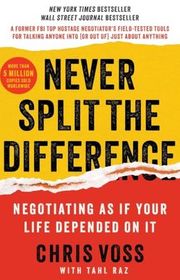
Never Split the Difference: Negotiating as if Your Life Depended on It
For readers who want concrete ways to listen, ask questions, and handle resistance during negotiation. The tactical focus complements Getting to Yes, though hostage-negotiation stories and the adversarial framing need care in ongoing relationships.
What it's about
Chris Voss and Tahl Raz translate lessons from hostage negotiation into business and everyday discussions. Stories explain techniques for listening, recognizing emotions, asking calibrated questions, and uncovering information that can change how an agreement develops.

For readers who prefer short research-based lessons to one sustained argument. The bite-sized format makes small communication changes easy to consider, though isolated examples need context before you assume the same result in your own setting.
What it's about
This collection presents fifty short lessons drawn from research on persuasion. Noah Goldstein, Steve Martin, and Robert Cialdini explain how small adjustments to requests and communication can affect responses in business, social situations, and everyday life.
Also recommended by
2 people- Charlie Munger recommended this book
Charlie Munger
"I suggest [this book]." - Charlie Munger
Charlie Munger's recommendation of this book - Alex Hormozi recommended this book
Alex Hormozi
Alex Hormozi recommended this book on Instagram.
Alex Hormozi's recommendation of this book

For marketers who want to understand why people pass messages along. Berger focuses on sharing and social transmission rather than winning a single conversation, though the examples explain possible mechanisms rather than offer a reliable formula for popularity.
What it's about
Jonah Berger investigates why certain products, ideas, and stories spread through word of mouth. Research and examples explain how social motives, emotions, everyday reminders, and other factors influence what people share and what others choose to pass along.
Also recommended by
1 person- Changpeng Zhao recommended this book
Changpeng Zhao
"A must-read for all product designers and marketers, and a lot of people in our team have taken the lessons in this book to heart." - Changpeng Zhao
Changpeng Zhao's recommendation of this book

For readers pitching deals who want a forceful approach to attention and framing. Klaff's dealmaking stories give the method a specific setting, though the competitive tone may transfer poorly to collaborative conversations or quieter professional cultures.
What it's about
Oren Klaff presents an approach to pitching ideas, products, and investment opportunities. Using stories from his dealmaking experience, he explores framing an interaction, attracting attention, and structuring a presentation so an audience remains engaged.

For readers curious about the patterns behind everyday choices. The experiment-led storytelling offers a broader view of decision-making than most tactical guides here, though it is an introduction to behavioral claims rather than a practical persuasion system.
What it's about
Dan Ariely challenges the assumption that people make consistently rational decisions. Through experiments and everyday examples, he examines recurring errors in judgment and argues that recognizing these patterns can help readers reconsider their own choices.
Also recommended by
4 people Keith Rabois recommended this book
Keith Rabois
Keith Rabois recommended this book on Quora.
Keith Rabois's recommendation of this book  Max Levchin recommended this book
Max Levchin
One of Max Levchin's answers to "what's your favourite business book you'd advise to young entrepreneurs?"
Max Levchin's recommendation of this book  Tom Bilyeu recommended this book
Tom Bilyeu
Tom Bilyeu recommended this book on his website.
Tom Bilyeu's recommendation of this book  Ryan Shea recommended this book
Ryan Shea
Ryan Shea recommended this book on his website.
Ryan Shea's recommendation of this book

For readers who want an organized sequence rather than a loose collection of persuasion principles. Kolenda's METHODS framework provides a memorable structure, though its confident packaging can make context-dependent psychological findings sound more universal than they are.
What it's about
Nick Kolenda presents a seven-step approach to persuasion drawn from cognitive psychology. He organizes techniques under the acronym METHODS, explaining his view of how psychological principles can shape people's thoughts and decisions and how those ideas might be applied in practice.

For readers who persuade at work without thinking of themselves as salespeople. Pink connects everyday influence with perspective-taking and problem clarification, though the broad treatment provides fewer detailed negotiation tools than a dedicated manual.
What it's about
Daniel Pink argues that persuading and influencing others are everyday activities extending beyond formal sales jobs. He explores skills such as understanding another person's perspective, handling rejection, clarifying problems, and communicating with a spirit of service.

Thank You for Arguing
What Aristotle, Lincoln, and Homer Simpson Can Teach Us About the Art of Persuasion
For speakers and writers who want the vocabulary and tools of rhetoric. Heinrichs connects classical ideas with lively everyday examples, though the playful tone and many techniques can distract readers looking for a compact scientific overview.
What it's about
Jay Heinrichs explains persuasion through historical speeches, popular culture, and everyday arguments. Practical techniques focus on adapting to an audience, establishing credibility, framing choices, and recognizing manipulative language, with exercises for developing rhetorical skills.
Sources
- 1
The 15 Best Books On Persuasion for Sales and Marketing | ActiveCampaign
activecampaign.com
- 2
12 Best Books on Persuasion (2026) | Chapterly
chapterly.ai
- 3
The Best Books on Influence and Persuasion | Reading List
thesignalgap.com
- 4
100 Best Persuasion Books of All Time (Updated for 2026)
shortform.com
- 5
The 21 Best Books on Influence and Persuasion
upjourney.com
- 6
Best Books on Persuasion and Influence | The Power Moves
thepowermoves.com
- 7
Best Persuasion Books (95 books)
goodreads.com
- 8
Looking for some good books on persuasion. : r/booksuggestions
reddit.com
- 9
Books recommendations for negotiation and persuasion? : r/ExperiencedDevs
reddit.com
- 10
Toastmasters International -5 Must-Read Books on Persuasion
toastmasters.org


Edited by
Software engineer whose passion for tracking book recommendations from podcasts inspired the creation of MRB.
Lead investor at 3one4 Capital whose startup expertise and love for books helped shape MRB and its growth.
Comments
Spotted a missing book, a wrong order or a mistake? Tell us and we'll fix this page.
We're a reading guide, not the author or publisher, so we can't send books or pass on messages.