
47 Best Sales Books
The best sales books, ranked by how many expert sources recommend them, with guidance for prospecting, discovery, negotiation, and managing a sales team.
Our take
Selling involves several different skills, and improving one does not automatically improve the others. Finding suitable prospects, understanding their problems, explaining value, and helping them make a decision each call for a different kind of practice. Sales managers also need systems for hiring, coaching, and measuring work that individuals can actually influence.
The books here range from traditional closing manuals to consultative methods and broader studies of persuasion. SPIN Selling and Gap Selling emphasize diagnosis before pitching. Fanatical Prospecting addresses keeping conversations coming, while Never Split the Difference concentrates on listening and negotiation. For leaders, Cracking the Sales Management Code and The Sales Development Playbook shift attention toward the organization around the seller.
Choose a book that addresses a specific weakness, then apply one idea in your own setting before adding another framework. Start with New Sales. Simplified. for a practical overview, or SPIN Selling if your main challenge is discovering what a customer actually needs.
47 books · 9 sources · Last updated
As an Amazon Associate, we earn from qualifying purchases (at no extra cost to you).
How to choose from this list
Skip to the full rankingIf you're new to sales: To Sell Is Human → New Sales. Simplified.
If you need better discovery: SPIN Selling → Gap Selling → The Challenger Sale
If your pipeline is inconsistent: Fanatical Prospecting → Smart Calling
If buyers struggle to decide: The JOLT Effect → Never Split the Difference
If you're building a sales team: The Sales Development Playbook → Cracking the Sales Management Code → The Sales Acceleration Formula
If you sell to overloaded customers: SNAP Selling → Selling to Big Companies
The 47 books, ranked
Ranked by how many expert sources name each book. Ties go to the book more people recommend.

SPIN Selling
For sellers handling complex purchases who need better discovery conversations. Rackham's question structure helps connect problems with business consequences, though effective use requires listening rather than marching through a memorized checklist.
What it's about
Rackham presents a research-based approach to selling complex, high-value products and services. His SPIN framework organizes questions around situation, problem, implication, and need-payoff, emphasizing understanding customers' needs and developing value through structured conversations rather than forceful closing techniques.
Also recommended by
1 person Noah Kagan recommended this book
Noah Kagan
Noah Kagan recommended this book in the "Tools of Titans" book.
Noah Kagan's recommendation of this book

Fanatical Prospecting
For sellers whose pipeline suffers from inconsistent outreach. Blount makes prospecting discipline and channel variety explicit, though the energetic emphasis on activity needs balancing with relevance, buyer preferences, and the quality of each conversation.
What it's about
Jeb Blount argues for consistent prospecting across several channels to prevent an empty sales pipeline. He provides frameworks for telephone calls, email, text, and social selling, along with approaches to rejection, familiarity, and securing appointments.

How To Win Friends and Influence People
For salespeople who need to listen better and develop sincere professional relationships. Carnegie makes everyday interpersonal habits memorable, though the older stories require adaptation and the principles work poorly when used as superficial flattery.
What it's about
Carnegie presents practical guidance for building relationships, communicating effectively, and influencing others. Stories and principles explore social confidence, leadership, and cooperation, offering approaches readers can apply to interactions in their personal lives and at work.
Also recommended by
18 people Warren Buffett recommended this book
Warren Buffett
"In my office, you will not see the degree I have from the University of Nebraska, or the master’s degree I have from Columbia University, but you’ll see the certificate I got from the Dale Carnegie course." - Warren Buffett
Warren Buffett's recommendation of this book  Scott Adams recommended this book
Scott Adams
One of the books on Scott Adams' "Persuasion Reading List."
Scott Adams's recommendation of this book  Dave Ramsey recommended this book
Dave Ramsey
Recommended on Dave Ramsey's website.
Dave Ramsey's recommendation of this book  Paul Graham recommended this book
Paul Graham
"The one book we encourage startup founders to read. [...] It's critically important for anyone in business." - Paul Graham
Paul Graham's recommendation of this book  Derek Sivers recommended this book
Derek Sivers
Derek Sivers mentioned this book on "The Tim Ferriss Show" podcast.
Derek Sivers's recommendation of this book  Dustin Moskovitz recommended this book
Dustin Moskovitz
"Seek to be understood." - Dustin Moskovitz
Dustin Moskovitz's recommendation of this book +12
More recommendations
- Ken Block
"One of the first books that really helped me achieve my management style and what’s helped me really be successful." - Ken Block
- DJ Vlad
Most Recommended Books reached out to DJ Vlad directly.
- Strauss Zelnick
"Archaic references and overweening title to the side, it’s actually a great guide to leadership and salesmanship." - Strauss Zelnick
- Daymond John
"I love all the Dale Carnegie books." - Daymond John
- Shay Carl
"A staple that I have listened to three or four times." - Shay Carl
- Tim Draper
"[One of the books] that are recommended or required at Draper University." - Tim Draper
- Sahil Lavingia
Sahil Lavingia recommended this book on Notion.
- Barbara Corcoran
"A must read for anyone in business." - Barbara Corcoran
- Alex Hormozi
Alex Hormozi recommended this book on Instagram.
- Michael Hyatt
Michael Hyatt recommended this book on his website.
- Ben Greenfield
Most Recommended Books reached out to Ben Greenfield directly.
- Patrick Bet-David
Patrick Bet-David recommended this book on his website.
- Ken Block

For sellers who struggle to understand resistance during difficult negotiations. Voss supplies concrete listening techniques and useful questions, though hostage-negotiation stories need adapting to commercial relationships built on continuing cooperation.
What it's about
Former FBI hostage negotiator Chris Voss draws on high-stakes encounters to explain his approach to negotiation. He presents principles centered on emotion, intuition and communication, applying lessons from crisis situations to business discussions and everyday disagreements.
Also recommended by
2 people- Dustin Moskovitz recommended this book
Dustin Moskovitz
Dustin Moskovitz recommended this book on Twitter.
Dustin Moskovitz's recommendation of this book  Blake Randall recommended this book
Blake Randall
"" - Blake Randall
Blake Randall's recommendation of this book

The Sales Acceleration Formula
Using Data, Technology, and Inbound Selling to go from $0 to $100 Million
For sales leaders building hiring, coaching, and measurement systems. Roberge makes the organizational side of growth concrete through operating experience, though the software-company setting and older inbound assumptions require adaptation.
What it's about
Mark Roberge explains the sales systems he developed while growing HubSpot. His approach uses data and technology to organize hiring, training, coaching, and demand generation, offering a framework for building teams and making revenue growth more predictable.
Also recommended by
2 people- Noah Kagan recommended this book
Noah Kagan
Noah Kagan recommended this book in the "Tools of Titans" book.
Noah Kagan's recommendation of this book  Alex Hormozi recommended this book
Alex Hormozi
Alex Hormozi recommended this book on Instagram.
Alex Hormozi's recommendation of this book

For sellers who pitch before understanding the buyer's problem. Keenan makes diagnosis and business impact central to the conversation, though quantifying a gap takes careful questioning and cannot be forced into every purchase.
What it's about
Keenan presents a sales approach based on diagnosing the difference between a buyer’s current situation and desired future. The book uses that gap to guide discovery, qualification, demonstrations, objections, and discussions of a proposed solution’s value.

For experienced business sellers who can bring useful commercial insight to customers. The teach-and-tailor framework offers an alternative to passive relationship management, though challenging a buyer without credible knowledge can damage trust.
What it's about
Matthew Dixon and Brent Adamson examine research into the habits of successful sales representatives. They argue that complex business sales benefit from teaching customers new insights, tailoring conversations to their needs, and confidently directing the buying process.

For readers who dislike traditional sales stereotypes or influence others outside a sales role. Pink offers an accessible, service-minded perspective, though it provides less detailed process guidance than a dedicated prospecting or discovery manual.
What it's about
Daniel Pink argues that persuading and influencing others are everyday activities extending beyond formal sales jobs. He explores skills such as understanding another person's perspective, handling rejection, clarifying problems, and communicating with a spirit of service.

For sellers who want to understand persuasion beyond individual scripts. Cialdini explains recurring psychological mechanisms with broad applications, though applying them ethically requires protecting a buyer's freedom to make an informed decision.
What it's about
Cialdini explores why people agree to requests and how recurring principles influence their decisions. Research and examples explain persuasion in everyday settings, alongside ways to recognize these mechanisms and resist attempts to exploit them.
Also recommended by
18 people Tobi Lütke recommended this book
Tobi Lütke
"The most mind-bending book you can imagine, because it essentially taught you always humans are flawed and influential." - Tobi Lütke
Tobi Lütke's recommendation of this book - Scott Adams recommended this book
Scott Adams
"100 percent of effective people seem to have read [this book]. In fact, it’s one of those things that when I meet somebody and they’re operating at a pretty high level, if you mention [this book], they’ve all read it." - Scott Adams
Scott Adams's recommendation of this book  Naval Ravikant recommended this book
Naval Ravikant
"Fundamental and had a lot to teach." - Naval Ravikant
Naval Ravikant's recommendation of this book  Charlie Munger recommended this book
Charlie Munger
Charlie Munger recommended this book in the "Poor Charlie's Almanack" book.
Charlie Munger's recommendation of this book  Adam Robinson recommended this book
Adam Robinson
Adam Robinson mentioned this book on "The Tim Ferriss Show" podcast.
Adam Robinson's recommendation of this book  Ramit Sethi recommended this book
Ramit Sethi
Ramit Sethi mentioned this book on "The Tim Ferriss Show" podcast.
Ramit Sethi's recommendation of this book +12
More recommendations
- Alexis Ohanian
"[Helps you] navigate the world with heightened awareness for how we're always being influenced/manipulated." - Alexis Ohanian
- Guy Kawasaki
"The guiding light for how I conduct business—and in many ways how I live my life." - Guy Kawasaki
- Max Levchin
One of Max Levchin's answers to "what's your favourite business book you'd advise to young entrepreneurs?"
- Noah Kagan
"People can be influenced in their behaviors by many different tactics." - Noah Kagan
- Samy Kamkar
"I love it because it was a very systematic and analytical approach to the most common ways that human being have been known to be influenced and persuaded to do something." - Samy Kamkar
- Andrew Wilkinson
"[One of] my most recommended business books." - Andrew Wilkinson
- Neil Strauss
"Understanding these [principles] make all the difference in making the leap from interest to attraction." - Neil Strauss
- Patrick O'Shaughnessy
Patrick O'Shaughnessy recommended this book on a blog post.
- Mark Manson
Mark Manson recommended this book on his website.
- Alex Hormozi
Alex Hormozi recommended this book on Instagram.
- James Clear
"[One of] the 10 best nonfiction books of all-time." - James Clear
- Michael Hyatt
Michael Hyatt recommended this book on his website.
- Alexis Ohanian

For newer salespeople who prefer short, energetic lessons to a formal methodology. Gitomer emphasizes value and buyer understanding, though the punchy style can feel repetitive and leaves less room for complex account strategy.
What it's about
Jeffrey Gitomer sets out principles for understanding why customers buy and earning their business. His advice focuses on creating value, learning about prospects, developing expertise, and maintaining the attitudes and habits that support lasting sales relationships.

New Sales. Simplified.
The Essential Handbook for Prospecting and New Business Development
For sellers who need a practical structure for creating new business. Weinberg connects targeting, messaging, and prospecting discipline more directly than motivational guides, though the straightforward approach still demands careful research and consistent execution.
What it's about
Mike Weinberg lays out a framework for proactive prospecting and new business development. The guide covers targeting accounts, preparing sales messages, securing meetings, conducting useful sales calls, and organizing time to create and advance opportunities.

Coaching Salespeople into Sales Champions
A Tactical Playbook for Managers and Executives
For managers who keep solving problems for representatives instead of developing their judgment. Rosen offers concrete coaching conversations and accountability tools, though the detailed playbook requires time and sustained managerial follow-through.
What it's about
Keith Rosen offers managers a coaching approach for developing salespeople beyond conventional training. The playbook addresses coaching conversations, accountability, performance improvement, and the habits leaders need to help individuals develop skills and confidence.

For sellers and founders who need more engaging presentations. Klaff offers memorable ideas about framing and attention, though the theatrical, deal-focused style requires restraint when trust and collaboration matter more than controlling the room.
What it's about
Oren Klaff presents an approach to pitching ideas, products, and investment opportunities. Using stories from his dealmaking experience, he explores framing an interaction, attracting attention, and structuring a presentation so an audience remains engaged.

Predictable Revenue
For sales leaders exploring specialized outbound prospecting and repeatable team processes. Ross and Tyler explain an influential organizational model, though its older Salesforce-era tactics and assumptions need substantial adaptation to today's buyers and channels.
What it's about
Aaron Ross and Marylou Tyler describe a system for generating B2B sales opportunities through specialized roles, targeted outreach, and repeatable processes. Their framework draws on experience building an outbound sales function at Salesforce.

For readers who respond to forceful encouragement and want to become more comfortable initiating sales conversations. Cardone emphasizes action and confidence, though his assertive style can fit poorly with a buyer-led, consultative approach.
What it's about
Grant Cardone presents selling and persuasion as essential skills in business and daily life. His advice covers prospecting, rejection, objections, pricing, time management, and maintaining confidence while seeking support for products, services, or ideas.

The Psychology of Selling
Increase Your Sales Faster and Easier Than You Ever Thought Possible
For newer sellers who want encouragement alongside practical reflections on buyer behavior. Tracy addresses confidence and rejection accessibly, though the motivational tone sometimes gives broad assertions more certainty than the evidence warrants.
What it's about
Brian Tracy explores the mental aspects of selling, including confidence, fear of rejection, and understanding why customers buy. He combines reflections on attitudes and behavior with practical approaches intended to help salespeople communicate and manage their work more effectively.

The Sales Development Playbook
Build Repeatable Pipeline and Accelerate Growth with Inside Sales
For leaders designing or improving an inside-sales development team. Bertuzzi connects staffing, specialization, and execution in a practical organizational framework, though the model needs adapting to your market and the economics of each account.
What it's about
Trish Bertuzzi explains how companies can build and manage sales development teams. Organized around six areas, the guide covers strategy, specialization, recruitment, retention, execution, and leadership as foundations for generating a repeatable pipeline through inside sales.

The Ultimate Sales Machine
Turbocharge Your Business with Relentless Focus on 12 Key Strategies
For business owners who need sales activity connected with training, marketing, and execution. Holmes offers an integrated operating approach, though the wide scope makes it less focused on individual sales conversations.
What it's about
Chet Holmes presents twelve business strategies centered on disciplined execution and repeated improvement. His guide connects staff development, marketing, sales, and client acquisition with practical systems intended to help companies focus their efforts and improve performance.
Also recommended by
2 people- Noah Kagan recommended this book
Noah Kagan
"This book has so many frigging tips I can't even start. Get it." - Noah Kagan
Noah Kagan's recommendation of this book  Michael Hyatt recommended this book
Michael Hyatt
Michael Hyatt recommended this book on his website.
Michael Hyatt's recommendation of this book

Secrets of Closing the Sale
For sellers who want a substantial collection of questions and closing approaches. Ziglar offers many ways to practice bringing conversations to a decision, though the older scripts need adapting to a buyer's circumstances and consent.
What it's about
Zig Ziglar explains techniques for persuasion and bringing sales conversations to a decision. Drawing on his own methods and other salespeople's experience, he discusses useful questions, verbal imagery and approaches to presenting ideas in ways that encourage agreement.
Also recommended by
1 person Seth Godin recommended this book
Seth Godin
Seth Godin mentioned this book on "The Tim Ferriss Show" podcast.
Seth Godin's recommendation of this book

Blueprints for a SaaS Sales Organization
How to Design, Build and Scale a Customer-Centric Sales Organization
For founders and sales leaders organizing a recurring-revenue business. The end-to-end perspective connects sales with customer success, though the SaaS assumptions and organizational detail make it less relevant to a solo transactional seller.
What it's about
A practical blueprint for building a SaaS sales organization around the entire customer relationship. The authors explain how marketing, sales, and customer success teams can coordinate their roles and processes to support a scalable recurring-revenue business.

Cracking the Sales Management Code
The Secrets to Measuring and Managing Sales Performance
For sales managers drowning in dashboards without clear coaching priorities. Jordan and Vazzana distinguish activities from objectives and outcomes, though the framework still requires choosing measures that fit your team's actual work.
What it's about
Jason Jordan and Michelle Vazzana examine which sales measures managers can actually influence. Their framework connects day-to-day activities with objectives and business results, helping leaders choose meaningful metrics and give salespeople clearer direction.

How I Raised Myself from Failure to Success in Selling
For readers who learn from personal experience and want practical encouragement after setbacks. Bettger makes enthusiasm and disciplined preparation tangible, though the insurance-sales setting and older anecdotes require interpretation for modern selling.
What it's about
Frank Bettger recounts his transformation from struggling insurance salesman to successful seller. Personal anecdotes and practical guidelines address enthusiasm, overcoming fear, earning trust, understanding customers, and developing the habits that support effective sales conversations.

For prospectors who want more relevant phone conversations rather than unprepared dialing. Sobczak emphasizes research and clear call objectives, though scripts still need personalization and the title's promise of eliminating rejection is unrealistic.
What it's about
Art Sobczak presents a prospecting method built around preparation rather than unplanned cold calls. He explains how to research potential customers, define call objectives, offer relevant value, and approach conversations with less fear of rejection.
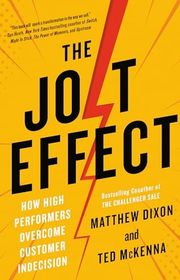
The JOLT Effect
For sellers whose interested buyers keep postponing a decision. Dixon and McKenna distinguish indecision from preference for the status quo, though applying the framework requires care to reduce anxiety without creating pressure.
What it's about
Matthew Dixon and Ted McKenna examine why customers hesitate to buy despite wanting change. Drawing on an analysis of sales conversations, they present an approach to recognizing indecision, limiting uncertainty, and helping buyers make decisions.

The Science of Selling
Proven Strategies to Make Your Pitch, Influence Decisions, and Close the Deal
For sellers interested in connecting their methods with behavioral research. Hoffeld translates research into practical questions and presentations, though a scientific label does not mean every sales recommendation has been independently tested in your setting.
What it's about
David Hoffeld connects sales practices with findings from psychology, neuroscience, and behavioral economics. He explains how buying decisions are influenced by emotions and other factors, then applies that research to asking questions, presenting value, and addressing objections.

The Greatest Salesman in the World
For readers who prefer an inspirational story to a technical sales manual. Mandino makes persistence and personal habits memorable, though the parable provides little guidance for discovery, qualification, or managing a complex buying process.
What it's about
Hafid, a young camel boy in Jerusalem, longs to become a successful merchant and seeks guidance from a master salesman. Og Mandino's fable uses his journey and ten ancient scrolls to explore habits, persistence, emotions, and fulfillment.
Also recommended by
3 people Matthew McConaughey recommended this book
Matthew McConaughey
"The most instrumental piece of literature and motivation I’ve ever read for me in my life." - Matthew McConaughey
Matthew McConaughey's recommendation of this book  Grant Cardone recommended this book
Grant Cardone
"My fav self help book." - Grant Cardone
Grant Cardone's recommendation of this book  Patrick Bet-David recommended this book
Patrick Bet-David
Patrick Bet-David recommended this book on his website.
Patrick Bet-David's recommendation of this book

How to Master the Art of Selling
For beginners who want a broad repertoire of traditional sales techniques to practice. Hopkins covers many stages of selling, though scripted language and closing methods need updating to suit informed buyers and authentic conversations.
What it's about
Tom Hopkins presents practical techniques for the selling process, from prospecting and first meetings to handling objections and closing deals. He covers questioning, telephone communication, referrals, and planning to help salespeople develop a more deliberate approach.
Also recommended by
1 person- Patrick Bet-David recommended this book
Patrick Bet-David
Patrick Bet-David recommended this book on his website.
Patrick Bet-David's recommendation of this book

For sellers building relationships over a long period rather than seeking quick transactions. Ferrazzi emphasizes generosity and ongoing contact, though the networking focus is less useful when your immediate challenge is sales discovery or qualification.
What it's about
Keith Ferrazzi and Tahl Raz outline an approach to professional relationships based on generosity and regular contact. Personal stories and practical advice cover making introductions, maintaining connections, and using digital tools to support mutually beneficial networks.
Also recommended by
1 person- Ramit Sethi recommended this book
Ramit Sethi
"All about networking the right way." - Ramit Sethi
Ramit Sethi's recommendation of this book

Combo Prospecting
The Powerful One-Two Punch That Fills Your Pipeline and Wins Sales
For business sellers combining phone outreach with digital research and social credibility. Hughes connects several prospecting channels into one approach, though platform tactics and executive-contact assumptions need adjusting to your buyers and current conditions.
What it's about
Tony Hughes combines traditional prospecting with social media and digital tools to reach executive buyers. He discusses relevant messaging, online credibility, referrals, and coordinated outreach designed to start conversations and build a pipeline of opportunities.

For sellers whose reactions to objections or discount requests undermine otherwise good technique. Stanley connects emotional regulation with practical selling situations, though developing those habits takes repeated practice rather than simply understanding the concepts.
What it's about
Colleen Stanley applies emotional intelligence to difficult selling situations, from prospecting to price negotiations. She explores impulse control, empathy, listening, and trust, with guidance for responding constructively when customers challenge a salesperson or push for discounts.

For salespeople whose working day disappears into email and competing demands. Konrath focuses on attention and practical work habits, though productivity changes alone cannot fix poor targeting or a weak customer proposition.
What it's about
A productivity guide for salespeople overwhelmed by growing demands and constant digital distractions. Jill Konrath offers ways to manage email, improve work habits, simplify sales processes, and reserve time for research, preparation, and customer conversations.
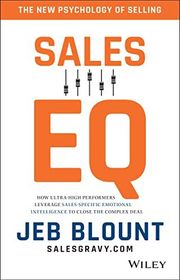
Sales EQ
For experienced sellers who want to improve self-control and interpersonal judgment during complex deals. Blount connects emotional skills with the sales process, though the broad framework overlaps with other consultative and relationship-focused approaches.
What it's about
Jeb Blount explores emotional intelligence in complex selling. He connects self-awareness, empathy, listening, and relationship management with prospecting, qualification, objections, and negotiation, explaining how emotional responses can shape both salesperson behavior and customer decisions.

Selling to Big Companies
For sellers trying to enter large accounts and earn attention from busy decision-makers. Konrath makes account targeting and initial value propositions concrete, though older contact tactics need adapting to current communication channels.
What it's about
A guide to approaching large corporate accounts and engaging busy decision-makers. Jill Konrath explains how to select target companies, develop a compelling value proposition, organize account-entry campaigns, and make initial sales meetings productive.
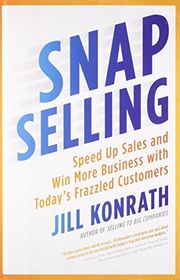
SNAP Selling
For sellers competing for the attention of overloaded buyers. Konrath offers a focused framework for simplifying communication and making value relevant, though the concise principles still depend on strong account research and substantive customer understanding.
What it's about
Jill Konrath examines how sellers can work with busy customers who resist complexity and unnecessary demands. Her SNAP framework emphasizes simplicity, value, alignment, and priorities in communications, meetings, and the decisions buyers face throughout a sale.

The Art of Closing the Sale
The Key to Making More Money Faster in the World of Professional Selling
For salespeople who want focused practice with objections and asking for a decision. The narrow attention to closing makes it easier to apply than a broad sales-system book, though some techniques reflect a more traditional approach.
What it's about
Brian Tracy focuses on the final stages of a sales conversation, including confidence, objections, and asking for a decision. He presents techniques and practice exercises intended to help salespeople approach closing with greater preparation and professional skill.

The New Strategic Selling
The Unique Sales System Proven Successful by the World's Best Companies
For sellers managing business deals with several influential decision makers. Its account-planning framework makes competing interests easier to examine than a conversation-only method, though the process can feel elaborate for simple, short sales.
What it's about
Robert Miller and Stephen Heiman present a system for managing complex sales involving several decision makers. The guide explains how to identify influential participants, recognize potential obstacles, assess competition, and pursue agreements that benefit both sides.

The Only Sales Guide You'll Ever Need
For salespeople who want to examine their working habits as well as customer conversations. The link between personal discipline and practical skills gives it a broader developmental focus, though experienced readers may find some principles familiar.
What it's about
Anthony Iannarino examines the mindset and skills needed for effective selling. He connects self-discipline, accountability, and resourcefulness with understanding customers' needs, telling useful stories, and creating value throughout the sales conversation and the resulting business relationship.

For sellers or coaches who interpret setbacks as evidence of fixed ability. Dweck offers a useful language for learning and improvement, though the book is broader than sales and does not replace deliberate skills practice.
What it's about
Carol Dweck explores how beliefs about ability influence learning, achievement, and responses to setbacks. Contrasting fixed and growth mindsets, she considers their implications for parenting, education, work, sports, and personal development.
Also recommended by
10 people Bill Gates recommended this book
Bill Gates
"Dweck and her research have helped my foundation colleagues and me understand more about the attitudes and habits that allow some students to persevere in school despite big challenges." - Bill Gates
Bill Gates's recommendation of this book - Tobi Lütke recommended this book
Tobi Lütke
Mentioned on "The Knowledge Project" podcast.
Tobi Lütke's recommendation of this book  Satya Nadella recommended this book
Satya Nadella
"Whatever change we’ve been able to achieve is because the cultural meme we picked was inspired by [this book]." - Satya Nadella
Satya Nadella's recommendation of this book  Tony Robbins recommended this book
Tony Robbins
Tony Robbins mentioned this book on "The Tim Ferriss Show" podcast.
Tony Robbins's recommendation of this book  Josh Waitzkin recommended this book
Josh Waitzkin
Josh Waitzkin recommended this book in the "Tools of Titans" book.
Josh Waitzkin's recommendation of this book  Ev Williams recommended this book
Ev Williams
"One of those ideas that is obvious only once you know it." - Ev Williams
Ev Williams's recommendation of this book +4
More recommendations
- Dustin Moskovitz
Dustin Moskovitz recommended this book on Twitter.
- Kathryn Minshew
"Read this book & love the idea!" - Kathryn Minshew
- Tom Bilyeu
Tom Bilyeu recommended this book on his website.
- Mark Manson
Mark Manson recommended this book on his website.
- Dustin Moskovitz

For readers who want to reconsider how generosity and service shape business relationships. The short parable makes its values easy to discuss, though it offers fewer concrete sales procedures than a practical handbook.
What it's about
Ambitious salesman Joe struggles to achieve the results he wants and seeks advice from a successful mentor named Pindar. This business parable introduces five principles of giving through encounters that challenge Joe's assumptions about success.
Also recommended by
1 person- Dave Ramsey recommended this book
Dave Ramsey
Recommended on Dave Ramsey's website.
Dave Ramsey's recommendation of this book

For sellers who want a repeatable structure without turning conversations into pressure. Bleeke keeps collaboration and buyer needs central, though the five-step framework needs adapting when several stakeholders shape a lengthy decision.
What it's about
Nancy Bleeke presents a five-step system for collaborative sales conversations centered on the buyer. Tools and examples cover preparation, discovering needs, adapting to different buyers, addressing objections, and helping both sides reach a useful decision.

For sellers trying to combine persuasive structure with empathy. Levitin offers an accessible bridge between customer motivations and practical conversations, though the universal framing needs adjusting for different cultures, products, and buying situations.
What it's about
Shari Levitin outlines ten principles for combining persuasive selling with authentic human connection. Her framework examines customer motivations, urgency, objections, and ways to align a sales process with how buyers make decisions.

For business sellers who want to contribute ideas rather than merely describe products. Schultz and Doerr connect insight with buyer collaboration, though their research-based framework still requires real subject knowledge to make the conversation useful.
What it's about
Drawing on their study of business-to-business purchases, Mike Schultz and John Doerr compare winning sellers with close competitors. Their three-level model emphasizes connecting with buyers, demonstrating value and acceptable risk, and collaborating through useful ideas.

For sellers who want to build trust through leadership behaviors rather than persuasion tricks. The buyer-centered perspective distinguishes it from closing manuals, though applying the principles requires judgment beyond the book's broad framework.
What it's about
James Kouzes, Barry Posner, and Deb Calvert apply leadership practices to selling. Drawing on buyers' experiences, they explain how salespeople can build trust, understand customers' priorities, and create relationships that encourage buyers to participate in decisions.

Swim with the Sharks Without Being Eaten Alive
Outsell, Outmanage, Outmotivate, and Outnegotiate Your Competition
For readers who enjoy practical business lessons conveyed through anecdotes. Mackay emphasizes knowing customers and sustaining relationships, though the wide-ranging advice is less systematic than a dedicated sales methodology and reflects its era.
What it's about
Harvey Mackay shares lessons in selling, negotiation, and management drawn from his business experience. His advice emphasizes knowing customers as people, maintaining relationships after a sale, setting goals, and handling competitors without sacrificing personal standards.

For quieter sellers who want a repeatable process instead of relying on spontaneous charm. The structured approach makes preparation feel more manageable than personality-driven advice, though the broad introvert framing will not describe every reader’s strengths.
What it's about
Matthew Pollard presents a structured sales process for people who consider themselves quiet or shy. He argues that selling can be learned through a repeatable system that uses introverts' strengths rather than requiring an outgoing personality.

For salespeople starting a new role or learning an unfamiliar offering. Konrath focuses on getting up to speed rather than mastering one selling technique, though the learning framework needs a concrete practice plan to become useful.
What it's about
Jill Konrath presents strategies for learning quickly when salespeople change jobs, face unfamiliar products, or encounter shifting markets. The book combines an adaptable mindset with a structured learning plan intended to build credibility and selling proficiency.

For sellers navigating high-value decisions with several stakeholders and substantial business risk. Thull's diagnostic approach emphasizes measurable value and decision quality, though the detailed process can be excessive for simpler purchases.
What it's about
Jeff Thull offers a method for navigating sales involving complex solutions and multiple decision-makers. He emphasizes guiding customer decisions, clarifying business problems, and establishing measurable value rather than relying on conventional presentations and price-based competition.
Sources
- 1
The Best Sales Books in 2026, According to Sales Leaders
leadforensics.com
- 2
The Best Sales Books, Ranked by an Operator
supered.io
- 3
23 Best Sales Books of All Time (Updated 2026)
emailanalytics.com
- 4
40 Sales Books That Will Change the Way You Sell in 2026
leadfeeder.com
- 5
40 Best Sales Books (of All Time) to Read, Grow, & Level Up Your Sales Skills in 2025
close.com
- 6
The Best Sales Books of All Time, Ranked by The Sales Industry
revenue.io
- 7
Sales Books
goodreads.com
- 8
22 Best Sales Books for Every Sales Professional
upjourney.com
- 9
Any Good Book Recommendations on Getting Good At Sales?
reddit.com


Edited by
Software engineer whose passion for tracking book recommendations from podcasts inspired the creation of MRB.
Lead investor at 3one4 Capital whose startup expertise and love for books helped shape MRB and its growth.
Comments
Did we miss something? Have feedback?
Help us improve this page by sharing your thoughts