
14 Best Effective Communication Books
The best effective communication books, ranked by how many expert sources recommend each one, with notes on who each suits, from listeners to team leaders.
Our take
Effective communication involves more than finding persuasive words. Sometimes the problem is listening closely enough to understand what someone needs. Sometimes it is expressing a boundary, preparing for disagreement, or explaining an idea to a wider audience. These books differ in whether they offer exercises, a structured method, professional examples, or stories that challenge assumptions about other people.
We Need to Talk begins with everyday conversational habits, while Just Listen concentrates on getting past defensiveness. Crucial Conversations and Difficult Conversations offer more developed approaches to tense exchanges. Boundaries uses an explicitly Christian framework for personal limits. For public messaging, Words That Work and Extraordinary PR, Ordinary Budget serve a different purpose from the relationship books. Start with the situation you need to handle, then choose a method you can practice rather than expecting a phrase or formula to work in every exchange.
14 books · 7 sources · Last updated
As an Amazon Associate, we earn from qualifying purchases (at no extra cost to you).
How to choose from this list
Skip to the full rankingIf you want better everyday conversations: We Need to Talk → Supercommunicators
If you're preparing for a tense exchange: Crucial Conversations → Difficult Conversations
If you want to express needs more clearly: Nonviolent Communication → Say What You Mean
If you struggle to get past defensiveness: Just Listen
If you communicate for an organization: Words That Work → Extraordinary PR, Ordinary Budget
If you want to develop professional relationships: How To Win Friends and Influence People → Never Eat Alone
The 14 books, ranked
Ranked by how many expert sources name each book. Ties go to the book more people recommend.

How To Win Friends and Influence People
For beginners who want memorable prompts for attention, appreciation, and cooperation. Carnegie makes everyday relationship habits easy to recognize, though the older examples and influence-oriented framing need care to avoid interactions becoming merely tactical.
What it's about
Carnegie presents practical guidance for building relationships, communicating effectively, and influencing others. Stories and principles explore social confidence, leadership, and cooperation, offering approaches readers can apply to interactions in their personal lives and at work.
Also recommended by
18 people Warren Buffett recommended this book
Warren Buffett
"In my office, you will not see the degree I have from the University of Nebraska, or the master’s degree I have from Columbia University, but you’ll see the certificate I got from the Dale Carnegie course." - Warren Buffett
Warren Buffett's recommendation of this book  Scott Adams recommended this book
Scott Adams
One of the books on Scott Adams' "Persuasion Reading List."
Scott Adams's recommendation of this book  Dave Ramsey recommended this book
Dave Ramsey
Recommended on Dave Ramsey's website.
Dave Ramsey's recommendation of this book  Paul Graham recommended this book
Paul Graham
"The one book we encourage startup founders to read. [...] It's critically important for anyone in business." - Paul Graham
Paul Graham's recommendation of this book  Derek Sivers recommended this book
Derek Sivers
Derek Sivers mentioned this book on "The Tim Ferriss Show" podcast.
Derek Sivers's recommendation of this book  Dustin Moskovitz recommended this book
Dustin Moskovitz
"Seek to be understood." - Dustin Moskovitz
Dustin Moskovitz's recommendation of this book +12
More recommendations
- Ken Block
"One of the first books that really helped me achieve my management style and what’s helped me really be successful." - Ken Block
- DJ Vlad
Most Recommended Books reached out to DJ Vlad directly.
- Strauss Zelnick
"Archaic references and overweening title to the side, it’s actually a great guide to leadership and salesmanship." - Strauss Zelnick
- Daymond John
"I love all the Dale Carnegie books." - Daymond John
- Shay Carl
"A staple that I have listened to three or four times." - Shay Carl
- Tim Draper
"[One of the books] that are recommended or required at Draper University." - Tim Draper
- Sahil Lavingia
Sahil Lavingia recommended this book on Notion.
- Barbara Corcoran
"A must read for anyone in business." - Barbara Corcoran
- Alex Hormozi
Alex Hormozi recommended this book on Instagram.
- Michael Hyatt
Michael Hyatt recommended this book on his website.
- Ben Greenfield
Most Recommended Books reached out to Ben Greenfield directly.
- Patrick Bet-David
Patrick Bet-David recommended this book on his website.
- Ken Block

For readers who avoid conversations because disagreement could have real consequences. The framework connects emotional safety with clear speaking and action, though using it naturally takes rehearsal and cannot remove unequal power or unwillingness to engage.
What it's about
Kerry Patterson and his coauthors offer tools for discussions where stakes are high, opinions differ, and emotions intensify. Examples explain how to create safety, listen through conflict, express disagreement, and turn difficult conversations into agreed action.
Also recommended by
3 people Max Levchin recommended this book
Max Levchin
"A now-venerable guide to having tough conversations in a way that engages the debaters." - Max Levchin
Max Levchin's recommendation of this book  Stewart Butterfield recommended this book
Stewart Butterfield
"Most useful [book] I've ever read on either leadership or management [technique]." - Stewart Butterfield
Stewart Butterfield's recommendation of this book  Patrick Bet-David recommended this book
Patrick Bet-David
Patrick Bet-David recommended this book on his website.
Patrick Bet-David's recommendation of this book

For readers who want to understand the competing stories beneath a difficult exchange. Douglas Stone, Bruce Patton, and Sheila Heen give preparation and perspective substantial space, though the reflective method takes more effort than memorizing conversational scripts.
What it's about
Douglas Stone, Bruce Patton, and Sheila Heen offer a method for approaching emotionally charged conversations. Examples explain how to prepare, reduce defensiveness, understand differing perspectives, and keep difficult discussions constructive.

For readers whose conversations stall because the other person feels unheard or defensive. Goulston gives listening an active role in building connection, though the broad promise in the subtitle exceeds what any technique can guarantee.
What it's about
Mark Goulston explores how to reach people who resist, withdraw, or react with anger. Drawing on his psychiatric background, he offers listening and persuasion techniques that begin with making another person feel understood.
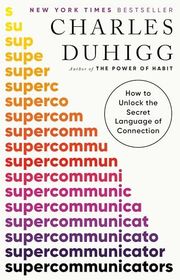
For readers who prefer reported stories to a workbook when learning about conversation. Duhigg connects practical, emotional, and identity-related exchanges, though the accessible framework simplifies complex interactions and still needs deliberate practice outside the book.
What it's about
Duhigg explores why some conversations create understanding while others fail, distinguishing practical, emotional and social exchanges. Stories from workplaces, personal relationships and negotiation illustrate how recognizing these differences can help people listen, express themselves and form stronger connections.

Nonviolent Communication
A Language of Life: Life-Changing Tools for Healthy Relationships
For readers who want a clear structure for separating observations, feelings, needs, and requests. Rosenberg makes compassionate expression concrete, though the language can sound formulaic until practiced flexibly and cannot guarantee cooperation from another person.
What it's about
Marshall Rosenberg introduces his Nonviolent Communication approach through stories, examples, and role plays. He presents communication practices intended to replace criticism and blame with honest expression and compassionate listening in relationships and conflicts.
Also recommended by
4 people Esther Perel recommended this book
Esther Perel
"I think that this book is a classic for anyone who is thinking relationships." - Esther Perel
Esther Perel's recommendation of this book  Neil Strauss recommended this book
Neil Strauss
"The central idea is that, unbeknownst to us, there’s a lot of violence in the way we communicate with others—and with ourselves." - Neil Strauss
Neil Strauss's recommendation of this book  Satya Nadella recommended this book
Satya Nadella
"When CEO Satya Nadella took over Microsoft, he started defusing its toxic culture by handing each of his execs [this book]." - Business Insider
Satya Nadella's recommendation of this book - Dustin Moskovitz recommended this book
Dustin Moskovitz
"Seek first to understand." - Dustin Moskovitz
Dustin Moskovitz's recommendation of this book
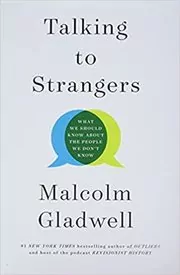
For readers who want to question their confidence in interpreting unfamiliar people. Gladwell uses reported cases to expose mistaken assumptions, though the selective storytelling offers reflection rather than a step-by-step conversation practice.
What it's about
Gladwell examines why we are so bad at reading people we do not know, using cases from policing, spying, fraud, and public scandal. It is an idea-driven book about trust, misjudgment, and the cost of false confidence.
Also recommended by
4 people Fareed Zakaria recommended this book
Fareed Zakaria
"Fascinating." - Fareed Zakaria
Fareed Zakaria's recommendation of this book  Elizabeth Warren recommended this book
Elizabeth Warren
"About how our perceptions [...] are based on us, and not on reality." - Elizabeth Warren
Elizabeth Warren's recommendation of this book  Melinda Gates recommended this book
Melinda Gates
Melinda Gates recommended this book on Twitter.
Melinda Gates's recommendation of this book  Mark Manson recommended this book
Mark Manson
Mark Manson recommended this book on his website.
Mark Manson's recommendation of this book

For readers shaping messages for audiences rather than only improving one-to-one dialogue. Luntz focuses on how language is received, though the political and commercial examples favor persuasion more than mutual understanding.
What it's about
Frank Luntz explores how audiences interpret language, drawing on research and examples from politics, advertising, and business. He examines why some phrases connect while others fail, emphasizing the listener's response when shaping speeches, slogans, presentations, and everyday communication.
Also recommended by
2 people Tristan Harris recommended this book
Tristan Harris
Tristan Harris mentioned this book on "The Tim Ferriss Show" podcast.
Tristan Harris's recommendation of this book  Matt Mullenweg recommended this book
Matt Mullenweg
"[The author's] the linguistic head of the Republican Party." - Matt Mullenweg
Matt Mullenweg's recommendation of this book

For readers who want to maintain professional relationships beyond occasional requests for help. Keith Ferrazzi and Tahl Raz emphasize generosity and regular contact, though the energetic networking style can feel demanding or transactional without careful adaptation.
What it's about
Keith Ferrazzi and Tahl Raz outline an approach to professional relationships based on generosity and regular contact. Personal stories and practical advice cover making introductions, maintaining connections, and using digital tools to support mutually beneficial networks.
Also recommended by
1 person Ramit Sethi recommended this book
Ramit Sethi
"All about networking the right way." - Ramit Sethi
Ramit Sethi's recommendation of this book

For readers who want accessible reminders for staying attentive and curious in conversation. Headlee keeps everyday habits central, though the concise approach offers less detailed preparation for entrenched conflict than the specialist difficult-conversation books.
What it's about
Celeste Headlee draws on her experience as a radio host to explain how to have more productive conversations. Practical guidance emphasizes attentive listening, curiosity, and habits that help people stay engaged when disagreement or distraction gets in the way.

For readers who struggle to separate responsibility from obligation in relationships. Henry Cloud and John Townsend connect limits with practical communication, though the Christian framework is explicit and may not match every reader’s beliefs.
What it's about
Henry Cloud and John Townsend explain personal limits through a Christian framework. They explore how to define responsibility, communicate needs, and say no in relationships with family, friends, coworkers, and oneself without abandoning care for others.
Also recommended by
2 people- Dave Ramsey recommended this book
Dave Ramsey
Recommended on Dave Ramsey's website.
Dave Ramsey's recommendation of this book  Greg McKeown recommended this book
Greg McKeown
"I really like [this book]." - Greg McKeown
Greg McKeown's recommendation of this book

For small organizations and advocates who need to communicate publicly with limited resources. Farmer connects credibility and persistence with practical PR choices, though the organizational messaging focus offers less help with intimate or everyday conversation.
What it's about
Jennifer Farmer offers public relations strategies for organizations with limited resources. Her approach emphasizes credibility, creativity, responsiveness, and persistence, helping mission-driven groups build relationships, attract attention, and communicate their work without a large promotional budget.

Leadership Presence
For leaders who want to work on how they come across as well as what they say. Kathy Lubar and Belle Linda Halpern draw on performance exercises, though the physical practice requires more participation than reading alone.
What it's about
Kathy Lubar and Belle Linda Halpern draw on theatrical training to explain leadership presence. They connect confidence, flexibility, relationships, and expressive communication, offering exercises for presenting ideas and conveying personal values in professional settings.

For readers who want communication practice connected to awareness and emotional steadiness. Sofer combines listening with mindfulness and needs-based expression, though the contemplative exercises require repeated practice and may feel slower than a script-focused guide.
What it's about
Oren Jay Sofer combines mindfulness, awareness of the body, and Nonviolent Communication to explore clearer conversations. Practices and examples focus on listening closely, expressing needs, staying present, and approaching difficult exchanges with greater confidence and less defensiveness.
Sources
- 1
13 Best Communication Books for Stronger Social Skills & Relationships
lifehack.org
- 2
11 Best Books on Conversation Skills (The Complete Guide)
scienceofpeople.com
- 3
Communication Books
goodreads.com
- 4
Best Communication Books (2026): 15 Ranked by Data
entrepedia.co
- 5
15 Best Communication Books to Read for Work
teambuilding.com
- 6
Looking for science based communication books from credible authors: advice needed pls!
reddit.com
- 7
9 must-read books to make you a stronger communicator
enterprisersproject.com


Edited by
Software engineer whose passion for tracking book recommendations from podcasts inspired the creation of MRB.
Lead investor at 3one4 Capital whose startup expertise and love for books helped shape MRB and its growth.
Comments
Spotted a missing book, a wrong order or a mistake? Tell us and we'll fix this page.
We're a reading guide, not the author or publisher, so we can't send books or pass on messages.