
12 Best Knowledge Books
The best books for expanding your knowledge, ranked by expert source recommendations, with notes on who each suits across science, history, psychology and ideas.
Our take
Expanding your knowledge can mean learning how the universe works, understanding human history, or noticing weaknesses in your own reasoning. These books take several routes. Some build a broad picture across centuries or scientific fields. Others concentrate on a question about attention, behavior, judgment, or how people find purpose. They suit curious general readers, but they ask for different kinds of effort.
Sapiens offers a sweeping historical argument, while A Short History of Nearly Everything introduces discoveries across the sciences. Cosmos connects astronomy with human curiosity, and A Brief History of Time takes a closer look at cosmology. For evaluating what you learn, Thinking, Fast and Slow examines judgment, Factfulness tests assumptions about global trends, and The Demon-Haunted World explores evidence and skepticism. Start with the subject that raises the most questions for you, then pair a broad introduction with a book that examines its claims more closely.
12 books · 7 sources · Last updated
As an Amazon Associate, we earn from qualifying purchases (at no extra cost to you).
How to choose from this list
Skip to the full rankingIf you want a broad science introduction: A Short History of Nearly Everything → Cosmos
If you want to explore human history: Sapiens
If you want to examine your judgments: Thinking, Fast and Slow → Factfulness
If you want to assess scientific claims: The Demon-Haunted World
If you're ready for cosmology: A Brief History of Time
If you want philosophical reflection: Man's Search for Meaning → Meditations
The 12 books, ranked
Ranked by how many expert sources name each book. Ties go to the book more people recommend.
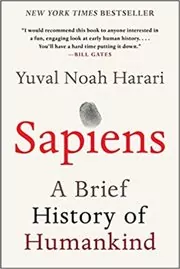
For curious beginners who want a broad narrative connecting human history with social institutions. Harari links distant periods more readily than a specialist study, though the sweeping explanations invite debate and need checking against narrower histories.
What it's about
Harari condenses 70,000 years of human history into a single narrative, tracing how Homo sapiens rose from apes on the savannah to planet-shaping forces. He focuses on shared myths, empires, money, religion and science, and asks whether all this progress made us happier.
Also recommended by
32 people Joe Rogan recommended this book
Joe Rogan
"It really puts in perspective how bizarre human beings are. It’s an awesome overview of our species." - Joe Rogan
Joe Rogan's recommendation of this book 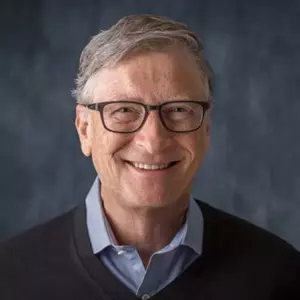 Bill Gates recommended this book
Bill Gates
"I would recommend this book to anyone interested in a fun, engaging look at early human history." - Bill Gates
Bill Gates's recommendation of this book  Naval Ravikant recommended this book
Naval Ravikant
"Best book I've read in [2015]." - Naval Ravikant
Naval Ravikant's recommendation of this book  Lex Fridman recommended this book
Lex Fridman
"Basically one of the things we've created here is we've imagined ideas that we all share." - Lex Fridman
Lex Fridman's recommendation of this book  Mark Zuckerberg recommended this book
Mark Zuckerberg
"A big history narrative of human civilization." - Mark Zuckerberg
Mark Zuckerberg's recommendation of this book 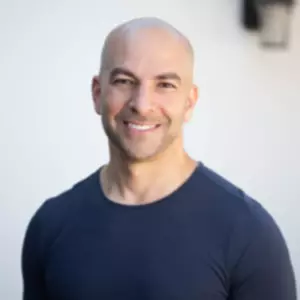 Peter Attia recommended this book
Peter Attia
One of Peter Attia's answers to "any books you feel would make your reading list?"
Peter Attia's recommendation of this book +26
More recommendations
- Ashton Kutcher
"The brainy book I seem to be sharing or talking about the most lately." - Ashton Kutcher
- Whitney Cummings
"A great book about [how] we’ve evolved and why we have anxiety." - Whitney Cummings
- Richard Branson
"I just love the style of his writing." - Richard Branson
- Ray Dalio
Ray Dalio mentioned this book on "The Tim Ferriss Show" podcast.
- Vinod Khosla
"A previous favorite." - Vinod Khosla
- James Cameron
"It explains human behavior and why we are the way we are in human civilization from soup to nuts. And I’ve read it now a couple of times. It’s a pretty astonishing book." - James Cameron
- Demis Hassabis
"There's not many times where I read a book and come out with 20 new ideas I hadn't thought about before, and [this book] made me think like that." - Demis Hassabis
- Keith Rabois
Keith Rabois recommended this book on a Medium blog post.
- Daniel Ek
"Both sobering and conservatively optimistic in equal measure." - Daniel Ek
- Reid Hoffman
"A grand theory of humanity." - Reid Hoffman
- Sam Kass
Sam Kass recommended this book in the "Tools of Titans" book.
- Sebastian Junger
"I’m going to give [this book] over and over again to everyone I know." - Sebastian Junger
- Kishore Biyani
"Fascinating because of its multi-disciplinary approach towards understanding human society, our behaviour and our future." - Kishore Biyani
- Ryan Shea
One of Ryan Shea's 4 answers to "what is the book (or books) you’ve given most as a gift?"
- Melinda Gates
Melinda Gates recommended this book on Likewise.com.
- Bill Gurley
"I really enjoyed [this book]." - Bill Gurley
- Karlie Kloss
"An amazing book on the beginning of humanity." - Karlie Kloss
- Anthony Pompliano
"[One of the] best books I read in 2017." - Anthony Pompliano
- Changpeng Zhao
"Gives me a greater perspective about how humans emerged and why we behave the way we do." - Changpeng Zhao
- PewDiePie
"Tells the major revolutions of human history." - PewDiePie
- Patrick O'Shaughnessy
"Provides a concise history of humankind and outlines why we have the psychology we do today." - Patrick O'Shaughnessy
- Chris Evans
"Truly mind-blowing. It’s changed the way I look at almost everything. I can’t endorse it enough." - Chris Evans
- Simon Mayo
"Love this book still." - Simon Mayo
- Penn Jillette
Penn Jillette mentioned this book in a New York Times interview.
- Mark Manson
Mark Manson recommended this book on his website.
- James Clear
"[One of] the 10 best nonfiction books of all-time." - James Clear
- Ashton Kutcher

Thinking, Fast and Slow
For readers who want to understand errors in judgment rather than collect facts. Kahneman connects research with recognizable choices, though it is demanding in places and some findings need reading alongside later psychological research.
What it's about
Kahneman explores two modes of thought: quick, intuitive responses and slower, deliberate reasoning. Drawing on psychological research, he examines how biases and impressions shape decisions, and when intuition helps or misleads in personal and professional life.
Also recommended by
19 people- Bill Gates recommended this book
Bill Gates
List of books Bill Gates read in 2012.
Bill Gates's recommendation of this book  Ray Dalio recommended this book
Ray Dalio
Ray Dalio mentioned this book in his book, "Principles."
Ray Dalio's recommendation of this book  Scott Adams recommended this book
Scott Adams
One of the books on Scott Adams' "Persuasion Reading List."
Scott Adams's recommendation of this book - Naval Ravikant recommended this book
Naval Ravikant
"Fine book but it didn’t need to be an entire book. A blog post would have gotten the point across." - Naval Ravikant
Naval Ravikant's recommendation of this book  Ev Williams recommended this book
Ev Williams
"I love surprising scientific findings, as well as information about how our brains work. [This book] is a treasure trove of both." - Ev Williams
Ev Williams's recommendation of this book  Marc Andreessen recommended this book
Marc Andreessen
"Captivating dive into human decision making, marred by inclusion of several/many? psychology studies that fail to replicate. Will stand as a cautionary tale?" - Marc Andreessen
Marc Andreessen's recommendation of this book +13
More recommendations
- Stewart Brand
Stewart Brand recommended this book on his "Selected Books for the Manual for Civilization" blog post.
- Bryan Johnson
"I started reading [this book] and I became increasingly convinced of my own fickleness and inability to actually act rationally in life." - Bryan Johnson
- Derek Sivers
"If you liked 'Predictably Irrational' or 'Stumbling on Happiness' or any of those pop-psychology books, well, this is the Godfather of all of their work." - Derek Sivers
- Sam Altman
One of Sam Altman's answers to "What are some of the best books you recommend for a young startup founder?"
- Ron Conway
"Covers all three phases of [the author's] career: his early days working oncognitive bias, his work on prospect theory, and his later work on happiness." - Ron Conway
- Jason Fried
"I enjoyed [this book]. Fascinating." - Jason Fried
- Nassim Taleb
"A landmark book in social thought, in the same league as The Wealth of Nations by Adam Smith and The Interpretation of Dreams by Sigmund Freud." - Nassim Taleb
- Sahil Lavingia
Sahil Lavingia recommended this book on Notion.
- Mark Manson
Mark Manson recommended this book on his website.
- Jay Shetty
"[One] of my favourite books." - Jay Shetty
- Michiko Kakutani
"Has become essential reading in many baseball front offices and among coaching staffs." - Michiko Kakutani
- Preston Pysh
"An incredible book!" - Preston Pysh
- Ben Greenfield
Most Recommended Books reached out to Ben Greenfield directly.
- Stewart Brand

For readers interested in how repeated behavior shapes daily life and organizations. Duhigg's reporting makes habit research accessible through stories, though its memorable framework simplifies processes that can vary substantially between people and situations.
What it's about
Charles Duhigg examines how habits form and change through scientific research and stories about individuals, companies, and social movements. He explains how recurring patterns influence behavior and how identifying them can help people reshape routines and organizations improve their practices.
Also recommended by
9 people- Ray Dalio recommended this book
Ray Dalio
"Fantastic. I got [this book] and I gave it to everyone in my company." - Ray Dalio
Ray Dalio's recommendation of this book - Scott Adams recommended this book
Scott Adams
One of the books on Scott Adams' "Persuasion Reading List."
Scott Adams's recommendation of this book  Tim Ferriss recommended this book
Tim Ferriss
"A very good book." - Tim Ferriss
Tim Ferriss's recommendation of this book - Naval Ravikant recommended this book
Naval Ravikant
"Interesting, not because of its content necessarily, but because it’s good for me to always keep on top of mind how powerful my habits are." - Naval Ravikant
Naval Ravikant's recommendation of this book  Kelly Starrett recommended this book
Kelly Starrett
Kelly Starrett recommended this book in the "Tools of Titans" book.
Kelly Starrett's recommendation of this book  Mr. Money Mustache recommended this book
Mr. Money Mustache
Mr. Money Mustache recommended this book on his blog.
Mr. Money Mustache's recommendation of this book +3
More recommendations
- Max Levchin
"Compiles a bunch of great academic neuroscience and applied psychology research on habit formation." - Max Levchin
- Danny Miranda
"Great writing, interesting stories, and incredible insights on how to control your habits." - Danny Miranda
- Patrick Bet-David
Patrick Bet-David recommended this book on his website.
- Max Levchin

Man's Search for Meaning
For readers exploring purpose through lived experience rather than a survey of facts. Frankl connects memoir with a psychological perspective more personally than the other books here, though the concentration-camp account is emotionally difficult.
What it's about
Viktor Frankl combines his account of imprisonment in Nazi concentration camps with an introduction to logotherapy. He explores the search for meaning, arguing that purpose and one's response to suffering can remain significant even under extreme circumstances.
Also recommended by
36 people Jordan Peterson recommended this book
Jordan Peterson
Recommended on Jordan Peterson's website.
Jordan Peterson's recommendation of this book  Jocko Willink recommended this book
Jocko Willink
Jocko Willink covered this book in "Jocko Podcast" Ep. 78
Jocko Willink's recommendation of this book  Esther Perel recommended this book
Esther Perel
"The book I’ve probably gifted the most is [this book], since I’m 16." - Esther Perel
Esther Perel's recommendation of this book  Emma Watson recommended this book
Emma Watson
"Loved it. Really loved it." - Emma Watson
Emma Watson's recommendation of this book - Naval Ravikant recommended this book
Naval Ravikant
"Wow it's dark." - Naval Ravikant
Naval Ravikant's recommendation of this book  David Blaine recommended this book
David Blaine
"One of my favorite books." - David Blaine
David Blaine's recommendation of this book +30
More recommendations
- Terry Crews
"Incredible." - Terry Crews
- Jimmy Fallon
"Talks about the meaning of life, and I believe you come out a better person from reading it." - Jimmy Fallon
- Tony Robbins
"Taught me that if you change the meaning, you change everything." - Tony Robbins
- Simon Sinek
"Single most important book you can read." - Simon Sinek
- Michael Gervais
"Outlines methods to discover deep meaning and purpose in life." - Michael Gervais
- Daniel Pink
"A hugely important book for me." - Daniel Pink
- Ev Williams
On the "books read" section of Ev Williams' GoodReads profile.
- Bryan Johnson
"His basic point is no matter the conditions we surround ourselves in, we can author our life." - Bryan Johnson
- Dustin Moskovitz
Dustin Moskovitz recommended this book on Twitter.
- Sam Altman
This book was on Sam Altman's bookshelf.
- Chelsea Handler
"One of those beautiful accounts of a terrible time in our history. His calm and sagaciousness, while witnessing one horror after another played out during his time in three separate concentration camps, is awe inspiring." - Chelsea Handler
- Ryan Holiday
"Looks at how we find purpose by dedicating ourselves to a cause, learning to love and finding a meaning to our suffering." - Ryan Holiday
- Maria Popova
"A meditation on what the gruesome experience of Auschwitz taught [the author] about the primary purpose of life: the quest for meaning, which sustained those who survived." - Maria Popova
- Aniela Gregorek
"A book I have gifted to many people because it changed the way I think about human suffering and grace in life." - Aniela Gregorek
- Fedor Holz
"[From it] I interpreted that we cannot avoid suffering, but we can choose how to cope with it, and that having meaning in our life is essential." - Fedor Holz
- Turia Pitt
"[If people are] doing a bit of soul searching, hands down [I give them this book]." - Turia Pitt
- Chip Conley
"If I were to take the meaning of [this book], and turn it into an equation, it would be despair equals suffering minus meaning." - Chip Conley
- Dave Elitch
Dave Elitch mentioned this book on "The Tim Ferriss Show" podcast.
- PewDiePie
"A great tool to help people. [...] In case something really bad happens, I feel like, from reading this book, I'm better equipped to handle it." - PewDiePie
- Shane Parrish
"As hard as you think your life is, it pales in comparison to Auschwitz." - Shane Parrish
- Phil Jackson
"An important book for me." - Phil Jackson
- Tom Bilyeu
Tom Bilyeu recommended this book on his website.
- Lex Fridman
"I reread [this book] quite often." - Lex Fridman
- Mark Manson
Mark Manson recommended this book on his website.
- Alastair Humphreys
"Slim but packed with wisdom that I often come back to. I really recommend you read it." - Alastair Humphreys
- Steve Kerr
"Incredibly inspiring." - Steve Kerr
- Robin Black
"One of the great books ever written exists because of one of the worst times in human history. From suffering comes beauty." - Robin Black
- Jim Kwik
"Illustrates that it’s not our circumstances but the decisions we make that diminish or develop us." - Jim Kwik
- Michael Hyatt
Michael Hyatt recommended this book on his website.
- Patrick Bet-David
Patrick Bet-David recommended this book on his website.
- Terry Crews

Meditations
For readers who want to examine their conduct through short philosophical reflections. The personal format invites repeated reading more easily than a continuous argument, though its repetition and ancient assumptions benefit from historical context.
What it's about
Marcus Aurelius's personal reflections explore virtue, rational judgment, leadership, and responses to adversity. Written as exercises for his own conduct, these notes consider how to live responsibly, understand human behavior, and meet circumstances beyond one's control.
Also recommended by
19 people- Naval Ravikant recommended this book
Naval Ravikant
"One of my favorite books of all time." - Naval Ravikant
Naval Ravikant's recommendation of this book  Tobi Lütke recommended this book
Tobi Lütke
"My most read book." - Tobi Lütke
Tobi Lütke's recommendation of this book  Jack Dorsey recommended this book
Jack Dorsey
"Finished reading." - Jack Dorsey
Jack Dorsey's recommendation of this book  Anna Kendrick recommended this book
Anna Kendrick
"I kind of thrive on stress, so I’m almost embarrassed by how comforting I find this book." - Anna Kendrick
Anna Kendrick's recommendation of this book  Sam Altman recommended this book
Sam Altman
"Great read." - Sam Altman
Sam Altman's recommendation of this book  Neil Strauss recommended this book
Neil Strauss
Neil Strauss recommended this book in the "Tools of Titans" book.
Neil Strauss's recommendation of this book +13
More recommendations
- Arianna Huffington
"I find [this book] so inspirational and instructive, it lives on my nightstand." - Arianna Huffington
- Stewart Brand
Stewart Brand recommended this book on his "Selected Books for the Manual for Civilization" blog post.
- Chip Conley
"I have given [this book] away to a number of people." - Chip Conley
- Ryan Holiday
"The private thoughts of the most powerful man in the world, admonishing himself on how to be better, more just, more immune to temptation, wiser." - Ryan Holiday
- Adam Robinson
"Someone would get more benefit from reading ten books multiple times. Like [this book]." - Adam Robinson
- Austen Allred
Austen Allred recommended this book on his website.
- Shane Parrish
"Really helped foster my interest in philosophy." - Shane Parrish
- Joe Rogan
"It's really wild when you think about how long that guy lived and how applicable some of his thoughts are today." - Joe Rogan
- Lex Fridman
Lex Fridman mentioned this book on Instagram.
- Mark Manson
Mark Manson recommended this book on his website.
- Ankur Warikoo
"Incredible book." - Ankur Warikoo
- James Clear
"[One of] the 10 best nonfiction books of all-time." - James Clear
- Patrick Bet-David
Patrick Bet-David recommended this book on his website.
- Arianna Huffington

A Short History of Nearly Everything
For readers who want an approachable tour of science and its discoveries. Bryson's stories make a wider range of subjects accessible than a single-topic introduction, though the original account needs supplementing with more recent scientific work.
What it's about
An ambitious and accessible guide to the history of science. Bryson travels the world to interview archaeologists, geologists, and physicists, explaining how we went from the Big Bang to the rise of civilization in plain English.
Also recommended by
6 people Warren Buffett recommended this book
Warren Buffett
"It’s very impressive [to] read about people pondering how to figure out the weight of the Earth or something in the 18th century." - Warren Buffett
Warren Buffett's recommendation of this book  Shah Rukh Khan recommended this book
Shah Rukh Khan
"I do a read [this book] often." - Shah Rukh Khan
Shah Rukh Khan's recommendation of this book  Stewart Brand recommended this book
Stewart Brand
Stewart Brand recommended this book on his "Selected Books for the Manual for Civilization" blog post.
Stewart Brand's recommendation of this book  Amanda Palmer recommended this book
Amanda Palmer
Amanda Palmer mentioned this book in the "Tools of Titans" book.
Amanda Palmer's recommendation of this book  Jamie Dimon recommended this book
Jamie Dimon
On Jamie Dimon's list of favorite books.
Jamie Dimon's recommendation of this book  Dominic D'Agostino recommended this book
Dominic D'Agostino
"Information-dense and manages to be humorous and super entertaining." - Dominic D'Agostino
Dominic D'Agostino's recommendation of this book
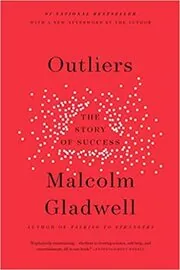
For readers questioning explanations of achievement based only on talent or effort. Gladwell makes opportunity and context vivid through stories, though his selective examples offer a starting point for inquiry rather than a complete theory of success.
What it's about
Gladwell looks past talent alone and asks how timing, family, culture, luck, and opportunity shape success. From hockey players to software billionaires and the Beatles, he makes the case that achievement is never as individual as it seems.
Also recommended by
11 people- Bill Gates recommended this book
Bill Gates
"Makes a lot of great points." - Bill Gates
Bill Gates's recommendation of this book  Charlie Munger recommended this book
Charlie Munger
"Perfectly marvelous book." - Charlie Munger
Charlie Munger's recommendation of this book  DJ Vlad recommended this book
DJ Vlad
Most Recommended Books reached out to DJ Vlad directly.
DJ Vlad's recommendation of this book  Dwayne Johnson recommended this book
Dwayne Johnson
Dwayne Johnson said he was reading this book in an interview with Andy Warhol.
Dwayne Johnson's recommendation of this book  James Altucher recommended this book
James Altucher
"I really love [this book]." - James Altucher
James Altucher's recommendation of this book - Joe Rogan recommended this book
Joe Rogan
"It's fucking great." - Joe Rogan
Joe Rogan's recommendation of this book +5
More recommendations
- Shaun White
"I started applying [a lesson from this book] to my own life." - Shaun White
- Will Smith
"Talks about the concept of 10,000 hours." - Will Smith
- Jay-Z
"About the principles of timing and repetition—about preparing yourself for luck, really." - Jay-Z
- Carlos Slim
"Must [read]." - Carlos Slim
- Patrick Bet-David
Patrick Bet-David recommended this book on his website.
- Shaun White

For readers interested in attention, challenge, and satisfaction in everyday activities. Its sustained account of deep engagement offers more focus than a broad self-improvement survey, though the research discussion can feel abstract without personal examples.
What it's about
Psychologist Mihaly Csikszentmihalyi explores flow, the state of deep absorption in an activity that challenges one's abilities. Drawing on research into optimal experience, he examines how attention, clear goals, and meaningful engagement can contribute to satisfaction in daily life.
Also recommended by
3 people Kishore Biyani recommended this book
Kishore Biyani
"Taught me one of the best values in life — achieving a state of flow." - Kishore Biyani
Kishore Biyani's recommendation of this book  Raoul Pal recommended this book
Raoul Pal
"A great book." - Raoul Pal
Raoul Pal's recommendation of this book  Pavel Durov recommended this book
Pavel Durov
Pavel Durov recommended this book in an interview.
Pavel Durov's recommendation of this book
Cosmos
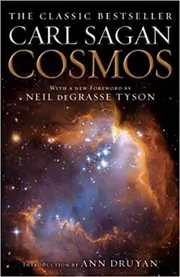
For beginners who want science connected with history and human curiosity. Sagan gives astronomy a broader cultural setting than a technical introduction, though the scientific details reflect an earlier era and require updating in places.
What it's about
Cosmos takes readers from the birth of stars and planets to the rise of life on Earth. Sagan blends astronomy, history, and philosophy into an accessible story about how we came to understand the universe and our small place within it.
Also recommended by
2 people Richard Branson recommended this book
Richard Branson
Richard Branson recommended this book on his "70 must-read books" blog post.
Richard Branson's recommendation of this book  Bill Nye recommended this book
Bill Nye
"The story of my other hero, Carl Sagan. The other guy who inspired me to do what I do now." - Bill Nye
Bill Nye's recommendation of this book

A Brief History of Time
For readers ready to concentrate on cosmology after a broad science introduction. Hawking develops questions about space and time more closely than a general survey, though avoiding equations does not make every concept easy to follow.
What it's about
Stephen Hawking introduces questions about the universe's beginning, its possible fate, and the nature of time. He explains black holes, relativity, and quantum ideas for general readers, connecting familiar physical concepts with the puzzles of cosmology.
Also recommended by
2 people- Richard Branson recommended this book
Richard Branson
Richard Branson recommended this book on his "70 must-read books" blog post.
Richard Branson's recommendation of this book  James Clear recommended this book
James Clear
"[One of] the 10 best nonfiction books of all-time." - James Clear
James Clear's recommendation of this book
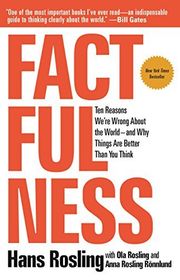
Factfulness
For readers who want to question their impressions of global development. Its data-based examples make common misreadings more tangible than an abstract reasoning guide, though the statistics describe their period and need checking against current figures.
What it's about
Hans Rosling, Ola Rosling, and Anna Rosling Rönnlund examine mistaken assumptions about global health, income, population, and development. They describe habits of thought that distort understanding and use data to explain a more differentiated picture of the world.
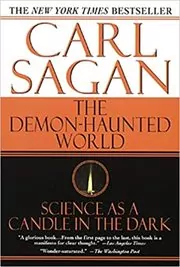
For readers who want tools for assessing extraordinary claims. Sagan connects skepticism with scientific curiosity more directly than the broad histories here, though the lengthy discussions of particular controversies reflect the period in which he wrote.
What it's about
The Demon-Haunted World is Sagan’s plainspoken defense of science and critical thinking. Using examples from UFO claims to faith healing, he shows how skepticism and a simple “baloney detection kit” can help us tell the difference between evidence and comforting illusion.
Sources
- 1
100 Best Knowledge Books of All Time (Updated for 2025)
shortform.com
- 2
28 Great Books That Will Expand Your Knowledge and Open Your Mind
calvinrosser.com
- 3
22 Books That Expand Your Mind and Change The Way You Live
observer.com
- 4
Knowledge Books
goodreads.com
- 5
best books for general knowledge?
reddit.com
- 6
You Need to Read These 10 Mind-Expanding Books
inc.com
- 7
"General knowledge" books
reddit.com






Edited by
Software engineer whose passion for tracking book recommendations from podcasts inspired the creation of MRB.
Lead investor at 3one4 Capital whose startup expertise and love for books helped shape MRB and its growth.
Comments
Did we miss something? Have feedback?
Help us improve this page by sharing your thoughts