
Malcolm Gladwell Books in Order
Explore Malcolm Gladwell’s books in order, with quick summaries, where to start tips, and a clear guide to his big-idea nonfiction and audio originals.
Last updated: 2 new books added
As an Amazon Associate, we earn from qualifying purchases (at no extra cost to you).
Malcolm Gladwell books in publication order
13 books
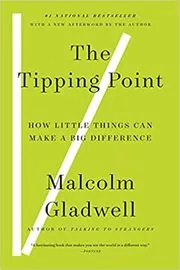
The Tipping Point
by Malcolm Gladwell
2000
Gladwell’s breakout book explores social epidemics, the moment when an idea, product, or behavior suddenly takes off. He shows how small shifts, key personalities, and the right context can turn a quiet trend into a cultural wave.
Recommended by
7 people Joe Rogan recommended this book
Joe Rogan
"Hearing him do the audio part is great." - Joe Rogan
Joe Rogan's recommendation of this book  Ev Williams recommended this book
Ev Williams
On the "books read" section of Ev Williams' GoodReads profile.
Ev Williams's recommendation of this book  Kevin Rose recommended this book
Kevin Rose
"A bunch of really good information here on how to make ideas go viral." - Kevin Rose
Kevin Rose's recommendation of this book  Mike Shinoda recommended this book
Mike Shinoda
"I love books like [this book]." - Mike Shinoda
Mike Shinoda's recommendation of this book  Kevin Systrom recommended this book
Kevin Systrom
Kevin Systrom recommended this book on Facebook.
Kevin Systrom's recommendation of this book  Jenn Im recommended this book
Jenn Im
Jenn Im recommended this book on Twitter.
Jenn Im's recommendation of this book +1
More recommendations
- Michael Hyatt
Michael Hyatt recommended this book on his website.
- Michael Hyatt
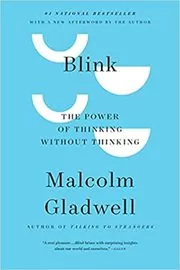
Blink
by Malcolm Gladwell
2005
In this fast-moving book about snap judgments, Gladwell explores how people think without thinking. He shows when quick impressions can be uncannily accurate, when they fail badly, and why expert intuition depends on knowing what details to ignore.
Recommended by
3 people- Ev Williams recommended this book
Ev Williams
On the "books read" section of Ev Williams' GoodReads profile.
Ev Williams's recommendation of this book - Kevin Systrom recommended this book
Kevin Systrom
Kevin Systrom recommended this book on Facebook.
Kevin Systrom's recommendation of this book - Mike Shinoda recommended this book
Mike Shinoda
"I know most of the guys in the band read [this book]." - Mike Shinoda
Mike Shinoda's recommendation of this book
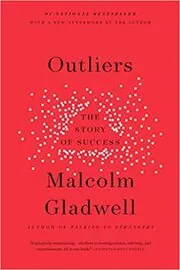
Outliers
by Malcolm Gladwell
2008
Gladwell looks past talent alone and asks how timing, family, culture, luck, and opportunity shape success. From hockey players to software billionaires and the Beatles, he makes the case that achievement is never as individual as it seems.
Recommended by
11 people Bill Gates recommended this book
Bill Gates
"Makes a lot of great points." - Bill Gates
Bill Gates's recommendation of this book  Charlie Munger recommended this book
Charlie Munger
"Perfectly marvelous book." - Charlie Munger
Charlie Munger's recommendation of this book  DJ Vlad recommended this book
DJ Vlad
Most Recommended Books reached out to DJ Vlad directly.
DJ Vlad's recommendation of this book  Dwayne Johnson recommended this book
Dwayne Johnson
Dwayne Johnson said he was reading this book in an interview with Andy Warhol.
Dwayne Johnson's recommendation of this book  James Altucher recommended this book
James Altucher
"I really love [this book]." - James Altucher
James Altucher's recommendation of this book - Joe Rogan recommended this book
Joe Rogan
"It's fucking great." - Joe Rogan
Joe Rogan's recommendation of this book +5
More recommendations
- Shaun White
"I started applying [a lesson from this book] to my own life." - Shaun White
- Will Smith
"Talks about the concept of 10,000 hours." - Will Smith
- Jay-Z
"About the principles of timing and repetition—about preparing yourself for luck, really." - Jay-Z
- Carlos Slim
"Must [read]." - Carlos Slim
- Patrick Bet-David
Patrick Bet-David recommended this book on his website.
- Shaun White
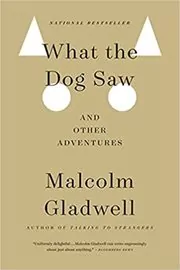
What the Dog Saw
by Malcolm Gladwell
2009
This essay collection gathers Gladwell’s New Yorker pieces on inventors, marketers, dog trainers, intelligence tests, and other unexpected subjects. It is a good entry point if you like his curiosity, quick pivots, and eye for hidden patterns.
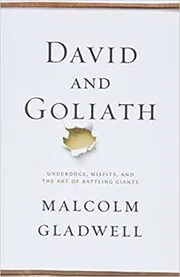
David and Goliath
by Malcolm Gladwell
2013
Using stories from history, education, disability, and conflict, Gladwell rethinks what it means to be an underdog. He argues that apparent weaknesses can become strengths, and that power often works differently than it first appears.
Recommended by
3 people Shah Rukh Khan recommended this book
Shah Rukh Khan
"Reading [this book]. Effort over ability....challenge conventions...you have to be so bad that you have no choice but to be desperate..." - Shah Rukh Khan
Shah Rukh Khan's recommendation of this book  Jodie Cook recommended this book
Jodie Cook
"Straight-talking guidance on why life is too short to be little." - Jodie Cook
Jodie Cook's recommendation of this book  Patrick Bet-David recommended this book
Patrick Bet-David
Patrick Bet-David recommended this book on his website.
Patrick Bet-David's recommendation of this book

Do Humankind’s Best Days Lie Ahead?
by Malcolm Gladwell
2016
This short Munk Debate transcript pits Malcolm Gladwell and Alain de Botton against Steven Pinker and Matt Ridley on the question of progress. It is a brisk exchange about optimism, risk, and whether a richer future is necessarily a better one.
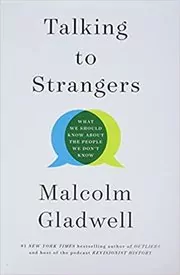
Talking to Strangers
by Malcolm Gladwell
2019
Gladwell examines why we are so bad at reading people we do not know, using cases from policing, spying, fraud, and public scandal. It is an idea-driven book about trust, misjudgment, and the cost of false confidence.
Recommended by
4 people Fareed Zakaria recommended this book
Fareed Zakaria
"Fascinating." - Fareed Zakaria
Fareed Zakaria's recommendation of this book  Elizabeth Warren recommended this book
Elizabeth Warren
"About how our perceptions [...] are based on us, and not on reality." - Elizabeth Warren
Elizabeth Warren's recommendation of this book  Melinda Gates recommended this book
Melinda Gates
Melinda Gates recommended this book on Twitter.
Melinda Gates's recommendation of this book  Mark Manson recommended this book
Mark Manson
Mark Manson recommended this book on his website.
Mark Manson's recommendation of this book
Miracle and Wonder
by Malcolm Gladwell
2021
Built from long conversations with Paul Simon, this audio biography follows the songwriter’s life, music, and working habits. Gladwell and Bruce Headlam mix interview material, songs, and commentary to explore how Simon kept making lasting work over decades.
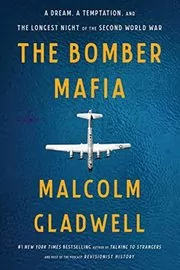
The Bomber Mafia
by Malcolm Gladwell
2021
Part war history, part moral argument, this book follows the clash between idealists who believed in precision bombing and leaders who chose devastating firebombing. Gladwell uses that conflict to ask how technology, good intentions, and brutal results can collide.
I Hate the Ivy League
by Malcolm Gladwell
2022
This audio collection draws on Gladwell’s Revisionist History work to question college rankings, admissions tests, campus prestige, and who elite schools really serve. It is sharp, argumentative, and especially interesting if education debates are your thing.
Revenge of the Tipping Point
by Malcolm Gladwell
2024
Twenty-five years after The Tipping Point, Gladwell returns to social contagion with a darker focus. He looks at superspreaders, group dynamics, and engineered environments to ask how behaviors spread, and why some epidemics turn destructive.
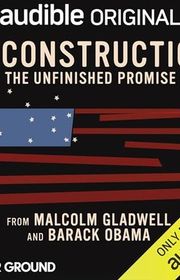
Reconstruction
by Malcolm Gladwell
2026
Malcolm Gladwell examines Reconstruction’s effort to redefine citizenship, voting and property after the Civil War. Historical records and contributions from Barack Obama and other voices explore the backlash against reform and the lasting consequences of its unfulfilled promises.
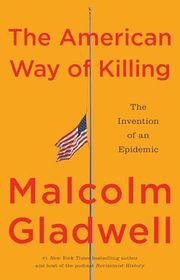
The American Way of Killing
by Malcolm Gladwell
2026
Malcolm Gladwell investigates why the United States experiences far more homicides than comparable wealthy countries. Interviews, historical research and stories of gun violence examine the assumptions behind American policing and gun policy, asking why attempts to address the crisis fail.
Where to start with Malcolm Gladwell
Ranked by consensusBest Malcolm Gladwell BooksThe 8 books expert sources name most oftenIf you want the classic Malcolm Gladwell: The Tipping Point → Blink → Outliers
If you like books about success and hidden advantage: Outliers → David and Goliath
If you want his sharpest books on modern social problems: Talking to Strangers → Revenge of the Tipping Point
If you prefer essays, history, and audio experiments: What the Dog Saw → The Bomber Mafia → Miracle and Wonder
Malcolm Gladwell collections, short stories, and related book types
Non-Fiction
by Malcolm Gladwell
2021A Dream, a Temptation, and the Longest Night of the Second World War


The Munk Debates
Author bio
Malcolm Gladwell was born in England on September 3, 1963, and grew up from age six in Elmira, Ontario, a small Mennonite community not far from the University of Waterloo. His father, an English mathematician, taught there, and his mother, Joyce, who was Jamaican, worked as a psychotherapist. That mix, academic life on one side, careful listening on the other, feels like a good early clue to the writer he became.
He has always seemed interested in the space between private lives and big systems.
Gladwell studied history at Trinity College, University of Toronto, and graduated in 1984. After school he moved to the United States, took an early job at The American Spectator, and later found steadier footing at The Washington Post. There he covered business and science, eventually serving as the paper’s New York bureau chief before joining The New Yorker as a staff writer in 1996.
That was the job that gave his curiosity room to roam.
His reporting moved easily between small details and big ideas, and that habit carried straight into the books. The book that made him widely known, The Tipping Point, asked how trends, behaviors, and ideas suddenly spread. Blink followed with a book about snap judgments and fast thinking, and it showed the same thing readers still come to him for now: a puzzle, a story, and a turn that makes familiar life look a little different.
He kept building on that approach. Outliers looks at success through timing, culture, family, and opportunity, not just talent, while What the Dog Saw gathers his magazine pieces and shows how broad his range can be. In David and Goliath and Talking to Strangers, he turns to power, misreading, and the way simple assumptions can lead people badly astray.
He is, at heart, a pattern hunter.
Over time, audio became just as important to him as the printed page. He launched the podcast Revisionist History in 2016, using sound, narration, and reporting to revisit things from the past that may have been misunderstood the first time around. In 2018 he co-founded Pushkin Industries, and that work led to projects like Miracle and Wonder, built from long conversations with Paul Simon, and I Hate the Ivy League, a sharp set of arguments about education, merit, and prestige.
A few themes show up again and again in his work. He likes hidden structures, small causes with big consequences, and the ways institutions quietly shape who gets a chance. Even when the subject changes, from ketchup to classroom dynamics to World War II bombing strategy in The Bomber Mafia, the underlying question stays pretty consistent: what are we missing because we think the obvious answer is the right one?
He still writes for The New Yorker and continues to make books and audio projects, including Revenge of the Tipping Point. Canada appointed him a Member of the Order of Canada in 2011. Running has also remained one of his longtime interests, which feels fitting for a writer who keeps circling back to performance, effort, and the tiny margins that separate one outcome from another.





Edited by
Software engineer whose passion for tracking book recommendations from podcasts inspired the creation of MRB.
Lead investor at 3one4 Capital whose startup expertise and love for books helped shape MRB and its growth.
Comments
Did we miss something? Have feedback?
Help us improve this page by sharing your thoughts