
19 Best Learning Books
The best books on learning, ranked by how many expert sources recommend each one, with notes on who each book suits and where to start improving your study.
Our take
Learning can mean remembering course material, developing a difficult skill, or making better use of what you read. Those goals overlap, but they call for different kinds of practice. A student preparing for an exam needs ways to retrieve knowledge reliably. Someone learning an instrument needs focused exercises and feedback. An independent learner may first need to decide what to study and how to test progress.
The books here approach those problems from several directions. Make It Stick and How We Learn explain memory research, while A Mind for Numbers brings learning methods into difficult coursework. Peak examines the development of expertise, and The Art of Learning adds a competitor's experience of pressure and improvement. Books on focus and habits can help you make time to apply those ideas, but they serve a different purpose from a study guide. Begin with Make It Stick for study methods, or Ultralearning if you're designing a project of your own.
19 books · 9 sources · Last updated
As an Amazon Associate, we earn from qualifying purchases (at no extra cost to you).
How to choose from this list
Skip to the full rankingIf you want better study methods: Make It Stick → A Mind for Numbers
If you're choosing for a child or teen: Learning How to Learn
If you want to develop a demanding skill: Peak → The Art of Learning
If you're planning independent study: Ultralearning → How to Read a Book
If distraction is the main obstacle: Atomic Habits → Deep Work
If you want notes that support writing: How to Take Smart Notes
The 19 books, ranked
Ranked by how many expert sources name each book. Ties go to the book more people recommend.

For students and teachers who want to replace familiar study habits with better-supported methods. Retrieval and spaced practice are explained more directly than in the motivation books here, though the research stories sometimes interrupt the practical advice.
What it's about
Peter Brown, Henry Roediger, and Mark McDaniel explore how learning and memory work through cognitive research and real-life stories. They challenge familiar study habits and present practical approaches for students, educators, and adults developing new skills.

For readers building a skill who want to understand deliberate practice and feedback. It makes the distinction between purposeful training and simple repetition clearer than Outliers, though finding good coaching can be difficult outside established disciplines.
What it's about
Anders Ericsson and Robert Pool explain deliberate practice through research on expert performers. Examples from music, chess, athletics, and memory explore how targeted training, feedback, and mental representations contribute to skill development beyond simply accumulating hours of repetition.
Also recommended by
2 people Josh Waitzkin recommended this book
Josh Waitzkin
Josh Waitzkin recommended this book in the "Tools of Titans" book.
Josh Waitzkin's recommendation of this book  Tony Hsieh recommended this book
Tony Hsieh
"Great book." - Tony Hsieh
Tony Hsieh's recommendation of this book

For readers who already know what to study but struggle to protect their attention. It helps create time for demanding work more directly than the memory books, though its routines fit some jobs better than others.
What it's about
Newport makes the case that focused, distraction-free work is a rare and valuable skill. He explains why shallow busyness takes over and offers rules for building routines that protect serious thinking.
Also recommended by
1 person Tai Lopez recommended this book
Tai Lopez
"Great book on how to focus the mind. Read this if you need to be more productive." - Tai Lopez
Tai Lopez's recommendation of this book

For curious readers who want an accessible tour of learning research before choosing techniques. Its attention to forgetting, variation, and timing broadens the discussion, though the journalistic format makes it less convenient as a step-by-step study manual.
What it's about
Benedict Carey examines research on learning and memory and tests its implications for everyday practice. He explores how timing, sleep, forgetting, surroundings, and variation in study can affect the way people absorb and retain information.
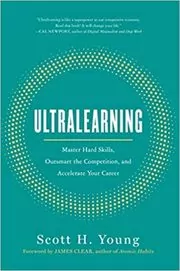
Ultralearning
Master Hard Skills, Outsmart the Competition, and Accelerate Your Career
For independent learners planning a demanding project outside a formal course. It connects goal-setting with direct practice more explicitly than the memory books, though its intensive examples can be difficult to fit around work and family.
What it's about
Scott Young explores intensive, self-directed learning through research and examples of people tackling ambitious educational projects. He explains how to organize efforts to master difficult subjects or skills, applying these approaches to personal interests, studies, and careers.

For students who feel intimidated by mathematics or science. It connects memory, focused work, and mental breaks to difficult coursework more closely than the general books, though the methods still require active problem-solving to pay off.
What it's about
Barbara Oakley explains learning strategies for difficult mathematics and science subjects, drawing on her own academic struggles. The guide offers ways to approach intimidating material and develop effective learning habits applicable beyond technical disciplines.

Learning How to Learn
How to Succeed in School Without Spending All Your Time Studying; A Guide for Kids and Teens
For children and teenagers who need learning advice in approachable language. Pictures and exercises make it easier to work through than A Mind for Numbers, though older students may find the presentation too young.
What it's about
Barbara Oakley and her coauthors explain learning techniques for children and teenagers through illustrations, questions, and exercises. Topics include procrastination, memory, metaphors, flexible thinking, and the role that mental breaks can play in understanding difficult subjects.

Thinking, Fast and Slow
For readers interested in why judgments feel convincing even when they're mistaken. It gives learning a broader context of reasoning and bias, though it is dense and offers fewer study techniques than Make It Stick.
What it's about
Kahneman explores two modes of thought: quick, intuitive responses and slower, deliberate reasoning. Drawing on psychological research, he examines how biases and impressions shape decisions, and when intuition helps or misleads in personal and professional life.
Also recommended by
19 people Bill Gates recommended this book
Bill Gates
List of books Bill Gates read in 2012.
Bill Gates's recommendation of this book  Ray Dalio recommended this book
Ray Dalio
Ray Dalio mentioned this book in his book, "Principles."
Ray Dalio's recommendation of this book  Scott Adams recommended this book
Scott Adams
One of the books on Scott Adams' "Persuasion Reading List."
Scott Adams's recommendation of this book  Naval Ravikant recommended this book
Naval Ravikant
"Fine book but it didn’t need to be an entire book. A blog post would have gotten the point across." - Naval Ravikant
Naval Ravikant's recommendation of this book  Ev Williams recommended this book
Ev Williams
"I love surprising scientific findings, as well as information about how our brains work. [This book] is a treasure trove of both." - Ev Williams
Ev Williams's recommendation of this book  Marc Andreessen recommended this book
Marc Andreessen
"Captivating dive into human decision making, marred by inclusion of several/many? psychology studies that fail to replicate. Will stand as a cautionary tale?" - Marc Andreessen
Marc Andreessen's recommendation of this book +13
More recommendations
- Stewart Brand
Stewart Brand recommended this book on his "Selected Books for the Manual for Civilization" blog post.
- Bryan Johnson
"I started reading [this book] and I became increasingly convinced of my own fickleness and inability to actually act rationally in life." - Bryan Johnson
- Derek Sivers
"If you liked 'Predictably Irrational' or 'Stumbling on Happiness' or any of those pop-psychology books, well, this is the Godfather of all of their work." - Derek Sivers
- Sam Altman
One of Sam Altman's answers to "What are some of the best books you recommend for a young startup founder?"
- Ron Conway
"Covers all three phases of [the author's] career: his early days working oncognitive bias, his work on prospect theory, and his later work on happiness." - Ron Conway
- Jason Fried
"I enjoyed [this book]. Fascinating." - Jason Fried
- Nassim Taleb
"A landmark book in social thought, in the same league as The Wealth of Nations by Adam Smith and The Interpretation of Dreams by Sigmund Freud." - Nassim Taleb
- Sahil Lavingia
Sahil Lavingia recommended this book on Notion.
- Mark Manson
Mark Manson recommended this book on his website.
- Jay Shetty
"[One] of my favourite books." - Jay Shetty
- Michiko Kakutani
"Has become essential reading in many baseball front offices and among coaching staffs." - Michiko Kakutani
- Preston Pysh
"An incredible book!" - Preston Pysh
- Ben Greenfield
Most Recommended Books reached out to Ben Greenfield directly.
- Stewart Brand

For learners who want to understand performance through one person's experience in chess and martial arts. It brings emotional control into the discussion more than Make It Stick, though translating its lessons into a study routine takes work.
What it's about
Josh Waitzkin draws lessons from his achievements in chess and martial arts to explore how people develop expertise. His personal story introduces principles for sustained learning, growth, and performing effectively under competitive pressure.
Also recommended by
4 people Safi Bahcall recommended this book
Safi Bahcall
"I actually loved [this book]." - Safi Bahcall
Safi Bahcall's recommendation of this book  Dave Elitch recommended this book
Dave Elitch
"I tell everyone I teach to get [this book]." - Dave Elitch
Dave Elitch's recommendation of this book  Mark Hart recommended this book
Mark Hart
"[The author] was this world-class chess player, world-class martial artist, and the book [is about] his learning process." - Mark Hart
Mark Hart's recommendation of this book  Ed Latimore recommended this book
Ed Latimore
"For your mind." - Ed Latimore
Ed Latimore's recommendation of this book

For readers curious about memory techniques who enjoy learning through a personal story. Foer's training makes mnemonic practice tangible, though competition feats such as memorizing cards don't automatically improve understanding of a difficult subject.
What it's about
Joshua Foer recounts training for competitive memory events while investigating the history and science of remembering. His journey among memory athletes explores techniques, practice, and the relationship between exceptional feats of recall and the ordinary workings of human memory.
Also recommended by
3 people- Bill Gates recommended this book
Bill Gates
"I never thought much about whether I could improve my memory across a wider set of domains, but now I think I could, after reading [this book]." - Bill Gates
Bill Gates's recommendation of this book  Chelsea Handler recommended this book
Chelsea Handler
"It has changed my life and made me embarrass myself much less when meeting someone twice." - Chelsea Handler
Chelsea Handler's recommendation of this book  Sahil Lavingia recommended this book
Sahil Lavingia
Sahil Lavingia recommended this book on Notion.
Sahil Lavingia's recommendation of this book

For language learners who want a structured approach to pronunciation, vocabulary, and recall. Its personalized flashcard method is more specific than the general study guides, though preparing materials takes time and conversation needs separate practice.
What it's about
Gabriel Wyner presents a language-learning method that begins with pronunciation and builds vocabulary through memorable associations. He explains how personalized flashcards, spaced repetition, and practice with language resources can support learning and long-term recall.

The 4-Hour Chef
The Simple Path to Cooking Like a Pro, Learning Anything, and Living the Good Life
For readers who want to test learning ideas through a practical project. Cooking gives its skill-breaking method a concrete setting, though the recipes, experiments, and side topics make it less focused than a conventional study guide.
What it's about
Using cooking as a practical setting, Ferriss explains his approach to learning new skills efficiently. Recipes and kitchen lessons accompany discussions of breaking skills into components, choosing priorities, and applying learning methods beyond food preparation.
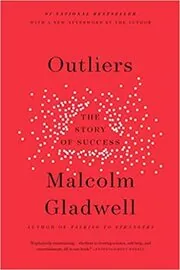
For readers who want to think about the opportunities and circumstances behind achievement. Its stories challenge talent-only explanations, though the famous practice-hours discussion shouldn't be treated as a universal rule for mastering a skill.
What it's about
Gladwell looks past talent alone and asks how timing, family, culture, luck, and opportunity shape success. From hockey players to software billionaires and the Beatles, he makes the case that achievement is never as individual as it seems.
Also recommended by
11 people- Bill Gates recommended this book
Bill Gates
"Makes a lot of great points." - Bill Gates
Bill Gates's recommendation of this book  Charlie Munger recommended this book
Charlie Munger
"Perfectly marvelous book." - Charlie Munger
Charlie Munger's recommendation of this book  DJ Vlad recommended this book
DJ Vlad
Most Recommended Books reached out to DJ Vlad directly.
DJ Vlad's recommendation of this book  Dwayne Johnson recommended this book
Dwayne Johnson
Dwayne Johnson said he was reading this book in an interview with Andy Warhol.
Dwayne Johnson's recommendation of this book  James Altucher recommended this book
James Altucher
"I really love [this book]." - James Altucher
James Altucher's recommendation of this book  Joe Rogan recommended this book
Joe Rogan
"It's fucking great." - Joe Rogan
Joe Rogan's recommendation of this book +5
More recommendations
- Shaun White
"I started applying [a lesson from this book] to my own life." - Shaun White
- Will Smith
"Talks about the concept of 10,000 hours." - Will Smith
- Jay-Z
"About the principles of timing and repetition—about preparing yourself for luck, really." - Jay-Z
- Carlos Slim
"Must [read]." - Carlos Slim
- Patrick Bet-David
Patrick Bet-David recommended this book on his website.
- Shaun White

For learners discouraged by setbacks who want to examine their beliefs about ability. It focuses on responses to difficulty more than study technique, though changing an attitude alone doesn't replace effective instruction and practice.
What it's about
Carol Dweck explores how beliefs about ability influence learning, achievement, and responses to setbacks. Contrasting fixed and growth mindsets, she considers their implications for parenting, education, work, sports, and personal development.
Also recommended by
10 people- Bill Gates recommended this book
Bill Gates
"Dweck and her research have helped my foundation colleagues and me understand more about the attitudes and habits that allow some students to persevere in school despite big challenges." - Bill Gates
Bill Gates's recommendation of this book  Tobi Lütke recommended this book
Tobi Lütke
Mentioned on "The Knowledge Project" podcast.
Tobi Lütke's recommendation of this book  Satya Nadella recommended this book
Satya Nadella
"Whatever change we’ve been able to achieve is because the cultural meme we picked was inspired by [this book]." - Satya Nadella
Satya Nadella's recommendation of this book  Tony Robbins recommended this book
Tony Robbins
Tony Robbins mentioned this book on "The Tim Ferriss Show" podcast.
Tony Robbins's recommendation of this book - Josh Waitzkin recommended this book
Josh Waitzkin
Josh Waitzkin recommended this book in the "Tools of Titans" book.
Josh Waitzkin's recommendation of this book - Ev Williams recommended this book
Ev Williams
"One of those ideas that is obvious only once you know it." - Ev Williams
Ev Williams's recommendation of this book +4
More recommendations
- Dustin Moskovitz
Dustin Moskovitz recommended this book on Twitter.
- Kathryn Minshew
"Read this book & love the idea!" - Kathryn Minshew
- Tom Bilyeu
Tom Bilyeu recommended this book on his website.
- Mark Manson
Mark Manson recommended this book on his website.
- Dustin Moskovitz
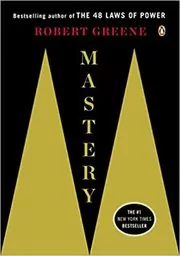
Mastery
For readers who want a long view of apprenticeship, mentors, and developing a craft. Historical lives make the path feel concrete, though the lessons come mainly from selected biographies rather than a systematic study of learning.
What it's about
Greene looks at how masters in art, science, and business learned their craft over time. Using real-life stories and practical steps, he argues for apprenticeship, deliberate practice, and patience over quick hacks.
Also recommended by
8 people Aubrey Marcus recommended this book
Aubrey Marcus
"The master work of a master author." - Aubrey Marcus
Aubrey Marcus's recommendation of this book  Ryan Holiday recommended this book
Ryan Holiday
"Read [this book] so that you can figure your life’s task and how to dedicate yourself to it." - Ryan Holiday
Ryan Holiday's recommendation of this book - Mark Hart recommended this book
Mark Hart
"An excellent book." - Mark Hart
Mark Hart's recommendation of this book  Tom Bilyeu recommended this book
Tom Bilyeu
Tom Bilyeu recommended this book on his website.
Tom Bilyeu's recommendation of this book - Rollo Tomassi recommended this book
Rollo Tomassi
"His best book next to 48 Laws." - Rollo Tomassi
Rollo Tomassi's recommendation of this book  Robin Sharma recommended this book
Robin Sharma
"GREAT book." - Robin Sharma
Robin Sharma's recommendation of this book +2
More recommendations
- Robin Black
"Wonderful book examining the lives of Masters. Recommend it highly." - Robin Black
- Patrick Bet-David
Patrick Bet-David recommended this book on his website.
- Robin Black

For readers who want their notes to support writing and original thinking. Its linked-note workflow goes beyond collecting facts, though setting up the system takes effort and it isn't a substitute for subject-specific practice.
What it's about
Sönke Ahrens explains a note-taking approach based on the Zettelkasten system. He shows how connecting and developing notes can support thinking, learning, and nonfiction writing, turning reading and accumulated ideas into an ongoing process rather than isolated research tasks.
Also recommended by
1 person Ali Abdaal recommended this book
Ali Abdaal
"Transformed my relationship with note-taking." - Ali Abdaal
Ali Abdaal's recommendation of this book

For readers who need to make studying a repeatable part of the day. Its emphasis on cues and environment complements the learning-science books, though it doesn't explain which study activities will produce the best understanding.
What it's about
James Clear explores why habits persist and how everyday systems influence behavior. He draws on behavioral research and illustrative stories to offer practical methods for establishing constructive routines, reducing unwanted habits, and making gradual improvements more sustainable.
Also recommended by
8 people Tim Urban recommended this book
Tim Urban
"I'd attribute about 60% of my good habits to [the author's] blog and this book is rapidly filling in the other 40%." - Tim Urban
Tim Urban's recommendation of this book  Vinod Khosla recommended this book
Vinod Khosla
"A decent book on self-help tools, not a category I am generally a fan of." - Vinod Khosla
Vinod Khosla's recommendation of this book  Biz Stone recommended this book
Biz Stone
"Great book." - Biz Stone
Biz Stone's recommendation of this book  Anthony Pompliano recommended this book
Anthony Pompliano
"Highly recommend." - Anthony Pompliano
Anthony Pompliano's recommendation of this book  Jodie Cook recommended this book
Jodie Cook
"I love the simplicity of this book." - Jodie Cook
Jodie Cook's recommendation of this book  Blake Randall recommended this book
Blake Randall
"" - Blake Randall
Blake Randall's recommendation of this book +2
More recommendations
- Ali Abdaal
"Helped me understand how habits are formed and what we can do." - Ali Abdaal
- Ben Greenfield
Most Recommended Books reached out to Ben Greenfield directly.
- Ali Abdaal

For readers who become discouraged when improvement stalls. Leonard's emphasis on enjoying regular practice gives this a calmer tone than the achievement-focused books, though it provides little detail about memory, exams, or designing technical exercises.
What it's about
George Leonard draws on Zen and aikido to examine how people develop lasting mastery. He emphasizes sustained practice, explores obstacles to learning, and presents five keys for pursuing skills and fulfillment beyond quick improvements.
Also recommended by
4 people- Ev Williams recommended this book
Ev Williams
On the "books read" section of Ev Williams' GoodReads profile.
Ev Williams's recommendation of this book  Maurice Ashley recommended this book
Maurice Ashley
"Detailed the challenges that we all face on the road to expertise in any field." - Maurice Ashley
Maurice Ashley's recommendation of this book  Terry Laughlin recommended this book
Terry Laughlin
"A set of prescriptions or principles, for attaining mastery." - Terry Laughlin
Terry Laughlin's recommendation of this book  Patrick O'Shaughnessy recommended this book
Patrick O'Shaughnessy
"This book, which you can read in a sitting, is a great overview of the process-driven mindset." - Patrick O'Shaughnessy
Patrick O'Shaughnessy's recommendation of this book

For readers who want to question arguments and connect ideas across books. Its analytical approach goes deeper than general advice to read more, though the formal categories and older examples can make it feel demanding.
What it's about
Mortimer Adler and Charles Van Doren explain different levels of reading, from basic comprehension to comparing several books on a subject. They offer methods for questioning an author's argument and adapt their approach to different kinds of writing.
Also recommended by
2 people Kevin Systrom recommended this book
Kevin Systrom
"[The author's] thesis is that the most important part of reading a book is to actually read the table of contents and familiarize yourself with the major structure of the book." - Kevin Systrom
Kevin Systrom's recommendation of this book  Shane Parrish recommended this book
Shane Parrish
"If you believe that you’re not getting everything out of your reading that you should, this book is awesome." - Shane Parrish
Shane Parrish's recommendation of this book
Sources
- 1
10 Best Books about Learning That Will Blow Your Mind
roliedema.com
- 2
18 Best Books to Improve Your Learning and Study Habits
developgoodhabits.com
- 3
Steal My Bookshelf: 21 BEST Books About Learning & Studying
examstudyexpert.com
- 4
Books about How to Learn (48 books)
goodreads.com
- 5
My Top Five Learning Books - Five Books Reader List
fivebooks.com
- 6
Ten Great Books on How to Learn Better
scotthyoung.com
- 7
Any book recommendations on the science of learning?
reddit.com
- 8
9 x Best Books on Learning
reddit.com
- 9
11 Must-Read Books That Will Make You a Better Learner
inc.com





Edited by
Software engineer whose passion for tracking book recommendations from podcasts inspired the creation of MRB.
Lead investor at 3one4 Capital whose startup expertise and love for books helped shape MRB and its growth.
Comments
Spotted a missing book, a wrong order or a mistake? Tell us and we'll fix this page.
We're a reading guide, not the author or publisher, so we can't send books or pass on messages.