
12 Best Studying Books
Find the best studying books, ranked by expert sources and readers, with help for memory, revision, difficult subjects, focus, and consistent routines.
Our take
Studying more effectively begins with identifying what is going wrong. You may be forgetting material after rereading it, struggling to solve unfamiliar problems, or losing the time you meant to spend working. Those difficulties call for different books. A guide to memory cannot organize your deadlines for you, and a productivity system cannot replace practice with the material.
For learning methods, Make It Stick explains why remembering something during practice can matter more than recognizing it on a page. Study Like a Champ turns learning research into student guidance. A Mind for Numbers is especially useful when difficult problems feel intimidating, while Learning How to Learn presents related ideas for younger readers.
Choose How to Become a Straight-A Student for college workload and assessment tactics. Use Deep Work or Atomic Habits when attention and consistency are the bottlenecks, and How to Read a Book when your assignments demand closer analysis. Start with the book that addresses your current obstacle, then test one change against what you can recall, explain, or do.
12 books · 8 sources · Last updated
As an Amazon Associate, we earn from qualifying purchases (at no extra cost to you).
How to choose from this list
Skip to the full rankingIf you forget what you have studied: Make It Stick → Study Like a Champ
If you struggle with technical subjects: A Mind for Numbers
If you need a college work system: How to Become a Straight-A Student → Atomic Habits
If distractions consume your study time: Deep Work
If you are choosing for a younger learner: Learning How to Learn
If you need to understand difficult reading: How to Read a Book → Understanding How We Learn
The 12 books, ranked
Ranked by how many expert sources name each book. Ties go to the book more people recommend.

For students who want to replace familiar but weak study routines with more durable learning. The research and examples explain retrieval, spacing, and varied practice, though applying the principles requires designing your own subject-specific routine.
What it's about
Peter Brown, Henry Roediger, and Mark McDaniel explore how learning and memory work through cognitive research and real-life stories. They challenge familiar study habits and present practical approaches for students, educators, and adults developing new skills.

For students who feel intimidated by mathematical or scientific material and need a workable approach. Oakley connects practice habits with managing procrastination and difficult problems, though learning strategies still need substantial subject-specific practice.
What it's about
Barbara Oakley explains learning strategies for difficult mathematics and science subjects, drawing on her own academic struggles. The guide offers ways to approach intimidating material and develop effective learning habits applicable beyond technical disciplines.

For learners who want to distinguish targeted improvement from simply logging practice hours. Ericsson and Pool emphasize feedback and specific weaknesses, though academic subjects differ in how easily they support the book’s expertise-building conditions.
What it's about
Anders Ericsson and Robert Pool explain deliberate practice through research on expert performers. Examples from music, chess, athletics, and memory explore how targeted training, feedback, and mental representations contribute to skill development beyond simply accumulating hours of repetition.
Also recommended by
2 people Josh Waitzkin recommended this book
Josh Waitzkin
Josh Waitzkin recommended this book in the "Tools of Titans" book.
Josh Waitzkin's recommendation of this book  Tony Hsieh recommended this book
Tony Hsieh
"Great book." - Tony Hsieh
Tony Hsieh's recommendation of this book

For students whose main obstacle is fragmented attention and constant interruption. Newport offers ways to protect demanding work, though the examples emphasize professional life and require adaptation to classes, shared spaces, and unpredictable schedules.
What it's about
Newport makes the case that focused, distraction-free work is a rare and valuable skill. He explains why shallow busyness takes over and offers rules for building routines that protect serious thinking.
Also recommended by
1 person Tai Lopez recommended this book
Tai Lopez
"Great book on how to focus the mind. Read this if you need to be more productive." - Tai Lopez
Tai Lopez's recommendation of this book

For readers who want an accessible explanation of why learning can improve through unexpected changes in practice. Carey makes memory research engaging, though the narrative format provides less step-by-step organization than a dedicated study handbook.
What it's about
Benedict Carey examines research on learning and memory and tests its implications for everyday practice. He explores how timing, sleep, forgetting, surroundings, and variation in study can affect the way people absorb and retain information.
Understanding How We Learn
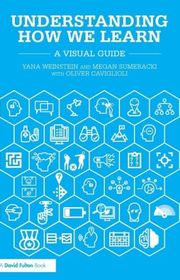
For students, parents, and teachers who prefer visual explanations of learning research. Illustrated accounts connect memory principles with practical strategies, though readers seeking a personalized timetable or subject-specific exercises will need to construct those separately.
What it's about
Yana Weinstein and Megan Sumeracki explain cognitive psychology and its implications for education, with illustrations by Oliver Caviglioli. The guide examines evidence, memory, and effective learning strategies, then offers practical applications for teachers, students, and parents.

For students who understand what to study but struggle to begin consistently. Clear’s approach helps reshape cues, routines, and environment, though it does not explain how to learn a difficult subject or assess understanding.
What it's about
James Clear explores why habits persist and how everyday systems influence behavior. He draws on behavioral research and illustrative stories to offer practical methods for establishing constructive routines, reducing unwanted habits, and making gradual improvements more sustainable.
Also recommended by
8 people Tim Urban recommended this book
Tim Urban
"I'd attribute about 60% of my good habits to [the author's] blog and this book is rapidly filling in the other 40%." - Tim Urban
Tim Urban's recommendation of this book  Vinod Khosla recommended this book
Vinod Khosla
"A decent book on self-help tools, not a category I am generally a fan of." - Vinod Khosla
Vinod Khosla's recommendation of this book  Biz Stone recommended this book
Biz Stone
"Great book." - Biz Stone
Biz Stone's recommendation of this book  Anthony Pompliano recommended this book
Anthony Pompliano
"Highly recommend." - Anthony Pompliano
Anthony Pompliano's recommendation of this book  Jodie Cook recommended this book
Jodie Cook
"I love the simplicity of this book." - Jodie Cook
Jodie Cook's recommendation of this book  Blake Randall recommended this book
Blake Randall
"" - Blake Randall
Blake Randall's recommendation of this book +2
More recommendations
- Ali Abdaal
"Helped me understand how habits are formed and what we can do." - Ali Abdaal
- Ben Greenfield
Most Recommended Books reached out to Ben Greenfield directly.
- Ali Abdaal

How to Become a Straight-A Student
The Unconventional Strategies Real College Students Use to Score High While Studying Less
For college students who want an actionable system for scheduling, exams, and papers. Newport organizes advice around actual undergraduate demands, though its interview-based approach is less a review of learning research than a practical playbook.
What it's about
Built from interviews with high-achieving college students, this guide replaces cramming and all-nighters with smarter systems. Newport covers scheduling, studying, exams, papers, and procrastination in a practical plan for earning better grades with less stress.
How to Read a Book: The Classic Guide to Intelligent Reading
For students who need to interrogate difficult texts rather than collect highlights. Adler and Van Doren explain analytical and comparative reading, though the formal framework takes effort and is not intended for every reading assignment.
What it's about
Mortimer Adler and Charles Van Doren describe levels of reading, from basic understanding and inspection to analysis and comparison across books. They explain ways to identify arguments, question authors and adjust reading methods to different kinds of writing.

Learning How to Learn
How to Succeed in School Without Spending All Your Time Studying; A Guide for Kids and Teens
For children and teenagers who want learning techniques explained in an approachable, illustrated format. Oakley and her coauthors translate abstract ideas into exercises and metaphors, though older students may prefer the more adult presentation elsewhere.
What it's about
Barbara Oakley and her coauthors explain learning techniques for children and teenagers through illustrations, questions, and exercises. Topics include procrastination, memory, metaphors, flexible thinking, and the role that mental breaks can play in understanding difficult subjects.
Study Like a Champ
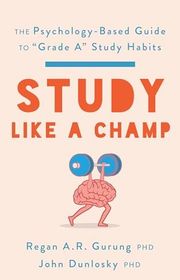
For students who want concrete study decisions grounded in cognitive psychology. Gurung and Dunlosky turn research into planning and practice advice, though improving results depends on applying the methods repeatedly rather than reading them once.
What it's about
Regan Gurung and John Dunlosky explain how students can organize their work and choose effective learning strategies. Drawing on cognitive psychology, they address study myths, memory, practice, and preparation through practical guidance aimed at school and college demands.

For students whose response to difficulty is undermining sustained effort. Dweck examines beliefs about developing ability, though a change in outlook needs to be paired with effective strategies, feedback, and appropriate support.
What it's about
Carol Dweck explores how beliefs about ability influence learning, achievement, and responses to setbacks. Contrasting fixed and growth mindsets, she considers their implications for parenting, education, work, sports, and personal development.
Also recommended by
10 people Bill Gates recommended this book
Bill Gates
"Dweck and her research have helped my foundation colleagues and me understand more about the attitudes and habits that allow some students to persevere in school despite big challenges." - Bill Gates
Bill Gates's recommendation of this book  Tobi Lütke recommended this book
Tobi Lütke
Mentioned on "The Knowledge Project" podcast.
Tobi Lütke's recommendation of this book  Satya Nadella recommended this book
Satya Nadella
"Whatever change we’ve been able to achieve is because the cultural meme we picked was inspired by [this book]." - Satya Nadella
Satya Nadella's recommendation of this book  Tony Robbins recommended this book
Tony Robbins
Tony Robbins mentioned this book on "The Tim Ferriss Show" podcast.
Tony Robbins's recommendation of this book - Josh Waitzkin recommended this book
Josh Waitzkin
Josh Waitzkin recommended this book in the "Tools of Titans" book.
Josh Waitzkin's recommendation of this book  Ev Williams recommended this book
Ev Williams
"One of those ideas that is obvious only once you know it." - Ev Williams
Ev Williams's recommendation of this book +4
More recommendations
- Dustin Moskovitz
Dustin Moskovitz recommended this book on Twitter.
- Kathryn Minshew
"Read this book & love the idea!" - Kathryn Minshew
- Tom Bilyeu
Tom Bilyeu recommended this book on his website.
- Mark Manson
Mark Manson recommended this book on his website.
- Dustin Moskovitz
Sources
- 1
18 Best Books to Improve Your Learning and Study Habits
developgoodhabits.com
- 2
Steal My Bookshelf: 21 BEST Books About Learning & Studying
examstudyexpert.com
- 3
Study Smarter, Not Harder
retrievalpractice.org
- 4
Study Skills Books
goodreads.com
- 5
Books on how to study?
reddit.com
- 6
Learning to Learn and Study Resource List
ahmni.app
- 7
Best Books on How to Study
vertechacademy.com
- 8
5 Books to Read that Make Studying and Schoolwork Easier
collegeraptor.com



Edited by
Software engineer whose passion for tracking book recommendations from podcasts inspired the creation of MRB.
Lead investor at 3one4 Capital whose startup expertise and love for books helped shape MRB and its growth.
Comments
Spotted a missing book, a wrong order or a mistake? Tell us and we'll fix this page.
We're a reading guide, not the author or publisher, so we can't send books or pass on messages.