
15 Best Capitalism Books
The best capitalism books, ranked by how many expert sources recommend each one, with notes on who each suits, from beginners to readers of economic history.
Our take
Books about capitalism ask different questions: how markets work, how wealth accumulates, who holds economic power, and which institutions should shape the system. Some defend competitive markets as a basis for freedom. Others argue for reform or examine inequality, racial exclusion, work, and corporate influence. Reading across those approaches makes the disagreements easier to understand without assuming that every book is trying to explain the same thing.
23 Things They Don't Tell You about Capitalism offers short, accessible challenges to familiar claims. Capitalism and Freedom presents a different starting position. For historical foundations, The Wealth of Nations and the first volume of Capital demand slower study. Capital in the Twenty-First Century centers wealth distribution, while The Age of Surveillance Capitalism examines digital power. Start with the question that interests you, then compare a book with a different argument or scale of analysis.
15 books · 6 sources · Last updated
As an Amazon Associate, we earn from qualifying purchases (at no extra cost to you).
How to choose from this list
Skip to the full rankingIf you're comparing accessible arguments: 23 Things They Don't Tell You about Capitalism → Capitalism and Freedom
If you want historical foundations: The Wealth of Nations → Capital, Volume 1
If you want institutions and economic history: The Great Transformation → Capital in the Twenty-First Century
If you want debates about reform: The Future of Capitalism → Saving Capitalism
If you want corporate power and everyday life: Bullshit Jobs → The Age of Surveillance Capitalism
The 15 books, ranked
Ranked by how many expert sources name each book. Ties go to the book more people recommend.

The Wealth of Nations
For readers who want to engage with a foundational account of markets, labor, and national prosperity. Smith offers a much broader argument than familiar quotations suggest, though the eighteenth-century prose and examples require time and context.
What it's about
Adam Smith examines how economic prosperity arises through labor, exchange, competition, and capital. First published in 1776, his study considers wages, trade, taxation, and the role of government within a broader account of national wealth.
Also recommended by
8 people Elon Musk recommended this book
Elon Musk
"Adam Smith FTW obv." - Elon Musk
Elon Musk's recommendation of this book  Naval Ravikant recommended this book
Naval Ravikant
Naval Ravikant's answer to "any good book about economy for a beginner?"
Naval Ravikant's recommendation of this book  Neil deGrasse Tyson recommended this book
Neil deGrasse Tyson
"To learn that capitalism is an economy of greed, a force of nature unto itself." - Neil deGrasse Tyson
Neil deGrasse Tyson's recommendation of this book  Nick Szabo recommended this book
Nick Szabo
"[One] of the most important books I’ve read." - Nick Szabo
Nick Szabo's recommendation of this book  Noam Chomsky recommended this book
Noam Chomsky
On the "Top 100 Books Referenced by Noam Chomsky" list.
Noam Chomsky's recommendation of this book  Brandon Stanton recommended this book
Brandon Stanton
Brandon Stanton mentioned this book on "The Tim Ferriss Show" podcast.
Brandon Stanton's recommendation of this book +2
More recommendations
- Bill Gurley
"[The author]'s magnum opus." - Bill Gurley
- Patrick Bet-David
Patrick Bet-David recommended this book on his website.
- Bill Gurley

Capital in the Twenty-First Century
For readers who want inequality examined through long historical series rather than brief policy slogans. Piketty connects evidence with institutional proposals, though the scale, technical discussion, and debated interpretations make this a substantial undertaking.
What it's about
Thomas Piketty examines the long-term accumulation and distribution of wealth through historical economic data. He explores relationships among capital, growth, inheritance, and inequality, concluding with proposals concerning taxation and institutions that might influence the concentration of wealth.
Also recommended by
4 people Alexandria Ocasio-Cortez recommended this book
Alexandria Ocasio-Cortez
Alexandria Ocasio-Cortez recommended this book on Twitter.
Alexandria Ocasio-Cortez's recommendation of this book  Bill Gates recommended this book
Bill Gates
"A 700-page treatise on economics translated from French." - Bill Gates
Bill Gates's recommendation of this book  Carl Icahn recommended this book
Carl Icahn
"Very good, very well thought out... And I agree that there are storm clouds ahead." - Carl Icahn
Carl Icahn's recommendation of this book  Peter Thiel recommended this book
Peter Thiel
"Accurately describes inequality in the past and present of countries like the United States." - Peter Thiel
Peter Thiel's recommendation of this book

The Age of Surveillance Capitalism
The Fight for a Human Future at the New Frontier of Power
For readers who want a sustained critique of digital business models and behavioral data. Zuboff gives power and autonomy a central analytical role, though the length and distinctive terminology can make the argument repetitive and demanding.
What it's about
Shoshana Zuboff examines corporate efforts to predict and influence human behavior through digital surveillance. She argues that this emerging form of capitalism threatens individual autonomy and democratic institutions, and considers the need for public accountability.
Also recommended by
2 people Barack Obama recommended this book
Barack Obama
Barack Obama's favorite books of 2019 list.
Barack Obama's recommendation of this book  Vinod Khosla recommended this book
Vinod Khosla
"Dives into the largest act of capitalist colonisation ever attempted - the colonisation of our minds, our behaviour, our free will, our very selves." - Vinod Khosla
Vinod Khosla's recommendation of this book
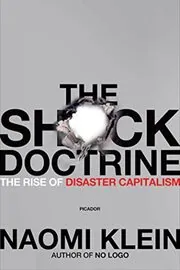
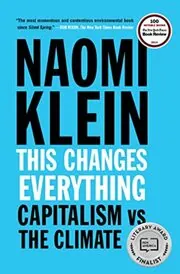
For readers examining claims that crises help enable sweeping economic reform. Klein connects cases across countries in one forceful argument, though the unifying interpretation is contested and gives less room to competing explanations.
What it's about
From Chile and Russia to Iraq and post-Katrina New Orleans, Klein traces how crisis can be used to force through privatization and austerity. It is a wide-ranging history of what she calls disaster capitalism.
Also recommended by
1 person Brit Marling recommended this book
Brit Marling
"Amazing and important to read or re-read right now." - Brit Marling
Brit Marling's recommendation of this book

For readers who want a historical argument about markets and the social institutions surrounding them. Polanyi connects economic change with political reactions, though the dense interpretation rewards background knowledge and comparison with rival histories.
What it's about
Karl Polanyi examines capitalism's emergence and the social changes accompanying the Industrial Revolution. He argues that market relations displaced earlier communal arrangements, and considers the dangers of treating economic exchange as independent of broader social obligations.
Also recommended by
3 people Satya Nadella recommended this book
Satya Nadella
"My father recommended this book long ago." - Satya Nadella
Satya Nadella's recommendation of this book - Noam Chomsky recommended this book
Noam Chomsky
On the "Top 100 Books Referenced by Noam Chomsky" list.
Noam Chomsky's recommendation of this book  Brad Delong recommended this book
Brad Delong
Brad Delong recommended this book in his website.
Brad Delong's recommendation of this book

For readers seeking reform proposals that connect economic divisions with shared obligations. Collier moves between firms, communities, and public institutions, though the breadth makes some proposals more suggestive than fully developed.
What it's about
Paul Collier examines widening divisions between prosperous cities and struggling regions, educated elites and other workers, and richer and poorer countries. He proposes pragmatic reforms grounded in shared obligations among businesses, families, communities, and the state.
Also recommended by
2 people- Bill Gates recommended this book
Bill Gates
"About something I’m also keenly interested in—the polarization we’re seeing in the U.S., Europe, and other places." - Bill Gates
Bill Gates's recommendation of this book - Vinod Khosla recommended this book
Vinod Khosla
"Outlines ethical ways of healing the deep new rifts that are tearing apart the fabric of the United States and other Western societies." - Vinod Khosla
Vinod Khosla's recommendation of this book

Capitalism and Freedom
For readers who want a clear defense of competitive markets linked to individual liberty. Friedman brings that position to concrete policy questions, though the firm ideological framework offers less space to competing accounts of market power.
What it's about
Milton Friedman argues that competitive capitalism supports economic freedom and is necessary for political freedom. He examines the relationship between markets, government, and individual liberty, asking how public institutions can function without undermining personal choice.
Also recommended by
1 person Patrick Bet-David recommended this book
Patrick Bet-David
Patrick Bet-David recommended this book on his website.
Patrick Bet-David's recommendation of this book

23 Things They Don't Tell You about Capitalism
For beginners who want short arguments that challenge familiar free-market assumptions. Chang makes economic policy approachable through distinct essays, though the provocative format compresses complex debates and should be compared with other perspectives.
What it's about
Ha-Joon Chang challenges widely repeated assumptions about free markets and global capitalism through twenty-three accessible essays. He questions prevailing economic prescriptions, examines their consequences, and argues for shaping the economic system around broader social goals.
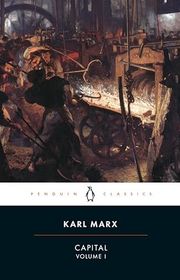
Capital, Volume 1
For readers prepared to study a foundational critique of capitalist production directly. Marx develops concepts through sustained argument and historical material, though the density, specialized vocabulary, and nineteenth-century context make this demanding without supplementary study.
What it's about
Karl Marx examines commodities, labor, value, and the accumulation of capital in the first volume of his critique of political economy. His analysis connects production and exchange with the social relations between workers and owners.

For business readers interested in a defense of capitalism built around stakeholder responsibility. John Mackey and Raj Sisodia offer company examples and a management philosophy, though selected successes do not establish that their approach always reconciles competing interests.
What it's about
John Mackey and Raj Sisodia argue that businesses can create value for customers, employees, suppliers, investors, communities, and the environment. Company examples illustrate their case for a more purposeful and humane capitalism, connecting commercial success with responsibility toward multiple stakeholders.

For readers who want an accessible argument about how political rules shape market outcomes. Reich connects concentrated power with reform proposals, though the US-centered advocacy provides less comparative history than the larger academic studies.
What it's about
Robert B. Reich examines the political decisions that shape markets and the distribution of wealth. Arguing that concentrated power has weakened the middle class, he explores how changes to economic rules could make capitalism serve a wider share of society.

The Road to Serfdom
For readers interested in the relationship between economic planning and political liberty. Hayek offers a focused warning rooted in wartime debate, though the polemical argument needs its historical setting and is not a survey of all mixed economies.
What it's about
Hayek argues that comprehensive economic planning threatens political freedom by concentrating decisions in government hands. Written during World War II, the book examines socialism, coercion, the rule of law, and the relationship between markets and liberty.
Also recommended by
4 people Charles Koch recommended this book
Charles Koch
Charles Koch recommended this book on his website.
Charles Koch's recommendation of this book  Rand Paul recommended this book
Rand Paul
On Rand Paul's website's "reading suggestions for students" section.
Rand Paul's recommendation of this book - Brad Delong recommended this book
Brad Delong
Brad Delong recommended this book in his website.
Brad Delong's recommendation of this book - Patrick Bet-David recommended this book
Patrick Bet-David
Patrick Bet-David recommended this book on his website.
Patrick Bet-David's recommendation of this book

For readers interested in how people experience work they believe has little purpose. Graeber makes those testimonies vivid and politically consequential, though the broad theory rests heavily on selected accounts rather than a representative occupational survey.
What it's about
David Graeber investigates jobs that workers themselves regard as pointless or unnecessary. Drawing on personal testimonies, he develops a theory of meaningless employment and examines its psychological costs, organizational causes, and implications for how society values different kinds of work.
Also recommended by
1 person David Heinemeier Hansson recommended this book
David Heinemeier Hansson
"Essentially a victory lap of the original essay and the response it provoked." - DHH
David Heinemeier Hansson's recommendation of this book
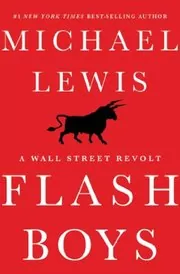
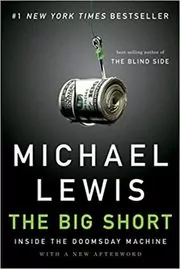
For readers who prefer narrative reporting to abstract economic argument. Lewis makes trading infrastructure and institutional incentives accessible through people, though the US equity-market focus and contested framing provide a narrow window onto capitalism.
What it's about
Follows a group of traders and technologists who uncover how high-frequency trading skims fractions of a cent from everyday orders, then race to build a fairer stock exchange that slows markets down just enough to protect ordinary investors.
Also recommended by
1 person Brian Armstrong recommended this book
Brian Armstrong
"An interesting book." - Brian Armstrong
Brian Armstrong's recommendation of this book

How Capitalism Underdeveloped Black America
Problems in Race, Political Economy, and Society
For readers studying the intersection of racial inequality and political economy in the United States. Marable connects institutions and class through a sustained critical framework, though the historical context and theoretical commitments require attentive reading.
What it's about
Manning Marable analyzes how racism and class intersect in American economic and social life. His study considers working-class communities, poverty, incarceration, education, and Black elites, arguing that capitalist structures have contributed to persistent racial inequality.
Sources
- 1
100 Best Capitalism Books of All Time
shortform.com
- 2
Best Books On Capitalism: 12 Top Picks
wisdomfuel.com
- 3
Capitalism, Economics & Business History
guides.pnw.edu
- 4
Suggestion on Books regarding capitalism
reddit.com
- 5
Capitalism Books
goodreads.com
- 6
Book Recommendations on the History of Capitalism
blogs.darden.virginia.edu



Edited by
Software engineer whose passion for tracking book recommendations from podcasts inspired the creation of MRB.
Lead investor at 3one4 Capital whose startup expertise and love for books helped shape MRB and its growth.
Comments
Spotted a missing book, a wrong order or a mistake? Tell us and we'll fix this page.
We're a reading guide, not the author or publisher, so we can't send books or pass on messages.