
17 Best Behavioral Economics Books
The best behavioral economics books, ranked by how many expert sources recommend each one, with guidance for curious beginners, students, and practitioners.
Our take
Behavioral economics examines what changes when economic models take real human attention, habits, emotions, and social influences seriously. These books help readers recognize patterns in choices, but they differ in purpose. Some introduce the field through stories, some explain research in depth, and others focus on designing services or making decisions under uncertainty.
Misbehaving offers a personal history of the field, while Thinking, Fast and Slow provides a longer exploration of judgment. Nudge and The Last Mile move toward practical choice design. The Why Axis emphasizes field experiments, and Scarcity asks how limited resources shape attention. Readers interested in applying ideas to their own actions can turn to How to Change, while Noise addresses inconsistency in professional judgments.
Read these books as arguments to examine, since evidence and its interpretation continue to develop. Start with Misbehaving for context, then choose a research focused or practical book that matches your question.
17 books · 9 sources · Last updated
As an Amazon Associate, we earn from qualifying purchases (at no extra cost to you).
How to choose from this list
Skip to the full rankingIf you're new to the field: Misbehaving → Thinking, Fast and Slow
If you design policies or services: Nudge → The Last Mile
If you want to understand incentives: The Why Axis
If you want to change your own behavior: How to Change
If your team makes inconsistent judgments: Noise
If you want to understand constrained choices: Scarcity
The 17 books, ranked
Ranked by how many expert sources name each book. Ties go to the book more people recommend.

For readers interested in designing policies or services around how people actually choose. Its choice architecture framework connects ideas with practical interventions, though effects depend on context and the ethics of steering decisions deserve equal attention.
What it's about
Richard Thaler and Cass Sunstein examine how the presentation of choices influences decisions. They describe nudges that preserve options while changing defaults or context, using examples from health, finance, and public policy to explore their approach to choice architecture.
Also recommended by
3 people Ben Shapiro recommended this book
Ben Shapiro
"A somewhat creepy book." - Ben Shapiro
Ben Shapiro's recommendation of this book  Mr. Money Mustache recommended this book
Mr. Money Mustache
"On decision making." - MMM
Mr. Money Mustache's recommendation of this book  Kevin Systrom recommended this book
Kevin Systrom
Kevin Systrom recommended this book on Facebook.
Kevin Systrom's recommendation of this book

Thinking, Fast and Slow
For readers ready for a substantial account of judgment, uncertainty, and cognitive bias. Its conceptual breadth offers more depth than anecdotal introductions, though the length and later challenges to some findings call for patient, critical reading.
What it's about
Kahneman explores two modes of thought: quick, intuitive responses and slower, deliberate reasoning. Drawing on psychological research, he examines how biases and impressions shape decisions, and when intuition helps or misleads in personal and professional life.
Also recommended by
19 people Bill Gates recommended this book
Bill Gates
List of books Bill Gates read in 2012.
Bill Gates's recommendation of this book  Ray Dalio recommended this book
Ray Dalio
Ray Dalio mentioned this book in his book, "Principles."
Ray Dalio's recommendation of this book  Scott Adams recommended this book
Scott Adams
One of the books on Scott Adams' "Persuasion Reading List."
Scott Adams's recommendation of this book  Naval Ravikant recommended this book
Naval Ravikant
"Fine book but it didn’t need to be an entire book. A blog post would have gotten the point across." - Naval Ravikant
Naval Ravikant's recommendation of this book  Ev Williams recommended this book
Ev Williams
"I love surprising scientific findings, as well as information about how our brains work. [This book] is a treasure trove of both." - Ev Williams
Ev Williams's recommendation of this book  Marc Andreessen recommended this book
Marc Andreessen
"Captivating dive into human decision making, marred by inclusion of several/many? psychology studies that fail to replicate. Will stand as a cautionary tale?" - Marc Andreessen
Marc Andreessen's recommendation of this book +13
More recommendations
- Stewart Brand
Stewart Brand recommended this book on his "Selected Books for the Manual for Civilization" blog post.
- Bryan Johnson
"I started reading [this book] and I became increasingly convinced of my own fickleness and inability to actually act rationally in life." - Bryan Johnson
- Derek Sivers
"If you liked 'Predictably Irrational' or 'Stumbling on Happiness' or any of those pop-psychology books, well, this is the Godfather of all of their work." - Derek Sivers
- Sam Altman
One of Sam Altman's answers to "What are some of the best books you recommend for a young startup founder?"
- Ron Conway
"Covers all three phases of [the author's] career: his early days working oncognitive bias, his work on prospect theory, and his later work on happiness." - Ron Conway
- Jason Fried
"I enjoyed [this book]. Fascinating." - Jason Fried
- Nassim Taleb
"A landmark book in social thought, in the same league as The Wealth of Nations by Adam Smith and The Interpretation of Dreams by Sigmund Freud." - Nassim Taleb
- Sahil Lavingia
Sahil Lavingia recommended this book on Notion.
- Mark Manson
Mark Manson recommended this book on his website.
- Jay Shetty
"[One] of my favourite books." - Jay Shetty
- Michiko Kakutani
"Has become essential reading in many baseball front offices and among coaching staffs." - Michiko Kakutani
- Preston Pysh
"An incredible book!" - Preston Pysh
- Ben Greenfield
Most Recommended Books reached out to Ben Greenfield directly.
- Stewart Brand

For readers who want to recognize persuasion in sales, workplaces, and everyday requests. Its memorable principles make social influence easier to notice, though it focuses on compliance rather than offering a complete account of economic behavior.
What it's about
Cialdini explores why people agree to requests and how recurring principles influence their decisions. Research and examples explain persuasion in everyday settings, alongside ways to recognize these mechanisms and resist attempts to exploit them.
Also recommended by
18 people Tobi Lütke recommended this book
Tobi Lütke
"The most mind-bending book you can imagine, because it essentially taught you always humans are flawed and influential." - Tobi Lütke
Tobi Lütke's recommendation of this book - Scott Adams recommended this book
Scott Adams
"100 percent of effective people seem to have read [this book]. In fact, it’s one of those things that when I meet somebody and they’re operating at a pretty high level, if you mention [this book], they’ve all read it." - Scott Adams
Scott Adams's recommendation of this book - Naval Ravikant recommended this book
Naval Ravikant
"Fundamental and had a lot to teach." - Naval Ravikant
Naval Ravikant's recommendation of this book  Charlie Munger recommended this book
Charlie Munger
Charlie Munger recommended this book in the "Poor Charlie's Almanack" book.
Charlie Munger's recommendation of this book  Adam Robinson recommended this book
Adam Robinson
Adam Robinson mentioned this book on "The Tim Ferriss Show" podcast.
Adam Robinson's recommendation of this book  Ramit Sethi recommended this book
Ramit Sethi
Ramit Sethi mentioned this book on "The Tim Ferriss Show" podcast.
Ramit Sethi's recommendation of this book +12
More recommendations
- Alexis Ohanian
"[Helps you] navigate the world with heightened awareness for how we're always being influenced/manipulated." - Alexis Ohanian
- Guy Kawasaki
"The guiding light for how I conduct business—and in many ways how I live my life." - Guy Kawasaki
- Max Levchin
One of Max Levchin's answers to "what's your favourite business book you'd advise to young entrepreneurs?"
- Noah Kagan
"People can be influenced in their behaviors by many different tactics." - Noah Kagan
- Samy Kamkar
"I love it because it was a very systematic and analytical approach to the most common ways that human being have been known to be influenced and persuaded to do something." - Samy Kamkar
- Andrew Wilkinson
"[One of] my most recommended business books." - Andrew Wilkinson
- Neil Strauss
"Understanding these [principles] make all the difference in making the leap from interest to attraction." - Neil Strauss
- Patrick O'Shaughnessy
Patrick O'Shaughnessy recommended this book on a blog post.
- Mark Manson
Mark Manson recommended this book on his website.
- Alex Hormozi
Alex Hormozi recommended this book on Instagram.
- James Clear
"[One of] the 10 best nonfiction books of all-time." - James Clear
- Michael Hyatt
Michael Hyatt recommended this book on his website.
- Alexis Ohanian

For readers who want to understand how behavioral economics developed within the economics profession. Its personal stories connect research questions with intellectual disputes, though the autobiographical perspective provides less systematic instruction than a textbook.
What it's about
Richard Thaler recounts the development of behavioral economics and his challenges to models of perfectly rational decision-making. Through research, everyday examples, and academic disputes, he explores how human habits and predictable mistakes complicate traditional economic assumptions.
Also recommended by
1 person Peter Mallouk recommended this book
Peter Mallouk
Peter Mallouk mentioned this book on Twitter.
Peter Mallouk's recommendation of this book

For beginners who want vivid examples of departures from rational choice. Its accessible experiments make abstract ideas approachable, though research controversies and changing evidence mean individual findings need checking rather than being treated as settled laws.
What it's about
Dan Ariely challenges the assumption that people make consistently rational decisions. Through experiments and everyday examples, he examines recurring errors in judgment and argues that recognizing these patterns can help readers reconsider their own choices.
Also recommended by
4 people Keith Rabois recommended this book
Keith Rabois
Keith Rabois recommended this book on Quora.
Keith Rabois's recommendation of this book  Max Levchin recommended this book
Max Levchin
One of Max Levchin's answers to "what's your favourite business book you'd advise to young entrepreneurs?"
Max Levchin's recommendation of this book  Tom Bilyeu recommended this book
Tom Bilyeu
Tom Bilyeu recommended this book on his website.
Tom Bilyeu's recommendation of this book  Ryan Shea recommended this book
Ryan Shea
Ryan Shea recommended this book on his website.
Ryan Shea's recommendation of this book
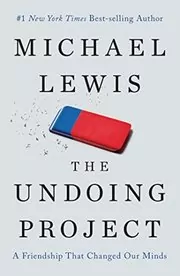
For readers who prefer intellectual history through people and relationships. Its account of Kahneman and Tversky makes the development of judgment research tangible, though the narrative is less useful as a systematic guide to applying the findings.
What it's about
Tells the intertwined story of psychologists Daniel Kahneman and Amos Tversky, whose research on judgment, bias, and decision-making reshaped economics, medicine, and politics, and of the intense friendship that powered, and eventually strained, their work together.
Also recommended by
4 people Anthony Pompliano recommended this book
Anthony Pompliano
"[One of the] best books I read in 2017." - Anthony Pompliano
Anthony Pompliano's recommendation of this book  Mark Cuban recommended this book
Mark Cuban
Mark Cuban's "books he's reading summer 2018" list.
Mark Cuban's recommendation of this book - Ray Dalio recommended this book
Ray Dalio
Ray Dalio mentioned this book on "The Tim Ferriss Show" podcast.
Ray Dalio's recommendation of this book  Raoul Pal recommended this book
Raoul Pal
Raoul Pal recommended this book on Twitter.
Raoul Pal's recommendation of this book

For readers who want to understand decisions made under shortages of money or time. Its attention to constrained mental bandwidth challenges explanations based solely on willpower, though the broad framework cannot capture every cause of poverty.
What it's about
Sendhil Mullainathan and Eldar Shafir examine how having too little money, time, or social connection changes attention and decision-making. Research and everyday examples illustrate scarcity's mental demands and suggest ways individuals and organizations might account for them.
Also recommended by
3 people Daniel Pink recommended this book
Daniel Pink
"One of the most underrated books of the last 10 years." - Daniel Pink
Daniel Pink's recommendation of this book  Esther Dyson recommended this book
Esther Dyson
"An explanation of scarcity for rich intellectuals, showing how poor people do stupid things for lack of money, while rich people do stupid things for lack of time." - Esther Dyson
Esther Dyson's recommendation of this book  Daniel Kahneman recommended this book
Daniel Kahneman
"The finest combination of heart and head that I have seen in our field." - Daniel Kahneman
Daniel Kahneman's recommendation of this book

For newcomers who enjoy investigating unexpected questions through incentives and data. Its conversational style makes economic reasoning inviting, though it is broader applied economics rather than a structured introduction to behavioral models or current research.
What it's about
Steven D. Levitt and Stephen J. Dubner use economic reasoning to investigate unexpected questions about everyday life. Their accounts of cheating, crime, parenting, and real estate explore incentives and challenge familiar explanations of how people behave.
Also recommended by
3 people Daymond John recommended this book
Daymond John
"I love newer books like [this book]." - Daymond John
Daymond John's recommendation of this book  James Altucher recommended this book
James Altucher
James Altucher mentioned this book on "The Tim Ferriss Show" podcast.
James Altucher's recommendation of this book - Ev Williams recommended this book
Ev Williams
On the "books read" section of Ev Williams' GoodReads profile.
Ev Williams's recommendation of this book

For readers overwhelmed by options who want to examine satisfaction, regret, and expectations. Its focused treatment makes choice overload easy to discuss, though the effects of additional choice vary across people, tasks, and circumstances.
What it's about
Barry Schwartz examines how an abundance of options can produce anxiety, regret, and dissatisfaction. Across consumer decisions and major life choices, he argues for managing expectations and adopting habits that make choosing less burdensome.
Also recommended by
2 people Pavel Tsatsouline recommended this book
Pavel Tsatsouline
"A very good book." - Pavel Tsatsouline
Pavel Tsatsouline's recommendation of this book  Noah Kagan recommended this book
Noah Kagan
"At restaurants, close the menu after you find the 1 dish that you like." - Noah Kagan
Noah Kagan's recommendation of this book
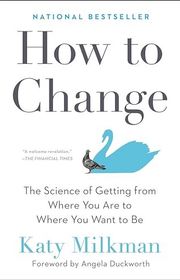
For readers who want behavioral research organized around obstacles to changing their own actions. Its problem specific approach is more directly practical than histories of the field, though suggested techniques still need testing against personal circumstances.
What it's about
Katy Milkman examines obstacles that prevent people from changing their behavior, including procrastination, inertia, and forgetfulness. Drawing on behavioral research, she discusses strategies matched to different barriers and explores how timing, incentives, and social influences can support action.
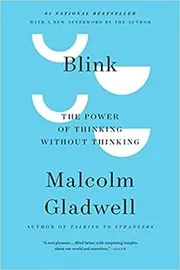
For general readers curious about the strengths and limits of snap judgments. Its storytelling makes intuition accessible, though it offers a selective popular account rather than a systematic behavioral economics foundation or a reliable decision procedure.
What it's about
In this fast-moving book about snap judgments, Gladwell explores how people think without thinking. He shows when quick impressions can be uncannily accurate, when they fail badly, and why expert intuition depends on knowing what details to ignore.
Also recommended by
3 people- Ev Williams recommended this book
Ev Williams
On the "books read" section of Ev Williams' GoodReads profile.
Ev Williams's recommendation of this book - Kevin Systrom recommended this book
Kevin Systrom
Kevin Systrom recommended this book on Facebook.
Kevin Systrom's recommendation of this book  Mike Shinoda recommended this book
Mike Shinoda
"I know most of the guys in the band read [this book]." - Mike Shinoda
Mike Shinoda's recommendation of this book
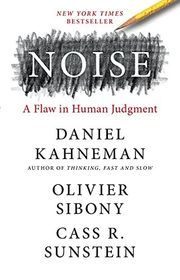
Noise: A Flaw in Human Judgment
For managers and professionals concerned about inconsistent judgments across similar cases. Its distinction between bias and unwanted variability adds an organizational perspective, though the detailed treatment and proposed procedures require effort to adapt to actual workplaces.
What it's about
Daniel Kahneman, Olivier Sibony, and Cass Sunstein examine unwanted variability in judgments made by people facing similar cases. They distinguish noise from systematic bias and explore procedures intended to improve consistency in organizations and professional decisions.

The Upside of Irrationality
The Unexpected Benefits of Defying Logic at Work and at Home
For readers interested in emotion, motivation, and the less obvious consequences of irrational behavior. Its approachable examples extend familiar decision puzzles into work and relationships, though research controversies make independent checking of specific claims especially useful.
What it's about
Dan Ariely examines the unexpected consequences of irrational choices at home and at work. Experiments and everyday experiences illuminate how emotion, social expectations, and incentives affect relationships, productivity, happiness, and the temptation to behave dishonestly.

For readers who want to see incentives tested outside a laboratory. Its emphasis on field experiments makes evidence gathering concrete, though results from particular communities and institutions do not automatically transfer to other settings.
What it's about
Gneezy and List use field experiments to investigate what motivates people in everyday life. Stories from varied communities and organizations reveal how incentives work, showing how evidence can challenge assumptions in business, education, politics, and philanthropy.

For readers making decisions when outcomes depend partly on luck. Its poker informed approach separates decision quality from results, though the analogies provide a practical mindset rather than a comprehensive account of behavioral economics.
What it's about
Drawing on professional poker, Annie Duke examines how people make choices without complete information. She explores how uncertainty, chance, and cognitive bias complicate judgment, offering ways to evaluate decisions without confusing their quality with their eventual outcomes.
Also recommended by
9 people Seth Godin recommended this book
Seth Godin
"The first chapter alone will change your life." - Seth Godin
Seth Godin's recommendation of this book - Marc Andreessen recommended this book
Marc Andreessen
"Compact guide to probabilistic domains like poker, or venture capital." - Marc Andreessen
Marc Andreessen's recommendation of this book  Mike Maples, Jr. recommended this book
Mike Maples, Jr.
"I wish I had learned the discipline of how to decide when I was younger." - Mike Maples, Jr.
Mike Maples, Jr.'s recommendation of this book - Max Levchin recommended this book
Max Levchin
"I read this book all the way through because I found the premise so intriguing. [The author] is a well-known poker player and won a World Series of Poker gold bracelet." - Max Levchin
Max Levchin's recommendation of this book  Howard Marks recommended this book
Howard Marks
"So many of [the author's] thoughts on poker and on decision-making in general agreed with mine." - Howard Marks
Howard Marks's recommendation of this book  Michael Mauboussin recommended this book
Michael Mauboussin
"An awesome book." - Michael Mauboussin
Michael Mauboussin's recommendation of this book +3
More recommendations
- Jason Fried
Jason Fried mentioned this book on Twitter.
- Mark Manson
Mark Manson recommended this book on his website.
- Danny Miranda
"[The author]'s academic plus poker background make this at a fascinating perspective." - Danny Miranda
- Jason Fried

For readers interested in how everyday spending might relate to wellbeing. Its narrow focus turns behavioral ideas into recognizable choices, though general research patterns do not determine what every household can afford or will find satisfying.
What it's about
Elizabeth Dunn and Michael Norton examine how spending choices affect happiness. Drawing on behavioral research, they present five principles that include valuing experiences and spending on others, connecting everyday purchases with the satisfaction they can provide.
Also recommended by
1 person Tim Ferriss recommended this book
Tim Ferriss
"It answers the question 'can money buy happiness?'" - Tim Ferriss
Tim Ferriss's recommendation of this book

For practitioners who want to improve the point where an intended service meets an actual decision. Its organizational tools connect behavioral insight with implementation, though using them well requires local evidence and careful testing.
What it's about
Soman explains how behavioral science can improve the final point where people make choices about an organization's offerings. Choice architecture, the psychology of money and time, behavioral experiments, and practical tools connect research insights with business, government, and nonprofit settings.
Sources
- 1
The Best Books on Behavioural Economics - Five Books Expert Recommendations
fivebooks.com
- 2
The 10 Most Influential Behavioral Economics Books [Updated for 2026] - Irrational Labs
irrationallabs.com
- 3
The 34 Best Books to Learn Behavioral Economics #SocentReadingList
movingworlds.org
- 4
Best Behavioral Economics Books for Beginners - Center for Health Incentives and Behavioral Economics (CHIBE)
chibe.upenn.edu
- 5
Popular Books - BehavioralEconomics.com | The BE Hub
behavioraleconomics.com
- 6
Behavioral Economics Books
goodreads.com
- 7
Behavioral Economics Books: A Critical Reading Guide | The Behavioral Scientist
thebehavioralscientist.com
- 8
First behavioral economics book? : r/BehavioralEconomics
reddit.com
- 9
Book recommendations for behavioural economics : r/BehavioralEconomics
reddit.com


Edited by
Software engineer whose passion for tracking book recommendations from podcasts inspired the creation of MRB.
Lead investor at 3one4 Capital whose startup expertise and love for books helped shape MRB and its growth.
Comments
Did we miss something? Have feedback?
Help us improve this page by sharing your thoughts