
22 Best Development Economics Books
Explore the best development economics books, ranked by expert sources and readers, on poverty, growth, institutions, policy, and competing paths to prosperity.
Our take
Development economics asks why living standards differ, how those differences persist, and what can improve people’s opportunities. The books here approach those questions at different scales. Some study household decisions and particular policies; others emphasize institutions, historical change, or what development should mean beyond rising income.
For an accessible entry through evidence about poverty, start with Poor Economics. Development as Freedom provides a different foundation by asking what people are actually able to do and become. Readers who want a structured course can choose Economic Development, while Debraj Ray’s Development Economics places greater demands on theoretical reasoning.
Read the broader arguments in conversation with one another. Why Nations Fail emphasizes institutions, How Asia Works examines specific policy combinations, and Kicking Away the Ladder challenges restrictions on late development. The End of Poverty and The White Man’s Burden offer sharply different views of international intervention. Begin with the level that interests you, from household choices to national transformation, then compare explanations rather than expecting one book to settle every debate.
22 books · 11 sources · Last updated
As an Amazon Associate, we earn from qualifying purchases (at no extra cost to you).
How to choose from this list
Skip to the full rankingIf you want an accessible introduction to poverty: Poor Economics → Development as Freedom
If you want a structured economics course: Economic Development → Development Economics
If you want to compare national development paths: Why Nations Fail → How Asia Works
If you want the debate over aid: The End of Poverty → The White Man's Burden
If you want industrial-policy arguments: Kicking Away the Ladder → The Elusive Quest for Growth
If you want alternatives to growth alone: Development as Freedom → Small Is Beautiful
The 22 books, ranked
Ranked by how many expert sources name each book. Ties go to the book more people recommend.

Development as Freedom
For readers who want to evaluate development through people’s real opportunities rather than income alone. Sen connects welfare with freedoms and public institutions, though the conceptual argument supplies fewer ready-made empirical tools than a methods text.
What it's about
Amartya Sen argues that development should be understood through the freedoms people can exercise in their lives. His analysis connects economic activity with social accountability, examining why rising overall wealth can coexist with deprivation and how freedom supports broader welfare.

For readers who want poverty policy grounded in particular choices and observed outcomes. Banerjee and Duflo make experimental evidence accessible, though lessons from individual interventions do not by themselves explain every country’s long-run development path.
What it's about
Abhijit Banerjee and Esther Duflo examine poverty through evidence about the lives and choices of poor people. They discuss how randomized trials and close attention to actual outcomes can challenge assumptions behind development policy and charitable aid.
Also recommended by
1 person Bill Gates recommended this book
Bill Gates
"Does a great job of bringing alive the complexities of poor people’s lives." - Bill Gates
Bill Gates's recommendation of this book

For readers drawn to comparative economic history and explanations involving culture and institutions. Landes offers an expansive argument about divergent prosperity, though its sweeping judgments are best read alongside contrasting historical interpretations.
What it's about
David Landes asks why some nations become prosperous while others remain poor. His historical account examines how cultural practices and circumstances interact with economic development, tracing contrasting paths to wealth and power around the world.
Also recommended by
3 people Charlie Munger recommended this book
Charlie Munger
Charlie Munger recommended this book in the "Poor Charlie's Almanack" book.
Charlie Munger's recommendation of this book  Jamie Dimon recommended this book
Jamie Dimon
On Jamie Dimon's list of favorite books.
Jamie Dimon's recommendation of this book  Brad Delong recommended this book
Brad Delong
"Very much worth reading." - Brad Delong
Brad Delong's recommendation of this book

The Mystery of Capital
Why Capitalism Triumphs in the West and Fails Everywhere Else
For readers interested in informal economies and the institutional barriers surrounding ownership. De Soto gives legal property systems a central explanatory role, though treating formalization as the main route to prosperity leaves other constraints less developed.
What it's about
De Soto argues that informal property arrangements prevent many people's assets from functioning as capital. Examining obstacles to legal ownership and economic participation, he proposes that accessible property systems are central to expanding opportunity in poorer countries.
Also recommended by
1 person Jordan Peterson recommended this book
Jordan Peterson
Recommended on Jordan Peterson's website.
Jordan Peterson's recommendation of this book

The Bottom Billion
Why the Poorest Countries are Failing and What Can Be Done About It
For readers seeking a clear account of obstacles facing the poorest countries. Collier organizes conflict, resources, geography, and governance into policy debates, though its broad country categories and intervention proposals need critical comparison with other accounts.
What it's about
Paul Collier examines why some of the world's poorest countries remain trapped by conflict, resource dependence, difficult geography, and weak governance. He assesses international responses, including aid, trade policy, intervention, and institutional reforms intended to support development.
Also recommended by
1 person- Bill Gates recommended this book
Bill Gates
"On the short list of books that I recommend to people." - Bill Gates
Bill Gates's recommendation of this book

For readers who want an ambitious case for coordinated investment against extreme poverty. Sachs connects field experience with a poverty-trap framework, though the book’s dated targets and confidence in large programs require comparison with later outcomes.
What it's about
Jeffrey Sachs draws on his work advising countries in economic crisis to propose ways of ending extreme poverty. He connects economic, political, environmental, and social problems in a framework for helping impoverished countries become more prosperous.
Also recommended by
1 person- Bill Gates recommended this book
Bill Gates
List of books Bill Gates read in 2011.
Bill Gates's recommendation of this book

The Elusive Quest for Growth
Economists' Adventures and Misadventures in the Tropics
For readers who want to understand why plausible growth policies can disappoint. Easterly uses incentives to connect theory with policy failures, though its skeptical emphasis offers less of a unified development blueprint than some readers expect.
What it's about
William Easterly examines why many development policies have failed to produce sustained growth in poorer countries. Combining economic theory with fieldwork stories, he argues that policy must account for the incentives facing individuals, businesses, governments, and aid donors.

The Wealth of Nations
For readers who want the historical foundations of thinking about productivity, exchange, and prosperity. Smith’s wide-ranging treatment rewards sustained reading, though its eighteenth-century setting makes it a source of ideas rather than contemporary policy instructions.
What it's about
Adam Smith examines how economic prosperity arises through labor, exchange, competition, and capital. First published in 1776, his study considers wages, trade, taxation, and the role of government within a broader account of national wealth.
Also recommended by
8 people Elon Musk recommended this book
Elon Musk
"Adam Smith FTW obv." - Elon Musk
Elon Musk's recommendation of this book  Naval Ravikant recommended this book
Naval Ravikant
Naval Ravikant's answer to "any good book about economy for a beginner?"
Naval Ravikant's recommendation of this book  Neil deGrasse Tyson recommended this book
Neil deGrasse Tyson
"To learn that capitalism is an economy of greed, a force of nature unto itself." - Neil deGrasse Tyson
Neil deGrasse Tyson's recommendation of this book  Nick Szabo recommended this book
Nick Szabo
"[One] of the most important books I’ve read." - Nick Szabo
Nick Szabo's recommendation of this book  Noam Chomsky recommended this book
Noam Chomsky
On the "Top 100 Books Referenced by Noam Chomsky" list.
Noam Chomsky's recommendation of this book  Brandon Stanton recommended this book
Brandon Stanton
Brandon Stanton mentioned this book on "The Tim Ferriss Show" podcast.
Brandon Stanton's recommendation of this book +2
More recommendations
- Bill Gurley
"[The author]'s magnum opus." - Bill Gurley
- Patrick Bet-David
Patrick Bet-David recommended this book on his website.
- Bill Gurley

How Asia Works
For readers who want concrete comparisons of development strategies within East Asia. Studwell connects land reform, industrial learning, and finance, though lessons drawn from particular regional histories cannot be transferred mechanically to every country.
What it's about
Joe Studwell compares the economic development of Asian countries to explain why some prospered while others lagged. Challenging the idea of a single regional miracle, he examines policy choices and structural differences behind contrasting experiences of growth.
Also recommended by
3 people- Bill Gates recommended this book
Bill Gates
"A good read for anyone who wants to understand what actually determines whether a developing economy will succeed." - Bill Gates
Bill Gates's recommendation of this book  Patrick Collison recommended this book
Patrick Collison
"A really good book." - Patrick Collison
Patrick Collison's recommendation of this book - Noah Smith recommended this book
Noah Smith
"I HIGHLY recommend [this book]." - Noah Smith
Noah Smith's recommendation of this book

For readers who want a clear institutional explanation of persistent differences in prosperity. Acemoglu and Robinson connect political power with economic incentives through historical cases, though the central framework can compress competing explanations and local complexity.
What it's about
Daron Acemoglu and James Robinson examine why countries follow different paths toward prosperity or poverty. Historical comparisons support their argument that political and economic institutions, rather than geography or culture alone, shape national development and opportunity.
Also recommended by
2 people Mark Zuckerberg recommended this book
Mark Zuckerberg
"Explores the different kinds of social institutions and incentives that nations have applied to encourage prosperity, economic development and elimination of poverty." - Mark Zuckerberg
Mark Zuckerberg's recommendation of this book - Bill Gates recommended this book
Bill Gates
"A major disappointment. I found the authors’ analysis vague and simplistic." - Bill Gates
Bill Gates's recommendation of this book

For readers who want a close view of how low-income households manage irregular money flows. The financial diaries reveal complexities missed by income averages, though the small set of country contexts limits broad generalization.
What it's about
Daryl Collins and her coauthors examine how poor households manage money through yearlong financial diaries. Research in Bangladesh, India, and South Africa reveals how families combine savings, loans, and informal arrangements to handle irregular income and emergencies.
Also recommended by
1 person- Mark Zuckerberg recommended this book
Mark Zuckerberg
"It's mind-blowing that almost half the world -- almost 3 billion people -- live on $2.50 a day or less." - Mark Zuckerberg
Mark Zuckerberg's recommendation of this book

For readers who want the founder's account of how microcredit developed in practice. Yunus makes the institutional struggle personal and concrete, though the memoir's enthusiasm should be distinguished from later evidence about the varied effects of small loans.
What it's about
Muhammad Yunus recounts the creation of the Grameen Bank and his efforts to extend small loans to people excluded from conventional banking. His account traces experiments in Bangladesh, institutional obstacles, and the development of microcredit as his proposed response to poverty.

For readers examining arguments against sustained aid dependence in Africa. Moyo presents a provocative financing critique, though its broad regional framing and forceful thesis require comparison with evidence on particular countries and types of assistance.
What it's about
Dambisa Moyo argues that dependence on development aid has hindered economic progress in Africa. Her critique examines the incentives and institutions surrounding aid, then proposes alternative financing and policy approaches intended to support growth without continued reliance on government assistance.

Development Economics
For economics students ready to study growth, inequality, and imperfect markets systematically. Ray connects theory across interacting development problems, though mathematical reasoning and older empirical examples make it less accessible than a general-audience introduction.
What it's about
Debraj Ray develops the economic theory of development through growth, inequality, poverty, population, and trade. Discussions of land, labor, and credit markets connect these themes with institutions and incentives, presenting development as the interaction of several influences rather than one cause.
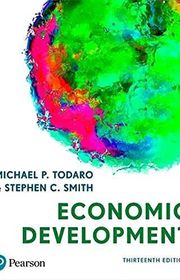
Economic Development
For students who want a broad, policy-oriented introduction before specializing in theory or empirical research. Todaro and Smith connect models with development problems and country examples, though the textbook format requires more sustained study than narrative accounts.
What it's about
Michael Todaro and Stephen Smith survey the theories, evidence, and policy debates of economic development. Chapters connect growth, poverty, inequality, population, migration, education, health, agriculture, trade, finance, and the environment with the practical challenges facing developing countries.

For readers examining the historical case for industrial policy and policy autonomy. Chang contrasts rich countries’ earlier strategies with later prescriptions for poorer ones, though its critical thesis benefits from comparison with competing interpretations of that history.
What it's about
Ha-Joon Chang examines the policies and institutions rich countries used during their own development. Comparing that history with advice given to poorer nations, he argues that restrictions on similar strategies can obstruct opportunities for economic growth.

More Than Good Intentions
Improving the Ways the World's Poor Borrow, Save, Farm, Learn, and Stay Healthy
For readers who want accessible examples of testing whether poverty programs actually help. Karlan and Appel make evaluation and behavior tangible, though successful small-scale interventions still raise questions about transfer, scale, and wider institutions.
What it's about
Dean Karlan and Jacob Appel examine efforts to reduce poverty through field experiments and attention to human behavior. Stories from development research explore borrowing, saving, education, and health, arguing that programs should be assessed by measured effects alongside their intentions.
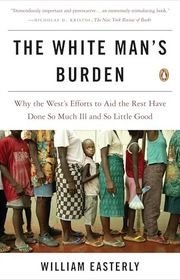
The White Man's Burden
For readers interested in a forceful critique of ambitious international aid plans. Easterly emphasizes accountability and local feedback, though the argument’s sharp contrast between planning and problem-solving should be tested against evidence from specific programs.
What it's about
William Easterly examines the record of international efforts to reduce poverty, criticizing large plans that overlook local incentives and accountability. He contrasts top-down ambitions with approaches that seek practical feedback and respond to the needs of people receiving assistance.

For readers interested in a very long historical view of unequal development. Diamond emphasizes geography, domestication, and disease, though this broad explanation needs complementing with accounts that give institutions, politics, and local histories more weight.
What it's about
Jared Diamond examines why different societies developed unequal levels of power and wealth. He emphasizes geography, available plants and animals, food production, disease, and technology as explanations for historical differences, challenging accounts based on racial superiority.
Also recommended by
12 people Joe Rogan recommended this book
Joe Rogan
"An amazing book." - Joe Rogan
Joe Rogan's recommendation of this book - Bill Gates recommended this book
Bill Gates
"Fascinating.... Lays a foundation for understanding human history." - Bill Gates
Bill Gates's recommendation of this book - Charlie Munger recommended this book
Charlie Munger
Charlie Munger recommended this book in the "Poor Charlie's Almanack" book.
Charlie Munger's recommendation of this book  Simon Sinek recommended this book
Simon Sinek
"Offers us a new and remarkably simple way of looking at our world." - Simon Sinek
Simon Sinek's recommendation of this book  Daniel Ek recommended this book
Daniel Ek
"A brilliant Pulitzer Prize-winning book about how the modern world was formed, analyzing how societies developed differently on different continents." - Daniel Ek
Daniel Ek's recommendation of this book  Jesse Williams recommended this book
Jesse Williams
"Helped rid me of the nagging incompleteness in my understood connection between the successes and failings of ancient and modern civilizations." - Jesse Williams
Jesse Williams's recommendation of this book +6
More recommendations
- Stewart Brand
"The main [book by this author]." - Stewart Brand
- Patrick Arnold
"Gave a big eye opening on why certain people of the world are more advanced than others and behave a certain way, as opposed to just genetics and this person is smarter because of this or that." - Patrick Arnold
- Jamie Dimon
On Jamie Dimon's list of favorite books.
- Margaret Atwood
"Also does pandemics." - Margaret Atwood
- Mark Manson
Mark Manson recommended this book on his website.
- James Clear
"[One of] the 10 best nonfiction books of all-time." - James Clear
- Stewart Brand

Factfulness
Ten Reasons We're Wrong About the World - and Why Things Are Better Than You Think
For readers who want to examine habitual assumptions about poverty and global living conditions. Rosling makes statistical perspective approachable, though the historical data need updating and broad progress does not settle disagreements about causes or policy.
What it's about
Hans Rosling and his collaborators examine ten habitual ways people misjudge global conditions. Using evidence about poverty, health, education, and population, they offer practical approaches to recognizing distorted assumptions and developing a more accurate understanding of the world.
Also recommended by
6 people- Bill Gates recommended this book
Bill Gates
"A fantastic book, and I hope a lot of people read it." - Bill Gates
Bill Gates's recommendation of this book - Jordan Peterson recommended this book
Jordan Peterson
Recommended on Jordan Peterson's website.
Jordan Peterson's recommendation of this book  Barack Obama recommended this book
Barack Obama
"A hopeful book about the potential for human progress when we work off facts rather than our inherent biases." - Barack Obama
Barack Obama's recommendation of this book  Howard Marks recommended this book
Howard Marks
"Unmasks a lot of misperceptions that people have about the state of the world." - Howard Marks
Howard Marks's recommendation of this book  Melinda Gates recommended this book
Melinda Gates
Melinda Gates recommended this book on Likewise.com.
Melinda Gates's recommendation of this book  Michael Batnick recommended this book
Michael Batnick
"Terrific book." - Michael Batnick
Michael Batnick's recommendation of this book

For readers questioning whether economic progress should mean ever larger production and organizations. Schumacher foregrounds human scale and ecological limits, though the essays offer a normative alternative rather than a modern empirical development textbook.
What it's about
E. F. Schumacher questions economic systems that equate progress with ever larger organizations and production. His essays propose an economy grounded in human needs, community, craftsmanship, and ecological limits, asking how prosperity can serve people while respecting the natural world.
Also recommended by
1 person Emma Watson recommended this book
Emma Watson
On the "books read" section of Emma Watson's GoodReads profile.
Emma Watson's recommendation of this book

Good Economics for Hard Times
For readers who want research-led discussion of major policy disputes rather than a single growth formula. Banerjee and Duflo connect several public problems, though the broad agenda extends well beyond poorer-country development and requires attention to context.
What it's about
Abhijit Banerjee and Esther Duflo use economic research to examine immigration, inequality, trade, technological change, growth, and climate policy. They challenge familiar assumptions and consider how evidence can help address difficult public problems amid political disagreement.
Sources
- 1
100 Best Development Economics Books of All Time (Updated for 2025)
shortform.com
- 2
Development Economics Books
goodreads.com
- 3
Development Links
kgajwani.scholars.harvard.edu
- 4
Development economics reading discussion
reddit.com
- 5
Development Economics Reading List
exploring-economics.org
- 6
11 Books about Poverty and Development
opportunity.org
- 7
Economic Development
brettparris.com
- 8
Can someone recommend me books to expand my limited knowledge about the world?
reddit.com
- 9
Economic Development Reading List
cato.org
- 10
Introduction to economic growth
bristol.ac.uk
- 11
The Best Books on Economic Development
fivebooks.com






Edited by
Software engineer whose passion for tracking book recommendations from podcasts inspired the creation of MRB.
Lead investor at 3one4 Capital whose startup expertise and love for books helped shape MRB and its growth.
Comments
Spotted a missing book, a wrong order or a mistake? Tell us and we'll fix this page.
We're a reading guide, not the author or publisher, so we can't send books or pass on messages.