
29 Best Diplomacy Books
The best diplomacy books, ranked by how many expert sources recommend each one, with notes for students, aspiring diplomats, and readers of world affairs.
Our take
Diplomacy involves negotiation, representation, communication, and the patient work of maintaining relations between states. Understanding it also means asking how leaders interpret one another, how institutions operate, and why settlements sometimes fail. These books approach those questions through practical guides, histories, reported accounts, and the recollections of people who took part.
Diplomacy: Theory and Practice offers a structured account of the profession, while Inside a U.S. Embassy shows the different jobs behind diplomatic work. Career Diplomacy is more directly useful for readers considering the American Foreign Service. Historical books examine negotiations in their political setting, and memoirs such as The Back Channel show decisions through one participant's experience. More theoretical works ask how power, national identity, and mistaken assumptions shape international choices.
Start with a practical overview if you want to understand what diplomats do. Choose a focused history or memoir if a particular period interests you, and compare participants' accounts with independent reporting before treating their judgments as a complete explanation.
29 books · 8 sources · Last updated
As an Amazon Associate, we earn from qualifying purchases (at no extra cost to you).
How to choose from this list
Skip to the full rankingIf you're new to diplomatic practice: Diplomacy: Theory and Practice → Inside a U.S. Embassy
If you're considering the US Foreign Service: Career Diplomacy → The Back Channel
If you want to study peace settlements: A World Restored → Paris 1919
If you're interested in negotiation and misunderstanding: Negotiating Across Cultures → Perception and Misperception in International Politics
If you want the UN from different perspectives: New World Disorder: The UN after the Cold War - An Insider's View → The Education of an Idealist
If you want reported accounts of policy failure: The Best and the Brightest → Fiasco: The American Military Adventure in Iraq, 2003 to 2005
The 29 books, ranked
Ranked by how many expert sources name each book. Ties go to the book more people recommend.

Diplomacy
For readers who want a broad history of diplomacy organized around power and national interests. Kissinger connects historical cases with his own experience, though his realist perspective and role in the events call for critical comparison.
What it's about
Henry Kissinger surveys diplomatic history and the competing principles that have shaped relations among states. Moving from European balance-of-power politics to American foreign policy and his own negotiations, he examines the tensions between national interests and political ideals.
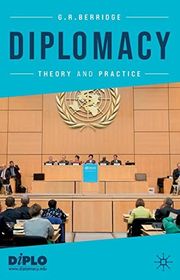
Diplomacy: Theory and Practice
For students who want a systematic account of how diplomacy is organized and conducted. Its treatment of negotiation, missions, and communication provides a useful framework, though it reads as a textbook rather than a personal narrative.
What it's about
G. R. Berridge explains diplomatic negotiation, foreign ministries, embassies, consulates, summits, and public communication. The sixth edition also examines diplomacy in hostile circumstances, with historical examples, contemporary cases, discussion topics, and annotated further reading for students.

Inside a U.S. Embassy
For readers who want to understand the different jobs inside an embassy. Firsthand profiles and daily accounts make the work concrete, though the US focus and older edition mean current entry requirements need checking separately.
What it's about
Edited by Shawn Dorman, this collection introduces roles across American embassies and consulates. Profiles, day-in-the-life accounts, and reports from the field describe diplomatic work, specialist responsibilities, overseas life, and responses to difficult assignments and crises.
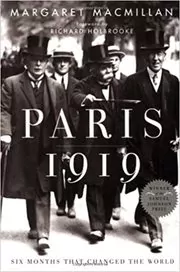
For readers who want diplomatic history through the people and bargaining behind a major peace settlement. MacMillan combines personalities with competing national demands, though the scale and many delegations make this a substantial historical read.
What it's about
Margaret MacMillan examines the six months of negotiations following the First World War. Wilson, Lloyd George, and Clemenceau confront competing national ambitions as their decisions reshape borders and establish the terms of peace.

For beginners who want a readable geographical introduction to international affairs. The regional chapters make physical constraints easy to picture, though the broad framework simplifies political choices and offers little detail about diplomatic practice.
What it's about
In this breakout book, Marshall uses ten maps to explain how mountains, rivers, coastlines and climate channel the choices of world leaders. Each chapter focuses on a key region and shows how geography underpins wars, alliances, trade routes and long running rivalries.
Also recommended by
1 person Fareed Zakaria recommended this book
Fareed Zakaria
"Explains the world starting with geography." - Fareed Zakaria
Fareed Zakaria's recommendation of this book

For readers interested in the move from human-rights advocacy into government. Power connects personal life with diplomatic choices, though the memoir presents her own account of difficult compromises and benefits from comparison with other perspectives.
What it's about
Samantha Power recounts her journey from Irish immigrant and war correspondent to human rights adviser and United States ambassador to the United Nations. Her memoir examines family life, public service, and the tensions between moral conviction and political power.
Also recommended by
1 person Barack Obama recommended this book
Barack Obama
Barack Obama's favorite books of 2019 list.
Barack Obama's recommendation of this book

A World Restored
For readers interested in the diplomacy behind the European settlement after Napoleon. Its sustained examination of balance and legitimacy develops ideas found in Kissinger's broader history, though the narrow period and analytical density require patience.
What it's about
Henry Kissinger examines Metternich, Castlereagh, and European diplomacy between 1812 and 1822. His historical study considers how leaders sought a stable political settlement after Napoleon, connecting negotiations with questions of legitimacy, national interests, and the balance of power.
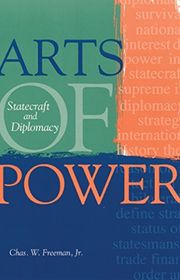
Arts of Power
For readers who want to place negotiation within the wider tools of statecraft. Freeman draws connections among diplomatic, economic, and military choices, though the broad principles offer less procedural detail than a dedicated practice reference.
What it's about
Chas W. Freeman Jr. examines the principles of statecraft and diplomatic work through experience and historical examples. Topics include intelligence, political action, cultural influence, economic measures, military power, negotiation, and the skills involved in representing a state.
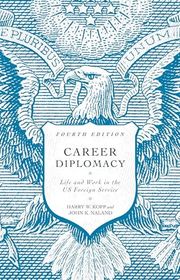
Career Diplomacy
For readers considering a career in the US Foreign Service. Its account of entry, advancement, and professional dilemmas is more directly useful than diplomatic memoirs, though the institutional guidance is specific to the American system.
What it's about
Harry W. Kopp and John K. Naland explain the US Foreign Service as an institution, profession, and career. They examine recruitment, career development, working conditions, and ethical challenges through experience and interviews with serving and former diplomats.

For readers who prefer diplomatic history through individual decision-makers. Hurd uses British foreign secretaries to examine competing approaches to power, though the British focus and biographical structure provide a selective account rather than a global survey.
What it's about
Douglas Hurd examines British diplomacy through the lives and decisions of successive foreign secretaries. The history explores the tensions between intervention and cooperation, connecting individual personalities with debates about how Britain should exercise influence in the wider world.
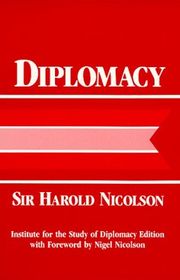
Diplomacy
For readers interested in the professional ideals and older traditions of diplomacy. Nicolson offers a compact perspective on diplomatic conduct, though its European setting and historical assumptions need supplementing with contemporary accounts of the profession.
What it's about
Harold Nicolson surveys the history, meaning, and practice of diplomacy. He considers changing methods, the qualities expected of diplomats, and the relationship between negotiation and public life, presenting a historical account of the profession's principles and ideals.

For readers interested in the United Nations' post-Cold War role. Hannay connects institutional problems with experience inside the organization, though his British diplomatic perspective and the book's historical period limit its coverage of later crises.
What it's about
David Hannay recounts the United Nations' changing role after the Cold War from his experience as Britain's representative. He examines international cooperation, crises in failed states, and the difficulties of reforming an organization facing demands beyond its capabilities.

Satow's Diplomatic Practice
For students and practitioners who need a substantial reference on diplomatic institutions and procedure. Its detailed coverage is more useful for consultation than narrative reading, and edition choice matters when you need current practice.
What it's about
Edited by Ivor Roberts, this reference examines diplomatic law and practice for people studying or working in diplomacy. Coverage includes diplomatic history, international organizations, human rights, public diplomacy, unconventional diplomatic channels, and the role of non-state actors.
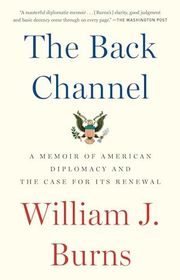
The Back Channel
For readers who want to see diplomacy through a career official's daily work and negotiations. Burns combines personal experience with documents, though this remains a participant's account and an argument for the profession's value.
What it's about
William J. Burns recounts more than three decades in American diplomacy, including relations with Russia and negotiations involving the Middle East. Drawing on cables and memoranda, he examines diplomatic judgment, setbacks, and the case for sustained international engagement.

For readers interested in how digital communication changes diplomatic influence. Fletcher connects professional experience with public participation, though the forward-looking argument is broader and more speculative than a procedural guide to embassy work.
What it's about
Former British ambassador Tom Fletcher examines how digital technology shifts power away from governments and challenges diplomacy. Drawing on history and his experience, he asks how public engagement and international cooperation can address insecurity, inequality, and global crises.

For readers interested in the weakening of civilian diplomacy within American foreign policy. Farrow's reporting gives institutions a human dimension, though the argument centers on US choices and presents an explicit case for diplomatic renewal.
What it's about
Ronan Farrow examines the weakening of American diplomacy and development institutions as military approaches take a larger role abroad. Reporting from Washington and conflict zones, he explores the implications of this shift for American influence.

On China
For readers interested in the historical outlook behind Chinese diplomacy and US-China relations. Kissinger combines history with experience of negotiations, though his role in the relationship and emphasis on elite strategy give the account a particular angle.
What it's about
Henry Kissinger examines Chinese history and diplomatic traditions alongside his encounters with successive generations of leaders. His account explores strategic thinking, the opening of relations with the United States, and the challenges of interpreting China's international role.
Also recommended by
1 person Greg Norman recommended this book
Greg Norman
One of Greg Norman's 3 answers to "what is the book (or books) you’ve given most as a gift?"
Greg Norman's recommendation of this book

World Order
For readers who want a broad framework for competing visions of international order. Kissinger compares historical traditions across regions, though the compressed civilizational categories and emphasis on state power can obscure differences within societies.
What it's about
Henry Kissinger examines competing historical ideas of international order and the difficulty of creating shared rules among states. Drawing on diplomacy and political history, he explores sovereignty, legitimacy, conflict, and the influence of differing cultural traditions.
Also recommended by
1 person Mark Zuckerberg recommended this book
Mark Zuckerberg
"About foreign relations and how we can build peaceful relationships throughout the world." - Mark Zuckerberg
Mark Zuckerberg's recommendation of this book
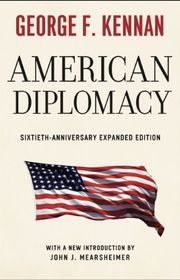
American Diplomacy
For readers who want a concise critique of American foreign-policy habits from an experienced diplomat. Kennan's essays sharpen questions about power and restraint, though the realist outlook and historical setting represent a particular perspective.
What it's about
George F. Kennan examines American foreign policy and the tensions between ideals, domestic politics, and power. His lectures and essays criticize moral certainty and overreach, asking how a powerful state can act with greater prudence and responsibility.
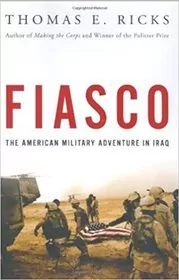
For readers who want a reported account of the gap between military victory and political outcomes. Ricks makes organizational failures concrete, though the Iraq focus is more useful for studying intervention than learning diplomatic procedure.
What it's about
Ricks reconstructs the invasion and occupation of Iraq through interviews, documents, and reporting from the field. It is a sharp account of how early battlefield success gave way to political and strategic failure.
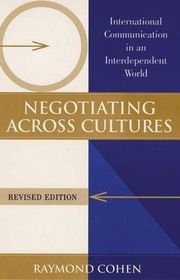
Negotiating Across Cultures
For readers preparing to examine cultural misunderstandings in international bargaining. Cohen's cases make communication differences concrete, though the high-context and low-context framework can oversimplify variation within societies and needs careful application to individuals.
What it's about
Raymond Cohen explores cultural influences on international negotiation, using American dealings with Japan, China, Egypt, India, and Mexico. He compares explicit and implicit communication styles and considers how different expectations affect bargaining, interpretation, and the handling of agreements.
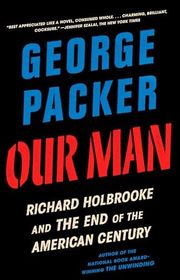
Our Man
For readers who prefer biography to a diplomat's own memoir. Packer examines Holbrooke's ambition alongside American foreign-policy choices, though the intimate, character-driven approach is less systematic than a general history of the institutions involved.
What it's about
George Packer follows Richard Holbrooke's diplomatic career from Vietnam through the Balkans and Afghanistan. Drawing a connection between personality and policy, the biography examines ambition, influence, and the possibilities and limits of American leadership abroad.

Perception and Misperception in International Politics
For readers studying how assumptions and expectations shape foreign-policy decisions. Jervis offers a sustained framework for examining misread intentions, though the analytical discussion and historical cases demand more concentration than an introductory diplomatic memoir.
What it's about
Robert Jervis applies cognitive psychology to foreign-policy decisions, exploring how leaders interpret events and misread others' intentions. The study examines learning from history, assumptions about influence, and recurring forms of misperception that shape choices in international politics.
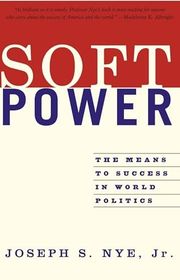
Soft Power
For readers interested in influence through attraction and persuasion rather than coercion alone. Nye provides a clear conceptual complement to power-centered histories, though the American policy focus offers less guidance on the routines of diplomatic work.
What it's about
Joseph S. Nye Jr. explains soft power as the ability to attract and persuade through culture, political ideals, and policies. He considers its relationship with military and economic power and its use in advancing international influence.

White House Years
For readers who want Kissinger's own account of high-level decision-making under Nixon. The detailed insider perspective complements broader diplomatic histories, though the length and author's interest in defending his decisions call for comparison with independent accounts.
What it's about
Henry Kissinger recounts his work as national security adviser during Richard Nixon's first presidential term. This memoir presents his perspective on Vietnam negotiations, relations with China and the Soviet Union, regional crises, and decision-making within the administration.

For readers seeking long historical context for inequalities among societies. Its geographical framework invites large-scale comparison, though it addresses diplomacy only indirectly and is better background reading than a guide to negotiation or foreign-policy institutions.
What it's about
Jared Diamond examines why different societies developed unequal levels of power and wealth. He emphasizes geography, available plants and animals, food production, disease, and technology as explanations for historical differences, challenging accounts based on racial superiority.
Also recommended by
12 people Joe Rogan recommended this book
Joe Rogan
"An amazing book." - Joe Rogan
Joe Rogan's recommendation of this book  Bill Gates recommended this book
Bill Gates
"Fascinating.... Lays a foundation for understanding human history." - Bill Gates
Bill Gates's recommendation of this book  Charlie Munger recommended this book
Charlie Munger
Charlie Munger recommended this book in the "Poor Charlie's Almanack" book.
Charlie Munger's recommendation of this book  Simon Sinek recommended this book
Simon Sinek
"Offers us a new and remarkably simple way of looking at our world." - Simon Sinek
Simon Sinek's recommendation of this book  Daniel Ek recommended this book
Daniel Ek
"A brilliant Pulitzer Prize-winning book about how the modern world was formed, analyzing how societies developed differently on different continents." - Daniel Ek
Daniel Ek's recommendation of this book  Jesse Williams recommended this book
Jesse Williams
"Helped rid me of the nagging incompleteness in my understood connection between the successes and failings of ancient and modern civilizations." - Jesse Williams
Jesse Williams's recommendation of this book +6
More recommendations
- Stewart Brand
"The main [book by this author]." - Stewart Brand
- Patrick Arnold
"Gave a big eye opening on why certain people of the world are more advanced than others and behave a certain way, as opposed to just genetics and this person is smarter because of this or that." - Patrick Arnold
- Jamie Dimon
On Jamie Dimon's list of favorite books.
- Margaret Atwood
"Also does pandemics." - Margaret Atwood
- Mark Manson
Mark Manson recommended this book on his website.
- James Clear
"[One of] the 10 best nonfiction books of all-time." - James Clear
- Stewart Brand
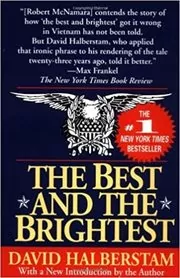
The Best and the Brightest
For readers interested in how talented policymakers can make disastrous decisions. Halberstam examines institutional assumptions and political pressures in depth, though the Vietnam focus offers lessons about policy failure rather than a general introduction to diplomacy.
What it's about
A deep account of how the Kennedy and Johnson administrations led the United States into Vietnam. Halberstam follows the gifted officials, bad assumptions, and political pressures that turned confidence into disaster.

For readers examining why ambitious state projects overlook local knowledge. Scott provides a useful challenge to top-down policy thinking, though the focus on domestic administration makes its relevance to diplomacy indirect rather than practical.
What it's about
James Scott investigates why ambitious state plans to improve society and the environment can end in disaster. Cases from Russia, Tanzania and elsewhere help him identify recurring conditions behind failures and question the assumptions of centralized social engineering.
Also recommended by
2 people Balaji Srinivasan recommended this book
Balaji Srinivasan
"There’s a sense in which the term 'real name' is a misnomer. A better term is a state name — a name which makes you legible to the state." - Balaji Srinivasan
Balaji Srinivasan's recommendation of this book  Rory Sutherland recommended this book
Rory Sutherland
"A fabulous book." - Rory Sutherland
Rory Sutherland's recommendation of this book

Nations and Nationalism
For readers who want theory behind national identity and the pressures states face. Gellner connects nationalism with social change, though the abstract, industrial-society argument provides background for diplomacy rather than a handbook of international negotiation.
What it's about
Ernest Gellner explains nationalism through its social roots in industrial society. He examines how changes in work, education, and shared culture create pressures for political and cultural boundaries to coincide, offering an account of modern nation formation.
Sources
- 1
AFSA-Recommended Reading | American Foreign Service Association
afsa.org
- 2
100 Best Diplomacy Books of All Time (Updated for 2026)
shortform.com
- 3
The Best Books on Diplomacy - Five Books Expert Recommendations
fivebooks.com
- 4
Diplomacy Books
goodreads.com
- 5
Looking for book recommendations on diplomacy — practice, theory, and history (aspiring diplomat, EU/Japan focus)
reddit.com
- 6
Negotiating - G. R. Berridge
grberridge.diplomacy.edu
- 7
State Department Reading List for 2026: 74 Books | DODReads
dodreads.com
- 8
Top 10 Books About International Relations
oxfordglobal.org



Edited by
Software engineer whose passion for tracking book recommendations from podcasts inspired the creation of MRB.
Lead investor at 3one4 Capital whose startup expertise and love for books helped shape MRB and its growth.
Comments
Spotted a missing book, a wrong order or a mistake? Tell us and we'll fix this page.
We're a reading guide, not the author or publisher, so we can't send books or pass on messages.