
19 Best Iraq War Books
The best Iraq War books, ranked by how many expert sources recommend each one, with notes on reporting, memoirs, fiction and the best place to start.
Our take
Books about the Iraq War approach it from very different distances. Strategic histories examine the invasion, occupation and changing military plans. Reporters follow soldiers and civilians through daily uncertainty, while memoirs and fiction explore experiences that continue after deployment. Reading across those forms helps distinguish the decisions made in offices from their consequences in homes, streets and military units.
Fiasco explains the early American campaign's failures, and The Gamble continues into the surge. Imperial Life in the Emerald City concentrates on occupation administration, while Night Draws Near keeps Iraqi civilian experience in view. For close reporting on soldiers, try The Good Soldiers; for their return home, follow it with Thank You for Your Service. Novels and stories such as The Yellow Birds, Redeployment and The Corpse Exhibition offer different literary responses to violence and memory. Begin with a broad nonfiction account, then add an Iraqi perspective and a more personal narrative.
19 books · 8 sources · Last updated
As an Amazon Associate, we earn from qualifying purchases (at no extra cost to you).
How to choose from this list
Skip to the full rankingIf you want the American campaign's strategic arc: Fiasco → The Gamble → The Endgame
If you want occupation policy and civilian life: Imperial Life in the Emerald City → Night Draws Near
If you want soldiers' experiences during and after deployment: The Good Soldiers → Thank You for Your Service
If you want close reporting on the invasion: Generation Kill → One Bullet Away
If you want fiction about war and its aftermath: The Yellow Birds → Redeployment → The Corpse Exhibition
The 19 books, ranked
Ranked by how many expert sources name each book. Ties go to the book more people recommend.
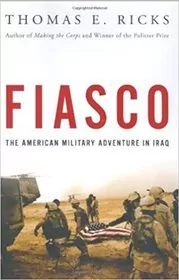
For readers who want an explanation of the early invasion and occupation's strategic failures. Ricks connects decisions in command with consequences on the ground, though its 2003-2005 focus needs later reading to follow the rest of the conflict.
What it's about
Ricks reconstructs the invasion and occupation of Iraq through interviews, documents, and reporting from the field. It is a sharp account of how early battlefield success gave way to political and strategic failure.

For readers trying to understand why occupation policy became disconnected from Iraqi realities. Chandrasekaran makes administrative choices concrete through the Green Zone's daily routines, though the focus on American governance leaves much of Iraqi life outside the frame.
What it's about
Rajiv Chandrasekaran investigates American efforts to rebuild Iraq through life inside Baghdad's Green Zone. He examines how the enclave's insulated routines and assumptions shaped occupation policy, contrasting its administrators' experience with conditions beyond the compound.

The Good Soldiers
For readers who want the surge understood through one unit's daily experience. Finkel's sustained observation makes the human costs specific, though the narrow focus cannot by itself explain the broader political and military campaign.
What it's about
An immersive account of the 2007 surge in Baghdad, centered on the 2-16 Rangers and Lt. Col. Ralph Kauzlarich. Finkel stays close to the soldiers on the ground, showing how policy talk turns into fear, loss, and daily survival.

For readers interested in combat leadership from a junior officer's perspective. Fick connects training with decisions made under pressure, though the memoir also covers Afghanistan and offers one commander's view rather than a full account of the war.
What it's about
Nathaniel Fick recounts his training as a Marine officer and his service in Afghanistan and Iraq. His memoir follows the demands of reconnaissance work and combat leadership, including the responsibility of protecting his men while questioning the missions assigned to them.
Also recommended by
1 person Peter Attia recommended this book
Peter Attia
One of Peter Attia's answers to "is there a book that you’ve read more than once?"
Peter Attia's recommendation of this book

The Forever War
For readers who want a reporter's close encounters with combatants and civilians. Filkins conveys uncertainty and violence through memorable scenes, though the movement between Iraq and Afghanistan offers less chronological structure than a conventional history.
What it's about
Dexter Filkins recounts reporting in Afghanistan and Iraq, placing combatants and civilians at the center of his account. Encounters, observed violence, and the uncertainty of daily life explore the human consequences of conflict and the difficulty of understanding war.
The Gamble
For readers ready to continue beyond Fiasco into the surge and its strategic debates. Ricks explains changes in American military thinking through interviews and reporting, though its publication point leaves the war's later outcomes unresolved.
What it's about
Ricks examines the debate over American strategy in Iraq and the implementation of the troop surge. Interviews with military leaders and reporting from the field trace the decisions, personalities and changing tactics that shaped the conflict from 2006 to 2008.

For readers drawn to a short, reflective novel about combat and its aftermath. Powers's lyrical voice emphasizes memory, guilt and damaged friendship, though the fragmented chronology and imagery ask for more attention than straightforward military fiction.
What it's about
Young soldiers Bartle and Murphy rely on each other during brutal fighting in Iraq, bound by Bartle's promise to bring Murphy home. Their struggle to survive follows them beyond combat, exposing war's lasting psychological damage.
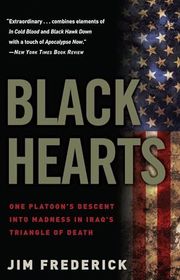
Black Hearts
For readers examining how leadership and unit conditions can contribute to atrocity. Frederick reconstructs one platoon's breakdown in close detail, though the killings and sexual violence make it an especially disturbing account rather than a general introduction.
What it's about
Frederick investigates the collapse of discipline in an American platoon serving in Iraq's Triangle of Death. The account connects leadership failures, repeated casualties and brutal conditions with war crimes, their investigation and the consequences for victims and soldiers.

For readers who want war fiction centered on bureaucracy rather than frontline heroics. Abrams's satire exposes public relations and institutional absurdity, though its exaggerated characters can feel less immediate than the quieter accounts of combat and loss.
What it's about
David Abrams's satirical novel follows soldiers and officers stationed at Baghdad's Forward Operating Base Triumph. Bureaucracy, public relations, and competing ambitions complicate their supposedly safer work behind the lines, exposing absurdities within the machinery of war.

Generation Kill
For readers who want the invasion seen close to a Marine reconnaissance unit. Wright's embedded reporting captures personality, confusion and danger, though the tight focus offers little of the Iraqi civilian perspective or higher-level planning.
What it's about
Evan Wright reports from his time embedded with Marine reconnaissance troops during the 2003 invasion of Iraq. Close portraits of the young servicemen follow combat, camaraderie, command decisions, and the physical and moral pressures encountered during the invasion.

Thank You for Your Service
For readers who want to follow the war beyond deployment and into households at home. Finkel's close reporting captures the strain on soldiers and families, though the intimate distress makes this an emotionally demanding account.
What it's about
Finkel follows soldiers from his earlier Iraq reporting as they return home and try to reenter ordinary life. The book looks closely at trauma, family strain, and the uneven systems meant to help them heal.

For readers who want the invasion's ideas and decision-makers connected with life in Iraq. Packer moves between policy arguments and individual encounters, though the emphasis on the war's beginnings needs later history alongside it.
What it's about
George Packer investigates the ideas, personalities, and decisions behind America's invasion of Iraq and its aftermath. Reporting from Washington and Iraq connects policy debates with the experiences of soldiers and civilians, tracing the distance between the war's ambitions and its consequences.
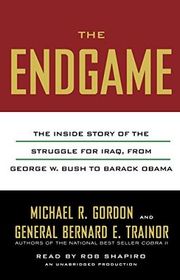
The Endgame
For readers who want a substantial account of the occupation through American withdrawal. Gordon and Trainor connect military operations with political negotiations, though the detailed cast and emphasis on high-level decisions make this a demanding first book.
What it's about
Gordon and Trainor trace the struggle over Iraq from the occupation to the withdrawal of American troops. Reporting and documentary research examine military campaigns, political negotiations and the decisions of American, Iraqi and other regional actors.

For readers interested in the gap between military experience and patriotic spectacle at home. Fountain's compressed, satirical novel brings that divide into one public event, though its heightened style provides interpretation rather than a factual campaign history.
What it's about
Nineteen-year-old soldier Billy Lynn joins his squad on a publicity tour after their Iraq firefight becomes televised heroism. At a Dallas Thanksgiving football game, patriotic spectacle collides with his grief, private doubts, and looming return to war.

For readers who want Iraqi civilians at the center of invasion and occupation reporting. Shadid gives family and community experiences sustained attention, though the early-war focus stops short of the conflict's later transformations.
What it's about
Anthony Shadid follows Iraqi civilians through invasion and occupation, reporting on daily life rather than military strategy alone. Their experiences reveal conflicting hopes, fears, and loyalties as war transforms families, communities, and ideas about the country's future.

Redeployment
For readers who prefer several sharply different voices to one continuous war narrative. Klay's stories examine guilt, faith and military identity from varied angles, though their range offers a mosaic rather than a chronological account.
What it's about
Phil Klay's story collection follows American servicemen through the Iraq War and its aftermath. Different narrators confront combat, faith, guilt, and the difficulty of returning home, exposing tensions between military experience and civilian expectations of war.

For readers interested in recovery as a shared challenge within a veteran marriage. Williams connects injury, intimacy and the demands of civilian life, though the personal account offers neither a general treatment guide nor a broad military history.
What it's about
Kayla Williams recounts building a marriage with fellow Iraq veteran Brian McGough after his serious brain injury. Her memoir follows their return to civilian life, confronting trauma, recovery, and the strain military service places on intimate relationships.

For readers open to unsettling Iraqi fiction that moves beyond realistic war reporting. Blasim's dark humor and fantastic turns capture dislocation and horror, though the graphic violence and deliberate instability make the collection challenging to read.
What it's about
Hassan Blasim's short stories portray Iraq through violence, displacement, and unsettling encounters with the fantastic. Soldiers, refugees, assassins, and supernatural figures inhabit narratives that combine wartime horror with dark humor and deliberately disorienting turns in storytelling.

You Know When the Men Are Gone
For readers interested in military families living with deployment's absences and uncertainties. Fallon's linked stories give the home front its own emotional complexity, though the focus on an American base offers limited access to Iraqi experience.
What it's about
Siobhan Fallon's linked stories explore life around Fort Hood while soldiers serve overseas. Spouses, children, and returning servicemen navigate absence, suspicion, loyalty, and uncertainty, revealing how distant combat reshapes the emotional life of a military community.
Sources
- 1
10 years of the Iraq War: 10 great books
washingtonpost.com
- 2
100 Best Iraq War Books of All Time
shortform.com
- 3
Books on Afghan/Iraq wars
reddit.com
- 4
Books on Iraq war and subsequent occupation.
reddit.com
- 5
Top 10 books about the Iraq war
theguardian.com
- 6
15 Great Books About Iraq, Afghanistan
thedailybeast.com
- 7
Best Iraq and Afghanistan War Books
goodreads.com
- 8
War Books: The Iraq War
mwi.westpoint.edu







Edited by
Software engineer whose passion for tracking book recommendations from podcasts inspired the creation of MRB.
Lead investor at 3one4 Capital whose startup expertise and love for books helped shape MRB and its growth.
Comments
Spotted a missing book, a wrong order or a mistake? Tell us and we'll fix this page.
We're a reading guide, not the author or publisher, so we can't send books or pass on messages.