
30 Best History Books
Explore the best history books, ranked by expert sources, with choices for curious beginners, immersive storytelling, and deeper study of particular eras.
Our take
History can begin with a question, a place, or a person whose choices changed other lives. A broad account helps you locate events in time, while a focused narrative can show what those events meant to people caught inside them. The most useful starting point is often a subject you already want to understand, followed by another book that complicates the first account.
SPQR offers an engaging route into ancient Rome, while The Guns of August concentrates on the decisions surrounding the opening of World War I. The Warmth of Other Suns builds a larger social history through individual lives, and Fifth Sun brings Indigenous accounts to the center of Aztec history. For readers more interested in how explanations are constructed, What Is History? asks questions that apply across the entire selection. Expect different scales, voices, and interpretations here; the choice depends on whether you want a story to enter or an argument to investigate.
30 books · 8 sources · Last updated
As an Amazon Associate, we earn from qualifying purchases (at no extra cost to you).
How to choose from this list
Skip to the full rankingIf you are beginning ancient history: SPQR → The History of the Ancient World
If you want twentieth-century conflict and aftermath: The Guns of August → Embracing Defeat → Postwar
If individual lives draw you in: The Warmth of Other Suns → Say Nothing → Grant
If you want to reconsider familiar historical perspectives: 1491 → Fifth Sun → The Silk Roads
If you want to question historical interpretation: What Is History? → Orientalism
The 30 books, ranked
Ranked by how many expert sources name each book. Ties go to the book more people recommend.

The Guns of August
The Pulitzer Prize-Winning Classic About the Outbreak of World War I
For readers who want political decisions to feel consequential, Tuchman turns the opening of World War I into a compelling narrative. Its concentrated focus makes a strong starting point, but does not cover the whole war.
What it's about
Barbara W. Tuchman recounts the opening month of World War I and the decisions that brought European powers into conflict. Beginning with Edward VII's funeral, she traces preparations, personalities, and events that shaped the war's course.
Also recommended by
1 person Doris Kearns Goodwin recommended this book
Doris Kearns Goodwin
"So beautifully written. But more importantly, for me, she was writing about battles and military stuff and things that you don’t imagine that sometimes a woman might be so adept at." - Doris Kearns Goodwin
Doris Kearns Goodwin's recommendation of this book

For readers drawn to large questions about global inequality, Diamond makes geography and ecology central to historical explanation. Treat its ambitious framework as an argument to examine alongside detailed regional histories, rather than a complete explanation.
What it's about
Jared Diamond examines why different societies developed unequal levels of power and wealth. He emphasizes geography, available plants and animals, food production, disease, and technology as explanations for historical differences, challenging accounts based on racial superiority.
Also recommended by
12 people Joe Rogan recommended this book
Joe Rogan
"An amazing book." - Joe Rogan
Joe Rogan's recommendation of this book  Bill Gates recommended this book
Bill Gates
"Fascinating.... Lays a foundation for understanding human history." - Bill Gates
Bill Gates's recommendation of this book  Charlie Munger recommended this book
Charlie Munger
Charlie Munger recommended this book in the "Poor Charlie's Almanack" book.
Charlie Munger's recommendation of this book  Simon Sinek recommended this book
Simon Sinek
"Offers us a new and remarkably simple way of looking at our world." - Simon Sinek
Simon Sinek's recommendation of this book  Daniel Ek recommended this book
Daniel Ek
"A brilliant Pulitzer Prize-winning book about how the modern world was formed, analyzing how societies developed differently on different continents." - Daniel Ek
Daniel Ek's recommendation of this book  Jesse Williams recommended this book
Jesse Williams
"Helped rid me of the nagging incompleteness in my understood connection between the successes and failings of ancient and modern civilizations." - Jesse Williams
Jesse Williams's recommendation of this book +6
More recommendations
- Stewart Brand
"The main [book by this author]." - Stewart Brand
- Patrick Arnold
"Gave a big eye opening on why certain people of the world are more advanced than others and behave a certain way, as opposed to just genetics and this person is smarter because of this or that." - Patrick Arnold
- Jamie Dimon
On Jamie Dimon's list of favorite books.
- Margaret Atwood
"Also does pandemics." - Margaret Atwood
- Mark Manson
Mark Manson recommended this book on his website.
- James Clear
"[One of] the 10 best nonfiction books of all-time." - James Clear
- Stewart Brand

Genghis Khan and the Making of the Modern World
For readers whose picture of the Mongols begins and ends with conquest, Weatherford offers a readable reassessment of their wider influence. His sympathetic emphasis is engaging, but benefits from comparison with other accounts of imperial violence.
What it's about
Jack Weatherford traces Genghis Khan's rise and the expansion of the Mongol Empire. His history examines conquest alongside trade, religious policy, and cultural exchange, arguing that Mongol rule helped shape the emergence of the modern world.
Also recommended by
5 people Tim Ferriss recommended this book
Tim Ferriss
"Has been recommended to me by several billionaires." - Tim Ferriss
Tim Ferriss's recommendation of this book  Ben Horowitz recommended this book
Ben Horowitz
"Unexpectedly the most interesting book on the topic of how you think about inclusion." - Ben Horowitz
Ben Horowitz's recommendation of this book  Lisa Ling recommended this book
Lisa Ling
"Genghis Khan was a great democratizer. His Mongol Empire conquered more territory in 25 years than the Romans did in 200." - Lisa Ling
Lisa Ling's recommendation of this book  Daymond John recommended this book
Daymond John
One of Daymond John's answers to "most-gifted or recommeded books?"
Daymond John's recommendation of this book  Austen Allred recommended this book
Austen Allred
"Probably in my top five all-time." - Austen Allred
Austen Allred's recommendation of this book

For readers reconsidering the Americas before European arrival, Mann connects archaeological findings with questions about population and environmental change. Its accessible reporting opens many subjects, though individual regions deserve more detailed histories of their own.
What it's about
Charles Mann surveys evidence about the Americas before Columbus, drawing on archaeology, anthropology, and history. He challenges familiar images of sparse populations and untouched wilderness, examining Indigenous societies and the extensive ways they shaped their environments.
Also recommended by
2 people Margaret Atwood recommended this book
Margaret Atwood
"About what the Americas were like before (and during) the wipeout caused by European microbes + viruses." - Margaret Atwood
Margaret Atwood's recommendation of this book  John Leguizamo recommended this book
John Leguizamo
"Every Latinx should read!" - John Leguizamo
John Leguizamo's recommendation of this book
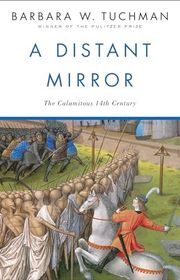
A Distant Mirror
For readers who learn through a vivid central figure, Tuchman uses a nobleman’s life to make fourteenth-century upheaval memorable. The narrative offers atmosphere and breadth, though its European aristocratic viewpoint leaves other experiences less visible.
What it's about
Barbara Tuchman explores fourteenth-century Europe through the life and world of French nobleman Enguerrand de Coucy. Warfare, plague, religious conflict, and social unrest shape a narrative that connects one individual’s circumstances with the pressures of a troubled century.

For readers beginning Roman history, Beard pairs a broad narrative with questions about citizenship, power, and surviving evidence. Her willingness to challenge familiar stories is illuminating, though readers seeking a simple sequence of emperors may prefer another approach.
What it's about
Mary Beard traces Rome's development from a small settlement into a Mediterranean empire. Political conflict, citizenship, conquest, slavery, and ordinary lives shape her account, which questions familiar stories and examines the evidence behind them.

A People's History of the United States
For readers questioning familiar national success stories, Zinn foregrounds resistance and people excluded from political power. His explicit political perspective makes the book provocative, but it works best in conversation with other accounts of American history.
What it's about
Howard Zinn recounts United States history from the perspectives of people often excluded from conventional national narratives. He emphasizes Indigenous peoples, enslaved people, workers, women, and dissenters, tracing conflicts over power, exploitation, resistance, and social change.
Also recommended by
4 people Alex Honnold recommended this book
Alex Honnold
"Totally changed the way I look at politics." - Alex Honnold
Alex Honnold's recommendation of this book - Lisa Ling recommended this book
Lisa Ling
"I credit this book with propelling me to dig deeper, and to not always believe the narrative." - Lisa Ling
Lisa Ling's recommendation of this book  Howard Stern recommended this book
Howard Stern
"Something I should have read in college." - Howard Stern
Howard Stern's recommendation of this book - John Leguizamo recommended this book
John Leguizamo
"Every Latinx should read!" - John Leguizamo
John Leguizamo's recommendation of this book

The History of the Decline and Fall of the Roman Empire
For experienced readers interested in both Rome and historical writing, Gibbon offers an expansive argument delivered in distinctive prose. The intellectual achievement remains rewarding, but its eighteenth-century assumptions and scholarship require a critical reading.
What it's about
Edward Gibbon traces the Roman Empire's transformation from its imperial height through the decline of the western empire and the history of Byzantium. His expansive narrative considers rulers, warfare, religion, and institutions in explaining centuries of political change.
Also recommended by
3 people Elon Musk recommended this book
Elon Musk
"[The author]'s famous book." - Elon Musk
Elon Musk's recommendation of this book  Mahatma Gandhi recommended this book
Mahatma Gandhi
"Portrays a mass of facts in his own imitable style." - Mahatma Gandhi
Mahatma Gandhi's recommendation of this book  Stewart Brand recommended this book
Stewart Brand
Stewart Brand recommended this book on his "Selected Books for the Manual for Civilization" blog post.
Stewart Brand's recommendation of this book

Battle Cry of Freedom
For readers ready for a substantial Civil War overview, McPherson connects campaigns with the political and social forces that made the conflict possible. Its integrated scope is valuable, but the length demands sustained attention.
What it's about
James McPherson traces the political, social, and military developments that led to the American Civil War and shaped its course. His narrative connects slavery, sectional conflict, leadership, and battlefield campaigns to the struggles over the Union and emancipation.
Also recommended by
2 people Ta-Nehisi Coates recommended this book
Ta-Nehisi Coates
"The definitive history of the Civil War. One of the greatest works of history I've ever read and arguably the best one volume history in existence." - Ta-Nehisi Coates
Ta-Nehisi Coates's recommendation of this book  Saagar Enjeti recommended this book
Saagar Enjeti
"Reading it in the midst of social and political chaos in America gave me profound hope that America at its best can overcome even its worst challenges." - Saagar Enjeti
Saagar Enjeti's recommendation of this book

Orientalism
For readers examining how culture and power shape representations of other societies, Said supplies an influential critical framework. Its demanding argument illuminates historical interpretation, although it is not a chronological introduction to the Middle East.
What it's about
Edward Said examines Western representations of the Middle and Near East and their connections with imperial power. His study argues that cultural and scholarly traditions constructed an imagined Orient, limiting the ability of its peoples to represent themselves.
Also recommended by
2 people Christopher Hitchens recommended this book
Christopher Hitchens
"A book that made one think." - Christopher Hitchens
Christopher Hitchens's recommendation of this book  Brad Delong recommended this book
Brad Delong
Brad Delong recommended this book in his website.
Brad Delong's recommendation of this book

For readers ready to understand Europe after World War II, Judt connects political reconstruction with social and cultural change across national borders. The synthesis is substantial and rewarding, though its density suits sustained reading.
What it's about
Tony Judt surveys Europe after 1945, bringing eastern and western experiences into a single historical narrative. Across six decades and thirty-four nations, he examines political and cultural change as the continent develops from the aftermath of war.
Also recommended by
1 person- Ta-Nehisi Coates recommended this book
Ta-Nehisi Coates
"[The author understood history] does not exist to comfort us." - Ta-Nehisi Coates
Ta-Nehisi Coates's recommendation of this book

For readers who enter history through investigative storytelling, Keefe makes the Troubles tangible through lives entangled in violence and silence. Its tightly focused narrative is compelling, but should be supplemented for a fuller political chronology.
What it's about
The abduction of Belfast mother Jean McConville in 1972 anchors Keefe's investigation of Northern Ireland's Troubles. Following victims, IRA members, and political leaders, he explores violence, secrecy, memory, and the unresolved consequences of the peace process.
Also recommended by
1 person Barack Obama recommended this book
Barack Obama
Barack Obama's favorite books of 2019 list.
Barack Obama's recommendation of this book

For readers wanting to rethink the geography of world history, Frankopan follows connections across Eurasia rather than organizing everything around western Europe. The broad narrative is stimulating, though its scale necessarily compresses complex regional differences.
What it's about
Peter Frankopan reexamines world history through the trade routes linking Europe, the Middle East, Central Asia, India, and China. He follows the movement of goods, ideas, religions, and power to show how these connections shaped empires and global affairs.
Also recommended by
1 person Raoul Pal recommended this book
Raoul Pal
"An amazing book." - Raoul Pal
Raoul Pal's recommendation of this book

What Is History?
For readers who want to question how historical knowledge is made, Carr offers a compact introduction to selection, evidence, and interpretation. The lectures stimulate discussion, though their setting and examples belong to an earlier scholarly debate.
What it's about
Edward Hallett Carr examines the relationship between historians and the facts they study. These lectures argue that historical knowledge involves selection and interpretation, exploring how a historian's circumstances shape accounts of the past and their significance.
Also recommended by
1 person- Christopher Hitchens recommended this book
Christopher Hitchens
"Brilliant." - Christopher Hitchens
Christopher Hitchens's recommendation of this book
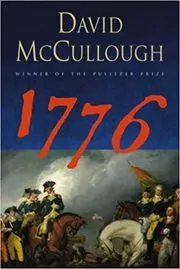
1776
For readers looking for an accessible entry into the American Revolution, McCullough gives one precarious year narrative momentum. The military focus keeps events clear, but leaves wider social experiences and the longer conflict for other books.
What it's about
In 1776 McCullough focuses on the year America’s fate hung in the balance, following George Washington and his ragged army through early victories, crushing defeats around New York, and the surprise attacks at Trenton and Princeton. It offers a ground‑level view of the Revolution’s most precarious months.
Fifth Sun
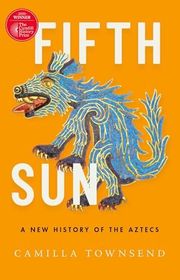
For readers seeking Aztec history beyond the conquerors’ perspective, Townsend foregrounds Indigenous written accounts and the people behind them. Its focused narrative changes the angle of vision, although it is not a survey of all Mesoamerica.
What it's about
Camilla Townsend recounts Aztec history using Indigenous-language sources, tracing political life, conquest, and survival through the experiences of Nahuatl-speaking people. The narrative follows communities and individuals whose accounts complicate familiar stories centered on Spanish observers.

Leningrad
For readers seeking civilian experience alongside military history, Reid makes the siege’s suffering and political failures central. Diaries and memoirs give the account immediacy, but the material is harrowing rather than an easy wartime introduction.
What it's about
Anna Reid recounts the siege of Leningrad from 1941 to 1944, drawing on diaries and memoirs alongside historical research. She examines Nazi strategy, Soviet leadership, and the daily struggle for food and survival among the city's inhabitants.

For readers seeking a substantial introduction to the crusades, Asbridge combines military narrative with attention to competing religious and political ambitions. Its breadth is useful, although the length asks for more commitment than a short overview.
What it's about
Thomas Asbridge traces the wars for control of the Holy Land from Christian and Muslim perspectives. Following figures such as Richard the Lionheart and Saladin, he examines religious motivations, political rivalries, military campaigns, and encounters between competing societies.
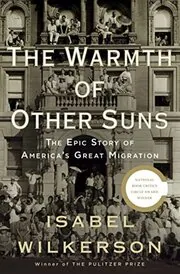
For readers who want social change grounded in individual lives, Wilkerson gives the Great Migration emotional and historical depth. Following three people makes the scale understandable, though it creates a long and deliberately immersive reading experience.
What it's about
Isabel Wilkerson traces the Great Migration through three Black Americans who leave the segregated South for Chicago, Harlem, and California. Their experiences illuminate the dangers, hopes, and lasting consequences of a movement that transformed the country.

A History of the American People
For readers wanting an energetic single-volume American narrative, Johnson connects political development with religion, enterprise, and culture. His confident judgments make the book readable, but its ideological perspective calls for comparison with contrasting histories.
What it's about
Paul Johnson surveys American history from colonial beginnings through the twentieth century. His narrative connects political and economic change with religion, culture, science, and everyday life, presenting his interpretation of the people and ideas that shaped the United States.

For readers asking how Britain approached the prospect of war, Bouverie turns diplomacy and political calculation into an accessible narrative. Its focused explanation clarifies appeasement, though it offers a narrower view than a general European history.
What it's about
Tim Bouverie examines Britain's attempts to appease Hitler before the Second World War. Drawing on archival material, he explores the political decisions, diplomatic failures, and social attitudes that shaped policy from Hitler's rise through the crisis at Dunkirk.

For readers interested in ordinary lives under extraordinary political pressures, Jarausch uses personal testimony to explore twentieth-century Germany. The generational approach reveals changing attitudes, but memoirs bring the limitations of retrospective self-interpretation.
What it's about
Konrad Jarausch draws on memoirs by Germans born in the 1920s to examine lives shaped by Nazism, war, and postwar division. The accounts explore complicity, disillusionment, recovery, and changing understandings of national identity across the twentieth century.

For readers who enjoy expansive cultural history, Durant connects Roman political life with art, religion, and Christianity’s emergence. The narrative has breadth and personality, though its age makes newer research an important companion.
What it's about
This volume follows Rome from its origins to AD 325, examining government, economic life, literature, art, and morality. The emergence of Christianity brings a growing conflict between religious conviction, imperial authority, and older Roman traditions.

For readers seeking Churchill’s full life in one volume, Gilbert combines public events with personal detail from extensive research. The chronological scope is useful, although sustained attention to one statesman limits the wider social picture.
What it's about
Martin Gilbert draws on extensive research for a single-volume account of Winston Churchill's life. Combining public events with private experiences, the biography follows his childhood, military adventures, entry into Parliament, and later political career.

For readers interested in the distance between ancient and modern democracy, Cartledge gives political vocabulary a historical foundation. The long perspective sharpens comparisons, but it requires more attention than a simple account of Athenian institutions.
What it's about
Paul Cartledge traces democracy's development in ancient Greece and its long political afterlife. He examines varied forms of popular rule, the hostility of elite thinkers, and the differences between ancient democratic practices and their modern counterparts.

For readers wondering how a defeated society changed under occupation, Dower connects Japanese everyday experience with political reconstruction. Its cultural detail deepens the account, although the focus assumes interest in a specific postwar setting.
What it's about
John Dower examines Japan's transformation during the American occupation following World War II. Drawing on Japanese sources, he connects political decisions about the emperor and the new constitution with ordinary people's experiences of defeat, hardship, and changing social expectations.

For readers exploring Latin America through extraction and unequal power, Galeano offers a forceful, literary interpretation. Its political argument is memorable, but readers should compare its sweeping claims with more recent regional and economic histories.
What it's about
Eduardo Galeano examines Latin America's social and economic history through patterns of extraction and foreign dominance. His account follows the continent's resources and labor, arguing that their exploitation has shaped its relationship with wealthier powers abroad.

For readers drawn to espionage and elite networks, Lownie uses Burgess’s life to make Cold War secrecy concrete. The personal detail is a strength, though a biography cannot provide a complete history of British intelligence.
What it's about
Andrew Lownie traces the life of Guy Burgess, a member of the Cambridge spy ring who passed British secrets to the Soviet Union. Interviews and archival material illuminate his personal relationships, access to influential circles, and career in espionage.

For readers wanting a connected introduction to ancient civilizations, Bauer offers a readable narrative supported by maps and timelines. The sweep helps establish chronology, though the compression leaves individual societies and scholarly debates needing further study.
What it's about
Susan Wise Bauer surveys ancient civilizations from their earliest accounts through Rome's decline. Maps, timelines, and narratives connect events across Europe, the Middle East, and China while bringing rulers and ordinary people's experiences into the history.

Grant
For readers who prefer history through a life, Chernow connects Grant’s military leadership with Reconstruction and the presidency. The detailed reassessment offers sustained context, but its scale makes it a substantial commitment rather than a quick introduction.
What it's about
A sweeping life of Ulysses S. Grant that moves from his failures in business to battlefield command in the Civil War and two turbulent presidential terms. Chernow reexamines Grant's reputation, highlighting his steadiness, personal struggles, and determination to defend Reconstruction and Black civil rights.
Also recommended by
2 people- Barack Obama recommended this book
Barack Obama
Barack Obama's favorite books of 2017 list.
Barack Obama's recommendation of this book  Hugh Hewitt recommended this book
Hugh Hewitt
"It’s hard to turn off and I’ve read wat, dozens of civil war books, but never with a focus on this hero of heroes." - Hugh Hewitt
Hugh Hewitt's recommendation of this book
Sources
- 1
45 Best History Books of All Time
reedsy.com
- 2
15 Best History Books Of All Time
historyadventures.co
- 3
Best History Books
goodreads.com
- 4
The 100 Best History Books of All Time
listmuse.com
- 5
Best history books?
reddit.com
- 6
The Best History Books of All Time
penguinrandomhouse.com
- 7
History books for beginners and experienced readers
reddit.com
- 8
History Books: Five Books Expert Recommendations
fivebooks.com








Edited by
Software engineer whose passion for tracking book recommendations from podcasts inspired the creation of MRB.
Lead investor at 3one4 Capital whose startup expertise and love for books helped shape MRB and its growth.
Comments
Did we miss something? Have feedback?
Help us improve this page by sharing your thoughts