
14 Best International Relations Books
The best international relations books, ranked by how many expert sources recommend each one, with notes on who each book suits and where to start reading.
Our take
International relations asks why states cooperate, compete, and fight, and how institutions, ideas, markets, and geography influence their choices. The subject includes theories that offer competing explanations as well as histories that show decisions unfolding in particular places. These books suit different stages of study, from a first map of the field to close examinations of power and policy.
The Globalization of World Politics provides a structured introduction, while Prisoners of Geography offers a more accessible regional starting point. Man, the State, and War helps separate different explanations of conflict, and Arms and Influence examines coercion and bargaining. Diplomacy and The Best and the Brightest turn toward historical decisions, while The Great Transformation connects political order with markets. Start with a broad introduction, then compare a theoretical argument with a historical case rather than expecting one book to explain every international event.
14 books · 9 sources · Last updated
As an Amazon Associate, we earn from qualifying purchases (at no extra cost to you).
How to choose from this list
Skip to the full rankingIf you're new to the subject: The Globalization of World Politics → Prisoners of Geography
If you want to compare explanations of war: Man, the State, and War → The Tragedy of Great Power Politics
If you want to study power and bargaining: The Twenty Years' Crisis, 1919-1939 → Arms and Influence
If you want diplomatic history and policy decisions: Diplomacy → The Best and the Brightest → War on Peace
If you want states, markets, and nations: The Great Transformation → Nations and Nationalism → Seeing Like a State
If you want a scholarly reference: The Oxford Handbook of International Relations
The 14 books, ranked
Ranked by how many expert sources name each book. Ties go to the book more people recommend.

For newcomers who want maps to make geopolitical choices easier to visualize. Marshall supplies an accessible regional starting point, though geography is only one explanation and cannot account for every political decision.
What it's about
In this breakout book, Marshall uses ten maps to explain how mountains, rivers, coastlines and climate channel the choices of world leaders. Each chapter focuses on a key region and shows how geography underpins wars, alliances, trade routes and long running rivalries.
Also recommended by
1 person Fareed Zakaria recommended this book
Fareed Zakaria
"Explains the world starting with geography." - Fareed Zakaria
Fareed Zakaria's recommendation of this book

Diplomacy
For readers who want diplomatic history interpreted through balance-of-power politics. Kissinger combines a broad narrative with a practitioner’s perspective, though that strong viewpoint should be read alongside approaches that challenge his assumptions.
What it's about
Henry Kissinger surveys diplomatic history and the competing principles that have shaped relations among states. Moving from European balance-of-power politics to American foreign policy and his own negotiations, he examines the tensions between national interests and political ideals.

Arms and Influence
For readers interested in how threats and commitments influence an opponent’s choices. Schelling makes bargaining central to military power, though the Cold War examples need interpretation when applying the arguments to different settings.
What it's about
Thomas Schelling examines military power as a means of bargaining, coercion, and deterrence. Drawing on Cold War crises, he explores how threats, commitments, and the prospect of violence can influence opponents without requiring outright battlefield victory.
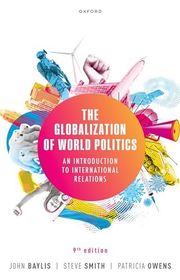
The Globalization of World Politics
For beginners who want a structured introduction before choosing a theoretical camp. The edited chapters connect core ideas with a wide range of issues, though the textbook format asks for more sustained study than a popular overview.
What it's about
This introductory textbook brings together chapters on the history, theories, institutions, and major issues of international relations. It connects debates about globalization with security, political economy, law, and other questions that shape relationships across borders.

The Tragedy of Great Power Politics
For readers who want to study a forceful realist explanation of rivalry among major states. Mearsheimer develops a sustained theoretical argument with historical cases, though it represents one contested perspective rather than the whole field.
What it's about
John Mearsheimer develops an account of great-power rivalry through historical analysis and his theory of offensive realism. The updated edition examines China’s rise and argues that competition for regional dominance creates enduring tensions with the United States.
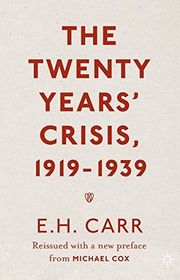
The Twenty Years' Crisis, 1919-1939
For readers who want to understand a foundational argument about power and political ideals. Carr grounds the debate in the interwar period, though its historical setting requires context and does not replace a modern introductory survey.
What it's about
E. H. Carr examines international politics between the world wars and the tension between idealistic projects and the realities of power. His argument considers morality, interests, law, and the obstacles to creating a durable international order.

For students who want a clear framework for comparing explanations of war. Waltz separates individual, domestic, and international causes, though the engagement with political thinkers makes this more demanding than an introductory news-oriented overview.
What it's about
Kenneth Waltz examines explanations for war through three perspectives: human nature and individual leaders, the internal organization of states, and the international system. Engaging with political thinkers, he considers how these different accounts shape proposed paths toward peace.

For readers interested in the long historical background to unequal power among societies. Diamond gives environmental conditions a central role, though the broad argument offers less help with specific diplomatic decisions or international relations theory.
What it's about
Jared Diamond examines why different societies developed unequal levels of power and wealth. He emphasizes geography, available plants and animals, food production, disease, and technology as explanations for historical differences, challenging accounts based on racial superiority.
Also recommended by
12 people Joe Rogan recommended this book
Joe Rogan
"An amazing book." - Joe Rogan
Joe Rogan's recommendation of this book  Bill Gates recommended this book
Bill Gates
"Fascinating.... Lays a foundation for understanding human history." - Bill Gates
Bill Gates's recommendation of this book  Charlie Munger recommended this book
Charlie Munger
Charlie Munger recommended this book in the "Poor Charlie's Almanack" book.
Charlie Munger's recommendation of this book  Simon Sinek recommended this book
Simon Sinek
"Offers us a new and remarkably simple way of looking at our world." - Simon Sinek
Simon Sinek's recommendation of this book  Daniel Ek recommended this book
Daniel Ek
"A brilliant Pulitzer Prize-winning book about how the modern world was formed, analyzing how societies developed differently on different continents." - Daniel Ek
Daniel Ek's recommendation of this book  Jesse Williams recommended this book
Jesse Williams
"Helped rid me of the nagging incompleteness in my understood connection between the successes and failings of ancient and modern civilizations." - Jesse Williams
Jesse Williams's recommendation of this book +6
More recommendations
- Stewart Brand
"The main [book by this author]." - Stewart Brand
- Patrick Arnold
"Gave a big eye opening on why certain people of the world are more advanced than others and behave a certain way, as opposed to just genetics and this person is smarter because of this or that." - Patrick Arnold
- Jamie Dimon
On Jamie Dimon's list of favorite books.
- Margaret Atwood
"Also does pandemics." - Margaret Atwood
- Mark Manson
Mark Manson recommended this book on his website.
- James Clear
"[One of] the 10 best nonfiction books of all-time." - James Clear
- Stewart Brand

For readers who want to connect international politics with the social foundations of markets. Polanyi gives economic arrangements a historical setting, though this demanding argument is political economy rather than a general introduction to foreign affairs.
What it's about
Karl Polanyi examines capitalism's emergence and the social changes accompanying the Industrial Revolution. He argues that market relations displaced earlier communal arrangements, and considers the dangers of treating economic exchange as independent of broader social obligations.
Also recommended by
3 people Satya Nadella recommended this book
Satya Nadella
"My father recommended this book long ago." - Satya Nadella
Satya Nadella's recommendation of this book  Noam Chomsky recommended this book
Noam Chomsky
On the "Top 100 Books Referenced by Noam Chomsky" list.
Noam Chomsky's recommendation of this book  Brad Delong recommended this book
Brad Delong
Brad Delong recommended this book in his website.
Brad Delong's recommendation of this book

For readers who want to question how states define problems and impose solutions. Scott connects administrative simplification with failures on the ground, though its focus on planning offers an indirect route into relations between states.
What it's about
James Scott investigates why ambitious state plans to improve society and the environment can end in disaster. Cases from Russia, Tanzania and elsewhere help him identify recurring conditions behind failures and question the assumptions of centralized social engineering.
Also recommended by
2 people Balaji Srinivasan recommended this book
Balaji Srinivasan
"There’s a sense in which the term 'real name' is a misnomer. A better term is a state name — a name which makes you legible to the state." - Balaji Srinivasan
Balaji Srinivasan's recommendation of this book  Rory Sutherland recommended this book
Rory Sutherland
"A fabulous book." - Rory Sutherland
Rory Sutherland's recommendation of this book

Nations and Nationalism
For readers interested in how nations and states become linked in modern politics. Gellner offers a focused argument about industrial society and shared culture, though its theoretical generalization leaves less room for local variation.
What it's about
Ernest Gellner explains nationalism through its social roots in industrial society. He examines how changes in work, education, and shared culture create pressures for political and cultural boundaries to coincide, offering an account of modern nation formation.
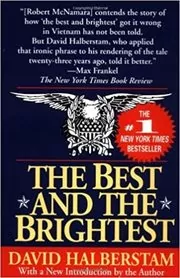
The Best and the Brightest
For readers who want to examine foreign-policy failure through the people who made decisions. Halberstam provides sustained historical detail on Vietnam, though the American focus and large cast make it a substantial, specialized commitment.
What it's about
A deep account of how the Kennedy and Johnson administrations led the United States into Vietnam. Halberstam follows the gifted officials, bad assumptions, and political pressures that turned confidence into disaster.

For readers interested in how diplomatic institutions shape American foreign policy. Farrow makes institutional change concrete through reporting and interviews, though its American focus offers a narrower view than a general international relations textbook.
What it's about
Ronan Farrow examines the weakening of American diplomacy and development institutions as military approaches take a larger role abroad. Reporting from Washington and conflict zones, he explores the implications of this shift for American influence.

The Oxford Handbook of International Relations
For students who already know the basic vocabulary and want to compare the field’s debates. The edited chapters provide several scholarly perspectives, though its scale and uneven difficulty make it better for reference than first exposure.
What it's about
Edited by Christian Reus-Smit and Duncan Snidal, this handbook surveys the theories and debates of international relations. Contributions examine the field's intellectual foundations and its connections with political economy, strategic studies, foreign policy, ethics, and international law.
Sources
- 1
Beyond the classics: A fresh international relations reading list for students
brookings.edu
- 2
Top 10 Books About International Relations
oxfordglobal.org
- 3
100 Best International Relations Books of All Time
shortform.com
- 4
International Relations Books
goodreads.com
- 5
What book would you recommend for someone incredibly new to international relations?
reddit.com
- 6
What books are a must read for someone that wants to study IR?
reddit.com
- 7
Intl Relations Books
goodreads.com
- 8
International Relations - Political Science Reading Lists for Undergraduates
guides.temple.edu
- 9
International Relations
politicalscience.case.edu




Edited by
Software engineer whose passion for tracking book recommendations from podcasts inspired the creation of MRB.
Lead investor at 3one4 Capital whose startup expertise and love for books helped shape MRB and its growth.
Comments
Did we miss something? Have feedback?
Help us improve this page by sharing your thoughts