
7 Best Geography Books
The best geography books, ranked by how many expert sources recommend each one, with notes on who each book suits and where curious readers can begin.
Our take
Geography asks how places work and how people understand them. That can mean studying borders and resources, questioning what a map leaves out, or exploring the meaning of a landscape. These books take different routes into those questions. Most are written for curious general readers rather than students seeking a complete textbook in physical or human geography.
Prisoners of Geography uses maps to introduce geopolitical constraints, while Guns, Germs, and Steel makes a much longer historical argument about environments and unequal development. Read their broad explanations with room for other perspectives. How to Lie with Maps sharpens your judgment about visual information. The Geography of Genius travels through creative cultures, and You Are Here explores imaginative mapping. For a lighter entry, try Maphead; for reflective writing about the world beneath the surface, choose Underland. Start with How to Lie with Maps if you want a skill that carries across the rest.
7 books · 7 sources · Last updated
As an Amazon Associate, we earn from qualifying purchases (at no extra cost to you).
How to choose from this list
Skip to the full rankingIf you want to read maps critically: How to Lie with Maps → You Are Here
If you're new to geopolitics: Prisoners of Geography
If you want a broad historical argument: Guns, Germs, and Steel
If you enjoy travel and cultural questions: The Geography of Genius → Maphead
If you want landscape and deep time: Underland
The 7 books, ranked
Ranked by how many expert sources name each book. Ties go to the book more people recommend.

For readers who want a quick way into geopolitics through maps. The regional chapters make physical constraints easy to grasp, though treating terrain as the main explanation can underplay political choices and historical change.
What it's about
In this breakout book, Marshall uses ten maps to explain how mountains, rivers, coastlines and climate channel the choices of world leaders. Each chapter focuses on a key region and shows how geography underpins wars, alliances, trade routes and long running rivalries.
Also recommended by
1 person Fareed Zakaria recommended this book
Fareed Zakaria
"Explains the world starting with geography." - Fareed Zakaria
Fareed Zakaria's recommendation of this book

How to Lie with Maps
For anyone who uses maps in news, study, or work. Monmonier builds practical skepticism about visual evidence more directly than the travel books here, though some examples require patient attention to cartographic detail.
What it's about
Mark Monmonier explains how mapmaking choices can distort information, whether intentionally or through necessary simplification. Examples from zoning disputes, census reports, and other contexts reveal the effects of color and presentation, encouraging readers to evaluate maps with informed skepticism.

For readers who want a sweeping account of global historical inequality. Its environmental framework connects many subjects in one argument, though the scale leaves less room for local histories and competing explanations.
What it's about
Jared Diamond examines why different societies developed unequal levels of power and wealth. He emphasizes geography, available plants and animals, food production, disease, and technology as explanations for historical differences, challenging accounts based on racial superiority.
Also recommended by
12 people Joe Rogan recommended this book
Joe Rogan
"An amazing book." - Joe Rogan
Joe Rogan's recommendation of this book  Bill Gates recommended this book
Bill Gates
"Fascinating.... Lays a foundation for understanding human history." - Bill Gates
Bill Gates's recommendation of this book  Charlie Munger recommended this book
Charlie Munger
Charlie Munger recommended this book in the "Poor Charlie's Almanack" book.
Charlie Munger's recommendation of this book  Simon Sinek recommended this book
Simon Sinek
"Offers us a new and remarkably simple way of looking at our world." - Simon Sinek
Simon Sinek's recommendation of this book  Daniel Ek recommended this book
Daniel Ek
"A brilliant Pulitzer Prize-winning book about how the modern world was formed, analyzing how societies developed differently on different continents." - Daniel Ek
Daniel Ek's recommendation of this book  Jesse Williams recommended this book
Jesse Williams
"Helped rid me of the nagging incompleteness in my understood connection between the successes and failings of ancient and modern civilizations." - Jesse Williams
Jesse Williams's recommendation of this book +6
More recommendations
- Stewart Brand
"The main [book by this author]." - Stewart Brand
- Patrick Arnold
"Gave a big eye opening on why certain people of the world are more advanced than others and behave a certain way, as opposed to just genetics and this person is smarter because of this or that." - Patrick Arnold
- Jamie Dimon
On Jamie Dimon's list of favorite books.
- Margaret Atwood
"Also does pandemics." - Margaret Atwood
- Mark Manson
Mark Manson recommended this book on his website.
- James Clear
"[One of] the 10 best nonfiction books of all-time." - James Clear
- Stewart Brand
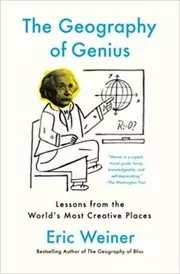
The Geography of Genius
A Search for the World's Most Creative Places from Ancient Athens to Silicon Valley
For curious travelers interested in why creativity flourishes in certain places. Weiner makes cultural geography approachable through encounters and historical visits, though the exploratory storytelling offers fewer firm conclusions than a systematic academic study.
What it's about
Eric Weiner visits places associated with exceptional creativity, from ancient Athens to Silicon Valley, asking why innovation flourishes in particular settings. Travel encounters and historical inquiry explore how cultural circumstances, social connections, and environments influence creative achievement.
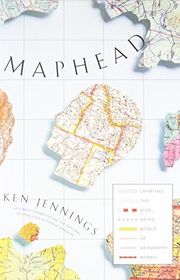
Maphead: Charting the Wide, Weird World of Geography Wonks
For readers who want an entertaining introduction to the people fascinated by maps. Jennings makes geographic curiosity feel social and approachable, though the anecdotes and enthusiast culture take priority over a structured geography course.
What it's about
Ken Jennings explores the communities and obsessions surrounding maps, from collectors to geography competitors. Personal stories and reporting examine spatial curiosity, geographic knowledge, and the changing relationship between people and the tools they use to navigate.

For readers drawn to landscapes, environmental questions, and reflective travel writing. Macfarlane connects underground places with deep time more intimately than the broad geopolitical books, though the lyrical style moves slowly and follows associations.
What it's about
Traveling through caves, glaciers, ancient burial sites, and other hidden environments, Robert Macfarlane investigates the worlds beneath our feet. His encounters connect geology and ecological relationships with human memory, mortality, and responsibility for the planet's distant future.
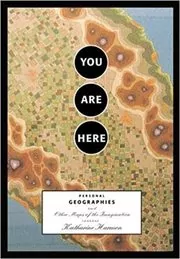
For artists and readers who enjoy maps as expressions of experience. Its visual range stretches the idea of geography beyond physical coordinates, though it offers inspiration rather than instruction in conventional mapmaking.
What it's about
Katharine Harmon collects imaginative maps that extend beyond conventional geography into emotions, myths, memories, and private worlds. Artists' creations and unusual charts show how mapping can express personal perspectives, inviting readers to explore places understood through imagination rather than physical coordinates.
Sources
- 1
7 Geography Books to Add to Your Bookshelf
geographyrealm.com
- 2
Eight essential books for geographers
geographical.co.uk
- 3
100 Best Geography Books of All Time
shortform.com
- 4
Best Popular Geography Books on Goodreads
goodreads.com
- 5
Which is your favourite book about geography?
reddit.com
- 6
The Best Geography Books Of All-Time
bookscrolling.com
- 7
Geography Reading List
reddit.com




Edited by
Software engineer whose passion for tracking book recommendations from podcasts inspired the creation of MRB.
Lead investor at 3one4 Capital whose startup expertise and love for books helped shape MRB and its growth.
Comments
Did we miss something? Have feedback?
Help us improve this page by sharing your thoughts