
19 Best World History Books
The best world history books, ranked by how many expert sources recommend each one, with notes on who each book suits and where to start exploring.
Our take
World history can mean a broad chronology, a study of connections between societies, or an argument about why the past unfolded as it did. No single book gives every region equal space. A useful starting point depends on whether you want a framework for unfamiliar events, a closer look at one civilization, or a theme that makes a large subject easier to follow.
A Little History of the World offers a short narrative introduction, while History of the World Map by Map helps with geographical orientation. The Silk Roads emphasizes connections across Eurasia, and Destiny Disrupted centers the Islamic world’s historical perspective. 1491 focuses on the Americas before Columbus. Other books use narrower subjects: Salt and A History of the World in 6 Glasses connect familiar goods with wider changes. Start with a broad introduction, then choose a regional or thematic account that answers the questions it leaves you with.
19 books · 7 sources · Last updated
As an Amazon Associate, we earn from qualifying purchases (at no extra cost to you).
How to choose from this list
Skip to the full rankingIf you want a short first overview: A Little History of the World
If you learn best from maps: History of the World Map by Map
If you want connections across Eurasia: The Silk Roads
If you want an Islamic historical perspective: Destiny Disrupted
If you want the Americas before Columbus: 1491
If you want history through everyday goods: Salt → A History of the World in 6 Glasses
The 19 books, ranked
Ranked by how many expert sources name each book. Ties go to the book more people recommend.

For readers who want to rethink familiar history through connections across Eurasia. Its attention to trade routes shifts the geographical focus eastward, though that organizing lens leaves some regions and local experiences less fully explored.
What it's about
Peter Frankopan reexamines world history through the trade routes linking Europe, the Middle East, Central Asia, India, and China. He follows the movement of goods, ideas, religions, and power to show how these connections shaped empires and global affairs.
Also recommended by
1 person Raoul Pal recommended this book
Raoul Pal
"An amazing book." - Raoul Pal
Raoul Pal's recommendation of this book

For readers interested in a large explanatory argument about unequal historical development. Its geographical framework connects agriculture, disease, and technology across societies, though its broad causal claims need comparison with more detailed regional histories.
What it's about
Jared Diamond examines why different societies developed unequal levels of power and wealth. He emphasizes geography, available plants and animals, food production, disease, and technology as explanations for historical differences, challenging accounts based on racial superiority.
Also recommended by
12 people Joe Rogan recommended this book
Joe Rogan
"An amazing book." - Joe Rogan
Joe Rogan's recommendation of this book  Bill Gates recommended this book
Bill Gates
"Fascinating.... Lays a foundation for understanding human history." - Bill Gates
Bill Gates's recommendation of this book  Charlie Munger recommended this book
Charlie Munger
Charlie Munger recommended this book in the "Poor Charlie's Almanack" book.
Charlie Munger's recommendation of this book  Simon Sinek recommended this book
Simon Sinek
"Offers us a new and remarkably simple way of looking at our world." - Simon Sinek
Simon Sinek's recommendation of this book  Daniel Ek recommended this book
Daniel Ek
"A brilliant Pulitzer Prize-winning book about how the modern world was formed, analyzing how societies developed differently on different continents." - Daniel Ek
Daniel Ek's recommendation of this book  Jesse Williams recommended this book
Jesse Williams
"Helped rid me of the nagging incompleteness in my understood connection between the successes and failings of ancient and modern civilizations." - Jesse Williams
Jesse Williams's recommendation of this book +6
More recommendations
- Stewart Brand
"The main [book by this author]." - Stewart Brand
- Patrick Arnold
"Gave a big eye opening on why certain people of the world are more advanced than others and behave a certain way, as opposed to just genetics and this person is smarter because of this or that." - Patrick Arnold
- Jamie Dimon
On Jamie Dimon's list of favorite books.
- Margaret Atwood
"Also does pandemics." - Margaret Atwood
- Mark Manson
Mark Manson recommended this book on his website.
- James Clear
"[One of] the 10 best nonfiction books of all-time." - James Clear
- Stewart Brand

A Little History of the World
For readers who want a short, welcoming first encounter with historical narrative. Its concise chapters make a long span manageable, though its older European emphasis needs supplementing with histories centered on other regions.
What it's about
E. H. Gombrich tells the story of human history through short chapters written for younger readers and curious adults. Civilizations, religious ideas, inventions, and conflicts appear within an accessible narrative that connects major events with the people who experienced them.
Also recommended by
1 person Tim Urban recommended this book
Tim Urban
"Super comprehensive history of everything. As if your grandfather were sitting around with a bunch of little kids explaining it." - Tim Urban
Tim Urban's recommendation of this book

For readers who want ancient Rome examined through evidence and questions about citizenship and power. Beard balances political change with social experience, though its Mediterranean focus makes it a regional study rather than a world survey.
What it's about
Mary Beard traces Rome's development from a small settlement into a Mediterranean empire. Political conflict, citizenship, conquest, slavery, and ordinary lives shape her account, which questions familiar stories and examines the evidence behind them.

For readers whose world-history background gives the pre-Columbian Americas too little space. Its synthesis of archaeological and historical research challenges familiar assumptions, though it covers a region rather than providing a global chronology.
What it's about
Charles Mann surveys evidence about the Americas before Columbus, drawing on archaeology, anthropology, and history. He challenges familiar images of sparse populations and untouched wilderness, examining Indigenous societies and the extensive ways they shaped their environments.
Also recommended by
2 people Margaret Atwood recommended this book
Margaret Atwood
"About what the Americas were like before (and during) the wipeout caused by European microbes + viruses." - Margaret Atwood
Margaret Atwood's recommendation of this book  John Leguizamo recommended this book
John Leguizamo
"Every Latinx should read!" - John Leguizamo
John Leguizamo's recommendation of this book
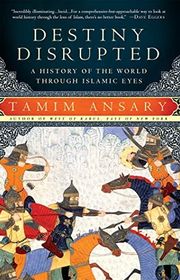
Destiny Disrupted: A History of the World Through Islamic Eyes
For readers who want a historical narrative centered on the Islamic world. Its attention to how events were understood within that tradition offers a useful shift in perspective, though one sweeping account cannot represent every community equally.
What it's about
Ansary follows the development of the Islamic world from Muhammad’s lifetime through later empires and encounters with Europe. The narrative connects religious, political, and cultural history to explain how a different understanding of world events took shape.
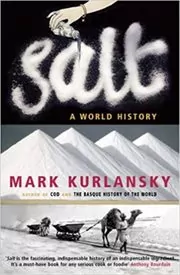
For readers who enjoy following a concrete object through many societies. Its focus on salt makes trade, preservation, and taxation tangible, though the succession of examples offers less chronological structure than a general survey.
What it's about
Kurlansky turns a common seasoning into a sweeping history of trade, labor, religion, and revolution. He shows how salt preserved food, built fortunes, and helped shape politics long before it became cheap enough to forget.

For newcomers who want a substantial narrative of ancient civilizations. Its maps and parallel chronologies help connect developments across regions, though the many rulers and episodes require more commitment than a short introductory history.
What it's about
Susan Wise Bauer surveys ancient civilizations from their earliest accounts through Rome's decline. Maps, timelines, and narratives connect events across Europe, the Middle East, and China while bringing rulers and ordinary people's experiences into the history.
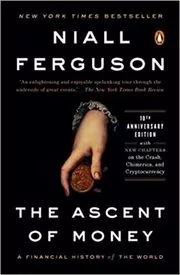
For readers who want financial institutions connected to political and social change. Its historical stories make credit and insurance less abstract, though finance remains a selective lens rather than a complete explanation of world events.
What it's about
From ancient Mesopotamian clay tablets to modern derivatives, this lively history explains how money, credit, bonds, and insurance evolved, showing how financial innovation has fueled both prosperity and crisis and arguing that understanding finance is essential to understanding world history.
Also recommended by
2 people Max Levchin recommended this book
Max Levchin
One of Max Levchin's answers to "what's your favourite business book you'd advise to young entrepreneurs?"
Max Levchin's recommendation of this book  Fareed Zakaria recommended this book
Fareed Zakaria
"Fascinating." - Fareed Zakaria
Fareed Zakaria's recommendation of this book

A History of the World in 6 Glasses
For readers who want an accessible thematic introduction through everyday consumption. Its six-drink structure makes connections between trade and culture easy to follow, though the selection emphasizes particular societies and moments rather than comprehensive coverage.
What it's about
Tom Standage traces world history through beer, wine, spirits, coffee, tea, and Coca-Cola. Following these drinks across centuries, he connects everyday consumption with changes in trade, politics, culture, and the growth of global connections.

For readers who want to understand the decisions behind the First World War. Its portraits of leaders connect diplomacy with personal judgment, though the detailed European focus requires more background than a general introduction.
What it's about
Margaret MacMillan traces the rivalries, alliances, nationalism, and political decisions that preceded the First World War. She examines Europe's transformation around the turn of the century and asks how leaders failed to prevent catastrophe.

The Lessons of History
For readers who already know some history and want brief reflections on recurring themes. Its compression encourages comparison across eras, though the generalizations reflect the authors’ perspective and cannot substitute for detailed historical evidence.
What it's about
Will and Ariel Durant distill their historical research into reflections on recurring patterns in civilization. They consider human nature, social progress, major ideas, and cycles of war and conquest while asking what the past can teach.
Also recommended by
8 people Ray Dalio recommended this book
Ray Dalio
"This is the Durants. They were maybe the greatest historians of all time." - Ray Dalio
Ray Dalio's recommendation of this book  Naval Ravikant recommended this book
Naval Ravikant
"A fantastic book." - Naval Ravikant
Naval Ravikant's recommendation of this book  Tim Ferriss recommended this book
Tim Ferriss
"It’s excellent." - Tim Ferriss
Tim Ferriss's recommendation of this book  Kevin Systrom recommended this book
Kevin Systrom
"A great book." - Kevin Systrom
Kevin Systrom's recommendation of this book  Shane Parrish recommended this book
Shane Parrish
"I’ll be re-reading this a few times." - Shane Parrish
Shane Parrish's recommendation of this book  Mark Manson recommended this book
Mark Manson
Mark Manson recommended this book on his website.
Mark Manson's recommendation of this book +2
More recommendations
- James Clear
"[One of] the 10 books with the most page-for-page wisdom." - James Clear
- Lyn Alden
"One of the most important books for long-term investors to read." - Lyn Alden
- James Clear

For readers who want a close study of participation in the Holocaust. Its focus on one police battalion connects testimony with questions of obedience and group behavior, though the narrow scope and atrocity detail make it demanding.
What it's about
Christopher Browning examines how members of a German reserve police battalion participated in the murder and deportation of Jews in occupied Poland. Testimony and records inform his analysis of obedience, group pressure, and involvement in mass killing.
Also recommended by
2 people Jocko Willink recommended this book
Jocko Willink
Jocko Willink covered this book in "Jocko Podcast" Ep. 85
Jocko Willink's recommendation of this book  Jordan Peterson recommended this book
Jordan Peterson
"The best book of its type." - Jordan Peterson
Jordan Peterson's recommendation of this book

For readers interested in the making of British imperial power through a single pivotal year. Its concentrated campaigns connect events across theaters, though the Britain-centered argument is narrower than a balanced world history.
What it's about
Frank McLynn examines the conflict between Britain and France during a pivotal year of the Seven Years' War. Military campaigns, political decisions, and cultural developments frame his account of Britain's emergence as a global power.

The Last Days of the Incas
For readers interested in conquest and resistance in the Andes. Its narrative continues beyond the initial Spanish invasion into the search for Vilcabamba, though the regional focus offers depth at the expense of a global overview.
What it's about
Kim MacQuarrie recounts the Spanish conquest of the Inca Empire and the decades of resistance that followed. His narrative also follows modern explorers searching for Vilcabamba, the hidden capital of the surviving Inca leadership.

The Roman Empire and the Silk Routes
The Ancient World Economy & the Empires of Parthia, Central Asia & Han China
For readers who want detailed ancient economic connections beyond Rome’s borders. Its emphasis on merchants, routes, and neighboring empires adds specificity to broader trade histories, though the specialized material assumes sustained interest in the period.
What it's about
Raoul McLaughlin investigates trade linking Rome with Parthia, Central Asia, and Han China. Caravan cities, merchants, and imperial relationships reveal how long-distance exchange shaped the ancient economy and knowledge of distant civilizations.

For visual learners who want to see migration, borders, and trade across time. Its maps make spatial relationships easier to grasp than prose alone, though compressed captions provide less explanation of contested causes.
What it's about
This visual world history uses maps to explain migration, trade, conquests, and the rise and fall of empires. Images, timelines, and concise accounts connect events across ancient, medieval, and modern periods, showing how geography and movement helped shape societies.

For readers who need to place events from different societies alongside one another. Its visual chronology supports browsing and quick orientation, though short entries offer limited room for arguments, uncertainty, or deeper causal explanation.
What it's about
This illustrated chronology follows world history from early human origins to modern events. Timelines, maps, photographs, and focused accounts connect cultures, leaders, inventions, and discoveries, helping readers place developments in context and compare events across different societies.

For newcomers who prefer illustrated summaries of major historical turning points. Its combination of artifacts, maps, and concise accounts encourages browsing, though the selective event-based format leaves many connections and perspectives unexplored.
What it's about
Philip Parker surveys more than 350 historical turning points, from early humanity to the modern world. Maps, photographs, artifacts, and illustrations accompany concise accounts of the people, inventions, ideas, and events shaping global history.
Sources
- 1
25 World History Books That Will Give You a New Perspective
explorethearchive.com
- 2
World History Books
goodreads.com
- 3
100 Best World History Books of All Time
shortform.com
- 4
World History Books
fivebooks.com
- 5
The best world history books for beginners
airplanemodepublishinghouse.com
- 6
Best book on World History?
reddit.com
- 7
Book recommendation for a complete survey of world history?
reddit.com




Edited by
Software engineer whose passion for tracking book recommendations from podcasts inspired the creation of MRB.
Lead investor at 3one4 Capital whose startup expertise and love for books helped shape MRB and its growth.
Comments
Spotted a missing book, a wrong order or a mistake? Tell us and we'll fix this page.
We're a reading guide, not the author or publisher, so we can't send books or pass on messages.