
15 Best Decision Making Books
The best decision making books, ranked by how many expert sources recommend each one, with notes to help you choose practical tools, psychology, or forecasting.
Our take
Decision making books tackle several different problems. Some explain why judgment goes wrong; others offer a process for comparing options, dealing with uncertainty, or learning from results. A useful book depends on whether you're stuck on a personal choice, responsible for repeated workplace judgments, or trying to predict what might happen next. Understanding a bias and having a routine for responding to it are related but separate goals.
Decisive and How to Decide emphasize practical processes. Thinking, Fast and Slow provides a broader conceptual background, while Thinking in Bets explores choices whose outcomes depend partly on luck. Superforecasting concentrates on predictions that can be checked and revised. For organizational decisions, Noise examines unwanted variation between judgments. The Scout Mindset asks how motivation and identity affect what people are willing to believe. Start with Decisive for a general process, or Thinking in Bets if uncertainty is the central difficulty.
15 books · 8 sources · Last updated
As an Amazon Associate, we earn from qualifying purchases (at no extra cost to you).
How to choose from this list
Skip to the full rankingIf you want a practical decision process: Decisive → How to Decide
If you want to understand recurring thinking errors: Thinking, Fast and Slow → The Art of Thinking Clearly
If you make decisions under uncertainty: Thinking in Bets → Superforecasting
If you assess choices across a team: Noise → Smart Choices
If you want to reconsider beliefs more openly: The Scout Mindset
If you design how choices are presented: Nudge
The 15 books, ranked
Ranked by how many expert sources name each book. Ties go to the book more people recommend.

Thinking, Fast and Slow
For readers who want a broad explanation of intuitive and deliberate judgment. The range of concepts gives later practical guides useful context, though the long research-centered discussion offers less immediate structure for one pressing decision.
What it's about
Kahneman explores two modes of thought: quick, intuitive responses and slower, deliberate reasoning. Drawing on psychological research, he examines how biases and impressions shape decisions, and when intuition helps or misleads in personal and professional life.
Also recommended by
19 people Bill Gates recommended this book
Bill Gates
List of books Bill Gates read in 2012.
Bill Gates's recommendation of this book  Ray Dalio recommended this book
Ray Dalio
Ray Dalio mentioned this book in his book, "Principles."
Ray Dalio's recommendation of this book  Scott Adams recommended this book
Scott Adams
One of the books on Scott Adams' "Persuasion Reading List."
Scott Adams's recommendation of this book  Naval Ravikant recommended this book
Naval Ravikant
"Fine book but it didn’t need to be an entire book. A blog post would have gotten the point across." - Naval Ravikant
Naval Ravikant's recommendation of this book  Ev Williams recommended this book
Ev Williams
"I love surprising scientific findings, as well as information about how our brains work. [This book] is a treasure trove of both." - Ev Williams
Ev Williams's recommendation of this book  Marc Andreessen recommended this book
Marc Andreessen
"Captivating dive into human decision making, marred by inclusion of several/many? psychology studies that fail to replicate. Will stand as a cautionary tale?" - Marc Andreessen
Marc Andreessen's recommendation of this book +13
More recommendations
- Stewart Brand
Stewart Brand recommended this book on his "Selected Books for the Manual for Civilization" blog post.
- Bryan Johnson
"I started reading [this book] and I became increasingly convinced of my own fickleness and inability to actually act rationally in life." - Bryan Johnson
- Derek Sivers
"If you liked 'Predictably Irrational' or 'Stumbling on Happiness' or any of those pop-psychology books, well, this is the Godfather of all of their work." - Derek Sivers
- Sam Altman
One of Sam Altman's answers to "What are some of the best books you recommend for a young startup founder?"
- Ron Conway
"Covers all three phases of [the author's] career: his early days working oncognitive bias, his work on prospect theory, and his later work on happiness." - Ron Conway
- Jason Fried
"I enjoyed [this book]. Fascinating." - Jason Fried
- Nassim Taleb
"A landmark book in social thought, in the same league as The Wealth of Nations by Adam Smith and The Interpretation of Dreams by Sigmund Freud." - Nassim Taleb
- Sahil Lavingia
Sahil Lavingia recommended this book on Notion.
- Mark Manson
Mark Manson recommended this book on his website.
- Jay Shetty
"[One] of my favourite books." - Jay Shetty
- Michiko Kakutani
"Has become essential reading in many baseball front offices and among coaching staffs." - Michiko Kakutani
- Preston Pysh
"An incredible book!" - Preston Pysh
- Ben Greenfield
Most Recommended Books reached out to Ben Greenfield directly.
- Stewart Brand

For readers who want a repeatable process rather than a catalog of biases. Its practical steps encourage wider options and checks on assumptions, though using the process well still requires time, information, and deliberate practice.
What it's about
Chip and Dan Heath investigate how people make choices in work and personal life. Drawing on research and examples, they offer approaches for overcoming distorted judgments, broadening options, and improving decisions made individually or in groups.
Also recommended by
1 person Julia Galef recommended this book
Julia Galef
"Explains four of the biggest judgment errors [...] and gives tips for combating them." - Julia Galef
Julia Galef's recommendation of this book

For readers who want to separate sound judgment from lucky results. The poker perspective makes uncertainty and outcome bias concrete, though it offers a mindset more than the exercises and worksheets found in How to Decide.
What it's about
Drawing on professional poker, Annie Duke examines how people make choices without complete information. She explores how uncertainty, chance, and cognitive bias complicate judgment, offering ways to evaluate decisions without confusing their quality with their eventual outcomes.
Also recommended by
9 people Seth Godin recommended this book
Seth Godin
"The first chapter alone will change your life." - Seth Godin
Seth Godin's recommendation of this book - Marc Andreessen recommended this book
Marc Andreessen
"Compact guide to probabilistic domains like poker, or venture capital." - Marc Andreessen
Marc Andreessen's recommendation of this book  Mike Maples, Jr. recommended this book
Mike Maples, Jr.
"I wish I had learned the discipline of how to decide when I was younger." - Mike Maples, Jr.
Mike Maples, Jr.'s recommendation of this book  Max Levchin recommended this book
Max Levchin
"I read this book all the way through because I found the premise so intriguing. [The author] is a well-known poker player and won a World Series of Poker gold bracelet." - Max Levchin
Max Levchin's recommendation of this book  Howard Marks recommended this book
Howard Marks
"So many of [the author's] thoughts on poker and on decision-making in general agreed with mine." - Howard Marks
Howard Marks's recommendation of this book  Michael Mauboussin recommended this book
Michael Mauboussin
"An awesome book." - Michael Mauboussin
Michael Mauboussin's recommendation of this book +3
More recommendations
- Jason Fried
Jason Fried mentioned this book on Twitter.
- Mark Manson
Mark Manson recommended this book on his website.
- Danny Miranda
"[The author]'s academic plus poker background make this at a fascinating perspective." - Danny Miranda
- Jason Fried

For readers who want an accessible tour of recurring departures from rational choice. The vivid examples make abstract ideas easy to discuss, though it is a popular account of behavior rather than a systematic decision-making procedure.
What it's about
Dan Ariely challenges the assumption that people make consistently rational decisions. Through experiments and everyday examples, he examines recurring errors in judgment and argues that recognizing these patterns can help readers reconsider their own choices.
Also recommended by
4 people Keith Rabois recommended this book
Keith Rabois
Keith Rabois recommended this book on Quora.
Keith Rabois's recommendation of this book - Max Levchin recommended this book
Max Levchin
One of Max Levchin's answers to "what's your favourite business book you'd advise to young entrepreneurs?"
Max Levchin's recommendation of this book  Tom Bilyeu recommended this book
Tom Bilyeu
Tom Bilyeu recommended this book on his website.
Tom Bilyeu's recommendation of this book  Ryan Shea recommended this book
Ryan Shea
Ryan Shea recommended this book on his website.
Ryan Shea's recommendation of this book
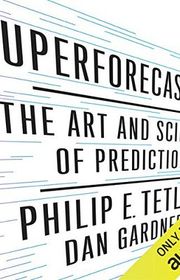
Superforecasting
For readers who want to improve predictions through explicit probabilities and revision. Its emphasis on practice and feedback is more measurable than general thinking advice, though forecasting bounded questions differs from choosing between deeply personal life paths.
What it's about
Philip Tetlock and Dan Gardner investigate the habits of people who make unusually accurate forecasts. Drawing on forecasting research, they examine probability estimates, updating beliefs, collaboration, and the disciplined practice involved in making predictions under uncertainty.

For readers interested in how defaults and presentation affect choices. Its focus on the decision environment differs from guides to individual reflection, though applying nudges raises questions about goals, context, and who designs the options.
What it's about
Richard Thaler and Cass Sunstein examine how the presentation of choices influences decisions. They describe nudges that preserve options while changing defaults or context, using examples from health, finance, and public policy to explore their approach to choice architecture.
Also recommended by
3 people Ben Shapiro recommended this book
Ben Shapiro
"A somewhat creepy book." - Ben Shapiro
Ben Shapiro's recommendation of this book  Mr. Money Mustache recommended this book
Mr. Money Mustache
"On decision making." - MMM
Mr. Money Mustache's recommendation of this book  Kevin Systrom recommended this book
Kevin Systrom
Kevin Systrom recommended this book on Facebook.
Kevin Systrom's recommendation of this book

For readers facing consequential choices with several competing objectives. The structured treatment of alternatives and tradeoffs is more analytical than a collection of anecdotes, though working through the framework can feel laborious for small everyday decisions.
What it's about
John Hammond, Ralph Keeney, and Howard Raiffa present a structured approach to making consequential choices. Everyday and business examples explore defining problems, evaluating alternatives, weighing tradeoffs, and addressing uncertainty so readers can reason more clearly about decisions.
Also recommended by
1 person- Mike Maples, Jr. recommended this book
Mike Maples, Jr.
"I wish I had learned the discipline of how to decide when I was younger." - Mike Maples, Jr.
Mike Maples, Jr.'s recommendation of this book

For readers who want exercises that turn decision principles into a working routine. Its tools make uncertainty more concrete than Thinking in Bets alone, though the benefit depends on completing the activities rather than simply reading them.
What it's about
Annie Duke offers exercises and tools for making decisions when information is incomplete and outcomes are uncertain. She examines bias, feedback, probability, and the difference between a sound process and a result shaped partly by luck.
Also recommended by
5 people Adam Robinson recommended this book
Adam Robinson
"SUPER SIMPLE, fun exercises!" - Adam Robinson
Adam Robinson's recommendation of this book  Adam Grant recommended this book
Adam Grant
"[This] handbook for decision-making isn’t just evidence-based and practical—it’s fun too." - Adam Grant
Adam Grant's recommendation of this book - Marc Andreessen recommended this book
Marc Andreessen
"Provides exercises for how to decide." - Marc Andreessen
Marc Andreessen's recommendation of this book - Seth Godin recommended this book
Seth Godin
"Simple, powerful and generous, it should be required reading." - Seth Godin
Seth Godin's recommendation of this book - Michael Mauboussin recommended this book
Michael Mauboussin
"The best user's guide to decision-making that you'll find." - Michael Mauboussin
Michael Mauboussin's recommendation of this book
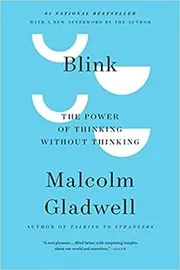
For readers curious about the strengths and failures of snap judgments. Its narrative examples make intuition engaging, though the stories provide less guidance on identifying when your own immediate impressions deserve trust.
What it's about
In this fast-moving book about snap judgments, Gladwell explores how people think without thinking. He shows when quick impressions can be uncannily accurate, when they fail badly, and why expert intuition depends on knowing what details to ignore.
Also recommended by
3 people- Ev Williams recommended this book
Ev Williams
On the "books read" section of Ev Williams' GoodReads profile.
Ev Williams's recommendation of this book - Kevin Systrom recommended this book
Kevin Systrom
Kevin Systrom recommended this book on Facebook.
Kevin Systrom's recommendation of this book  Mike Shinoda recommended this book
Mike Shinoda
"I know most of the guys in the band read [this book]." - Mike Shinoda
Mike Shinoda's recommendation of this book

For readers overwhelmed by comparing options and second-guessing their choices. Its focus on expectations and satisfaction addresses a different problem from evaluating probabilities, though the argument about abundant choice needs applying with attention to context.
What it's about
Barry Schwartz examines how an abundance of options can produce anxiety, regret, and dissatisfaction. Across consumer decisions and major life choices, he argues for managing expectations and adopting habits that make choosing less burdensome.
Also recommended by
2 people Pavel Tsatsouline recommended this book
Pavel Tsatsouline
"A very good book." - Pavel Tsatsouline
Pavel Tsatsouline's recommendation of this book  Noah Kagan recommended this book
Noah Kagan
"At restaurants, close the menu after you find the 1 dish that you like." - Noah Kagan
Noah Kagan's recommendation of this book
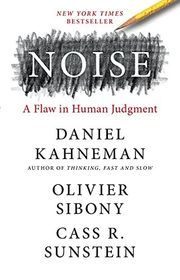
Noise: A Flaw in Human Judgment
For readers responsible for repeated judgments across teams or organizations. Its focus on unwanted variability adds a different lens from familiar bias lists, though many of the remedies concern institutional procedures rather than quick personal decisions.
What it's about
Daniel Kahneman, Olivier Sibony, and Cass Sunstein examine unwanted variability in judgments made by people facing similar cases. They distinguish noise from systematic bias and explore procedures intended to improve consistency in organizations and professional decisions.

The Art of Thinking Clearly
For readers who want brief introductions to many common thinking traps. The compact chapters make selective reading easy, though recognizing a bias by name does not provide a full method for preventing it in practice.
What it's about
Rolf Dobelli examines common errors in reasoning through ninety-nine short chapters. Everyday examples illustrate cognitive biases and mistaken judgments, inviting readers to recognize recurring traps and reconsider how they make decisions at work and in personal life.

For readers comfortable using technical ideas as lenses on ordinary problems. Computational concepts clarify searching, scheduling, and uncertainty in unusual ways, though real-life decisions rarely match the models' assumptions as neatly as an algorithm does.
What it's about
Brian Christian and Tom Griffiths connect computer algorithms with everyday decisions constrained by time and information. They explore questions of searching, organizing, scheduling, and choosing between familiar options and new possibilities, showing how computational ideas illuminate human judgment.
Also recommended by
1 person Anthony Pompliano recommended this book
Anthony Pompliano
"[One of the] best books I read in 2017." - Anthony Pompliano
Anthony Pompliano's recommendation of this book

For readers who notice themselves defending a position rather than examining it. The attention to motivation and intellectual honesty complements analytical decision tools, though a more open attitude does not remove uncertainty or competing values.
What it's about
Julia Galef examines the difference between defending existing beliefs and seeking an accurate picture of reality. Through examples and practical strategies, she encourages curiosity, intellectual honesty, and willingness to revise opinions, presenting those habits as skills readers can develop.
Also recommended by
1 person Rutger Bregman recommended this book
Rutger Bregman
"Highly recommended. It's not easy to become (more of) a scout, but it's hard not to be inspired by this book." - Rutger Bregman
Rutger Bregman's recommendation of this book

For readers who prefer a short story to a research-heavy guide. The hiking parable makes its decision questions easy to remember, though the simplified narrative provides less analysis of probabilities, tradeoffs, and organizational choices.
What it's about
Spencer Johnson presents a decision-making system through the story of a mountain hike. The guide combines practical questions about needs, options, and consequences with reflection on integrity, intuition, and personal insight in work and life.
Sources
- 1
Exploring Books on Decision-Making
alliancefordecisioneducation.org
- 2
Best Books for Decision-Making: 9 That Actually Changed How I Decide
grahammann.net
- 3
Best Books For Decision Making
lisanneswart.com
- 4
The Best Books on Data and Decision-Making
fivebooks.com
- 5
Decision Making Books
goodreads.com
- 6
15 Best Decision Making Books to Change How You Think
expectedvalue.co.uk
- 7
Books that can help with decision making and critical thinking
reddit.com
- 8
Books about Decision Making
reddit.com




Edited by
Software engineer whose passion for tracking book recommendations from podcasts inspired the creation of MRB.
Lead investor at 3one4 Capital whose startup expertise and love for books helped shape MRB and its growth.
Comments
Spotted a missing book, a wrong order or a mistake? Tell us and we'll fix this page.
We're a reading guide, not the author or publisher, so we can't send books or pass on messages.