
9 Best Critical Thinking Books
The best critical thinking books, ranked by how many expert sources recommend each one, with notes to help you choose argument guides, psychology, and skepticism.
Our take
Critical thinking means asking what supports a claim, whether its reasons fit its conclusion, and what might change your mind. It also means noticing how your own expectations can distort what you accept. These books approach those tasks from different directions. Some teach argument skills directly; others use psychology, scientific skepticism, or global data to show how confident judgments can go wrong.
Asking the Right Questions: A Guide to Critical Thinking gives you a structure for examining what you read and hear. A Rulebook for Arguments turns toward making your own case clearly. Thinking, Fast and Slow provides a longer account of judgment, while The Art of Thinking Clearly offers short entries to revisit. The skepticism books focus on evaluating unusual claims. Begin with an argument guide if you want a method to practice, then choose a psychology or science book to see where those habits become useful.
9 books · 8 sources · Last updated
As an Amazon Associate, we earn from qualifying purchases (at no extra cost to you).
How to choose from this list
Skip to the full rankingIf you want a practical starting point: Asking the Right Questions → A Rulebook for Arguments
If you want to understand cognitive biases: The Art of Thinking Clearly → Thinking, Fast and Slow
If you want to examine extraordinary claims: The Demon-Haunted World → How to Think About Weird Things
If you want to question assumptions about global trends: Factfulness
If you want a short study companion: The Pocket Guide to Critical Thinking
The 9 books, ranked
Ranked by how many expert sources name each book. Ties go to the book more people recommend.

Thinking, Fast and Slow
For readers who want a detailed account of how judgment can go wrong. Its sustained explanations provide more depth than a catalog of biases, but it is dense and offers fewer exercises than the argument guides here.
What it's about
Kahneman explores two modes of thought: quick, intuitive responses and slower, deliberate reasoning. Drawing on psychological research, he examines how biases and impressions shape decisions, and when intuition helps or misleads in personal and professional life.
Also recommended by
19 people Bill Gates recommended this book
Bill Gates
List of books Bill Gates read in 2012.
Bill Gates's recommendation of this book  Ray Dalio recommended this book
Ray Dalio
Ray Dalio mentioned this book in his book, "Principles."
Ray Dalio's recommendation of this book  Scott Adams recommended this book
Scott Adams
One of the books on Scott Adams' "Persuasion Reading List."
Scott Adams's recommendation of this book  Naval Ravikant recommended this book
Naval Ravikant
"Fine book but it didn’t need to be an entire book. A blog post would have gotten the point across." - Naval Ravikant
Naval Ravikant's recommendation of this book  Ev Williams recommended this book
Ev Williams
"I love surprising scientific findings, as well as information about how our brains work. [This book] is a treasure trove of both." - Ev Williams
Ev Williams's recommendation of this book  Marc Andreessen recommended this book
Marc Andreessen
"Captivating dive into human decision making, marred by inclusion of several/many? psychology studies that fail to replicate. Will stand as a cautionary tale?" - Marc Andreessen
Marc Andreessen's recommendation of this book +13
More recommendations
- Stewart Brand
Stewart Brand recommended this book on his "Selected Books for the Manual for Civilization" blog post.
- Bryan Johnson
"I started reading [this book] and I became increasingly convinced of my own fickleness and inability to actually act rationally in life." - Bryan Johnson
- Derek Sivers
"If you liked 'Predictably Irrational' or 'Stumbling on Happiness' or any of those pop-psychology books, well, this is the Godfather of all of their work." - Derek Sivers
- Sam Altman
One of Sam Altman's answers to "What are some of the best books you recommend for a young startup founder?"
- Ron Conway
"Covers all three phases of [the author's] career: his early days working oncognitive bias, his work on prospect theory, and his later work on happiness." - Ron Conway
- Jason Fried
"I enjoyed [this book]. Fascinating." - Jason Fried
- Nassim Taleb
"A landmark book in social thought, in the same league as The Wealth of Nations by Adam Smith and The Interpretation of Dreams by Sigmund Freud." - Nassim Taleb
- Sahil Lavingia
Sahil Lavingia recommended this book on Notion.
- Mark Manson
Mark Manson recommended this book on his website.
- Jay Shetty
"[One] of my favourite books." - Jay Shetty
- Michiko Kakutani
"Has become essential reading in many baseball front offices and among coaching staffs." - Michiko Kakutani
- Preston Pysh
"An incredible book!" - Preston Pysh
- Ben Greenfield
Most Recommended Books reached out to Ben Greenfield directly.
- Stewart Brand

The Art of Thinking Clearly
For readers who want short introductions to common reasoning traps. The brief chapters make it easier to dip into than Thinking, Fast and Slow, but the compact format leaves less space for evidence and qualifications.
What it's about
Rolf Dobelli examines common errors in reasoning through ninety-nine short chapters. Everyday examples illustrate cognitive biases and mistaken judgments, inviting readers to recognize recurring traps and reconsider how they make decisions at work and in personal life.
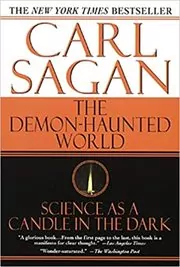
For readers who want a humane defense of evidence and scientific skepticism. Sagan connects reasoning with the appeal of extraordinary claims, but the examples reflect an earlier media environment rather than today’s online platforms.
What it's about
The Demon-Haunted World is Sagan’s plainspoken defense of science and critical thinking. Using examples from UFO claims to faith healing, he shows how skepticism and a simple “baloney detection kit” can help us tell the difference between evidence and comforting illusion.

Factfulness
Ten Reasons We're Wrong About the World - and Why Things Are Better Than You Think
For readers who want to test assumptions about global conditions against data. Its questions make mistaken impressions visible, but the figures need updating and its focus is narrower than a general guide to argument.
What it's about
Hans Rosling and his collaborators examine ten habitual ways people misjudge global conditions. Using evidence about poverty, health, education, and population, they offer practical approaches to recognizing distorted assumptions and developing a more accurate understanding of the world.
Also recommended by
6 people- Bill Gates recommended this book
Bill Gates
"A fantastic book, and I hope a lot of people read it." - Bill Gates
Bill Gates's recommendation of this book  Jordan Peterson recommended this book
Jordan Peterson
Recommended on Jordan Peterson's website.
Jordan Peterson's recommendation of this book  Barack Obama recommended this book
Barack Obama
"A hopeful book about the potential for human progress when we work off facts rather than our inherent biases." - Barack Obama
Barack Obama's recommendation of this book  Howard Marks recommended this book
Howard Marks
"Unmasks a lot of misperceptions that people have about the state of the world." - Howard Marks
Howard Marks's recommendation of this book  Melinda Gates recommended this book
Melinda Gates
Melinda Gates recommended this book on Likewise.com.
Melinda Gates's recommendation of this book  Michael Batnick recommended this book
Michael Batnick
"Terrific book." - Michael Batnick
Michael Batnick's recommendation of this book

For readers curious about the everyday influences on choices, especially prices and expectations. Its experiment-centered stories are approachable, but it is a behavioral-economics introduction rather than a systematic course in evaluating arguments.
What it's about
Dan Ariely challenges the assumption that people make consistently rational decisions. Through experiments and everyday examples, he examines recurring errors in judgment and argues that recognizing these patterns can help readers reconsider their own choices.
Also recommended by
4 people Keith Rabois recommended this book
Keith Rabois
Keith Rabois recommended this book on Quora.
Keith Rabois's recommendation of this book  Max Levchin recommended this book
Max Levchin
One of Max Levchin's answers to "what's your favourite business book you'd advise to young entrepreneurs?"
Max Levchin's recommendation of this book  Tom Bilyeu recommended this book
Tom Bilyeu
Tom Bilyeu recommended this book on his website.
Tom Bilyeu's recommendation of this book  Ryan Shea recommended this book
Ryan Shea
Ryan Shea recommended this book on his website.
Ryan Shea's recommendation of this book

A Rulebook for Arguments
For readers who want to build clear arguments in essays and discussion. Its compact rules are easier to apply while writing than a long psychology book, but developing judgment still takes practice beyond the examples.
What it's about
Anthony Weston presents concise rules for constructing and evaluating arguments, from choosing evidence to supporting conclusions. Examples illustrate persuasive reasoning, while guidance on public debate addresses the responsibilities and etiquette of engaging with other people's views.

For students and general readers who want a repeatable way to examine claims. Its questions about reasons, assumptions, and evidence make it more directly usable than the bias surveys, but the textbook approach asks for active practice.
What it's about
M. Neil Browne and Stuart Keeley teach critical thinking through questions about arguments and evidence. The guide examines conclusions, reasons, assumptions, and language, helping readers recognize fallacies and evaluate competing claims before deciding what to accept.

For readers who enjoy testing unusual claims through logic and evidence. Its focused examples make skeptical reasoning concrete, but the textbook treatment and emphasis on extraordinary beliefs may feel narrow beside the everyday decision books.
What it's about
Theodore Schick and Lewis Vaughn explain how to assess unusual claims using evidence, logic, and scientific reasoning. Their guide examines common errors in thinking and offers methods for judging whether beliefs have adequate support.
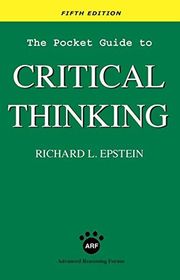
The Pocket Guide to Critical Thinking
For students who want a concise companion for analyzing arguments. Worked examples make it more practice-oriented than the popular psychology books here, but its abbreviated scope means some topics need a fuller textbook.
What it's about
Richard Epstein introduces skills for evaluating arguments and reasoning more clearly. Examples from everyday communication and media illustrate the methods, while the fifth edition adds discussion of scientific explanations, experiments, models, and theories for students and independent learners.
Sources
- 1
The 5 Best Books On Critical Thinking
game-changer.net
- 2
The 5 Best Books on Critical Thinking for Einstein-Esque Performance
bloomsoup.com
- 3
17 Best Books on Critical Thinking [Handpicked for You]
upjourney.com
- 4
The best books on Critical Thinking
fivebooks.com
- 5
Bookstore
philosophy.hku.hk
- 6
Critical Thinking Books
goodreads.com
- 7
Need A Critical Thinking/Analysis Book
reddit.com
- 8
Critical Thinking Toolkit
teachinghandbook.wwu.edu


Edited by
Software engineer whose passion for tracking book recommendations from podcasts inspired the creation of MRB.
Lead investor at 3one4 Capital whose startup expertise and love for books helped shape MRB and its growth.
Comments
Spotted a missing book, a wrong order or a mistake? Tell us and we'll fix this page.
We're a reading guide, not the author or publisher, so we can't send books or pass on messages.