
11 Best Michael Lewis Books
The best Michael Lewis books, ranked by how many expert sources recommend each one, with notes to help you choose among finance, sports, and psychology.
Our take
Michael Lewis writes about people who notice something the surrounding system has missed. That might be a baseball player valued for the wrong reasons, a financial market built on shaky assumptions, or public servants whose work few people understand. His books turn those systems into stories through a small cast of characters. They're standalone works, so you can start with the subject that interests you most.
Moneyball is a useful introduction to his interest in evidence and overlooked value. For Wall Street, Liar's Poker brings a personal voice, while The Big Short explains the mortgage crisis through people who bet against it. The Undoing Project shifts toward psychology and friendship. Later books such as The Fifth Risk examine institutions and expertise beyond finance. Start with Moneyball for an accessible story about decisions, or choose The Big Short if understanding a financial failure is what brings you here.
11 books · 7 sources · Last updated
As an Amazon Associate, we earn from qualifying purchases (at no extra cost to you).
Reading Michael Lewis in order? See all Michael Lewis books in order
How to choose from this list
Skip to the full rankingIf you're reading Lewis for the first time: Moneyball
If you want to follow Wall Street across eras: Liar's Poker → The Big Short → Flash Boys
If you want psychology and decision-making: The Undoing Project
If you want public institutions and risk: The Fifth Risk → The Premonition
If you want technology and financial ambition: The New New Thing → Going Infinite
The 11 books, ranked
Ranked by how many expert sources name each book. Ties go to the book more people recommend.
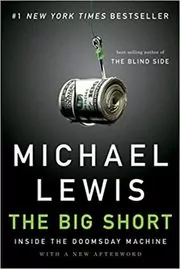
For readers trying to understand the mortgage crisis through people who challenged the consensus. It gives financial machinery a clear dramatic thread, though the jargon still demands more attention than Moneyball.
What it's about
This book follows a handful of outsiders who realized the subprime mortgage market was doomed, used credit default swaps to bet against it, and watched as the 2008 financial crisis exposed how fragile and reckless Wall Street had become.
Also recommended by
3 people David Heinemeier Hansson recommended this book
David Heinemeier Hansson
"A good one." - DHH
David Heinemeier Hansson's recommendation of this book  Malcolm Gladwell recommended this book
Malcolm Gladwell
Malcolm Gladwell recommended this book in the "Tools of Titans" book.
Malcolm Gladwell's recommendation of this book  Sheryl Sandberg recommended this book
Sheryl Sandberg
"[The author takes on] the 2008 Wall Street crash." - Sheryl Sandberg
Sheryl Sandberg's recommendation of this book
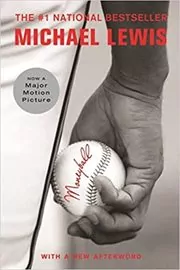
For a first Lewis book, especially if you enjoy underdogs and decisions made with data. Baseball gives the argument concrete stakes, though some knowledge of the game makes the detail easier to follow.
What it's about
Lewis shows how Oakland A’s general manager Billy Beane used statistics and undervalued players to build a winning baseball team on a shoestring budget, challenging decades of scouting wisdom and changing how fans, front offices, and players think about the game.
Also recommended by
1 person Ev Williams recommended this book
Ev Williams
On the "books read" section of Ev Williams' GoodReads profile.
Ev Williams's recommendation of this book
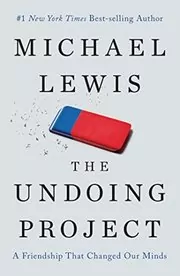
For readers who care more about judgment and collaboration than financial markets. The friendship makes the psychology approachable, but it is a portrait of researchers rather than a practical guide to avoiding bias.
What it's about
Tells the intertwined story of psychologists Daniel Kahneman and Amos Tversky, whose research on judgment, bias, and decision-making reshaped economics, medicine, and politics, and of the intense friendship that powered, and eventually strained, their work together.
Also recommended by
4 people Anthony Pompliano recommended this book
Anthony Pompliano
"[One of the] best books I read in 2017." - Anthony Pompliano
Anthony Pompliano's recommendation of this book  Mark Cuban recommended this book
Mark Cuban
Mark Cuban's "books he's reading summer 2018" list.
Mark Cuban's recommendation of this book  Ray Dalio recommended this book
Ray Dalio
Ray Dalio mentioned this book on "The Tim Ferriss Show" podcast.
Ray Dalio's recommendation of this book  Raoul Pal recommended this book
Raoul Pal
Raoul Pal recommended this book on Twitter.
Raoul Pal's recommendation of this book
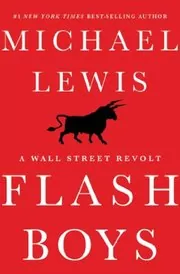
For readers curious about the plumbing of stock trading. It makes speed and market structure tangible through a small group of reformers, but its argument comes through their perspective rather than a balanced technical survey.
What it's about
Follows a group of traders and technologists who uncover how high-frequency trading skims fractions of a cent from everyday orders, then race to build a fairer stock exchange that slows markets down just enough to protect ordinary investors.
Also recommended by
1 person Brian Armstrong recommended this book
Brian Armstrong
"An interesting book." - Brian Armstrong
Brian Armstrong's recommendation of this book
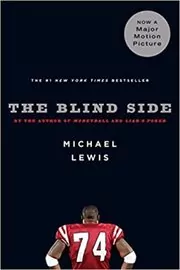
For football fans interested in why particular skills become valuable. It connects strategy with an individual life more directly than Moneyball, but its family narrative reflects the perspective of its time of writing.
What it's about
Blending the evolution of modern football strategy with the true story of Michael Oher, a homeless teenager taken in by the Tuohy family, this book shows how his size and talent at left tackle reshape his life and the meaning of opportunity.
Also recommended by
1 person- Ev Williams recommended this book
Ev Williams
On the "books read" section of Ev Williams' GoodReads profile.
Ev Williams's recommendation of this book
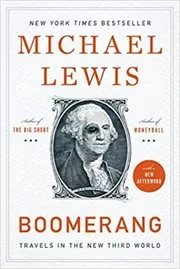
For readers who want to follow The Big Short beyond Wall Street. Its country visits make the debt crisis varied and readable, but broad cultural portraits can simplify the differences within each country.
What it's about
Expands the story of the global financial crisis by traveling through countries like Iceland, Greece, and Ireland, revealing how cheap credit, local culture, and political choices combined to create booms, busts, and long-lasting economic pain.

Going Infinite
For readers who want a close character portrait behind the FTX collapse. Lewis had unusual access to Sam Bankman-Fried, but that closeness also drew criticism for giving his subject too much benefit of the doubt.
What it's about
Draws on close access to Sam Bankman-Fried to tell the story of FTX’s dizzying rise and collapse, tracing how a crypto exchange built on big promises and effective-altruism branding ended in bankruptcy, criminal charges, and huge losses for customers.
Liar's Poker
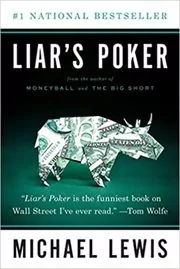
For readers who want Lewis at his most personal and satirical. His bond desk experience makes the workplace culture vivid, but it captures a particular Wall Street era rather than explaining today’s markets.
What it's about
Part memoir, part exposé, this book describes Lewis’s years as a young bond salesman at Salomon Brothers, capturing the swagger, fear, and excess of 1980s Wall Street and the birth of the mortgage-backed securities boom.
Also recommended by
4 people Tim Ferriss recommended this book
Tim Ferriss
"A very exciting book." - Tim Ferriss
Tim Ferriss's recommendation of this book  Tim O’Reilly recommended this book
Tim O’Reilly
"A time machine into this place when our financial economy went crazily wrong." - Tim O’Reilly
Tim O’Reilly's recommendation of this book  Chamath Palihapitiya recommended this book
Chamath Palihapitiya
"Probably my favorite book." - Chamath Palihapitiya
Chamath Palihapitiya's recommendation of this book  Trung Phan recommended this book
Trung Phan
"About the Trading industry." - Trung Phan
Trung Phan's recommendation of this book
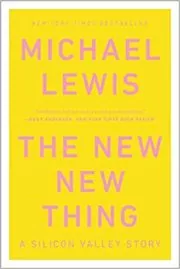
For readers who prefer technology entrepreneurs to traders or athletes. Jim Clark provides a personal route into the dot-com boom, but the business landscape is historical and the focus stays close to one outsized personality.
What it's about
Follows Silicon Valley billionaire Jim Clark across startups, sailing adventures, and the 1990s internet boom, using his restless drive to show how venture capital, code, and hype combined to create a new, wildly speculative kind of capitalism.
Also recommended by
4 people Ryan Holiday recommended this book
Ryan Holiday
Ryan Holiday recommended this book on his blog.
Ryan Holiday's recommendation of this book  Keith Rabois recommended this book
Keith Rabois
"[One of three] classic books to read, albeit perhaps with less immediate/practical relevance today." - Keith Rabois
Keith Rabois's recommendation of this book  Austen Allred recommended this book
Austen Allred
"[One of] my favorite books for understanding the history of Silicon Valley." - Austen Allred
Austen Allred's recommendation of this book  Kevin Systrom recommended this book
Kevin Systrom
"I read [this book] and I said to myself this feels like an area of the world I can come to and be myself.'" - Kevin Systrom
Kevin Systrom's recommendation of this book
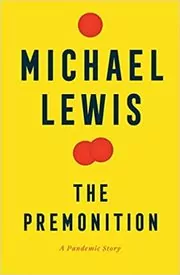
For readers drawn to public health and institutional failure. Its focus on people trying to anticipate danger makes a useful companion to The Fifth Risk, but it offers a selective American story rather than a global pandemic history.
What it's about
Follows a small group of doctors, scientists, and local health officials who saw the danger of a fast-moving virus long before COVID-19 hit, and shows how bureaucratic hesitation left the United States vulnerable to a preventable catastrophe.
Also recommended by
1 person Arnold Schwarzenegger recommended this book
Arnold Schwarzenegger
"A great lesson in preparedness." - Arnold Schwarzenegger
Arnold Schwarzenegger's recommendation of this book
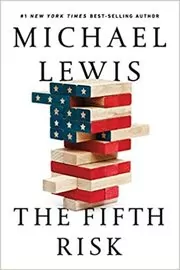
For readers curious about the public work that usually stays out of sight. Its agency portraits make institutional knowledge concrete, but its focus on one presidential transition gives the argument a specific political frame.
What it's about
Explores what happens when new political leaders ignore the expertise inside key U.S. agencies, profiling the quiet civil servants at Energy, Agriculture, and Commerce who manage nuclear safety, food programs, and weather data that most citizens never see.
Sources
- 1
Michael Lewis | The Official Website
michaellewiswrites.com
- 2
Books by Michael Lewis
goodreads.com
- 3
Michael Lewis Books in Order, and Which to Read First
lisanneswart.com
- 4
5 Best Michael Lewis Books (2025)
ereads.com
- 5
Suggest me an author similar to Michael Lewis
reddit.com
- 6
Ranking Author Michael Lewis's Best Books (A Bibliography Countdown)
bookscrolling.com
- 7
Michael Lewis Responds to Criticism of Sam Bankman-Fried Book
time.com







Edited by
Software engineer whose passion for tracking book recommendations from podcasts inspired the creation of MRB.
Lead investor at 3one4 Capital whose startup expertise and love for books helped shape MRB and its growth.
Comments
Spotted a missing book, a wrong order or a mistake? Tell us and we'll fix this page.
We're a reading guide, not the author or publisher, so we can't send books or pass on messages.