
10 Best WordPress Books
The best WordPress books, ranked by how many expert sources recommend them, with guidance for new site owners, online shops, and plugin developers.
Our take
WordPress books serve two quite different readers: people who want to publish a website and developers who want to change how the platform works. A dashboard walkthrough can help with pages, menus, and plugins, while a programming reference assumes comfort with code and explains the systems behind those features.
Edition matters here. Many familiar guides describe interfaces and workflows from before today's block editor and site-editing tools. Their explanations can still provide useful background, but screenshots, plugin choices, and security procedures need checking against the current software. WordPress: The Missing Manual and WordPress All-in-One For Dummies emphasize site ownership, while Building Web Apps with WordPress takes a developer's perspective.
Begin with a recent edition of WordPress All-in-One For Dummies if you want a broad site-building introduction. If you already write PHP and want to extend the platform, start with Professional WordPress Plugin Development and use current developer documentation alongside it.
10 books · 8 sources · Last updated
As an Amazon Associate, we earn from qualifying purchases (at no extra cost to you).
How to choose from this list
Skip to the full rankingIf you want a broad site-building introduction: WordPress All-in-One For Dummies → WordPress: The Missing Manual
If you prefer short visual lessons: WordPress in Easy Steps
If you want to develop plugins: Professional WordPress Plugin Development
If you want to build applications: Professional WordPress → Building Web Apps with WordPress
If you want to understand store setup: Building E-Commerce Solutions with WooCommerce
The 10 books, ranked
Ranked by how many expert sources name each book. Ties go to the book more people recommend.

For programmers seeking a broad explanation of WordPress internals and development. It offers more architectural depth than beginner manuals, though this edition predates the block editor and needs substantial updating alongside current documentation.
What it's about
Brad Williams, David Damstra, and Hal Stern examine WordPress design and development from a programmer's perspective. Using examples aligned with WordPress 4.1, they explore the system's functionality and its use as a framework for applications.

For site owners who want clear explanations rather than a bare checklist of clicks. MacDonald connects features with practical uses, though the edition shown here cannot cover every change in today's editor.
What it's about
Matthew MacDonald explains how to build and manage websites with WordPress through practical, accessible instructions. This third edition covers themes, widgets, and plugins, helping bloggers and web designers understand how the platform's features work together to support different kinds of sites.

WordPress All-in-One For Dummies
For beginners who want a broad reference covering setup, content, and site management. The combined mini-books make individual topics easy to revisit, though the linked edition is older than later revisions of this title.
What it's about
Lisa Sabin-Wilson presents a combined guide to setting up and managing WordPress sites. Topics include hosting, themes, administration, security, and creating content with the Gutenberg editor, offering a reference for building and maintaining a web presence.

For developers who want WordPress to support applications beyond a conventional blog. The architectural perspective connects several moving parts, though you need programming experience and should check implementation details against current documentation.
What it's about
Brian Messenlehner and Jason Coleman explain how to use WordPress as an application framework. Examples explore plugins, themes, users, external services, payments, and scaling, showing how familiar web technologies can support more complex applications.

WordPress To Go
For complete beginners who want a short path from hosting to a working website. The simple sequence lowers the entry barrier, though its pre-block-editor workflow no longer matches much of today's interface.
What it's about
Sarah McHarry introduces building a WordPress website or blog for readers without programming experience. Step-by-step lessons explain getting a site running and developing its content and identity, with accessible guidance intended for beginners and small business owners.
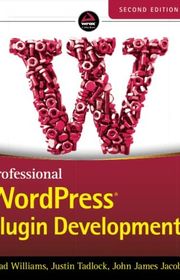
Professional WordPress Plugin Development
For PHP developers ready to create maintainable WordPress plugins. The sustained focus on plugin architecture gives it more depth than general site guides, though this second edition still needs current documentation for newer platform features.
What it's about
Brad Williams, Justin Tadlock, and John James Jacoby explain WordPress plugin development in this second edition. Topics include hooks, administration interfaces, data storage, security, and distribution, with examples showing how plugins extend the platform.

For beginners learning the block editor's early workflow through a complete site-building project. The broad coverage provides orientation, though WordPress 5 screenshots and customization instructions differ from the current platform.
What it's about
Karol Król introduces building websites with WordPress 5, including its Gutenberg block editor. Practical examples cover posts, pages, multimedia, themes, plugins, design customization, and extending the platform beyond a conventional blog.

WordPress in Easy Steps
For beginners who prefer short instructions and visual steps over extensive explanations. Bartlett offers a manageable first pass through site building, though the linked edition's dashboard and customization examples need updating.
What it's about
Darryl Bartlett introduces building and maintaining websites with WordPress 5 for readers without coding experience. The guide covers the dashboard, users, themes, content, plugins, online stores, search visibility, and interaction with visitors.

Building E-Commerce Solutions with WooCommerce
For WordPress users who want a guided introduction to running an online store. Its focused commerce workflow is useful, though payment, tax, shipping, and administration details require verification against current WooCommerce documentation.
What it's about
Robbert Ravensbergen guides readers through creating an online store with WooCommerce. Instructions cover setup, product categories and variations, downloadable items, payment methods, shipping, and discount coupons within a WordPress-based commerce site.

WordPress Security Made Easy
For nontechnical site owners who want illustrated explanations of security-related maintenance. The approachable format reduces the learning barrier, though its older procedures should be verified against current guidance before changing a live site's configuration.
What it's about
Niko Guruli presents illustrated, step-by-step guidance for installing and maintaining a WordPress site with attention to security. Developed from his own working notes, the guide explains practical measures for beginners, bloggers, and small business owners.
Sources
- 1
Best WordPress Books for 2026 (7 Verified Picks, 3 to Skip)
theguidex.com
- 2
10 Best WordPress Books for Beginners and Pros in 2026
wp-umbrella.com
- 3
Top 12 WordPress Books To Add To Your Collection
elegantthemes.com
- 4
10 Best WordPress Books You’ll Want to Read in 2026
isitwp.com
- 5
64 Best Wordpress Books of All Time (Updated for 2026)
shortform.com
- 6
7 Best WordPress Books for All Knowledge Levels
themeisle.com
- 7
Wordpress Books
goodreads.com
- 8
15 WordPress Books To Read
blog.hubspot.com


Edited by
Software engineer whose passion for tracking book recommendations from podcasts inspired the creation of MRB.
Lead investor at 3one4 Capital whose startup expertise and love for books helped shape MRB and its growth.
Comments
Spotted a missing book, a wrong order or a mistake? Tell us and we'll fix this page.
We're a reading guide, not the author or publisher, so we can't send books or pass on messages.