
12 Best Deep Learning Books
The best deep learning books, ranked by how many expert sources recommend each one, with notes on who each suits, from practical coders to advanced students.
Our take
Deep learning books differ in what they expect you to know and how they teach. Some start with working models and explain the machinery afterward. Others build networks from simple operations or develop the mathematics needed to analyze why a method behaves as it does.
Python experience helps with most practical choices here, while the more theoretical texts also ask for linear algebra, calculus, and probability. Deep Learning for Coders with Fastai and PyTorch emphasizes applications. Deep Learning from Scratch and Grokking Deep Learning slow down to expose the underlying operations. Deep Learning by Goodfellow and his coauthors provides a foundational reference, but its publication predates several architectures now central to the field. Framework-based books introduce another consideration: examples can require different library versions from those installed on a current machine.
Start with the practical path if you already code, or choose Understanding Deep Learning if you want concepts and mathematics developed together.
12 books · 8 sources · Last updated
As an Amazon Associate, we earn from qualifying purchases (at no extra cost to you).
How to choose from this list
Skip to the full rankingIf you want to build models early: Deep Learning for Coders with Fastai and PyTorch → Dive into Deep Learning
If you want to build the mechanics yourself: Grokking Deep Learning → Deep Learning from Scratch
If you prefer Keras examples: Deep Learning with Python
If you want mathematical understanding: Understanding Deep Learning
The 12 books, ranked
Ranked by how many expert sources name each book. Ties go to the book more people recommend.
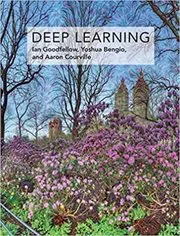
Deep Learning
For readers with mathematical foundations who want a substantial conceptual reference, Goodfellow and his coauthors explain core methods in depth. The theoretical treatment remains useful, though it predates transformers and is demanding as a first practical introduction.
What it's about
Ian Goodfellow, Yoshua Bengio, and Aaron Courville introduce the mathematical foundations, established methods, and research directions of deep learning. The textbook covers neural networks and applications alongside the conceptual tools needed to understand this field.
Also recommended by
4 people Elon Musk recommended this book
Elon Musk
"Written by three experts in the field, [this book] is the only comprehensive book on the subject." - Elon Musk
Elon Musk's recommendation of this book  Satya Nadella recommended this book
Satya Nadella
"The book made such a significant impact on Satya Nadella that he hired co-author Yoshua Bengio." - ThingsCyber.com
Satya Nadella's recommendation of this book  Vinod Khosla recommended this book
Vinod Khosla
"For a slightly more technical read [on AI]." - Vinod Khosla
Vinod Khosla's recommendation of this book  Nassim Taleb recommended this book
Nassim Taleb
"Very clear exposition, does the math without getting lost in the details." - Nassim Taleb
Nassim Taleb's recommendation of this book

For programmers who want to understand the pieces hidden by high-level libraries, Weidman builds networks from basic operations. The implementation-first reasoning encourages careful learning, though readers need Python and some machine learning background to get the most from it.
What it's about
Seth Weidman explains neural networks by building them in Python from first principles. For readers with machine learning experience, mathematical, computational, and conceptual explanations develop from basic operations into advanced architectures, making the parts of a working model explicit.

Deep Learning with Python
For Python programmers who prefer intuitive explanations alongside working models, Chollet offers a practical entry through Keras. Its balance of concepts and examples supports application, though code from this edition needs checking against the installed library versions.
What it's about
Francois Chollet introduces deep learning with Python and Keras through intuitive explanations and practical examples. The second edition develops the concepts behind neural networks alongside their application, guiding readers with Python experience toward understanding and building deep learning models.

For programmers who want to train useful models before tackling all the mathematics, Howard and Gugger offer an application-first path. The early projects make the subject concrete, though fastai abstractions and changing dependencies require some independent investigation.
What it's about
Jeremy Howard and Sylvain Gugger teach deep learning through practical applications using fastai and PyTorch. Programmers learn to train models for a range of tasks, connecting working examples with the concepts behind them without requiring an advanced academic background.

For students who want neural methods placed within a broader algorithmic framework, Aggarwal provides a substantial textbook treatment. The mathematical coverage supports deeper study, though its density makes it less approachable than an application-led first course.
What it's about
Charu Aggarwal examines neural networks and deep learning through their theory and algorithms. Mathematical explanations, examples, and exercises connect classical models with deeper architectures and traditional machine learning, giving students a framework for understanding the design choices behind neural systems.

For developers interested in the Java-oriented Deeplearning4j ecosystem, Patterson and Gibson connect model concepts with deployment concerns. That production perspective distinguishes the book, though its framework choices and older tooling make it a specialized route today.
What it's about
Josh Patterson and Adam Gibson connect deep learning theory with production workflows using Deeplearning4j. Examples cover training and tuning network architectures, preparing different kinds of data, and running applications on Spark and Hadoop, linking model choices with practical organizational problems.
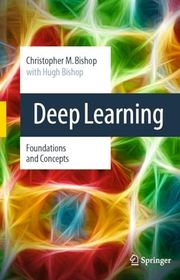
Deep Learning: Foundations and Concepts
For mathematically prepared readers who want a coherent textbook treatment of modern deep learning, the Bishops connect foundations with contemporary methods. Its broad analytical perspective supports serious study, though beginners may need a gentler introduction alongside it.
What it's about
Christopher and Hugh Bishop develop deep learning through its mathematical foundations, neural architectures, and learning methods. The book connects established principles with modern topics such as attention and generative modeling, using explanations and illustrations to organize a rapidly expanding subject.

Grokking Deep Learning
For Python users who want to see how learning happens inside a network, Trask develops the mechanics incrementally. Its from-scratch emphasis builds intuition, though the deliberate pace and limited architecture coverage make it a foundation rather than a comprehensive reference.
What it's about
Andrew Trask explains neural network training by developing the details behind it rather than relying on a high-level description. Python-based learning tasks guide readers through the underlying science, building an understanding of how deep learning systems operate through hands-on work.

Hands-On Machine Learning with Scikit-Learn, Keras, and TensorFlow
Concepts, Tools, and Techniques to Build Intelligent Systems
For readers who want classical machine learning and neural networks in one practical course, Géron offers broad Python-based coverage. The exercises help connect topics, though this older TensorFlow edition requires attention to library changes and newer alternatives.
What it's about
Aurelien Geron teaches machine learning through Python examples using Scikit-Learn, Keras, and TensorFlow. Practical exercises develop an intuitive understanding of algorithms and neural networks, connecting the concepts behind intelligent systems with the tools used to build them.
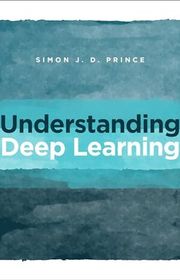
Understanding Deep Learning
For readers who want visual intuition connected with mathematical explanations, Prince offers a structured modern introduction. The diagrams and exercises support deliberate study, though familiarity with linear algebra, calculus, and probability makes the progression considerably easier.
What it's about
Simon Prince explains neural network principles, optimization, and modern deep learning architectures through mathematical development, diagrams, and exercises. The textbook connects foundational models with topics including transformers and generative methods, giving readers a framework for understanding how these systems work.
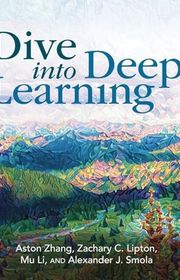
Dive into Deep Learning
For programmers who want explanations and runnable experiments closely connected, this book makes implementation part of the learning process. The interactive approach encourages testing ideas, though its breadth and framework choices require careful management of prerequisites and software versions.
What it's about
Aston Zhang and his coauthors teach deep learning through mathematical explanations, code, and interactive experiments. The material develops foundational models and modern architectures, connecting concepts with implementations across supported frameworks and exercises that invite readers to investigate behavior themselves.

Neural Networks and Deep Learning
For readers who want a focused conceptual introduction without buying a textbook, Nielsen develops the central ideas with care. Its coherent progression rewards active study, though the limited architecture range and older code need supplementing for current practice.
What it's about
Michael Nielsen explains the core principles of neural networks and deep learning in a freely available online book. The text develops understanding through a focused treatment of how networks learn, prioritizing conceptual foundations over a broad catalog of techniques.
Sources
- 1
Top 13 Must Have Books for Deep Learning!
analyticsvidhya.com
- 2
Top 10 Deep Learning Books (Updated for 2023) | EDUCBA
educba.com
- 3
The 17 Best Deep Learning Books on Our Reading List
solutionsreview.com
- 4
Deep Learning Books
goodreads.com
- 5
Recommended books by the certified - Japan Deep Learning Association
jdla.org
- 6
Machine Learning Books: The 10 Best for 2026 (Free PDFs Included) | ComputingForGeeks
computingforgeeks.com
- 7
Reference Textbooks | Layerwise ML
layerwiseml.com
- 8
Book review
reddit.com





Edited by
Software engineer whose passion for tracking book recommendations from podcasts inspired the creation of MRB.
Lead investor at 3one4 Capital whose startup expertise and love for books helped shape MRB and its growth.
Comments
Spotted a missing book, a wrong order or a mistake? Tell us and we'll fix this page.
We're a reading guide, not the author or publisher, so we can't send books or pass on messages.