
13 Best Python Books
The best Python books, ranked by how many expert sources recommend each one, with notes on who each book suits and where to start learning the language.
Our take
Python books serve very different readers. A first-time programmer needs explanations of variables, loops, and functions, along with exercises that make those ideas concrete. Someone moving from another language may need less introduction and more help understanding Python's conventions. Data analysis adds another layer: working with arrays and tables means learning libraries as well as the language itself.
Python Crash Course provides a structured introduction with larger projects, while Automate the Boring Stuff with Python starts from everyday tasks you might want to automate. Think Python moves more gradually through programming ideas. Once you can write programs, Fluent Python and Effective Python help you examine how you use the language. The data books suit readers with a specific analytical goal. Edition matters throughout: several linked books cover older Python or library releases, so compare examples with current documentation. Start with one beginner book, work through its exercises, and choose a specialist title when you have a project in mind.
13 books · 8 sources · Last updated
As an Amazon Associate, we earn from qualifying purchases (at no extra cost to you).
How to choose from this list
Skip to the full rankingIf you've never programmed: Think Python → Python Crash Course
If you want useful scripts quickly: Automate the Boring Stuff with Python
If you already know the basics: Python Tricks → Effective Python → Fluent Python
If you want to work with tables: Python for Data Analysis → Python Data Science Handbook
If you need worked solutions: Python Cookbook
The 13 books, ranked
Ranked by how many expert sources name each book. Ties go to the book more people recommend.
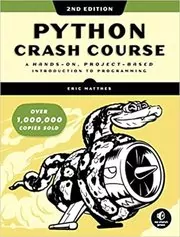
For beginners who want a clear route from syntax to complete projects. Its exercises and substantial applications offer a more structured progression than a cookbook, though following the projects takes more time than learning a few useful scripts.
What it's about
Eric Matthes introduces Python through short lessons and exercises covering variables, collections, functions, classes, and testing. The second half applies those foundations to larger projects, including a game, data visualizations, and a Django web application.
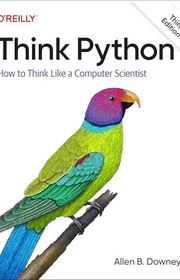
Think Python
For complete beginners who want to understand programming concepts before building a large application. Its gradual explanations and exercises offer a quieter approach than Head First Python, though readers seeking immediate automation projects may prefer Sweigart.
What it's about
Allen Downey introduces programming through Python, building from variables and functions toward data structures, recursion, and classes. Exercises and debugging advice encourage readers to develop problem-solving habits while learning to express ideas as working code.
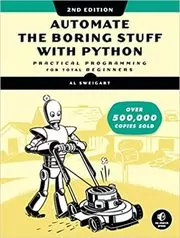
For beginners motivated by reducing repetitive computer work. It gets to useful scripts more directly than the language-reference books, though libraries and websites change, so older examples may require current documentation and adjustments.
What it's about
Al Sweigart introduces Python programming through practical tasks that reduce repetitive computer work. After covering the basics, the book develops scripts for organizing files, working with spreadsheets and documents, collecting web data, sending messages, and automating keyboard and mouse actions.

For programmers who know the basics and want to understand Python's design and idioms. It develops the data model more deeply than Python Tricks, though it is a substantial read and the linked first edition predates newer features.
What it's about
Luciano Ramalho guides experienced programmers through Python’s features and idioms to help them write concise, expressive code. Examples explore the data model, collections, first-class functions, object-oriented design, generators, concurrency, and metaprogramming.

Learning Python
For readers who want detailed explanations of the core language and can commit to a long tutorial. It offers more depth than a quick introduction, though the linked fifth edition includes Python 2 and lacks recent language developments.
What it's about
Mark Lutz provides a detailed introduction to Python’s core language through explanations, examples, and exercises. The book covers built-in types, statements, functions, modules, classes, exceptions, and advanced language features, addressing both Python 2 and Python 3.

For beginners who learn well through pictures, conversation, and frequent exercises. The visual format makes it less imposing than Learning Python, though readers who prefer compact explanations may find the busy presentation distracting.
What it's about
Paul Barry introduces Python through a visual format with exercises and practical examples. Readers learn data structures and functions before building a web application and exploring databases, exceptions, data handling, decorators, comprehensions, and generators.

Python Cookbook
For experienced programmers looking for worked solutions and explanations of recurring problems. The recipe format is more useful for targeted questions than sequential study, though its examples reflect an older version of Python 3.
What it's about
David Beazley and Brian Jones provide practical Python 3 recipes for experienced programmers. Each problem, solution, and discussion explores techniques for data structures, text processing, files, networking, concurrency, testing, and other recurring programming tasks.

For readers whose main goal is cleaning, reshaping, and analyzing tabular data. It gives pandas more attention than a general Python introduction, though the linked older edition needs checking against current library documentation.
What it's about
Wes McKinney demonstrates how to prepare and analyze data using Python, pandas, NumPy, and IPython. Practical examples cover loading datasets, handling missing values, combining and reshaping tables, plotting results, grouping data, and working with time series.

For programmers ready to review specific habits and avoid subtle mistakes. Its focused guidelines are easier to apply incrementally than a long reference, though the linked 90-item edition has been followed by a larger revision.
What it's about
Brett Slatkin presents 90 focused guidelines for writing clearer, more reliable Python code. Realistic examples explain language idioms, functions, classes, generators, concurrency, testing, and performance, including subtle pitfalls that can surprise developing programmers.

For programmers who want a compact printed reminder of syntax and library features. It is easier to consult quickly than Learning Python, though it covers older releases and can't replace current documentation or a tutorial.
What it's about
This compact reference collects Python syntax, built-in types, functions, exceptions, and commonly used standard-library modules. Mark Lutz also summarizes command-line options and object-oriented features, helping programmers look up details while working with Python 2 and Python 3.

Learn Python 3 the Hard Way
A Very Simple Introduction to the Terrifyingly Beautiful World of Computers and Code
For beginners who like typing examples and learning through repeated practice. Its exercise sequence gives more direction than a reference book, though the strict teaching style won't suit everyone and explanations can need supplementation.
What it's about
Zed Shaw teaches Python 3 through 52 exercises built around typing, running, and debugging code. The lessons progress from variables, strings, and files to program design, object-oriented programming, testing, and basic game and web development.

For readers who want one introduction to the scientific Python toolchain, including arrays, tables, plotting, and machine learning. Its breadth helps connect the tools, though older examples may need changes for current library versions.
What it's about
Jake VanderPlas introduces the Python tools commonly used for scientific computing and data analysis. Examples show how to work interactively with IPython, manipulate arrays and tables with NumPy and pandas, visualize results, and build machine-learning models with scikit-learn.

For programmers who can already write scripts and want short lessons in clearer Python. Its small examples make it easier to sample than Fluent Python, though the focused format doesn't provide a complete advanced curriculum.
What it's about
Dan Bader explains useful Python features through short code examples and focused discussions. The book helps programmers recognize idioms and improve their code, exploring topics such as functions, object behavior, comprehensions, loops, and context managers.
Sources
- 1
The Best Python Books – Real Python
realpython.com
- 2
Top 10 Python Books For Beginners [2026 TOP SELECTIVE]
softwaretestinghelp.com
- 3
Best Python programming books (30 books)
goodreads.com
- 4
Beginner level question: Best book to start with?
reddit.com
- 5
What is the only one python book you recommend for learning python for a senior developer who knows the fundamentals?
reddit.com
- 6
Awesome Python: Recommend Books
awesomepython.org
- 7
Python Books for Beginners: Where to Start | Course Report
coursereport.com
- 8
ReferenceBooks
wiki.python.org




Edited by
Software engineer whose passion for tracking book recommendations from podcasts inspired the creation of MRB.
Lead investor at 3one4 Capital whose startup expertise and love for books helped shape MRB and its growth.
Comments
Did we miss something? Have feedback?
Help us improve this page by sharing your thoughts