
24 Best Scala Books
The best Scala books, ranked by how many expert sources recommend each one, with notes for beginners and developers exploring functional design or applications.
Our take
Scala books differ both in learning goals and in the language version they teach. A broad tutorial explains how objects, functions, collections, and types fit together. A functional-programming book concentrates on design and composition, while specialized texts address concurrency, domain models, or data processing. Some listed editions use Scala 2, so check the specific edition before expecting examples to run unchanged in Scala 3.
For an introduction built around Scala 3, consider Beginning Scala 3 or Programming Scala. Scala Cookbook offers Scala 3 recipes for selective consultation. Get Programming with Scala takes a gradual tutorial approach, with older examples that may need adjustment. For functional ideas, Grokking Functional Programming offers an approachable route, while Functional Programming in Scala asks for sustained exercise work. Hands-on Scala Programming suits readers motivated by projects, and Learning Spark focuses on analytics rather than the language alone. Start with a version-matched tutorial, then choose a specialized book when you have a concrete learning goal.
24 books · 12 sources · Last updated
As an Amazon Associate, we earn from qualifying purchases (at no extra cost to you).
How to choose from this list
Skip to the full rankingIf you want an introduction using Scala 3: Beginning Scala 3 → Programming Scala
If you want Scala 3 solutions to specific problems: Scala Cookbook
If you want a gradual introduction to functional ideas: Grokking Functional Programming → Functional Programming, Simplified
If you want exercise-driven functional depth: Functional Programming in Scala
If you learn by building applications: Hands-on Scala Programming → Functional and Reactive Domain Modeling
If you want Scala for data processing: Learning Spark
The 24 books, ranked
Ranked by how many expert sources name each book. Ties go to the book more people recommend.

Programming in Scala
For developers who want an explanation of how Scala’s object-oriented and functional features fit together. The stepwise depth supports careful study, but the listed third edition covers Scala 2.12, so it should not be mistaken for the Scala 3 edition.
What it's about
Martin Odersky and colleagues provide a comprehensive tutorial combining Scala's object-oriented and functional features. The third edition covers language basics, collections, types, pattern matching, Java integration, and concurrency through Scala 2.12.

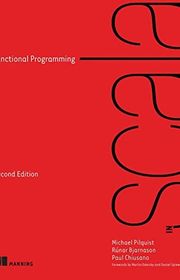
Functional Programming in Scala
For programmers who want to learn functional design through exercises rather than just language syntax. Building abstractions step by step gives the ideas continuity, but this first edition uses older Scala syntax and assumes patient, active problem-solving.
What it's about
Paul Chiusano and Rúnar Bjarnason teach functional programming through Scala examples and exercises. The tutorial progresses from foundational techniques to more advanced abstractions and multicore programming, emphasizing functions that avoid dependence on mutable program state.

Scala for the Impatient
For experienced programmers who prefer concise examples and exercises to a slow introduction. The compact progression makes selective study easy, but this listed second edition targets Scala 2.12, so newer Scala 3 syntax requires separate reference.
What it's about
Cay Horstmann introduces Scala through concise examples and exercises for experienced programmers. This second edition covers Scala 2.12, progressing from language basics and object-oriented features to functional techniques, implicit classes, futures, and Java interoperability.

For developers who want a broad Scala 3 tutorial connecting functional techniques with objects. The coverage makes it useful beyond an initial reading, but the range of language concepts and abstractions rewards prior programming experience and steady practice.
What it's about
Dean Wampler explores Scala's combination of functional programming and objects for application development. This third edition covers Scala 3 syntax, pattern matching, type classes, contextual abstractions, collections, and techniques for using the language effectively.
Scala Cookbook
For developers who want to solve a particular Scala 3 problem while working. The recipe format makes selective consultation convenient, but it is less cohesive than a tutorial, and library-specific examples still need matching with your project’s versions.
What it's about
Alexander’s second edition presents recipes for Scala 3 across language features, collections, functional programming, objects, and application tasks. Examples begin with practical problems and explain possible solutions, giving readers material to consult while developing programs or exploring unfamiliar features.

For developers who learn best by building working programs. The projects connect language features with application design, but the book’s Scala 2-era environment and library versions need checking before using the examples in a newer project.
What it's about
Haoyi Li teaches Scala through practical projects that grow from basic programs into production applications. Examples include interactive websites, parallel web crawlers, and distributed systems, showing how language features solve concrete development problems.

Scala in Action
For readers maintaining older Scala applications who want a task-oriented tutorial. The practical context links language features with tools and libraries, but it targets Scala 2.10 and an early ecosystem, so many examples need substantial updating.
What it's about
Nilanjan Raychaudhuri teaches Scala 2.10 through practical programming tasks and hands-on examples. The tutorial covers language features, Java libraries, build tools, testing, debugging, Akka concurrency, and techniques for creating domain-specific languages.
Functional and Reactive Domain Modeling
For developers who want to connect functional programming with the structure of business applications. The domain-model focus gives abstractions practical context, but the reactive libraries and examples reflect an older ecosystem and assume more than introductory Scala knowledge.
What it's about
Ghosh models application domains through functions, types, and composition, then connects those models with reactive and distributed-system concerns. Examples examine how business behavior can be represented and combined, relating functional design to patterns such as event sourcing and message-driven systems.
Get Programming with Scala
For programmers who want a gradual, exercise-driven introduction to Scala’s different styles. The emphasis on functions, types, and design gives the lessons purpose, but its Scala 2-era examples may require adjustments in a Scala 3 environment.
What it's about
Sfregola introduces Scala through progressive lessons, examples, and exercises. The tutorial connects object-oriented concepts with functional design, types, abstraction, and testing, helping readers move from individual language features toward clearer program structure and the habits involved in writing maintainable code.

For programmers who want a guided introduction without the scale of a full language reference. The examples connect core features with practical use, but the older Scala 2 code needs adaptation for a Scala 3 learning environment.
What it's about
Jason Swartz introduces Scala's functional and object-oriented programming features for developers new to the language. Examples and exercises cover values, types, functions, collections, classes, traits, and advanced typing, with an emphasis on practical JVM development.
Scala in Depth
For developers who already know Scala basics and want to examine design choices and language behavior. The detailed examples reward focused study, but the original Scala 2-era material should be checked against the language and libraries used today.
What it's about
Suereth explores Scala techniques beyond introductory syntax through examples and discussion of design decisions. Topics connect the language’s object-oriented and functional features with development practice, examining how types, abstractions, and implementation choices influence the structure and behavior of programs.
Atomic Scala
For learners who prefer very small lessons with frequent practice. The atom-sized progression provides a manageable introduction, but its older Scala 2 syntax and tools mean it should not be used as a current Scala 3 reference.
What it's about
Eckel and Marsh introduce Scala through short lessons called atoms, each concentrating on a small concept. Examples and exercises build programming foundations gradually, allowing beginners and experienced developers to practice individual ideas before combining them into more substantial programs.
Beginning Scala 3
For programmers who want an introductory text updated to Scala 3. The progression joins object-oriented and functional features with practical examples, but the broad language coverage still needs hands-on work and current reference material for changing libraries.
What it's about
This third edition introduces Scala 3 through practical examples and explanations of object-oriented and functional programming. It covers constructs including extension methods, enums, top-level declarations, and newer type features, then relates small components to the construction of larger programs.
Functional Programming, Simplified
For programmers who prefer small code examples before abstract terminology. The gradual explanation can make functional ideas approachable, but this Scala edition uses older syntax and covers a different learning goal from a complete modern language reference.
What it's about
Alexander develops functional programming ideas through a sequence of Scala examples and explanations. The book moves from familiar programming habits toward pure functions, immutable data, and composition, emphasizing an incremental understanding of techniques rather than beginning with abstract mathematical vocabulary.
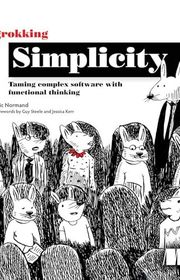
Grokking Functional Programming
For programmers who want functional concepts explained through examples, exercises, and visual reasoning. The accessible progression gives abstraction a practical role, but the book teaches a programming approach rather than covering the full Scala language or ecosystem.
What it's about
Płachta introduces functional programming through functions, types, immutable values, and practical examples in Scala. Exercises connect basic principles with program design, concurrency, and testing, helping readers consider how functional techniques change the way code is structured and understood.
Learning Concurrent Programming in Scala
For developers comfortable with Scala who want to study concurrent program design. The practical examples give coordination problems concrete form, but the verified edition belongs to the older Scala ecosystem, so its APIs and tooling need careful updating.
What it's about
Prokopec introduces concurrent programming through Scala examples and practical design problems. The book examines ways to coordinate tasks and shared work, connecting underlying concurrency concepts with techniques for building programs that use multiple execution paths and available processing resources.
Modern Systems Programming with Scala Native
For Scala developers interested in native compilation and operating-system interfaces beyond the JVM. The systems focus offers a distinct application of the language, but it assumes lower-level programming interest, and the toolchain examples need checking against current Scala Native.
What it's about
Whaling introduces systems programming using Scala Native, including native compilation, operating-system interfaces, networking, and input and output. The book explores pointers and memory-related techniques, showing how Scala can be used to build programs outside the usual JVM execution environment.

Scala Puzzlers
For Scala users who enjoy investigating surprising code behavior. The puzzle format exposes assumptions that ordinary tutorials may miss, but its Scala 2-era focus and narrow examples make it a supplement rather than an introduction to modern Scala.
What it's about
Andrew Phillips and Nermin Šerifović present Scala code puzzles whose behavior challenges common expectations. Explanations reveal subtle language rules and pitfalls, helping developers understand surprising results and recognize problems that can become production bugs.
Akka in Action
For Scala developers who want to build systems around Akka Typed actors. The focus on concurrency, clustering, and testing gives the framework practical context, but it is a specialized application book and requires matching its examples with your Akka version.
What it's about
The second edition introduces actor-based application development with Akka Typed. It covers communication, testing, clustering, distributed state, and deployment concerns, helping readers connect individual actors with the design and operation of larger concurrent and distributed software systems.
Functional Programming Patterns in Scala and Clojure
For Java-oriented developers who want to compare functional designs across two JVM languages. The paired examples make alternative structures visible, but the split between Scala and Clojure leaves less room for a complete introduction to either language.
What it's about
Bevilacqua-Linn uses Scala and Clojure to examine recurring programming problems from a functional perspective. Examples compare object-oriented patterns with functional alternatives and introduce designs built around composition and immutable data, aiming to make programs clearer and easier to maintain.

For data engineers who want to use Scala within a broader Spark workflow. The structured API examples connect programming with analytics tasks, but the verified second edition covers Spark 3.0 and also uses Python, SQL, and Java.
What it's about
Jules Damji and his coauthors introduce modern Spark programming and distributed analytics. They explain architecture, DataFrames, SQL, performance tuning, streaming, data lakes, and machine learning through examples for developing efficient applications on large datasets.
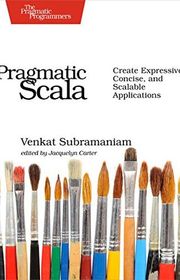
Pragmatic Scala
For experienced object-oriented programmers who want examples connecting familiar skills with functional techniques. The application-oriented approach keeps the discussion concrete, but the verified text targets Scala 2.11, so use it for concepts with current documentation alongside it.
What it's about
Subramaniam presents Scala through examples that combine object-oriented and functional programming. Updated from a work originally titled Programming Scala, this text addresses Scala 2.11, including concurrency and collections, while emphasizing concise program design and practical application of language features.
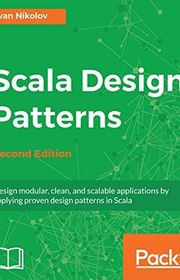
Scala Design Patterns
For developers who want to compare familiar design patterns with Scala’s functional options. The organized pattern vocabulary supports design discussion, but its Scala 2-era examples require adaptation and can encourage unnecessary structure if applied without a concrete problem.
What it's about
Nikolov’s second edition examines creational, structural, behavioral, and functional design patterns in Scala. Examples connect language features with recurring design problems, asking how applications can be organized for reuse, extension, and maintainability while comparing different approaches to familiar patterns.

Introduction to Programming and Problem-Solving Using Scala
For readers who need programming fundamentals as well as an introduction to Scala. The classroom-style exercises support systematic learning, but the breadth and older syntax make it a slower route for experienced developers seeking a current Scala 3 reference.
What it's about
Mark Lewis and Lisa Lacher introduce programming and problem-solving with Scala for beginning college students. Exercises and projects develop skills in functions, recursion, collections, files, graphical interfaces, sorting, and object-oriented design.
Sources
- 1
Books
docs.scala-lang.org
- 2
Scala Books
educba.com
- 3
Best Scala Books
jobroadmaps.com
- 4
69 Best Scala Books of All Time
shortform.com
- 5
How to learn Scala
exercism.org
- 6
Scala Books
goodreads.com
- 7
Awesome Scala
github.com
- 8
Top 8 Scala Books for Beginners in 2025
booksoncode.com
- 9
Learn Scala Programming Fast: Effective Books 2025
computingforgeeks.com
- 10
10 Best Scala Books For Beginner To Become Expert
data-flair.training
- 11
Looking for Scala book
reddit.com
- 12
Which book in your mind is the best for getting started with Scala (3) for people with some programming experience?
reddit.com




Edited by
Software engineer whose passion for tracking book recommendations from podcasts inspired the creation of MRB.
Lead investor at 3one4 Capital whose startup expertise and love for books helped shape MRB and its growth.
Comments
Spotted a missing book, a wrong order or a mistake? Tell us and we'll fix this page.
We're a reading guide, not the author or publisher, so we can't send books or pass on messages.