
10 Best Software Engineering Books
We analyzed 5+ expert sources, curated book lists, and recommendations from successful people to find the 10 best software engineering books according to the internet — not just one person's opinion. Each book on this list was mentioned by at least two independent sources, and the ranking is based on how frequently each title appears across all sources studied. This consensus-based approach ensures you get recommendations backed by multiple experts, not a single reviewer's bias.
Goal: Find the best Software Engineering books according to the internet (not just one person's opinion).
Method:
- Search for "best software engineering books" and study the top 5+ pages.
- Add only the books mentioned 2+ times.
- Rank the results neatly here.
10 Best Software Engineering Books
As an Amazon Associate, we earn from qualifying purchases (at no extra cost to you).
Last updated:
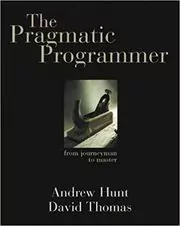
What it's about
Andrew Hunt and David Thomas present practical guidance on programming as a craft. They explore making informed choices, understanding requirements, communicating clearly, and producing software that others can maintain and build upon across different technologies.
Also recommended by
2 people Ev Williams recommended this book
Ev Williams
On the "books read" section of Ev Williams' GoodReads profile.
Ev Williams's recommendation of this book  Jeff Atwood recommended this book
Jeff Atwood
"Instead of worrying about code, the authors boiled down all the practical approaches that they've found to work in the real world into this one book." - Jeff Atwood
Jeff Atwood's recommendation of this book
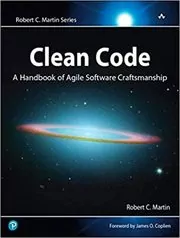
What it's about
Martin presents principles and practices for writing understandable, maintainable code. Examples and case studies examine naming, functions, classes, formatting, error handling, and testing, while a catalog of heuristics and code smells helps readers recognize and improve troublesome code.

Head First Design Patterns
Building Extensible and Maintainable Object-Oriented Software
What it's about
Eric Freeman and Elisabeth Robson teach object-oriented design patterns through Java examples, visual explanations, and exercises. The second edition connects recurring design solutions with underlying principles, emphasizing understanding and applying patterns to extensible, maintainable software.
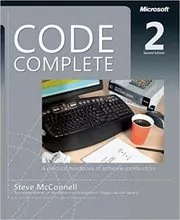
What it's about
Steve McConnell assembles practical guidance on software construction from research and commercial programming experience. Using code examples and design principles, he explores how developers can reduce complexity and approach the work of building software across different projects and environments.
Also recommended by
1 person- Jeff Atwood recommended this book
Jeff Atwood
"The very act of reading this book already sets you apart from probably ninety percent of your fellow developers. In a good way." - Jeff Atwood
Jeff Atwood's recommendation of this book

What it's about
Gayle Laakmann McDowell prepares software developers for technical interviews through 189 programming questions and worked solutions. The guide explains approaches to solving problems, reviews computer science concepts, and discusses interview evaluation, preparation, and communicating a solution.

Patterns of Enterprise Application Architecture
What it's about
Fowler catalogs recurring design patterns for enterprise software, explaining their uses and tradeoffs. The book addresses layered architecture, domain logic, database access, object-relational mapping, web presentation, concurrency, and distributed systems, helping developers choose structures suited to their applications.

What it's about
Fowler explains how to improve the internal structure of existing code through refactoring. This revised edition uses JavaScript examples and extends its attention beyond class-based designs, presenting techniques for continually reshaping code as a software system evolves.

What it's about
Martin describes the professional responsibilities of software developers, from making commitments and estimating work to communicating under pressure. The book discusses coding, testing, refactoring, time management, and difficult decisions, including when to say yes and when to say no.

What it's about
Frederick Brooks examines the difficulties of managing software projects in a collection of essays. He considers team organization, system design, planning, and communication, offering reflections on the limits and complexities of large-scale programming work.
Also recommended by
5 people Jeff Bezos recommended this book
Jeff Bezos
Part of "Jeff's Reading List."
Jeff Bezos's recommendation of this book  Larry Ellison recommended this book
Larry Ellison
"Larry [Ellison] had given this book to every software executive whom he met within the company." - Marc Benioff
Larry Ellison's recommendation of this book  Marc Benioff recommended this book
Marc Benioff
"Had a huge impact on me." - Marc Benioff
Marc Benioff's recommendation of this book  Alan Kay recommended this book
Alan Kay
"An early look and experience with timeless truths (and gotchas) from systems building with teams" - Alan Kay
Alan Kay's recommendation of this book - Jeff Atwood recommended this book
Jeff Atwood
"Arguably the only classic book in our field. If you haven't read it, shame on you." - Jeff Atwood
Jeff Atwood's recommendation of this book

What it's about
Erich Gamma and his coauthors catalog reusable solutions to recurring object-oriented design problems. Organized into creational, structural, and behavioral patterns, the book explains when each approach applies, its consequences, and trade-offs within a larger software design.
Sources
- 1
7 books software engineers need to read right now to get ahead | Hack Reactor
hackreactor.com
- 2
10 Software Engineering Books you should read in 2021 | by Brecht Verhoeve | Jan, 2021 | Medium | CodeX
medium.com
- 3
10 must read books for software engineers
thesmartcoder.dev
- 4
The Best Books for Software Engineers (Beginner to Advanced Careers)
thomasnet.com
- 5
15 BEST Software Engineering Books (2022 Update)
guru99.com



Edited by
Software engineer whose passion for tracking book recommendations from podcasts inspired the creation of MRB.
Lead investor at 3one4 Capital whose startup expertise and love for books helped shape MRB and its growth.
Comments
Did we miss something? Have feedback?
Help us improve this page by sharing your thoughts