
22 Best Artificial Intelligence Books
The best artificial intelligence books, ranked by how many expert sources recommend each, with notes for beginners, programmers, and readers exploring AI risks.
Our take
Artificial intelligence books can answer very different questions: how machines learn, where businesses can use them, and what happens when automated decisions affect people. Some require programming and mathematics; others help general readers evaluate claims, understand limitations, or think about the responsibilities that come with increasingly capable systems. Choosing a starting point depends on whether you want to build, use, or question the technology.
Artificial Intelligence: A Modern Approach offers a broad technical foundation, while Deep Learning concentrates on neural networks. Artificial Intelligence: A Guide for Thinking Humans explains ideas and shortcomings for a wider audience. Co-Intelligence focuses on working with generative systems, while Human Compatible and The Alignment Problem explore different aspects of making AI serve human purposes. Older books can still clarify important ideas, but their examples and forecasts need context. Start with Mitchell for understanding, Mollick for practical use, or Russell and Norvig for sustained technical study.
22 books · 9 sources · Last updated
As an Amazon Associate, we earn from qualifying purchases (at no extra cost to you).
How to choose from this list
Skip to the full rankingIf you're new to AI: Artificial Intelligence → AI Snake Oil
If you want to use generative AI: Co-Intelligence
If you want a technical foundation: Artificial Intelligence: A Modern Approach → Deep Learning
If you want to understand AI safety: The Alignment Problem → Human Compatible → Superintelligence
If you're planning business projects: Applied Artificial Intelligence → Human + Machine
The 22 books, ranked
Ranked by how many expert sources name each book. Ties go to the book more people recommend.
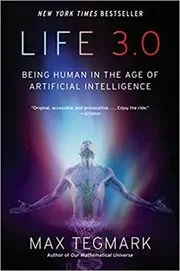
For general readers drawn to the long-term stakes of powerful AI. Tegmark makes competing futures approachable without programming, though the scenarios are speculative and offer little instruction for using present-day systems.
What it's about
Max Tegmark explores how advanced artificial intelligence could change work, politics, conflict, and humanity's future. He considers possible paths for increasingly capable machines and asks how society can shape their development toward beneficial outcomes.
Also recommended by
6 people Barack Obama recommended this book
Barack Obama
Barack Obama's favorite books of 2018 list.
Barack Obama's recommendation of this book  Bill Gates recommended this book
Bill Gates
"Anyone who wants to discuss how artificial intelligence is shaping the world should read this book." - Bill Gates
Bill Gates's recommendation of this book  Elon Musk recommended this book
Elon Musk
"A compelling guide to the challenges and choices in our quest for a great future of life, intelligence and consciousness—on Earth and beyond." - Elon Musk
Elon Musk's recommendation of this book  Keith Rabois recommended this book
Keith Rabois
"Best introduction to AI, accessible to sophisticated. Enjoyable to read." - Keith Rabois
Keith Rabois's recommendation of this book  Lex Fridman recommended this book
Lex Fridman
"I recommend people read [this book]." - Lex Fridman
Lex Fridman's recommendation of this book  PewDiePie recommended this book
PewDiePie
"It felt almost like reading a scifi." - PewDiePie
PewDiePie's recommendation of this book
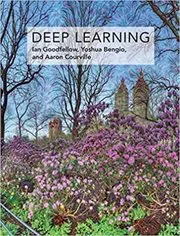
Deep Learning
For mathematically confident students who want the foundations behind neural networks. Its systematic explanations support deeper study better than a coding recipe book, but it predates the transformer and large language model era.
What it's about
Ian Goodfellow, Yoshua Bengio, and Aaron Courville introduce the mathematical foundations, established methods, and research directions of deep learning. The textbook covers neural networks and applications alongside the conceptual tools needed to understand this field.
Also recommended by
4 people- Elon Musk recommended this book
Elon Musk
"Written by three experts in the field, [this book] is the only comprehensive book on the subject." - Elon Musk
Elon Musk's recommendation of this book  Satya Nadella recommended this book
Satya Nadella
"The book made such a significant impact on Satya Nadella that he hired co-author Yoshua Bengio." - ThingsCyber.com
Satya Nadella's recommendation of this book  Vinod Khosla recommended this book
Vinod Khosla
"For a slightly more technical read [on AI]." - Vinod Khosla
Vinod Khosla's recommendation of this book  Nassim Taleb recommended this book
Nassim Taleb
"Very clear exposition, does the math without getting lost in the details." - Nassim Taleb
Nassim Taleb's recommendation of this book
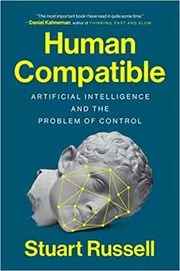
For readers who want AI safety tied to a concrete design question: how machines should handle uncertain human preferences. Russell bridges technical ideas and public concerns, though his proposed direction is not a finished solution.
What it's about
Stuart Russell examines the benefits and dangers of increasingly capable artificial intelligence. He proposes rebuilding AI around uncertainty about human preferences, arguing that machines should learn what people want and remain responsive to human control.
Also recommended by
1 person- Elon Musk recommended this book
Elon Musk
"Worth reading." - Elon Musk
Elon Musk's recommendation of this book

For readers who prefer human stories and research history when approaching AI safety. Christian connects technical problems to questions about values and fairness, though the detailed narrative requires more patience than a brief introductory survey.
What it's about
Brian Christian investigates the difficulties of getting machine-learning systems to act in accordance with human intentions and values. Stories of biased decisions and efforts to improve them connect technical research with questions of fairness, transparency, and the assumptions built into data.
Also recommended by
1 person Ezra Klein recommended this book
Ezra Klein
Ezra Klein recommended this book on Twitter.
Ezra Klein's recommendation of this book
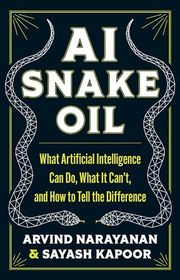
AI Snake Oil: What Artificial Intelligence Can Do, What It Can’t, and How to Tell the Difference
For readers who want better questions to ask about AI claims before trusting them. It distinguishes different uses and failure modes clearly, though its critical focus offers less instruction on building or deploying systems.
What it's about
Arvind Narayanan and Sayash Kapoor examine misleading claims about artificial intelligence and distinguish useful applications from unreliable ones. They discuss prediction, generative systems, and real-world harms, helping readers evaluate what particular AI technologies can credibly deliver.

For students seeking a broad technical foundation, this connects search, reasoning, learning, and decision making within one framework. Its breadth makes it a strong reference, but mathematical detail rewards patient study rather than casual browsing.
What it's about
Stuart Russell and Peter Norvig introduce the theory and practice of artificial intelligence through a unified treatment of its subfields. The textbook covers learning, language processing, robotics, and related topics, connecting concepts with mathematical and algorithmic detail.
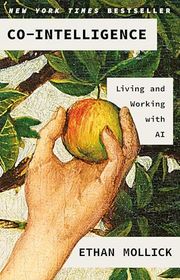
Co-Intelligence: Living and Working with AI
For readers who want to work thoughtfully with generative AI now. Mollick emphasizes experimentation and human judgment, though the examples describe a changing set of tools rather than a permanent operating manual.
What it's about
Ethan Mollick examines how generative AI can change work, learning, and creative tasks. He combines experiments with practical principles for collaborating with AI systems, checking their outputs, and deciding where human judgment remains necessary.

For readers interested in how business ecosystems shaped competition between China and Silicon Valley. Lee offers an entrepreneurial perspective on deployment, though the geopolitical snapshot predates the recent generative AI industry.
What it's about
Kai-Fu Lee examines the competition between China and the United States in artificial intelligence. He considers how the technology could transform economies and employment, alongside the social responsibilities involved in responding to widespread changes in work.
Also recommended by
9 people Yuval Noah Harari recommended this book
Yuval Noah Harari
"A superb and very timely survey of the impact of AI on the geopolitical system, the job market and human society." - Yuval Noah Harari
Yuval Noah Harari's recommendation of this book  Arianna Huffington recommended this book
Arianna Huffington
"One of those books you begin reading and instantly feel that everybody should know about it." - Arianna Huffington
Arianna Huffington's recommendation of this book  Chris Anderson recommended this book
Chris Anderson
"Truly one of the wisest and most surprising takes on AI." - Chris Anderson
Chris Anderson's recommendation of this book  Marc Benioff recommended this book
Marc Benioff
"[The author] applies his superpowers to predicting the disruptive shifts that will define the AI-powered future." - Marc Benioff
Marc Benioff's recommendation of this book  Peter Diamandis recommended this book
Peter Diamandis
"A must read for anyone serious about understanding the future of our species." - Peter Diamandis
Peter Diamandis's recommendation of this book - Satya Nadella recommended this book
Satya Nadella
"Clear-eyed and a must-read." - Satya Nadella
Satya Nadella's recommendation of this book +3
More recommendations
- Tim O’Reilly
"If you care about the future being brought to us by AI, this is the one indispensable book of 2018." - Tim O’Reilly
- Balaji Srinivasan
"A history of the Chinese tech ecosystem." - Balaji Srinivasan
- Ryan Shea
Ryan Shea recommended this book on his website.
- Tim O’Reilly

For readers prepared to examine the logic of losing control over smarter machines. Its detailed arguments sharpen thinking about existential risk, but the density and hypothetical scenarios make it a demanding first introduction.
What it's about
Nick Bostrom examines the possibility that machines could surpass humans in general intelligence. He considers how such systems might become powerful, the dangers they could pose, and whether their initial design could help make an intelligence explosion survivable.
Also recommended by
6 people- Elon Musk recommended this book
Elon Musk
"Worth reading [this book]. We need to be super careful with AI. Potentially more dangerous than nukes." - Elon Musk
Elon Musk's recommendation of this book  Naval Ravikant recommended this book
Naval Ravikant
"I wouldn’t just read [this book] breathless and wide-eyed and believe everything." - Naval Ravikant
Naval Ravikant's recommendation of this book  Sam Harris recommended this book
Sam Harris
"Made me worry that machine knowledge could ruin everything." - Sam Harris
Sam Harris's recommendation of this book  Sam Altman recommended this book
Sam Altman
"Best thing I’ve seen on this topic." - Sam Altman
Sam Altman's recommendation of this book  Will MacAskill recommended this book
Will MacAskill
"Very important book." - Will MacAskill
Will MacAskill's recommendation of this book  Marc Goodman recommended this book
Marc Goodman
One of Marc Goodman's most-gifted or recommended books.
Marc Goodman's recommendation of this book

For general readers who want to understand why impressive AI performance can coexist with basic failures. Mitchell explains concepts with a skeptical scientific perspective, though the original discussion predates the latest language models.
What it's about
Melanie Mitchell introduces the history and central ideas of artificial intelligence through explanations of research and the people behind it. She examines machine learning, apparent successes, and persistent limitations, asking what computers can understand and how their abilities compare with ours.
Also recommended by
1 person Michael Mauboussin recommended this book
Michael Mauboussin
"Perfect for the amateur interested in AI (as I would describe myself)." - Michael Mauboussin
Michael Mauboussin's recommendation of this book

For readers curious about the intellectual roots of technological singularity arguments. Kurzweil connects accelerating change to ambitious predictions, but the projected timelines and human-machine convergence should be read as contested forecasts.
What it's about
Ray Kurzweil argues that accelerating technological change could lead to a profound merging of humans and machines. He considers how expanding intelligence and technological capabilities might transform human life, alongside the risks of that future.
Also recommended by
7 people- Peter Diamandis recommended this book
Peter Diamandis
"Was the basis for the foundation of Singularity University." - Peter Diamandis
Peter Diamandis's recommendation of this book  Steve Aoki recommended this book
Steve Aoki
"It opened me up to the idea of science fiction becoming science fact." - Steve Aoki
Steve Aoki's recommendation of this book  Jason Silva recommended this book
Jason Silva
One of the books in a "list of favorite books" Jason Silva tweeted about.
Jason Silva's recommendation of this book  Brian Armstrong recommended this book
Brian Armstrong
"Many major problems, like education and disease, will be totally transformed by this in our lifetimes." - Brian Armstrong
Brian Armstrong's recommendation of this book  Stewart Brand recommended this book
Stewart Brand
Stewart Brand recommended this book on his "Selected Books for the Manual for Civilization" blog post.
Stewart Brand's recommendation of this book - Marc Goodman recommended this book
Marc Goodman
"Has shown [...] that there is this persistent exponential pace of technology." - Marc Goodman
Marc Goodman's recommendation of this book +1
More recommendations
- Mark Manson
"Shows that the processing power of computers and technology has increased exponentially through history and is likely to continue doing so." - Mark Manson
- Mark Manson

The Master Algorithm
How the Quest for the Ultimate Learning Machine Will Remake Our World
For general readers who want a conceptual map of different machine-learning traditions. The competing schools provide useful organizing ideas, though the proposed universal algorithm is an argument rather than an established discovery.
What it's about
Pedro Domingos introduces five competing approaches to machine learning and the ideas behind them. He explores their strengths, limitations, and possible combination into a universal learning algorithm, considering what increasingly capable machines could mean for society.
Also recommended by
2 people Mark Cuban recommended this book
Mark Cuban
"I hadn’t been convinced that it was prime time for AI. It is." - Mark Cuban
Mark Cuban's recommendation of this book - Vinod Khosla recommended this book
Vinod Khosla
"If you want speculation about what the master AI might need (one view)." - Vinod Khosla
Vinod Khosla's recommendation of this book

For business leaders deciding where AI could solve an organizational problem. It emphasizes teams, experiments, and implementation choices rather than technical theory, though its earlier business examples need supplementing for generative AI projects.
What it's about
Yao, Zhou, and Jia guide business leaders through evaluating and implementing artificial intelligence. The handbook addresses choosing useful opportunities, assembling teams, conducting experiments, deciding whether to build or buy, and designing applications that serve organizational and social goals.

Artificial Intelligence Engines
A Tutorial Introduction to the Mathematics of Deep Learning
For readers ready to work through the mathematics behind neural-network learning. The transition from informal explanation to analysis makes mechanisms clearer, though it requires more calculation than a general introduction to AI.
What it's about
Stone introduces the mathematics behind neural-network learning through informal explanations followed by detailed analysis. Historical models and modern deep-learning approaches include perceptrons, backpropagation, convolutional networks, autoencoders, generative adversarial networks, and reinforcement learning, with supporting code and tutorial appendices.

Artificial Intelligence in Healthcare
AI, Machine Learning, and Deep and Intelligent Medicine Simplified for Everyone
For healthcare readers seeking an initial vocabulary for discussing AI across medical settings. Its specialty-focused breadth is useful for orientation, though it should not substitute for current clinical evidence or implementation guidance.
What it's about
Mahajan surveys applications of artificial intelligence across healthcare and medical specialties. The book introduces machine learning and data science while examining implementation, ethics, benefits, and risks, including uses in research, education, drug discovery, insurance, and electronic health records.

Fundamentals of Machine Learning for Predictive Data Analytics
Algorithms, Worked Examples, and Case Studies
For students and analysts who want algorithms connected to predictive analytics projects. Worked examples help bridge mathematical models and business questions, though it is a substantial textbook rather than a quick management overview.
What it's about
Kelleher, Mac Namee, and D'Arcy explain machine-learning approaches for predictive analytics through theory, worked examples, and business case studies. This edition adds deep learning, unsupervised learning, and reinforcement learning, connecting technical models with the stages of practical analytics projects.

For managers thinking about how people and AI systems can share work. Its focus on roles and process redesign makes organizational questions tangible, though the earlier case studies require context when considering newer generative systems.
What it's about
Daugherty and Wilson examine how collaboration between people and intelligent machines can reshape business processes. Research across organizations informs their discussion of new hybrid roles, management principles, and the skills and training needed as artificial intelligence changes work.

The Hundred-Page Machine Learning Book
For technically comfortable readers who want a compact map of machine-learning methods. Its concise mathematical treatment helps connect core ideas quickly, though beginners may need longer explanations and more practice than the format allows.
What it's about
Andriy Burkov presents a compact introduction to machine learning that combines mathematical explanations with practical concepts. Coverage includes supervised and unsupervised methods, neural networks, clustering, feature engineering, and model tuning, connecting core algorithms with their use in applications.

Machine Learning For Dummies
For beginners who prefer familiar explanations and practical Python examples to a formal textbook. It offers a gentler entry into machine learning, though working through the exercises still requires coding and attention to mathematics.
What it's about
John Paul Mueller and Luca Massaron introduce machine learning through Python tools, mathematical basics, and practical examples. This second edition covers model validation, neural networks, support vector machines, sentiment analysis, and recommendation systems for beginners.
Also recommended by
1 person- Mark Cuban recommended this book
Mark Cuban
Mark Cuban said he's reading this book in a Politico interview.
Mark Cuban's recommendation of this book

A First Course in Artificial Intelligence
For computing students who want to understand search and knowledge representation before specializing in neural networks. Its problem-solving progression clarifies classical AI, though readers primarily interested in language models will need additional material.
What it's about
Khemani introduces artificial intelligence by developing the strategies required for a problem-solving agent. Beginning with search and first principles, the textbook progresses toward knowledge representation and its use, building a step-by-step account of approaches to intelligent problem solving.

For curious readers who want a compact conceptual introduction to learning from data. It explains the field without turning into a programming course, though students seeking implementation skills will need exercises and technical resources elsewhere.
What it's about
Alpaydin explains machine learning for general readers, tracing its development and introducing important algorithms. Examples include recommendations, pattern recognition, neural networks, and reinforcement learning, alongside discussion of data science and the privacy and security questions associated with learning from data.

The Emotion Machine
Commonsense Thinking, Artificial Intelligence, and the Future of the Human Mind
For readers interested in cognitive theories behind attempts to build intelligent machines. Minsky challenges simple divisions between reasoning and emotion, though the exploratory account is less useful as a guide to contemporary AI engineering.
What it's about
Minsky proposes that emotions, intuitions, and feelings are different ways of thinking. Exploring how mental activity develops from instinctive responses toward complex reasoning and self-awareness, he connects an account of the human mind with the possibilities of artificial intelligence.
Sources
- 1
14 of the best books about artificial intelligence (AI) for any level
tableau.com
- 2
Top 20 Artificial Intelligence Books For Beginners
mygreatlearning.com
- 3
12 Best AI Books for Beginners to Read in 2026
aiifi.ai
- 4
Best Books on Artificial Intelligence
goodreads.com
- 5
Becoming an AI Apprentice: A Field Guide
aisingapore.org
- 6
14 Best AI Books: Learn AI in 2026
365datascience.com
- 7
AI book recommendations
reddit.com
- 8
Essential Books on AI
barnesandnoble.com
- 9
The Best Books On Artificial Intelligence
nonobvious.com






Edited by
Software engineer whose passion for tracking book recommendations from podcasts inspired the creation of MRB.
Lead investor at 3one4 Capital whose startup expertise and love for books helped shape MRB and its growth.
Comments
Spotted a missing book, a wrong order or a mistake? Tell us and we'll fix this page.
We're a reading guide, not the author or publisher, so we can't send books or pass on messages.