
11 Best Wildlife Books
The best wildlife books, ranked by how many expert sources recommend each one, with guidance on animal behavior, conservation stories, and nature writing.
Our take
Wildlife books can take you into the field with researchers, reveal how an animal senses its surroundings, or turn an ordinary encounter into an essay about attention. Some focus on a species or an individual creature. Others ask how people share space with animals and what happens when conservation meets politics, tourism, or everyday development.
An Immense World explores sensory experiences beyond our own, while Other Minds connects cephalopods with questions about the evolution of intelligence. Beyond Words considers animals’ social and emotional lives through close observation. For conservation narratives, American Wolf follows one animal amid human conflict, and Last Chance to See combines endangered species with an unusual travel partnership. Bird Therapy and Vesper Flights offer more personal approaches to noticing wildlife. Younger readers can explore marine environments through the illustrated Ocean.
Start with a species or question that already interests you, then choose between scientific explanation, reported narrative, and more reflective nature writing.
11 books · 6 sources · Last updated
As an Amazon Associate, we earn from qualifying purchases (at no extra cost to you).
How to choose from this list
Skip to the full rankingIf you want to explore animal perception: An Immense World → Other Minds
If you want to consider animal relationships: Beyond Words → The Soul of an Octopus
If you want conservation and human conflict: American Wolf → Last Chance to See
If you prefer personal nature writing: Bird Therapy → Vesper Flights
If you're reading with children: Ocean
If you enjoy evolutionary speculation: The Zoologist's Guide to the Galaxy
The 11 books, ranked
Ranked by how many expert sources name each book. Ties go to the book more people recommend.

For readers who want sustained attention to the social and emotional lives of particular animals. Its field encounters give scientific questions emotional force, though interpretations of what animals feel need to be distinguished from directly observable behavior.
What it's about
Carl Safina combines field observations and research into animal brains to explore the lives of elephants, wolves, and killer whales. He examines personality, emotion, and social relationships, questioning sharp distinctions between human and animal experience.
Also recommended by
1 person Emma Watson recommended this book
Emma Watson
On the "books read" section of Emma Watson's GoodReads profile.
Emma Watson's recommendation of this book

For readers who prefer an intimate narrative of encounters to a broad scientific survey. Its focus on individual octopuses makes curiosity and connection vivid, though much of the experience occurs in aquariums rather than entirely in the wild.
What it's about
Sy Montgomery explores octopus intelligence through encounters in aquariums and the ocean. Blending personal relationships with scientific observation, she considers their distinctive personalities, problem-solving abilities, and what connections across species suggest about consciousness.
Also recommended by
1 person Barry Ritholtz recommended this book
Barry Ritholtz
"I loved this book." - Barry Ritholtz
Barry Ritholtz's recommendation of this book
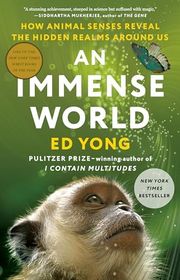
An Immense World
For readers who want to understand animals through senses unlike their own. Its wide range of examples challenges familiar human assumptions, though the many species and sensory systems make it a book to absorb gradually rather than skim.
What it's about
Ed Yong explores how animals perceive their surroundings through senses that can differ radically from human experience. Encounters with researchers and studies of smell, sound, light, vibration, and other signals reveal varied ways of inhabiting a shared world.

For readers who want conservation described through a sustained relationship with particular animals. Its reserve setting makes practical dilemmas immediate, though the memoir’s human perspective and emotional interpretation should be distinguished from a scientific account of elephant behavior.
What it's about
Lawrence Anthony recounts accepting a troubled elephant herd at his South African game reserve to save them from being killed. His efforts to earn their trust unfold alongside the challenges of conservation, revealing the relationships that developed between humans and elephants.
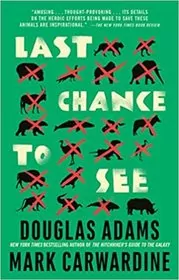
Last Chance to See
For readers who want conservation writing with humor and a strong travel narrative. The contrast between Adams’s curiosity and Carwardine’s expertise gives it character, though the species’ circumstances have changed since the journeys it records.
What it's about
Part travelogue, part conservation plea, this nonfiction journey follows Douglas Adams and zoologist Mark Carwardine as they cross the globe seeking endangered animals, blending sharp humor with sobering glimpses of kakapos, Komodo dragons, rhinos and other species on the brink.
Also recommended by
1 person Patrick O'Shaughnessy recommended this book
Patrick O'Shaughnessy
"The funniest travel book I’ve ever read." - Patrick O'Shaughnessy
Patrick O'Shaughnessy's recommendation of this book
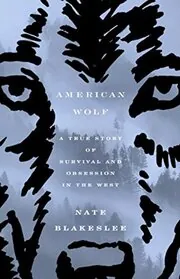
For readers who want wildlife observation connected with the politics surrounding conservation. Its focus on one wolf gives competing human interests a clear narrative center, though the conflicts and losses make it more sobering than a celebratory animal book.
What it's about
Centered on the Yellowstone wolf O-Six, this book follows one animal's life while showing the people fighting over what the American West should be. It mixes close wildlife observation with politics, land use, and real human stakes.

For readers interested in animal intelligence and the evolution of subjective experience. Its combination of philosophy and encounters with cephalopods asks different questions from a standard wildlife survey, though the abstract passages require patience.
What it's about
Peter Godfrey-Smith combines observations of octopuses and other sea creatures with philosophy and evolutionary history. Exploring how nervous systems and subjective experience developed, he considers what cephalopod intelligence can reveal about minds radically different from our own.

The Zoologist's Guide to the Galaxy
What Animals on Earth Reveal About Aliens--and Ourselves
For readers who enjoy using Earth’s animals to think through larger scientific questions. Its evolutionary comparisons give familiar behavior a surprising context, though the discussion of aliens remains informed speculation rather than a survey of observed wildlife alone.
What it's about
Arik Kershenbaum uses animal behavior and evolutionary principles to explore what life on other planets might be like. Examples from Earth inform questions about alien movement, communication, cooperation, and intelligence, linking scientific speculation with an examination of living systems.

Vesper Flights
For readers who want wildlife encounters shaped into reflective literary essays. Its short pieces connect observation with human memory and assumptions, though the changing subjects and personal voice offer less systematic explanation than a popular science book.
What it's about
Helen Macdonald brings together essays about wildlife and the ways people understand the natural world. Observations of birds, landscapes, and everyday encounters connect with reflections on memory, loss, freedom, and the meanings humans project onto other creatures.

Bird Therapy
For readers interested in paying attention to nearby birds through a personal account. Its connection between observation and recovery makes the ordinary landscape meaningful, though one person’s experience should not be treated as a general mental health prescription.
What it's about
Joe Harkness recounts how birdwatching became part of his recovery after a mental health crisis. Combining personal experience with nature writing and practical reflections, he explores how observing local birds brought focus, connection, and meaning to daily life.

Ocean
For families who want an illustrated introduction to marine life that invites looking and discovery. The flaps and cutouts make exploration tactile, though the delicate format and brief explanations offer less depth than a more conventional reference.
What it's about
Hélène Druvert’s illustrated ocean exploration uses flaps and intricate cutouts to reveal marine environments and their inhabitants. The book travels from rocky shores to deep water, introducing waves, coral, sea creatures, and the importance of protecting ocean life.
Sources
- 1
58 Best Wildlife Books in 2026 That Animal Lovers Will Devour
monkeysandmountains.com
- 2
Wildlife Books
goodreads.com
- 3
100 Best Wildlife Books of All Time (Updated for 2026)
shortform.com
- 4
I'm looking for book recs on Environmentalism or Zoology
reddit.com
- 5
21 of the best wildlife and nature books for 2025
sciencefocus.com
- 6
Celebrate World Wildlife Day With These Books
webuybooks.co.uk




Edited by
Software engineer whose passion for tracking book recommendations from podcasts inspired the creation of MRB.
Lead investor at 3one4 Capital whose startup expertise and love for books helped shape MRB and its growth.
Comments
Spotted a missing book, a wrong order or a mistake? Tell us and we'll fix this page.
We're a reading guide, not the author or publisher, so we can't send books or pass on messages.