
23 Best Science Books
The best science books, ranked by how many expert sources recommend each one, with notes on who they suit, from curious beginners to readers ready for deeper study.
Our take
Science books can introduce unfamiliar ideas, reconstruct discoveries, or examine the people affected by scientific work. Some offer a broad tour; others stay with a single subject such as evolution, cancer, animal senses, or the search for a unified physics. Choosing a subject that already makes you curious is often more useful than trying to read every classic first.
A Short History of Nearly Everything offers a friendly overview, while Cosmos connects astronomy with a wider human perspective. For focused biology, try The Selfish Gene, An Immense World, or Entangled Life. The Emperor of All Maladies and The Immortal Life of Henrietta Lacks connect research with lives and institutions. The physics books vary in difficulty and in how far they move from established findings into proposed theories. Historical classics also show how understanding develops, rather than providing the final word. Start with the broad overview, then follow the subject that leaves you with the most questions.
23 books · 8 sources · Last updated
As an Amazon Associate, we earn from qualifying purchases (at no extra cost to you).
How to choose from this list
Skip to the full rankingIf you want a broad starting point: A Short History of Nearly Everything → Cosmos
If you want physics foundations: Six Easy Pieces → A Brief History of Time
If you want living worlds beyond human experience: An Immense World → Entangled Life
If you want biology and inheritance: The Selfish Gene → The Gene
If you want medicine and its human consequences: The Immortal Life of Henrietta Lacks → The Emperor of All Maladies
If you want the history of major scientific ideas: The Origin of Species → Chaos → The Making of the Atomic Bomb
The 23 books, ranked
Ranked by how many expert sources name each book. Ties go to the book more people recommend.

A Short History of Nearly Everything
For newcomers who want a broad scientific tour with stories about the people behind discoveries. Bryson makes unfamiliar territory inviting, though the entertaining sweep sacrifices depth and some details reflect the book's age.
What it's about
An ambitious and accessible guide to the history of science. Bryson travels the world to interview archaeologists, geologists, and physicists, explaining how we went from the Big Bang to the rise of civilization in plain English.
Also recommended by
6 people Warren Buffett recommended this book
Warren Buffett
"It’s very impressive [to] read about people pondering how to figure out the weight of the Earth or something in the 18th century." - Warren Buffett
Warren Buffett's recommendation of this book  Shah Rukh Khan recommended this book
Shah Rukh Khan
"I do a read [this book] often." - Shah Rukh Khan
Shah Rukh Khan's recommendation of this book  Stewart Brand recommended this book
Stewart Brand
Stewart Brand recommended this book on his "Selected Books for the Manual for Civilization" blog post.
Stewart Brand's recommendation of this book  Amanda Palmer recommended this book
Amanda Palmer
Amanda Palmer mentioned this book in the "Tools of Titans" book.
Amanda Palmer's recommendation of this book  Jamie Dimon recommended this book
Jamie Dimon
On Jamie Dimon's list of favorite books.
Jamie Dimon's recommendation of this book  Dominic D'Agostino recommended this book
Dominic D'Agostino
"Information-dense and manages to be humorous and super entertaining." - Dominic D'Agostino
Dominic D'Agostino's recommendation of this book
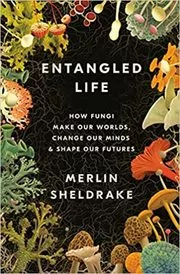
For readers curious about fungi and the relationships that make ecosystems possible. Sheldrake blends research with personal exploration in an accessible account, though the speculative questions and metaphors require distinguishing established findings from possibilities.
What it's about
Merlin Sheldrake explores the hidden world of fungi and their relationships with plants, people, and entire ecosystems. Scientific research and personal encounters introduce organisms that challenge familiar ideas about individuality, intelligence, and the possibilities of environmental restoration.

For readers who want medical discovery placed inside a long human history. Mukherjee connects scientific ideas with clinicians and patients, though the substantial account is emotionally demanding and should not be used for current treatment decisions.
What it's about
Siddhartha Mukherjee recounts the history of cancer through patients, researchers, and changing ideas about the disease. Combining medical history with clinical experiences, he traces efforts to understand and treat cancer alongside the human consequences of that struggle.
Also recommended by
4 people Peter Attia recommended this book
Peter Attia
One of Peter Attia's answers to "any books you feel would make your reading list?"
Peter Attia's recommendation of this book  Bill Gates recommended this book
Bill Gates
"I loved [this] brilliant book about cancer." - Bill Gates
Bill Gates's recommendation of this book  Laura R Walker recommended this book
Laura R Walker
"For friends who have faced or are facing cancer, I often give them [this book]." - Laura R Walker
Laura R Walker's recommendation of this book  Cathie Wood recommended this book
Cathie Wood
"Fantastic book...a must read!" - Cathie Wood
Cathie Wood's recommendation of this book
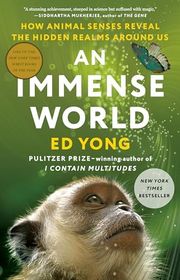
An Immense World
For readers who want familiar animals to feel newly strange through the study of perception. Yong connects experiments with vivid encounters across many senses, though the breadth offers less sustained attention to any single species.
What it's about
Ed Yong explores how animals perceive their surroundings through senses that can differ radically from human experience. Encounters with researchers and studies of smell, sound, light, vibration, and other signals reveal varied ways of inhabiting a shared world.
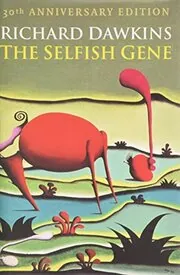
The Selfish Gene
For readers ready to examine evolution from a gene-centered perspective. Dawkins uses thought experiments and examples to explain apparent cooperation and conflict, though the title's metaphor can mislead if treated as a claim about conscious genetic intentions.
What it's about
This landmark book shifts focus from organisms to genes, arguing that natural selection largely favours gene variants that promote their own replication. Along the way Dawkins introduces ideas like "selfish" and "altruistic" behaviour in evolutionary terms and coins the now-famous concept of the meme.
Also recommended by
12 people Charlie Munger recommended this book
Charlie Munger
"I had to read [this book] twice before I fully understood it." - Charlie Munger
Charlie Munger's recommendation of this book  Matt Ridley recommended this book
Matt Ridley
"Turned evolutionary biology on its head and was written like a great detective story." - Matt Ridley
Matt Ridley's recommendation of this book  Brian Armstrong recommended this book
Brian Armstrong
"Famous book about how our bodies are vehicles to replicate our genes (even though we occasionally defy them)." - Brian Armstrong
Brian Armstrong's recommendation of this book  Ev Williams recommended this book
Ev Williams
On the "books read" section of Ev Williams' GoodReads profile.
Ev Williams's recommendation of this book  Nick Szabo recommended this book
Nick Szabo
"Explains more about life (including human behavior and myself) than anything else I’ve read. " - Nick Szabo
Nick Szabo's recommendation of this book  Phil Libin recommended this book
Phil Libin
"Had a profound influence on me pretty early on." - Phil Libin
Phil Libin's recommendation of this book +6
More recommendations
- Mr. Money Mustache
"An explanation of evolution since the beginning of life that explains things from the perspective of individual genes." - MMM
- Bob Metcalfe
"It just seemed to explain everything." - Bob Metcalfe
- David Deutsch
"Influenced my books." - David Deutsch
- Tai Lopez
"Mind blowing book. [...] But warning you, it’s too true for most people to handle..." - Tai Lopez
- Elon Musk
"Most people don't realize that the origin of the word 'meme' is [this book]." - Elon Musk
- Mark Manson
Mark Manson recommended this book on his website.
- Mr. Money Mustache

For readers interested in heredity alongside the ethical consequences of genetic thinking. Mukherjee's family perspective gives the history personal stakes, though the broad narrative compresses technical debates and cannot replace a genetics course.
What it's about
Siddhartha Mukherjee traces the history of genetics while weaving in his family’s experiences of mental illness. The account examines discoveries about heredity, the misuse of genetic ideas, and ethical questions raised by growing power to understand and alter genes.
Also recommended by
4 people- Bill Gates recommended this book
Bill Gates
"Mukherjee once again shows his gift for making hard science easily accessible." - Bill Gates
Bill Gates's recommendation of this book  John Legend recommended this book
John Legend
"So interesting and well written." - John Legend
John Legend's recommendation of this book  Bryan Johnson recommended this book
Bryan Johnson
"A great book." - Bryan Johnson
Bryan Johnson's recommendation of this book  Reid Hoffman recommended this book
Reid Hoffman
Reid Hoffman told McKinsey he was reading this book.
Reid Hoffman's recommendation of this book

A Brief History of Time
For readers who want to wrestle with time, black holes, and the universe's beginnings without a textbook. Hawking connects large questions in a compact account, though the conceptual leaps are demanding despite the limited mathematics.
What it's about
Stephen Hawking introduces questions about the universe's beginning, its possible fate, and the nature of time. He explains black holes, relativity, and quantum ideas for general readers, connecting familiar physical concepts with the puzzles of cosmology.
Also recommended by
2 people Richard Branson recommended this book
Richard Branson
Richard Branson recommended this book on his "70 must-read books" blog post.
Richard Branson's recommendation of this book  James Clear recommended this book
James Clear
"[One of] the 10 best nonfiction books of all-time." - James Clear
James Clear's recommendation of this book
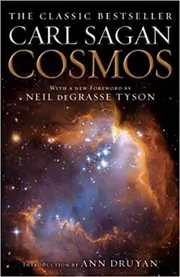
Cosmos
For readers who want astronomy connected with scientific history and humanity's place in nature. Sagan's expansive perspective makes it an inviting starting point, though the older account cannot include the discoveries made since its publication.
What it's about
Cosmos takes readers from the birth of stars and planets to the rise of life on Earth. Sagan blends astronomy, history, and philosophy into an accessible story about how we came to understand the universe and our small place within it.
Also recommended by
2 people- Richard Branson recommended this book
Richard Branson
Richard Branson recommended this book on his "70 must-read books" blog post.
Richard Branson's recommendation of this book  Bill Nye recommended this book
Bill Nye
"The story of my other hero, Carl Sagan. The other guy who inspired me to do what I do now." - Bill Nye
Bill Nye's recommendation of this book

For readers interested in how fossils reshape arguments about evolution and historical contingency. Gould turns the Burgess Shale into a sustained question about life's possible paths, though the scientific interpretations reflect an earlier stage of paleontological research.
What it's about
Stephen Jay Gould examines the extraordinary fossils of Canada's Burgess Shale and the changing interpretations of their ancient animals. Their unfamiliar forms become the basis for an argument about contingency in evolution and the historical accidents that shaped life.

Thinking, Fast and Slow
For readers curious about judgment, intuition, and why sensible people make predictable mistakes. Kahneman gives the subject a memorable framework, though the long succession of studies requires more patient reading than a short practical decision guide.
What it's about
Kahneman explores two modes of thought: quick, intuitive responses and slower, deliberate reasoning. Drawing on psychological research, he examines how biases and impressions shape decisions, and when intuition helps or misleads in personal and professional life.
Also recommended by
19 people- Bill Gates recommended this book
Bill Gates
List of books Bill Gates read in 2012.
Bill Gates's recommendation of this book  Ray Dalio recommended this book
Ray Dalio
Ray Dalio mentioned this book in his book, "Principles."
Ray Dalio's recommendation of this book  Scott Adams recommended this book
Scott Adams
One of the books on Scott Adams' "Persuasion Reading List."
Scott Adams's recommendation of this book  Naval Ravikant recommended this book
Naval Ravikant
"Fine book but it didn’t need to be an entire book. A blog post would have gotten the point across." - Naval Ravikant
Naval Ravikant's recommendation of this book - Ev Williams recommended this book
Ev Williams
"I love surprising scientific findings, as well as information about how our brains work. [This book] is a treasure trove of both." - Ev Williams
Ev Williams's recommendation of this book  Marc Andreessen recommended this book
Marc Andreessen
"Captivating dive into human decision making, marred by inclusion of several/many? psychology studies that fail to replicate. Will stand as a cautionary tale?" - Marc Andreessen
Marc Andreessen's recommendation of this book +13
More recommendations
- Stewart Brand
Stewart Brand recommended this book on his "Selected Books for the Manual for Civilization" blog post.
- Bryan Johnson
"I started reading [this book] and I became increasingly convinced of my own fickleness and inability to actually act rationally in life." - Bryan Johnson
- Derek Sivers
"If you liked 'Predictably Irrational' or 'Stumbling on Happiness' or any of those pop-psychology books, well, this is the Godfather of all of their work." - Derek Sivers
- Sam Altman
One of Sam Altman's answers to "What are some of the best books you recommend for a young startup founder?"
- Ron Conway
"Covers all three phases of [the author's] career: his early days working oncognitive bias, his work on prospect theory, and his later work on happiness." - Ron Conway
- Jason Fried
"I enjoyed [this book]. Fascinating." - Jason Fried
- Nassim Taleb
"A landmark book in social thought, in the same league as The Wealth of Nations by Adam Smith and The Interpretation of Dreams by Sigmund Freud." - Nassim Taleb
- Sahil Lavingia
Sahil Lavingia recommended this book on Notion.
- Mark Manson
Mark Manson recommended this book on his website.
- Jay Shetty
"[One] of my favourite books." - Jay Shetty
- Michiko Kakutani
"Has become essential reading in many baseball front offices and among coaching staffs." - Michiko Kakutani
- Preston Pysh
"An incredible book!" - Preston Pysh
- Ben Greenfield
Most Recommended Books reached out to Ben Greenfield directly.
- Stewart Brand

The Origin of Species
For readers who want to encounter a major scientific argument in its original form. Darwin builds his case through accumulated observations, though the nineteenth-century prose and absence of later genetics make a modern companion useful.
What it's about
Charles Darwin presents his theory of evolution through natural selection. Drawing on observations and experiments, he explains how species can change over time and challenges the idea that living forms were created separately and remain fixed.
Also recommended by
4 people Neil deGrasse Tyson recommended this book
Neil deGrasse Tyson
"To learn of our kinship with all other life on Earth." - Neil deGrasse Tyson
Neil deGrasse Tyson's recommendation of this book  Paul Graham recommended this book
Paul Graham
Paul Graham used this book as an example that one scientist's "take" can be very convincing.
Paul Graham's recommendation of this book  Darren Aronofsky recommended this book
Darren Aronofsky
Darren Aronofsky mentioned this book on "The Tim Ferriss Show" podcast.
Darren Aronofsky's recommendation of this book - Matt Ridley recommended this book
Matt Ridley
"[Changed] science and [reached] the public." - Matt Ridley
Matt Ridley's recommendation of this book

For readers who enjoy using incentives and data to question familiar explanations. Levitt and Dubner make social inquiry entertaining through unexpected cases, though the selected arguments are prompts for scrutiny rather than a comprehensive introduction to economics.
What it's about
Steven D. Levitt and Stephen J. Dubner use economic reasoning to investigate unexpected questions about everyday life. Their accounts of cheating, crime, parenting, and real estate explore incentives and challenge familiar explanations of how people behave.
Also recommended by
3 people Daymond John recommended this book
Daymond John
"I love newer books like [this book]." - Daymond John
Daymond John's recommendation of this book  James Altucher recommended this book
James Altucher
James Altucher mentioned this book on "The Tim Ferriss Show" podcast.
James Altucher's recommendation of this book - Ev Williams recommended this book
Ev Williams
On the "books read" section of Ev Williams' GoodReads profile.
Ev Williams's recommendation of this book

The Making of the Atomic Bomb
For readers who want scientific discovery, wartime organization, and moral consequences in one substantial history. Rhodes gives the people and physics sustained attention, though the length and technical passages require a larger commitment than most popular introductions.
What it's about
Richard Rhodes traces the scientific discoveries and wartime decisions that led to the atomic bomb. Scientists’ lives, the Manhattan Project, and the bombings of Hiroshima and Nagasaki form a history of technological achievement and moral consequences.
Also recommended by
3 people Lewis Cantley recommended this book
Lewis Cantley
"I minored in theoretical physics [...] Yet I learned more physics from [this book] than I did in my courses." - Lewis Cantley
Lewis Cantley's recommendation of this book  Chris Dixon recommended this book
Chris Dixon
"Truly epic story, showing humanity at both its best and worst." - Chris Dixon
Chris Dixon's recommendation of this book  Trung Phan recommended this book
Trung Phan
"As good as it gets in describing the development of the nuclear industry." - Trung Phan
Trung Phan's recommendation of this book

For readers who want to hear a physicist reason through foundational ideas. Feynman's selected lectures reward active attention more than passive browsing, though the title's promise of ease should not obscure the conceptual work involved.
What it's about
Six accessible selections from Richard Feynman's physics lectures introduce atoms, energy, gravitation, quantum behavior, and the connections between physics and other sciences. The lessons convey fundamental ideas through examples and explanations intended for beginning readers.
Also recommended by
1 person- Naval Ravikant recommended this book
Naval Ravikant
Naval Ravikant tweeted about this book.
Naval Ravikant's recommendation of this book

The Immortal Life of Henrietta Lacks
For readers interested in the people and ethical decisions behind laboratory advances. Skloot connects a family's experience with the history of cell research, though the investigative narrative concentrates on one consequential case rather than surveying medical ethics.
What it's about
Rebecca Skloot investigates the life of Henrietta Lacks, whose cells were taken without her knowledge and became important tools in medical research. Her reporting connects scientific advances with the experiences of Lacks's family and questions of consent, race, and justice.
Also recommended by
1 person A.J. Jacobs recommended this book
A.J. Jacobs
"Great writer." - A.J. Jacobs
A.J. Jacobs's recommendation of this book
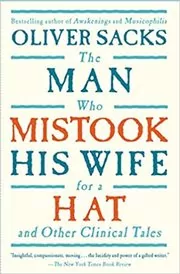
For readers who understand science best through individual lives. Sacks connects neurological differences with questions of identity and adaptation, though these historical case narratives are selective portraits rather than a current clinical guide.
What it's about
In this collection of clinical tales, Sacks follows patients whose brains alter memory, recognition, movement, and identity. Strange symptoms become deeply human stories about how people rebuild a sense of self.
Also recommended by
1 person Jordan Peterson recommended this book
Jordan Peterson
Recommended on Jordan Peterson's website.
Jordan Peterson's recommendation of this book

Brief Answers to the Big Questions
For readers who prefer short treatments of large scientific and human questions. Hawking's collected reflections range more widely than his cosmology introduction, though the accessible format leaves less room for technical explanation and separates some arguments from their detail.
What it's about
Stephen Hawking addresses questions about the universe, intelligent life, God, and humanity's future. This posthumous collection combines scientific explanations with reflections on space exploration, artificial intelligence, and the responsibilities people face in protecting life on Earth.

For readers who enjoy following how a scientific field takes shape across different disciplines. Gleick makes patterns and researchers part of one historical story, though it is a conceptual narrative rather than a mathematical guide to nonlinear systems.
What it's about
James Gleick traces the emergence of chaos theory through scientists whose discoveries changed the study of complex systems. Edward Lorenz's butterfly effect, Mitchell Feigenbaum's work, and Benoit Mandelbrot's fractals introduce readers to this scientific development.
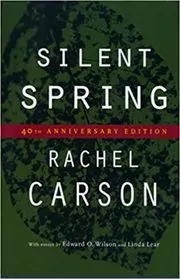
Silent Spring
For readers interested in how scientific evidence can challenge accepted environmental practices. Carson links particular chemical effects with larger ecological questions, though its historical pesticide controversies need distinguishing from today's wider research and regulation.
What it's about
Carson examines what widespread pesticide use, especially DDT, was doing to birds, waterways, and human health. It is a clear, unsettling case against chemical shortcuts and a turning point in environmental writing.
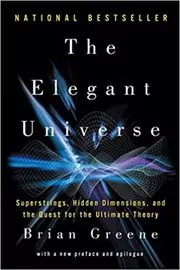
The Elegant Universe
Superstrings, Hidden Dimensions, and the Quest for the Ultimate Theory
For readers who know some basic physics and want to explore attempts at unification. Greene's analogies make difficult ideas approachable, though string theory's proposed picture should not be confused with experimentally established conclusions.
What it's about
The Elegant Universe introduces string theory to general readers, explaining how tiny vibrating strings and extra dimensions might unify gravity with quantum physics. Greene uses everyday analogies and a historical tour of physics to make deep ideas feel approachable.

For readers who want a concise narrative of physicists' search for unification. Kaku supplies a broad sequence of ideas, though his enthusiasm for possible future theories needs separating from what experiments have already established.
What it's about
Michio Kaku explores physicists' search for a theory unifying the fundamental forces of nature. Tracing efforts to connect gravitation with quantum physics, he presents the ideas and challenges behind the continuing quest for a theory of everything.

For readers who like brief essays that move from biological observation to larger reflections. Thomas makes interdependence a recurring lens across varied subjects, though the poetic connections and older science differ from a systematic modern biology introduction.
What it's about
Lewis Thomas reflects on biology, medicine, and human life in essays that connect scientific observation with philosophical curiosity. Cells, microbes, insects, language, and music become ways of considering interdependence, communication, and humanity's place in the living world.

For younger readers and curious adults who want an illustrated introduction to women's scientific contributions. Ignotofsky makes many lives accessible in one volume, though the short profiles provide starting points rather than detailed biographies or technical histories.
What it's about
Rachel Ignotofsky presents illustrated profiles of fifty women whose work shaped science, technology, engineering, and mathematics. Biographies spanning ancient and modern history sit alongside infographics and scientific context, introducing both familiar pioneers and researchers whose contributions received less recognition.
Sources
- 1
50 of The Best Science Books
theplanets.org
- 2
Best Science Books
jamesclear.com
- 3
Best Science Books: 9 for Readers
marginandmuse.com
- 4
I’m starting to enjoy pop science and nature again and I would appreciate some guidance
reddit.com
- 5
Science Books
goodreads.com
- 6
pop science or pop humanities books please!
reddit.com
- 7
The 100 Best Science Books of All Time
listmuse.com
- 8
100 All-Time Greatest Popular Science Books
oedb.org



Edited by
Software engineer whose passion for tracking book recommendations from podcasts inspired the creation of MRB.
Lead investor at 3one4 Capital whose startup expertise and love for books helped shape MRB and its growth.
Comments
Did we miss something? Have feedback?
Help us improve this page by sharing your thoughts