
15 Best Natural History Books
The best natural history books, ranked by how many expert sources recommend each one, with notes on who each book suits and where beginners can start.
Our take
Natural history begins with paying attention to living things and the places they inhabit. These books help curious walkers, gardeners, birdwatchers, and general readers look more closely, whether the subject is a patch of moss, a bird’s behavior, or the relationships within a forest. Some explain research directly; others develop their ideas through essays, travel, or a year spent watching one place.
Gathering Moss and The Forest Unseen work on a small scale, showing how much life careful observation can reveal. The Genius of Birds and The Soul of an Octopus focus on animal intelligence, while The Invention of Nature approaches interconnected life through a scientist’s biography. Silent Spring adds the history of environmental harm and public argument. Readers seeking an older scientific foundation can turn to The Origin of Species, but its language takes patience. Start with Gathering Moss for intimate observation or The Genius of Birds for accessible science.
15 books · 7 sources · Last updated
As an Amazon Associate, we earn from qualifying purchases (at no extra cost to you).
How to choose from this list
Skip to the full rankingIf you want to notice small things: Gathering Moss → The Forest Unseen
If you want to understand animal intelligence: The Genius of Birds → The Soul of an Octopus
If you want a year in one landscape: The Outermost House → Pilgrim at Tinker Creek
If you want the history of ecological ideas: The Invention of Nature → The Origin of Species
If you want nature and human responsibility: Braiding Sweetgrass → Silent Spring
The 15 books, ranked
Ranked by how many expert sources name each book. Ties go to the book more people recommend.

For woodland walkers curious about relationships among trees. Its accessible language makes forest processes easy to picture, though descriptions of trees as social beings can blur the distinction between metaphor and biological explanation.
What it's about
Wohlleben opens the forest floor and canopy to show trees as social beings that share nutrients, send warnings, and support their young. It is an eye-opening look at woodland life, rooted in science and years of fieldwork.
Also recommended by
4 people Emma Watson recommended this book
Emma Watson
On the "books read" section of Emma Watson's GoodReads profile.
Emma Watson's recommendation of this book  Patrick O'Shaughnessy recommended this book
Patrick O'Shaughnessy
"If you like the woods at all, pick this up immediately. You will never see the forest (the 'wood wide web') the same way again." - Patrick O'Shaughnessy
Patrick O'Shaughnessy's recommendation of this book  Brit Marling recommended this book
Brit Marling
"@z_al and I came up with the Tree Internet sequence after being inspired by [this book]." - Brit Marling
Brit Marling's recommendation of this book  Morgan Housel recommended this book
Morgan Housel
"A fascinating book about the complexity of something that seems basic." - Morgan Housel
Morgan Housel's recommendation of this book

The Origin of Species
For readers ready to follow a foundational scientific argument in its original form. Darwin builds natural selection from accumulated observations, though the nineteenth-century prose and absence of modern genetics make this a demanding introduction.
What it's about
Charles Darwin presents his theory of evolution through natural selection. Drawing on observations and experiments, he explains how species can change over time and challenges the idea that living forms were created separately and remain fixed.
Also recommended by
4 people Neil deGrasse Tyson recommended this book
Neil deGrasse Tyson
"To learn of our kinship with all other life on Earth." - Neil deGrasse Tyson
Neil deGrasse Tyson's recommendation of this book  Paul Graham recommended this book
Paul Graham
Paul Graham used this book as an example that one scientist's "take" can be very convincing.
Paul Graham's recommendation of this book  Darren Aronofsky recommended this book
Darren Aronofsky
Darren Aronofsky mentioned this book on "The Tim Ferriss Show" podcast.
Darren Aronofsky's recommendation of this book  Matt Ridley recommended this book
Matt Ridley
"[Changed] science and [reached] the public." - Matt Ridley
Matt Ridley's recommendation of this book

For readers who enjoy staying with one landscape through changing seasons. Beston offers patient coastal observation and reflective prose, though the emphasis on atmosphere makes this less useful as a practical guide to identifying species.
What it's about
Henry Beston records a year spent in an isolated cottage on Cape Cod's outer beach. Observations of seabird migrations, winter storms, changing light, and the meeting of land and ocean become reflections on nature and humanity's place within it.
Also recommended by
1 person Richard Branson recommended this book
Richard Branson
Richard Branson recommended this book on his "70 must-read books" blog post.
Richard Branson's recommendation of this book
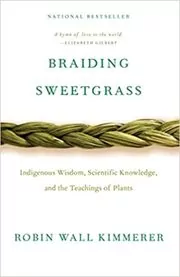
Braiding Sweetgrass
Indigenous Wisdom, Scientific Knowledge and the Teachings of Plants
For readers seeking botany alongside Indigenous teachings about responsibility and reciprocity. Kimmerer connects scientific attention with lived relationships to plants, though the essay structure asks for reflection rather than delivering a systematic natural history course.
What it's about
Kimmerer braids personal stories, botany, and Potawatomi teachings into essays about what plants can teach us about reciprocity, gratitude, and care. It asks readers to see the living world as kin, not backdrop.

Pilgrim at Tinker Creek
For readers who want nature writing that raises difficult philosophical questions. Dillard turns close attention into an inquiry about beauty and cruelty, though her dense imagery and digressions can demand more patience than straightforward science reporting.
What it's about
Annie Dillard records a year's exploration of the natural world around Tinker Creek in Virginia. Encounters with animals, insects, water and changing seasons become occasions for examining the beauty, violence and mystery she finds in her surroundings.
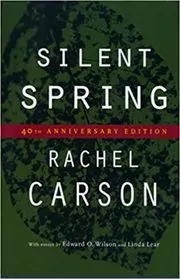
Silent Spring
For readers interested in how environmental evidence becomes a public argument. Carson connects pesticide use with damage across living systems, though its historical setting means it should be read alongside current information about particular chemicals.
What it's about
Carson examines what widespread pesticide use, especially DDT, was doing to birds, waterways, and human health. It is a clear, unsettling case against chemical shortcuts and a turning point in environmental writing.
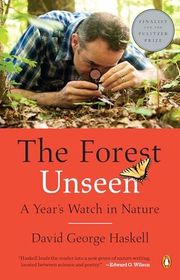
The Forest Unseen: A Year's Watch in Nature
For readers who want scientific depth without leaving a small patch of ground. Haskell connects patient observation with ecological explanation, though the deliberate pace suits readers willing to linger over details rather than seek a broad survey.
What it's about
David George Haskell returns to a small area of Tennessee forest throughout a year. His observations of its organisms and seasonal changes lead into explanations of ecology, evolution, and the connections among living things.

For readers who prefer learning scientific ideas through a life story. Wulf connects Humboldt’s travels with his understanding of nature as interdependent, though biography occupies more space than detailed explanations of present-day ecology.
What it's about
Andrea Wulf traces Alexander von Humboldt's travels, scientific observations, and influence on later thinkers. Her biography explores his vision of nature as an interconnected whole, connecting an adventurous life with ideas that helped shape environmental thought and scientific understanding.
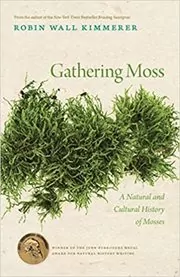
For readers who want to notice the small organisms they usually overlook. Kimmerer combines botanical knowledge with personal reflection at an intimate scale, though these linked essays move more slowly than a conventional science overview.
What it's about
Through linked essays on one of nature’s smallest life-forms, Kimmerer explores how mosses live, spread, and shape the world around them. It blends science, personal reflection, and a fresh way of paying attention.
Also recommended by
1 person Maria Popova recommended this book
Maria Popova
"An extraordinary celebration of smallness and the grandeur of life." - Maria Popova
Maria Popova's recommendation of this book

For readers curious about intelligence in animals very different from us. Montgomery makes that question personal through close encounters, though her emotional involvement gives the book a different emphasis from a detached survey of research.
What it's about
Sy Montgomery explores octopus intelligence through encounters in aquariums and the ocean. Blending personal relationships with scientific observation, she considers their distinctive personalities, problem-solving abilities, and what connections across species suggest about consciousness.
Also recommended by
1 person Barry Ritholtz recommended this book
Barry Ritholtz
"I loved this book." - Barry Ritholtz
Barry Ritholtz's recommendation of this book

The Genius of Birds
For birdwatchers who want to move beyond names and identification. Ackerman makes research on avian intelligence approachable through behavior and scientific questions, though the wide survey offers less immersion in one place or species.
What it's about
Jennifer Ackerman explores bird intelligence through visits to research sites and accounts of discoveries about avian brains and behavior. Her investigation examines the abilities of birds and considers what they reveal about the nature and evolution of intelligence.

For readers interested in why time outdoors matters to people. Williams links travel reporting with research on human well-being, though its focus on our responses to nature offers less detail about plants, animals, and ecosystems themselves.
What it's about
Florence Williams travels to forests and other natural settings to investigate research on nature's effects on people. Reporting from Korea, Finland, and California, she examines connections among outdoor environments, mood, health, creativity, and the demands of modern life.
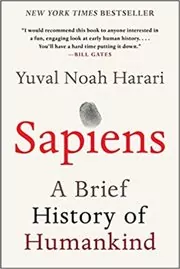
For readers who want a broad account of humanity within the living world. Its sweep connects biology with culture and institutions, though much of the book concerns human history rather than observing other species.
What it's about
Harari condenses 70,000 years of human history into a single narrative, tracing how Homo sapiens rose from apes on the savannah to planet-shaping forces. He focuses on shared myths, empires, money, religion and science, and asks whether all this progress made us happier.
Also recommended by
32 people Joe Rogan recommended this book
Joe Rogan
"It really puts in perspective how bizarre human beings are. It’s an awesome overview of our species." - Joe Rogan
Joe Rogan's recommendation of this book  Bill Gates recommended this book
Bill Gates
"I would recommend this book to anyone interested in a fun, engaging look at early human history." - Bill Gates
Bill Gates's recommendation of this book  Naval Ravikant recommended this book
Naval Ravikant
"Best book I've read in [2015]." - Naval Ravikant
Naval Ravikant's recommendation of this book  Lex Fridman recommended this book
Lex Fridman
"Basically one of the things we've created here is we've imagined ideas that we all share." - Lex Fridman
Lex Fridman's recommendation of this book  Mark Zuckerberg recommended this book
Mark Zuckerberg
"A big history narrative of human civilization." - Mark Zuckerberg
Mark Zuckerberg's recommendation of this book  Peter Attia recommended this book
Peter Attia
One of Peter Attia's answers to "any books you feel would make your reading list?"
Peter Attia's recommendation of this book +26
More recommendations
- Ashton Kutcher
"The brainy book I seem to be sharing or talking about the most lately." - Ashton Kutcher
- Whitney Cummings
"A great book about [how] we’ve evolved and why we have anxiety." - Whitney Cummings
- Richard Branson
"I just love the style of his writing." - Richard Branson
- Ray Dalio
Ray Dalio mentioned this book on "The Tim Ferriss Show" podcast.
- Vinod Khosla
"A previous favorite." - Vinod Khosla
- James Cameron
"It explains human behavior and why we are the way we are in human civilization from soup to nuts. And I’ve read it now a couple of times. It’s a pretty astonishing book." - James Cameron
- Demis Hassabis
"There's not many times where I read a book and come out with 20 new ideas I hadn't thought about before, and [this book] made me think like that." - Demis Hassabis
- Keith Rabois
Keith Rabois recommended this book on a Medium blog post.
- Daniel Ek
"Both sobering and conservatively optimistic in equal measure." - Daniel Ek
- Reid Hoffman
"A grand theory of humanity." - Reid Hoffman
- Sam Kass
Sam Kass recommended this book in the "Tools of Titans" book.
- Sebastian Junger
"I’m going to give [this book] over and over again to everyone I know." - Sebastian Junger
- Kishore Biyani
"Fascinating because of its multi-disciplinary approach towards understanding human society, our behaviour and our future." - Kishore Biyani
- Ryan Shea
One of Ryan Shea's 4 answers to "what is the book (or books) you’ve given most as a gift?"
- Melinda Gates
Melinda Gates recommended this book on Likewise.com.
- Bill Gurley
"I really enjoyed [this book]." - Bill Gurley
- Karlie Kloss
"An amazing book on the beginning of humanity." - Karlie Kloss
- Anthony Pompliano
"[One of the] best books I read in 2017." - Anthony Pompliano
- Changpeng Zhao
"Gives me a greater perspective about how humans emerged and why we behave the way we do." - Changpeng Zhao
- PewDiePie
"Tells the major revolutions of human history." - PewDiePie
- Patrick O'Shaughnessy
"Provides a concise history of humankind and outlines why we have the psychology we do today." - Patrick O'Shaughnessy
- Chris Evans
"Truly mind-blowing. It’s changed the way I look at almost everything. I can’t endorse it enough." - Chris Evans
- Simon Mayo
"Love this book still." - Simon Mayo
- Penn Jillette
Penn Jillette mentioned this book in a New York Times interview.
- Mark Manson
Mark Manson recommended this book on his website.
- James Clear
"[One of] the 10 best nonfiction books of all-time." - James Clear
- Ashton Kutcher

For gardeners and readers interested in how human desires shape cultivated plants. Its four focused examples give botany a familiar starting point, though it offers a selective argument rather than a broad botanical survey.
What it's about
Michael Pollan examines the reciprocal relationship between humans and four cultivated plants: apples, tulips, marijuana, and potatoes. Their histories reveal how desires for sweetness, beauty, intoxication, and control have shaped both plants and people.
Also recommended by
2 people Tim Draper recommended this book
Tim Draper
"My wife recommended [this book]." - Tim Draper
Tim Draper's recommendation of this book  Samin Nosrat recommended this book
Samin Nosrat
Samin Nosrat mentioned this book on "The Tim Ferriss Show" podcast.
Samin Nosrat's recommendation of this book

The World Without Us
For readers drawn to environmental questions through imaginative scenarios. Its disappearing-human premise makes our material footprint tangible, though this speculative approach provides less sustained observation of individual organisms than the field-based books here.
What it's about
Alan Weisman imagines what would happen if humans suddenly disappeared from Earth. Drawing on scientific expertise, he explores collapsing infrastructure, recovering ecosystems, and the materials and environmental changes that might outlast human civilization.
Also recommended by
2 people- Richard Branson recommended this book
Richard Branson
Richard Branson recommended this book on his "70 must-read books" blog post.
Richard Branson's recommendation of this book  Ev Williams recommended this book
Ev Williams
On the "books read" section of Ev Williams' GoodReads profile.
Ev Williams's recommendation of this book
Sources
- 1
100 Best Nature Books of All Time
shortform.com
- 2
Best of Natural History
goodreads.com
- 3
Best nature writing
reddit.com
- 4
Books for Every Naturalist
wellreadnaturalist.com
- 5
The Best Books on Natural History
fivebooks.com
- 6
Non-Fiction history/natural history/ nature books
reddit.com
- 7
7 Best Natural History Books to Read in 2026
bookshelf360.co.uk








Edited by
Software engineer whose passion for tracking book recommendations from podcasts inspired the creation of MRB.
Lead investor at 3one4 Capital whose startup expertise and love for books helped shape MRB and its growth.
Comments
Spotted a missing book, a wrong order or a mistake? Tell us and we'll fix this page.
We're a reading guide, not the author or publisher, so we can't send books or pass on messages.