
9 Best Consciousness Books
The best consciousness books, ranked by how many expert sources recommend each one, with notes on neuroscience, philosophy, animal minds, and where to start.
Our take
Consciousness books ask how experience fits into the world we study from the outside. Some focus on what brains do, others on why physical processes should feel like anything at all. Questions about the self, animal awareness, and artificial minds follow from that difference. These books suit curious general readers as well as people ready for sustained philosophical argument, but they do not offer one agreed explanation.
Conscious provides a short introduction to the puzzle, while Being You brings perception and bodily experience into a neuroscience account. Other Minds approaches the subject through octopuses and evolution. For contrasting philosophical arguments, read Consciousness Explained alongside The Conscious Mind. The Ego Tunnel concentrates on the experienced self, and The Feeling of Life Itself makes a case for integrated information theory. The Origin of Consciousness in the Breakdown of the Bicameral Mind offers a much more speculative historical proposal. Start with an accessible overview, then choose a theory to examine alongside its alternatives.
9 books · 8 sources · Last updated
As an Amazon Associate, we earn from qualifying purchases (at no extra cost to you).
How to choose from this list
Skip to the full rankingIf you want a short introduction: Conscious → Being You
If you want animal minds and evolution: Other Minds
If you want contrasting philosophical arguments: Consciousness Explained → The Conscious Mind
If you're interested in the sense of self: Being You → The Ego Tunnel
If you want integrated information theory: The Feeling of Life Itself
If you enjoy thought experiments and varied voices: The Mind's I
The 9 books, ranked
Ranked by how many expert sources name each book. Ties go to the book more people recommend.

Consciousness Explained
For readers ready to challenge the intuition that experience has a single inner observer. Its thought experiments provide a sustained philosophical counterpoint to Chalmers, though the long argument and provocative treatment of familiar intuitions can be demanding.
What it's about
Daniel Dennett presents a model of consciousness grounded in physical and cognitive processes, drawing on neuroscience, psychology, and artificial intelligence. He challenges familiar assumptions about subjective experience and explores how interacting mechanisms might produce the sense of an aware self.

For readers who want consciousness explored through animal lives and evolutionary history. Its observations of cephalopods give the subject a concrete, outward-looking setting, though it offers less systematic coverage of competing philosophical theories than the debate-focused books.
What it's about
Peter Godfrey-Smith combines observations of octopuses and other sea creatures with philosophy and evolutionary history. Exploring how nervous systems and subjective experience developed, he considers what cephalopod intelligence can reveal about minds radically different from our own.

For readers who want the philosophical case that physical explanation leaves something unresolved. Its careful development of the hard problem anchors a major position in the debate, but the technical arguments make it a demanding first introduction.
What it's about
David Chalmers examines why physical explanations of the brain leave questions about subjective experience unresolved. He develops a theory treating consciousness as fundamental and considers its implications for artificial intelligence, the mind, and physical reality.

For readers curious about an unconventional historical account of the mind. Its use of ancient texts offers a striking contrast with laboratory-based theories, though the bicameral hypothesis is controversial and should be read as a speculative argument.
What it's about
Julian Jaynes proposes that human consciousness developed historically through language rather than existing in its modern form from the beginning. His controversial theory interprets ancient texts and behavior as evidence of an earlier mentality directed by perceived commanding voices.
Also recommended by
4 people Naval Ravikant recommended this book
Naval Ravikant
Naval Ravikant mentioned this book on "The Tim Ferriss Show" podcast.
Naval Ravikant's recommendation of this book  Adam Robinson recommended this book
Adam Robinson
"[One of five books (this one perhaps most of all) that confirm] there is far, far more in our unconscious mind than is dreamt of in our philosophy." - Adam Robinson
Adam Robinson's recommendation of this book  Sam Altman recommended this book
Sam Altman
This book was on Sam Altman's bookshelf.
Sam Altman's recommendation of this book  Patrick O'Shaughnessy recommended this book
Patrick O'Shaughnessy
"This is a mind f**k." - Patrick O'Shaughnessy
Patrick O'Shaughnessy's recommendation of this book
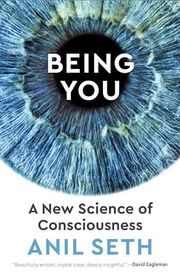
Being You
For readers who want consciousness connected to perception, the body, and neuroscience. Its experiments and examples make a more concrete starting point than Chalmers’s extended philosophical argument, though predictive processing is one approach within an unsettled field.
What it's about
Anil Seth explores how conscious experience may arise from the brain’s activity in a living body. He develops an account of perception, selfhood, and awareness using experiments, neurological observations, and ideas about the brain’s predictions.
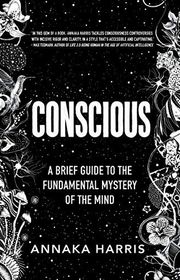
Conscious: A Brief Guide to the Fundamental Mystery of the Mind
For readers who want the central questions in a short first book. Its compact discussion makes assumptions about awareness and selfhood easier to examine, though the brevity leaves less room for evidence and detailed objections to different positions.
What it's about
Annaka Harris introduces questions about what consciousness is, where it might occur, and how it relates to the brain. The book considers perception, the sense of self, and philosophical possibilities while examining familiar assumptions about experience.
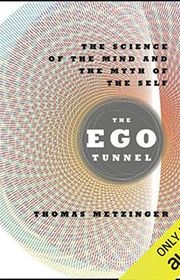
The Ego Tunnel: The Science of the Mind and the Myth of the Self
For readers especially interested in how the experience of being someone is constructed. Its focus on self-models and embodiment complements the wider surveys, though the philosophical language and implications require more concentration than a brief introduction.
What it's about
Thomas Metzinger argues that the experienced self emerges from a model generated by the brain. Drawing on philosophy and neuroscience, he explores perception, embodiment, altered experiences, and the ethical implications of understanding consciousness in this way.
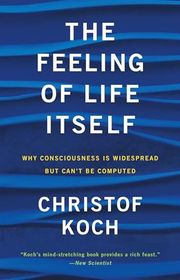
The Feeling of Life Itself: Why Consciousness Is Widespread but Can't Be Computed
For readers who want a sustained introduction to integrated information theory. Koch connects a specific theory with questions about brains, animals, and machines, though the book argues for a disputed framework rather than offering a neutral survey.
What it's about
Christof Koch explores the nature and physical basis of conscious experience through integrated information theory. He examines what the theory could imply for animal awareness, human brains, and artificial systems, connecting neuroscience with broader philosophical questions.
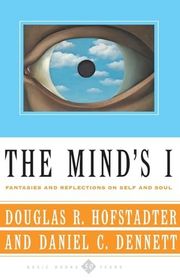
The Mind's I: Fantasies and Reflections on Self and Soul
For readers who enjoy exploring ideas through fiction, essays, and thought experiments. The varied selections offer more imaginative entry points than a single theoretical argument, though the older anthology does not cover recent neuroscience systematically.
What it's about
Douglas Hofstadter and Daniel Dennett assemble and comment on writings about minds, identity, and selfhood. Fiction, essays, and thought experiments examine intelligence, experience, and what it might mean for a person or machine to have a mind.
Sources
- 1
The best books on Consciousness
fivebooks.com
- 2
Consciousness: The Best 5 Books to Read
philosophybreak.com
- 3
5 brilliant books on consciousness
bigthink.com
- 4
The Top Books about Consciousness
unearnedwisdom.com
- 5
Consciousness Books
goodreads.com
- 6
Best Books on the Neuroscience of Consciousness
fivebooks.com
- 7
Need suggestions for good journal articles and books on consciousness
reddit.com
- 8
Book Recommendations?
reddit.com







Edited by
Software engineer whose passion for tracking book recommendations from podcasts inspired the creation of MRB.
Lead investor at 3one4 Capital whose startup expertise and love for books helped shape MRB and its growth.
Comments
Spotted a missing book, a wrong order or a mistake? Tell us and we'll fix this page.
We're a reading guide, not the author or publisher, so we can't send books or pass on messages.