
14 Best Valuation Books
The best valuation books, ranked by how many expert sources recommend each one, with notes for beginners, investors, and analysts choosing a practical guide.
Our take
Valuation asks what a business or asset is worth, and which assumptions make that estimate believable. These books help individual investors, finance students, analysts, and managers approach the question from different directions. Some begin with financial statements and investment discipline; others work through cash flows, discount rates, growth, and comparisons with similar businesses. Knowing the mechanics matters, but so does understanding what a model leaves uncertain.
The Little Book of Valuation offers a shorter entry into the methods, while Investment Valuation develops a much wider technical toolkit. McKinsey’s Valuation connects the numbers with operating performance and management decisions. Business Analysis & Valuation puts accounting and business strategy first, and Narrative and Numbers examines the story behind the assumptions. The older foundations remain useful too, provided you expect historical examples rather than current market instruction. Start with the shorter introduction, then choose the deeper reference that matches your work.
14 books · 8 sources · Last updated
As an Amazon Associate, we earn from qualifying purchases (at no extra cost to you).
How to choose from this list
Skip to the full rankingIf you are new to valuation: The Little Book of Valuation → Investment Valuation
If you analyze company performance: Business Analysis & Valuation → Valuation
If you need stronger assumptions: Narrative and Numbers → Damodaran on Valuation
If you want the theoretical foundations: The Theory of Investment Value
The 14 books, ranked
Ranked by how many expert sources name each book. Ties go to the book more people recommend.

For analysts and managers who want to connect company value with operating performance. Its treatment of growth, returns, and forecasting offers a broad corporate framework, though the depth makes it demanding for beginners.
What it's about
McKinsey's Tim Koller, Marc Goedhart, and David Wessels explain the principles and methods of corporate valuation. The guide covers performance analysis, forecasting, capital structure, and management decisions, connecting financial assessment with the creation of long-term company value.
Also recommended by
2 people Bill Gurley recommended this book
Bill Gurley
Bill Gurley recommended this book on Quora.
Bill Gurley's recommendation of this book  Michael Mauboussin recommended this book
Michael Mauboussin
Michael Mauboussin recommended this book on Twitter.
Michael Mauboussin's recommendation of this book

For individual investors who want a shorter introduction before tackling a valuation textbook. It explains the main approaches with less preparation than Investment Valuation, though brevity leaves less room for difficult cases and detailed modeling.
What it's about
Aswath Damodaran introduces company valuation for individual investors through accessible explanations and examples. He examines discounted cash flow, relative valuation using multiples, and elements of real-option analysis, helping readers interpret research reports and construct their own estimates.

For analysts who already know the basics and need help choosing or adjusting valuation methods. It connects standard models with control, synergy, and other complications, though substantial overlap with Investment Valuation makes reading both optional.
What it's about
Aswath Damodaran examines valuation methods for investment analysis and corporate decisions. He connects cash flows, discount rates, and multiples with more complex questions involving control, synergy, nonoperating assets, stock options, illiquidity, and financial distress.

The Intelligent Investor
For investors who need discipline around price, risk, and market swings before building models. Its margin-of-safety framework complements the technical texts, though it offers less instruction in modern spreadsheet valuation and contains dated examples.
What it's about
Benjamin Graham outlines a value-investing philosophy that distinguishes investing from speculation and emphasizes disciplined decision-making. He examines how investors can assess value, respond to market fluctuations, and use a margin of safety when considering purchases.
Also recommended by
7 people Warren Buffett recommended this book
Warren Buffett
"I obviously recommend, first and foremost, [this book]. Considered to be the 'Bible of Value Investing.'" - Warren Buffett
Warren Buffett's recommendation of this book  DJ Vlad recommended this book
DJ Vlad
"The single biggest influence on how I buy and sell stocks." - DJ Vlad
DJ Vlad's recommendation of this book  Kevin Rose recommended this book
Kevin Rose
"The foundation for investing." - Kevin Rose
Kevin Rose's recommendation of this book  Peter Mallouk recommended this book
Peter Mallouk
"A phenomenal book." - Peter Mallouk
Peter Mallouk's recommendation of this book  Bill Ackman recommended this book
Bill Ackman
"I found it fascinating." - Bill Ackman
Bill Ackman's recommendation of this book  Jamie Dimon recommended this book
Jamie Dimon
On Jamie Dimon's list of favorite books.
Jamie Dimon's recommendation of this book +1
More recommendations
- Ryan Petersen
"[Part of] my biz book canon." - Ryan Petersen
- Ryan Petersen

For readers ready to build a detailed valuation toolkit across different assets. Its breadth makes it useful as a reference beyond ordinary company valuation, though the length and technical detail can overwhelm a first-time reader.
What it's about
Aswath Damodaran develops methods for valuing assets through financial analysis and practical examples. The guide examines alternative valuation approaches, the assumptions behind them, and challenges in estimating cash flows, discount rates, and comparable values.

The Theory of Investment Value
For readers interested in why future payments determine investment value. Its dividend-based reasoning provides historical foundations for later valuation models, though the mathematical presentation and older financial setting make it a demanding starting point.
What it's about
John Burr Williams develops an approach to investment value based on the present worth of expected future payments. Originally published in 1938, the book combines theoretical analysis with investment experience and introduces the dividend discount model for valuing shares.

For students and analysts who want to understand the accounts before trusting a valuation. Its connection between business strategy and financial statements distinguishes it from model-centered references, though accounting familiarity makes the material easier.
What it's about
Krishna Palepu and Paul Healy connect financial statement analysis with corporate strategy and business valuation. Their framework helps readers assess a company's performance, value, and creditworthiness, using accounting information to understand business decisions and prospects.

Equity Asset Valuation
For investment students who want a structured comparison of equity valuation methods. Its combination of accounting analysis and model selection supports systematic study, though the textbook format demands more sustained work than an introductory guide.
What it's about
Jerald Pinto presents equity valuation methods that connect accounting analysis with finance theory. The text helps readers compare valuation models and decide which approaches fit particular companies and circumstances, combining conceptual explanations with practical investment analysis.

For analysts whose spreadsheets need a clearer business argument, and storytellers who need numerical discipline. It connects assumptions with plausible company narratives more directly than the technical references, though it cannot replace learning valuation mechanics.
What it's about
Aswath Damodaran argues that business valuation requires both a credible story and meaningful numbers. Case studies show how narratives become financial models, how a company’s history shapes its story, and how analysts can test the plausibility of their assumptions.
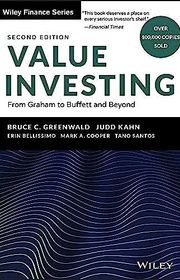
Value Investing: From Graham to Buffett and Beyond
For investors who want a business-centered valuation framework alongside cash-flow models. Its emphasis on assets, earning power, and competitive advantage adds a different perspective, though applying the framework still requires accounting knowledge and judgment.
What it's about
Bruce Greenwald and his coauthors explain how value investors assess businesses using assets, sustainable earnings, and competitive advantages. Case studies and investor examples connect the framework with decisions about growth, valuation, and the price paid for a company.

For readers who want to examine what valuation models require from financial statements. Its focus on the relationship between accounting information and value is more concentrated than the broader textbooks, though prior accounting knowledge helps.
What it's about
Richard Barker examines the models used to value companies and the financial information those models require. The book combines analytical reviews of valuation approaches with an assessment of how financial statement data can support or complicate their use.
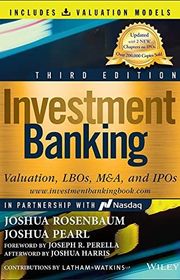
Investment Banking: Valuation, LBOs, M&A, and IPOs
For students and junior analysts who want to learn valuation as part of transaction work. Its step-by-step treatment of comparable companies, deals, and financial models is practical, though the banking focus exceeds many individual investors’ needs.
What it's about
Joshua Rosenbaum and Joshua Pearl explain financial analysis used in investment banking, including comparable companies, precedent transactions, discounted cash flow, and leveraged buyouts. Later editions extend the material to IPOs and provide valuation model resources.
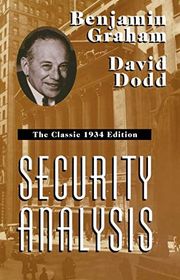
Security Analysis
For experienced readers who want to study securities through earnings, assets, and financial statements. Its detailed analytical foundations extend beyond The Intelligent Investor, though the original text demands patience with historical examples and conventions.
What it's about
Benjamin Graham and David Dodd develop methods for evaluating bonds and stocks through financial statements, earning power, and asset values. Their approach separates market prices from investment value and examines the evidence behind an investment decision.

For readers examining why technology businesses resist conventional valuation assumptions. This edition focuses on adapting models to uncertain growth and stock options, though its original technology examples reflect an earlier market environment.
What it's about
Aswath Damodaran examines the difficulties of valuing technology companies at different stages of development. Case studies show how to adapt valuation techniques when projecting revenue, earnings, cash flows, and the effects of stock options in uncertain businesses.
Sources
- 1
8 Best Valuation Books
wallstreetmojo.com
- 2
100 Best Valuation Books of All Time
shortform.com
- 3
Business : Valuation
researchguides.dartmouth.edu
- 4
Valuation Books
goodreads.com
- 5
11 Of The Best Books On Stock & Business Valuation
acquirersmultiple.com
- 6
Best valuation books
holdlens.com
- 7
Is there any book on business analytics and business valuation??
reddit.com
- 8
I hear a lot of people praising Damodaran, can anyone recommend a book of his that they feel gave them the best understanding of valuation?
reddit.com





Edited by
Software engineer whose passion for tracking book recommendations from podcasts inspired the creation of MRB.
Lead investor at 3one4 Capital whose startup expertise and love for books helped shape MRB and its growth.
Comments
Spotted a missing book, a wrong order or a mistake? Tell us and we'll fix this page.
We're a reading guide, not the author or publisher, so we can't send books or pass on messages.